How to remove
Uninstall Clonezilla 1.2.2-31
from Windows
Easily uninstall Clonezilla 1.2.2-31 on Windows 10 or 11 with our expert-tested guide. Fix it in minutes and enjoy a clean system!

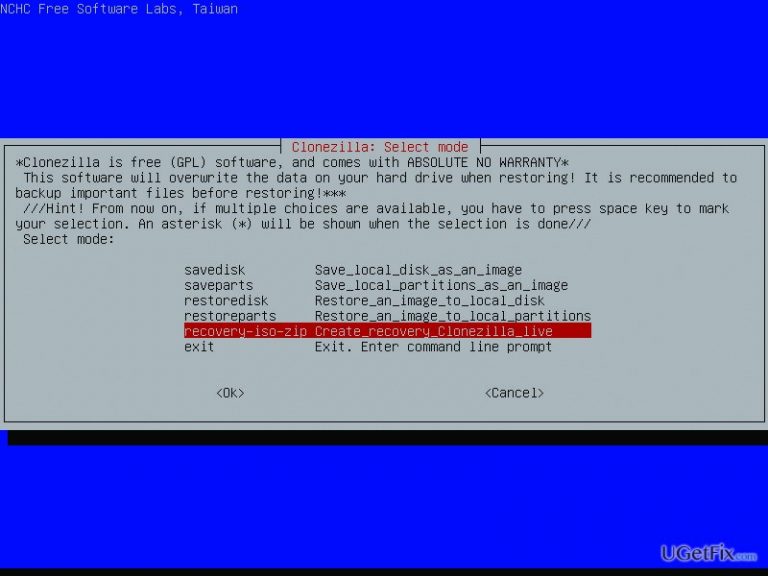
How does How to Uninstall Clonezilla 1.2.2-31 on Windows end up on your PC?
- Clonezilla was not completely uninstalled via Control Panel
- Leftover files and registry entries remain after uninstallation
- The .exe file is still running in Task Manager
- Clonezilla version 1.2.2-31 has known uninstallation issues
- Startup menu icon persists after uninstallation
- Manual removal of registry files can lead to errors if not done carefully
Repairs Windows system files, removes malware, and restores a clean OS state — without reinstalling.
I thought that I uninstalled Clonezilla successfully, but it seems that I didn’t. I have access Control Panel and uninstalled it from there. However, I found its icon placed on startup menu, as well as its .exe file running within Task Manager. I’m running Windows 10 and Clonezilla version 1.2.2-31. Please tell me how it should be uninstalled permanently. Thanks!
Clonezilla is a partition or disk clone tool, which is akin to Norton Ghost or True Image. It’s function is to implement system deployment, hard drive backup and recovery. To put it a more comprehensive way, Clonezilla is a piece of software that is capable of cloning systems in an easy and flexible way. It can clone the system to a local disk, USB devices or network share. At the moment, two Clonezilla types are available – Clonezilla lice and Clonezilla Server Edition. Clonezilla lice can be used for cloning one single system, while Server Edition can handle 40 machines at once. Although this piece of software is useful, not people find it necessary. However, for some reason, it sometimes gets difficult to uninstall Clonezilla completely. The majority of users who faced issues with the removal of this software were using 1.2.2-31 version. Thus, in this post, we will explain how to uninstall Clonezilla 1.2.2-31 completely.
How to Uninstall Clonezilla 1.2.2-31 on Windows?
Each time you attempt to uninstall a piece of software, don’t forget about its leftovers. All programs without exceptions have additional files, which typically are stored on Windows Registries. Leaving leftovers is a risky thing because one day the amount of leftovers may reach a high level due to which the machine may get slow, freeze, and crash frequently. Thus, it’s very important to uninstall Clonezilla 1.2.2-31 along with all its components. To do this in the most easy way, install [rev id="Perfect Uninstaller"] and let it do the job automatically.
Manual Clonezilla 1.2.2-31 removal
We highly do not recommend deleting files from Registry Editor manually. If, however, you are determined to do so, perform each step listed below extremely carefully.
Uninstall a program via Control Panel
- Click on Start (bottom left corner) and select Control Panel (Windows 7/XP).
Right-click on Windows icon (bottom left corner) and select Control Panel (Windows 8/10). - Select Add/Remove Programs and select Uninstall a Program under Programs.
- Find Clonezilla 1.2.2-31, click on it, and select Change/Remove.
- Follow the uninstall wizard.
Use Built-in uninstaller
- Click on Start (bottom left corner) and select All Programs or All Apps depending on the type of Windows you’re running.
- Find Clonezilla 1.2.2-31 folder, open it and click on its Uninstaller.
- Wait for the process to finish.
- You can also do the same by accessing Clonezilla 1.2.2-31 folder and clicking on a file named as unins000.exe or uninstall.exe.
Clean up the Registries
As soon as you remove the main executable file, it’s time to clean up the leftovers from Registries. Beware that this process is a bit risky as you may delete the wrong files. Therefore, be very careful and don’t touch any files that you are not certain about.
- Click on Start, type regedit in a search box, and hit Enter (Windows 7, XP).
Click on Windows icon (bottom left corner) and simultaneously press R. Type regedit in a dialogue box to open Registry Editor (Windows 8/10). - If a confirmation window shows up, click Yes to continue.
- Here you have to find and delete all registry entries that belong to Clonezilla 1.2.2-31 in the following locations:
HKEY_CURRENT_USER\Software
HKEY_LOCAL_MACHINE\SOFTWARE
HKEY_LOCAL_MACHINE\Software\Microsoft\Windows\CurrentVersion\Run\eg ui - After that, check up system folders and delete Clonezilla 1.2.2-31 files there:
C:\Program Files\
C:\Document and Settings\All Users\Application Data\
C:\Documents and Settings\%USER%\Application Data\.
As soon as you finish this, Clonezilla 1.2.2-31 removal should be completed successfully and you should no longer see its icons or processes. Hopefully you don’t.
Bottom line
To uninstall Clonezilla 1.2.2-31 completely, it is recommended to use a tool like Perfect Uninstaller to remove all components automatically. If you prefer manual removal, ensure to follow the steps carefully to avoid issues. If none of these methods work, consider seeking further assistance or using alternative uninstallation software.
Frequently asked questions
To uninstall Clonezilla 1.2.2-31 from Windows 10, go to 'Settings', select 'Apps', find Clonezilla in the list, and click 'Uninstall'. Follow the prompts to complete the uninstallation process.
Yes, you can remove Clonezilla 1.2.2-31 by opening Control Panel, selecting 'Programs', then 'Programs and Features', finding Clonezilla, and clicking 'Uninstall'.
If Clonezilla 1.2.2-31 does not appear in the installed programs list, check for any associated files or folders on your system and manually delete them, or use a third-party uninstaller tool that works with Windows 10 or Windows 11.




Report an issue
What's wrong with this guide? We review every report and update or remove content.
Report received — thank you. We'll review and fix it.
You need a free account to submit a report.
Be the first to comment