How to remove
Clear Cache From Web Browsers
from Windows
Easily clear cache from your web browsers in Windows 10 or 11 for smoother performance. Expert-tested methods with screenshots ensure zero traces left.

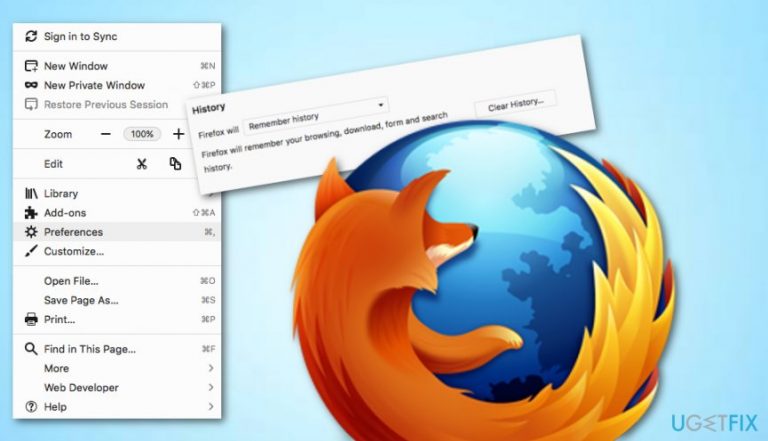
How does How To Clear Cache From Web Browsers end up on your PC?
- Browser cache stores website information to speed up browsing.
- Cached data may prevent users from seeing the latest version of a website.
- Clearing cache can help resolve errors like 404 or 502.
- Users may mistakenly believe that clearing cache alone protects their privacy.
- Cookies and browsing history also need to be deleted for better privacy protection.
Repairs Windows system files, removes malware, and restores a clean OS state — without reinstalling.
When browsing the web, sometimes I encounter various errors and problems, and I am suggested to clean cache. I am not sure what it is and how can I do it? Could you explain me?
A browser cache is a place where website information is stored. Such information includes texts, pictures and other media files, scripts and other parts of the site. The main reason why browsers save this information is to speed up the browsing experience. When you visit the site for the first time, all the information is downloaded and stored on the computer’s hard drive or phone's storage.
Thus, next time you visit the same website, your browser does not need to download the same information again. As a result, the web page is opened quicker. Usually, browsers can show the latest version of the website automatically. However, in some cases, users need to clear cache in order to see all the content properly. What is more, cleaning cash might also help to fix 404 error[ref en-3] or 502 error.
Sometimes computer users think that deleting cache helps to protect their privacy. However, it’s not enough to clean cache. If you are concerned about your privacy, you should also delete cookies[ref en-1] and browsing history.
How To Clear Cache From Web Browsers?
Below we will provide instructions on how to clean cache[ref en-2] from the four most popular web browsers - Internet Explorer, Google Chrome, Mozilla Firefox, and Safari.

Internet Explorer
1. Open the Internet Explorer web browser application.
2. Open the Gear icon (Tools icon) on the right-top corner of the page.
3. Go to Safety -> Delete browsing history…
4. In the appeared window, you need to uncheck all pre-selected options except “Temporary Internet files and website files” option.
5. Click on Delete button.
6. The “Delete browsing history…” will disappear. The mouse icon might be trembling for a while. Once it comes back to normal, you might receive a message informing about completed deletion at the bottom of the screen.
Google Chrome
1. Open the browser.
2. Click on the Settings icon at the right-top corner of the browser.
3. Go to More Tools and choose Clear browsing data.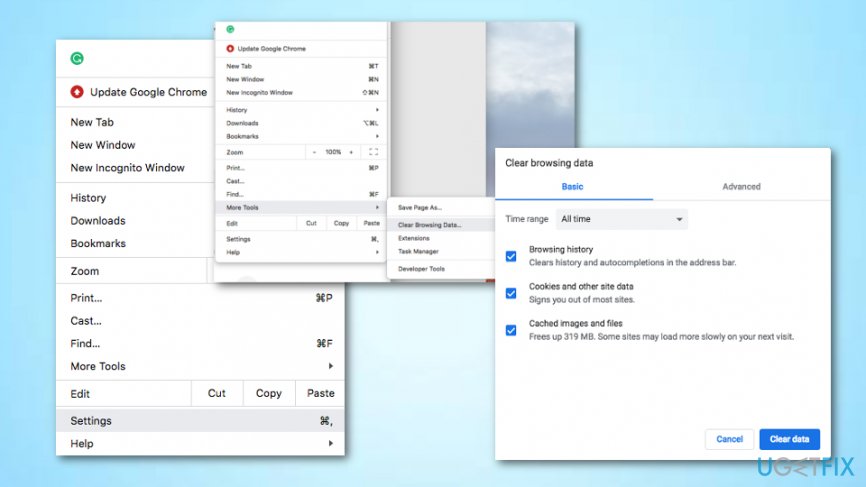
4. In the appeared window, select "Cookies and other site and plug-in data" and "Cached images and files." If there are other entries pre-selected and you want to keep them, untick them.
5. At the top of the box, there’s a drop-down menu where you need to choose the amount of data you want to delete. Choose “beginning of the time” option.
6. Click "Clear browsing data" button.
Mozilla Firefox
1. Open the browser.
2. Click the Menu icon and go to Preferences.
3. When in Preferences, open the Advanced panel and go to Network tab.
4. Here you will find a Cached Web Content information section and “Clear Now” button near it. Click on it.
5. Close the about:preferences page.
Besides, you can set Mozilla Firefox to clear cache automatically as soon as you close the browser:
1. Go to Menu -> Preferences -> Privacy panel.
2. Open History section.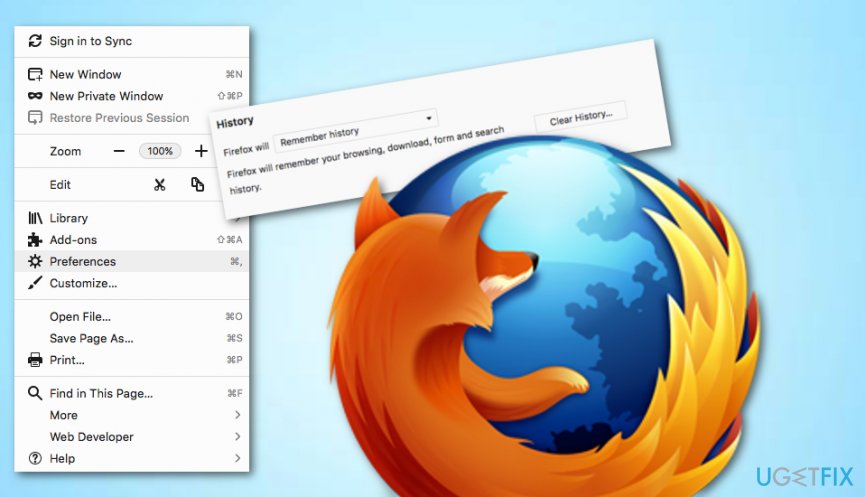
3. Chose “Use custom settings for history” option from the Firefox will drop-down menu.
4. Tick the checkbox saying “Clear history when Firefox closes.”
5. Near "Clear history when Firefox closes” option there’s a Settings button. Click on it.
6. In the appeared "Settings for Clearing History options” window tick “Cache" checkbox.
7. Click OK to apply the changes and close the "Settings for Clearing History" window
Safari
1. Open Safari.
2. Go to Preferences -> Advanced tab.
3. Select the “Show Develop Menu” option at the end of the window. Close it.
4. In the top menu bar, you will see a new Develop option. Click on it and choose “Empty Caches” option.
Bottom line
To clear cache, follow the specific instructions for your browser: Internet Explorer, Google Chrome, Mozilla Firefox, or Safari. If clearing the cache does not resolve your issues, consider deleting cookies and browsing history as additional steps.
Frequently asked questions
To clear the cache in Microsoft Edge, open the browser, click on the three-dot menu in the top right corner, select 'Settings,' then 'Privacy, search, and services,' and under 'Clear browsing data,' click 'Choose what to clear.'
In Google Chrome, click on the three-dot menu, go to 'More tools,' select 'Clear browsing data,' choose the time range, check 'Cached images and files,' and click 'Clear data.'
Yes, in Firefox, click on the three horizontal lines in the top right corner, select 'Options,' navigate to 'Privacy & Security,' and under 'Cookies and Site Data,' click 'Clear Data' to remove the cache.




Report an issue
What's wrong with this guide? We review every report and update or remove content.
Report received — thank you. We'll review and fix it.
You need a free account to submit a report.
Be the first to comment