How to fix
ERROR_NOT_SAME_DEVICE
on Windows
Resolve the ERROR_NOT_SAME_DEVICE issue on Windows 10 and 11 effortlessly. Follow our expert-tested guide for quick and effective fixes!

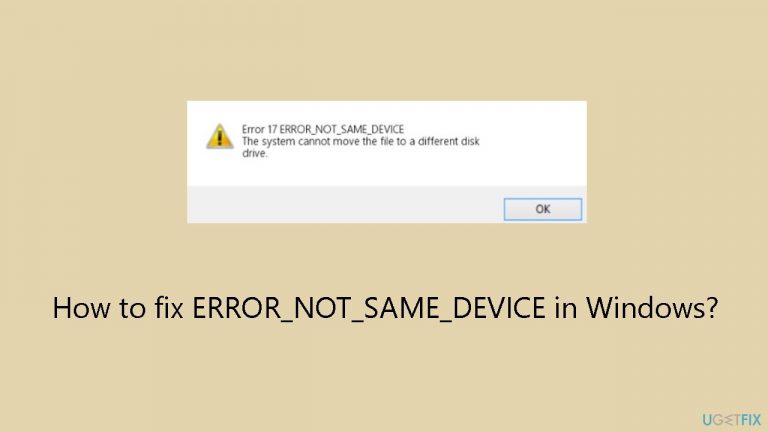
What causes How to fix ERROR_NOT_SAME_DEVICE in Windows?
- File is being moved between different storage devices
- Source and destination are on different devices
- Possible conflicts in file structures
- Permissions issues
- Hardware settings conflicts
Repairs Windows system files, removes malware, and restores a clean OS state — without reinstalling.
Hello. I tried to transfer some files between different drives on my Windows PC but it is not working. I get the ERROR_NOT_SAME_DEVICE error. Is there a way to fix this?
Transferring or moving a file from one disk drive to another is disrupted for users when they meet the "ERROR_NOT_SAME_DEVICE" in Windows. This error occurs when the system notices that a file is being moved between various storage devices. It means that the source and destination are on different devices, hence the operation cannot be finished.
Users may be greatly impacted by this problem, especially when working on jobs that require frequently moving files between disks. For example, users handling high data quantities can find that this issue interferes with their workflow, causing delays and sometimes aggravating them. Furthermore, it could be difficult for people who depend on file organization across several drives to keep up a smooth and effective data management system.
Windows imposes a restriction on direct transfers between distinct storage devices for a variety of reasons, such as possible conflicts in file structures, permissions, or hardware settings, which can result in the "ERROR_NOT_SAME_DEVICE" problem. Users should be aware of this restriction to avoid making pointless efforts to transfer files across drives, which will stop this error from happening.
Understanding the limitations imposed by the operating system and modifying file management procedures appropriately are necessary to resolve this issue. While exact solutions vary depending on the user's goals and circumstances, in general, users can investigate other options such using backup and restore features or moving the file to the destination drive before deleting it from the source.
In this guide, you will find 5 steps that should help you fix ERROR_NOT_SAME_DEVICE in Windows. You can also run a maintenance tool like [d1] that can fix most system errors, BSODs,[ref en-1] corrupted files, and registry[ref en-2] issues. Otherwise, follow the step-by-step instructions below.
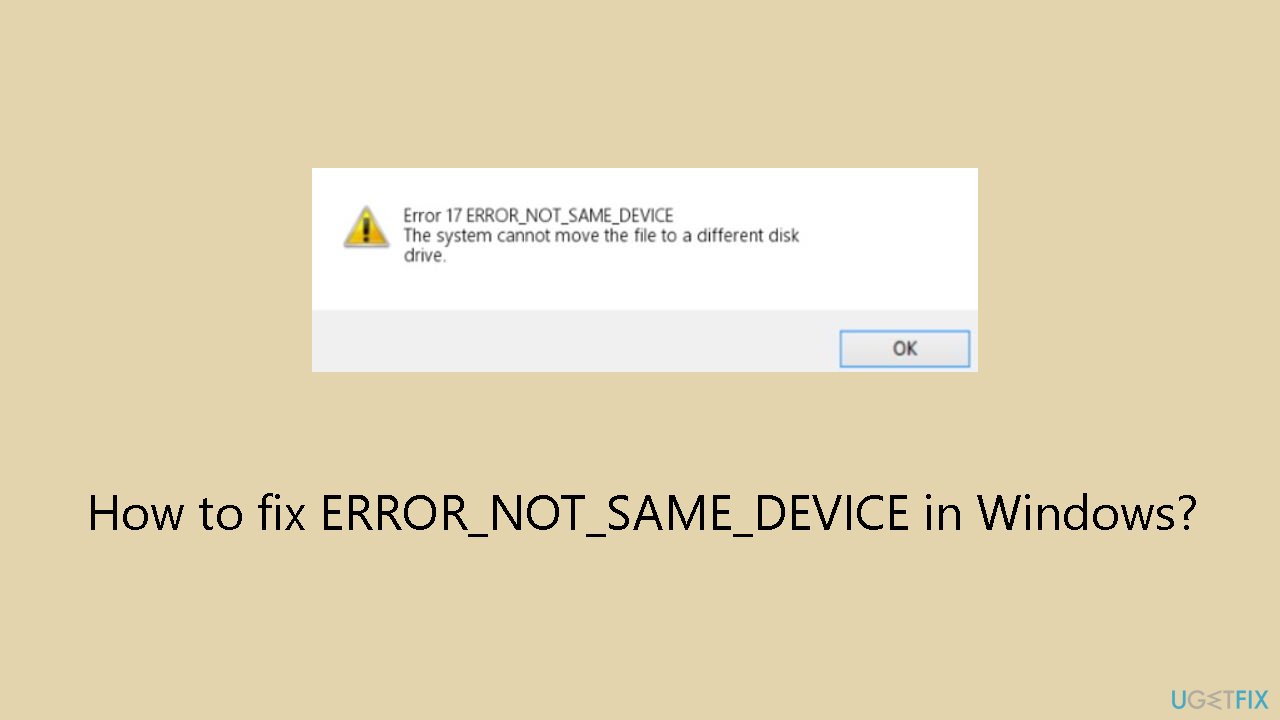
Method 1. Fix Corrupted System Files
Use Command Prompt commands to repair system file corruption:
- Open Command Prompt as administrator
- Use the following command and press Enter:
sfc /scannow
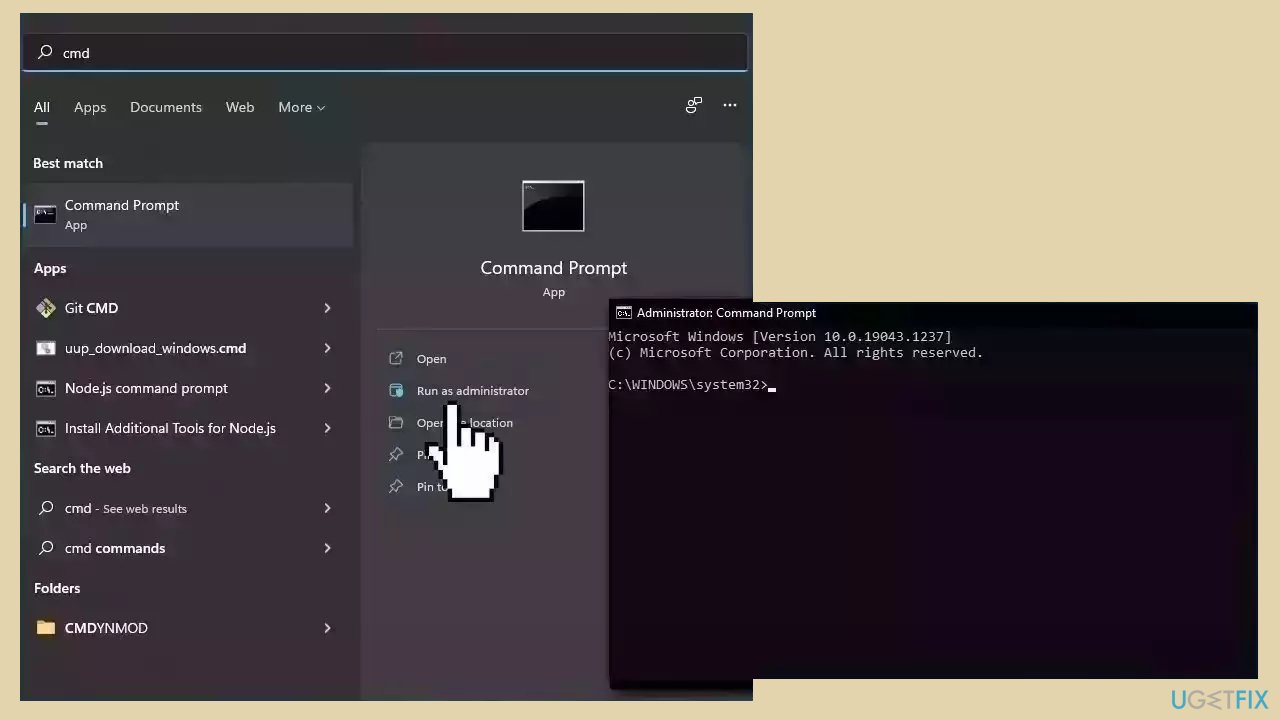
- Reboot your system
- If SFC returned an error, then use the following command lines, pressing Enter after each:
DISM /Online /Cleanup-Image /CheckHealth
DISM /Online /Cleanup-Image /ScanHealth
DISM /Online /Cleanup-Image /RestoreHealth
Method 2. Install Windows Updates
- Press the Windows key + R to open the Run box.
- Type ms-settings:windowsupdate in the text box and press Enter.
- Click the Check for updates button.
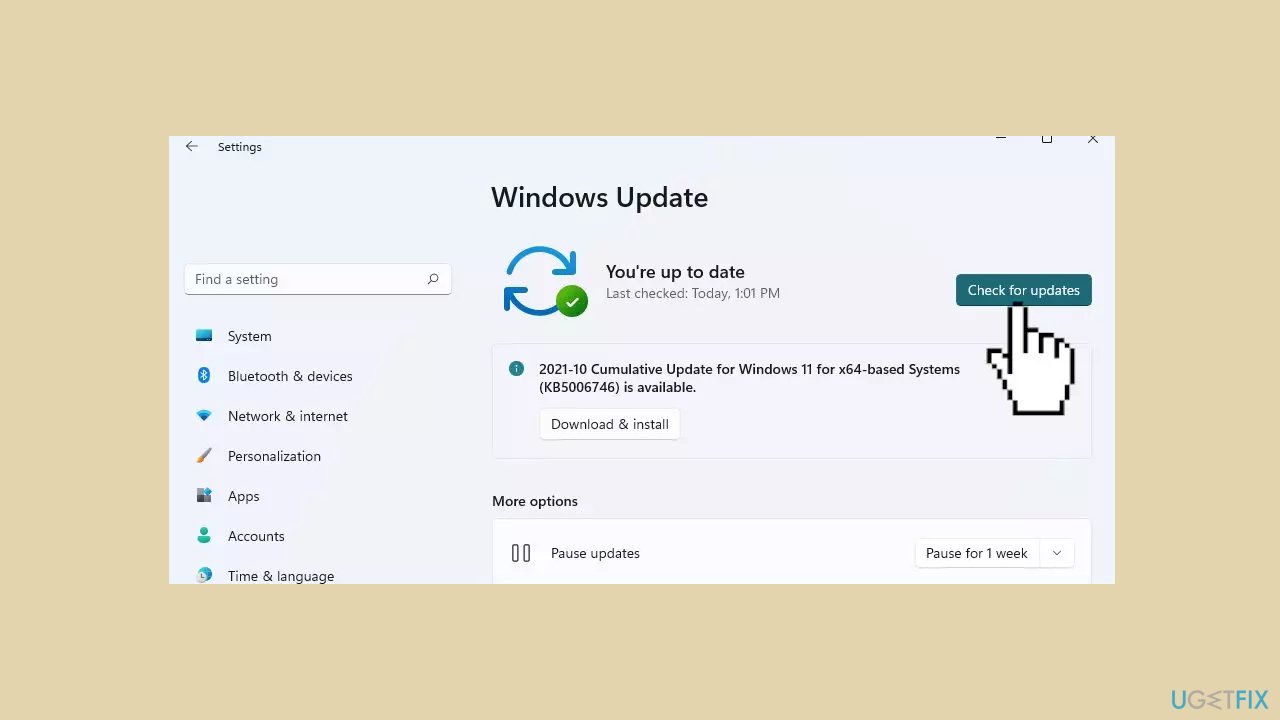
- If a new update is available, click the Download & Install all button.
- Restart your computer after the process is finished and check to see if the problem is fixed.
Method 3. Scan for Malware
A malware infection may be the cause of ERROR_NOT_SAME_DEVICE in Windows. It is important to run a comprehensive security scan to rule out this possibility and ensure that the computer is not infected. This can help to prevent further issues with the Windows operating system and ensure that it is functioning properly.
If you have access to a security scanner, or if your organization pays for one, you can use it to scan your entire system to check for a virus infection. Otherwise, you can use Windows Defender to scan your system:
- Click on the Windows Start menu or press the Windows key on your keyboard.
- Type Microsoft Defender in the search bar and click on Microsoft Defender Antivirus to open the application.
- Click on the Virus & threat protection option in the left-hand menu.
- Click on the Quick scan or Full scan option, depending on your preference.
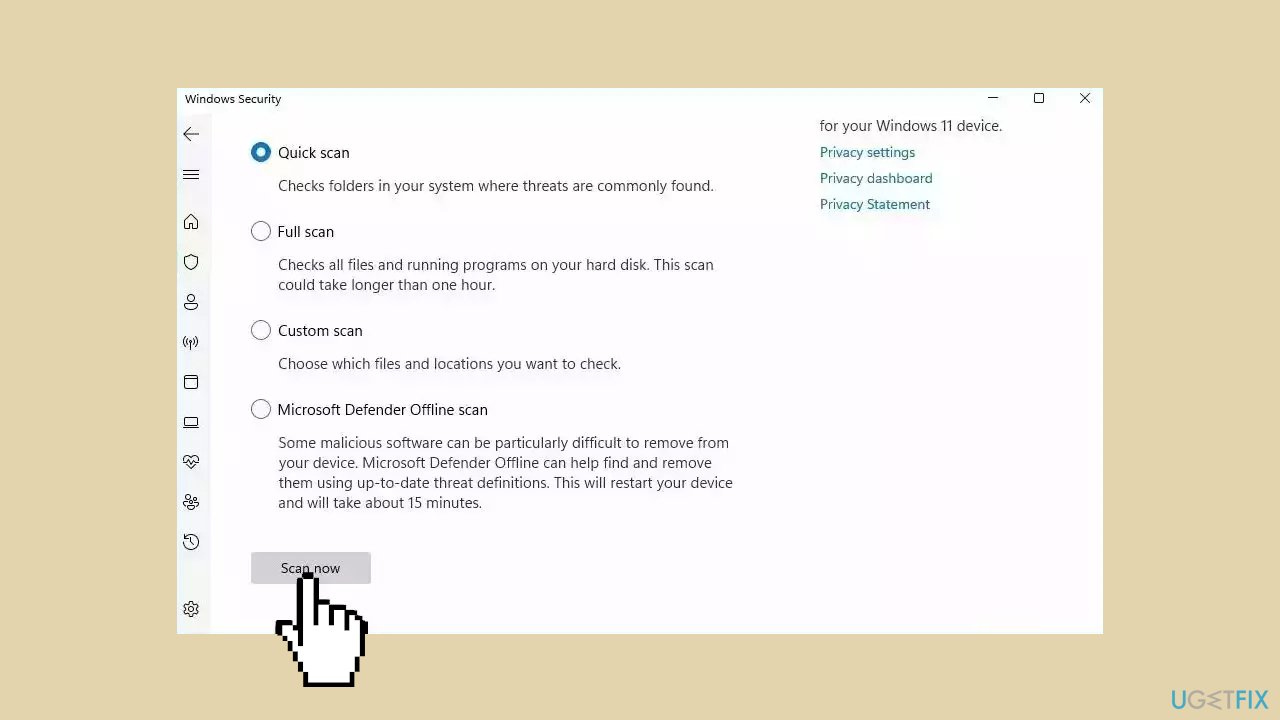
- If you choose Quick scan, Microsoft Defender Antivirus will scan the most vulnerable and commonly infected areas of your computer.
- If you choose Full scan, Microsoft Defender Antivirus will scan your entire computer, including all files, folders, and programs.
- Click on the Scan now button to start the selected scan type and wait for the scan to complete.
- The time it takes will depend on the size of your hard drive and the number of files being scanned.
- Once the scan is complete, you will be informed of any detected threats, and you can choose to quarantine or remove them.
- If no threats are found, Microsoft Defender Antivirus will inform you that your device is secure.
Method 4. Uninstall Recently Installed Program
- Open Control Panel.
- Navigate to the Programs section.
- Click on Uninstall a program.
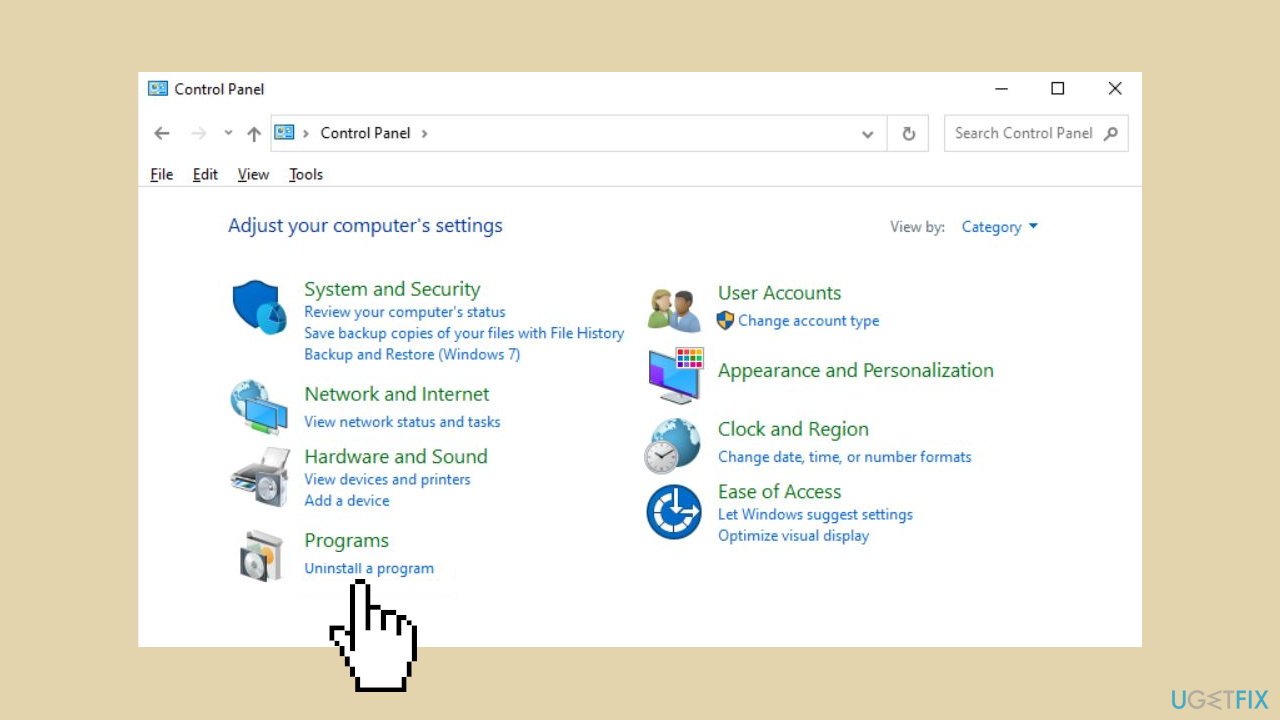
- Locate the recently installed application in the list.
- Right-click on the application.
- Choose Uninstall from the context menu.
- Confirm the action.
- Follow the uninstallation wizard to complete the process.
Method 5. Check Disk
- Open File Explorer.
- Locate your C drive and right-click on it.
- Choose Properties from the context menu.
- In the Properties window, go to the Tools tab.
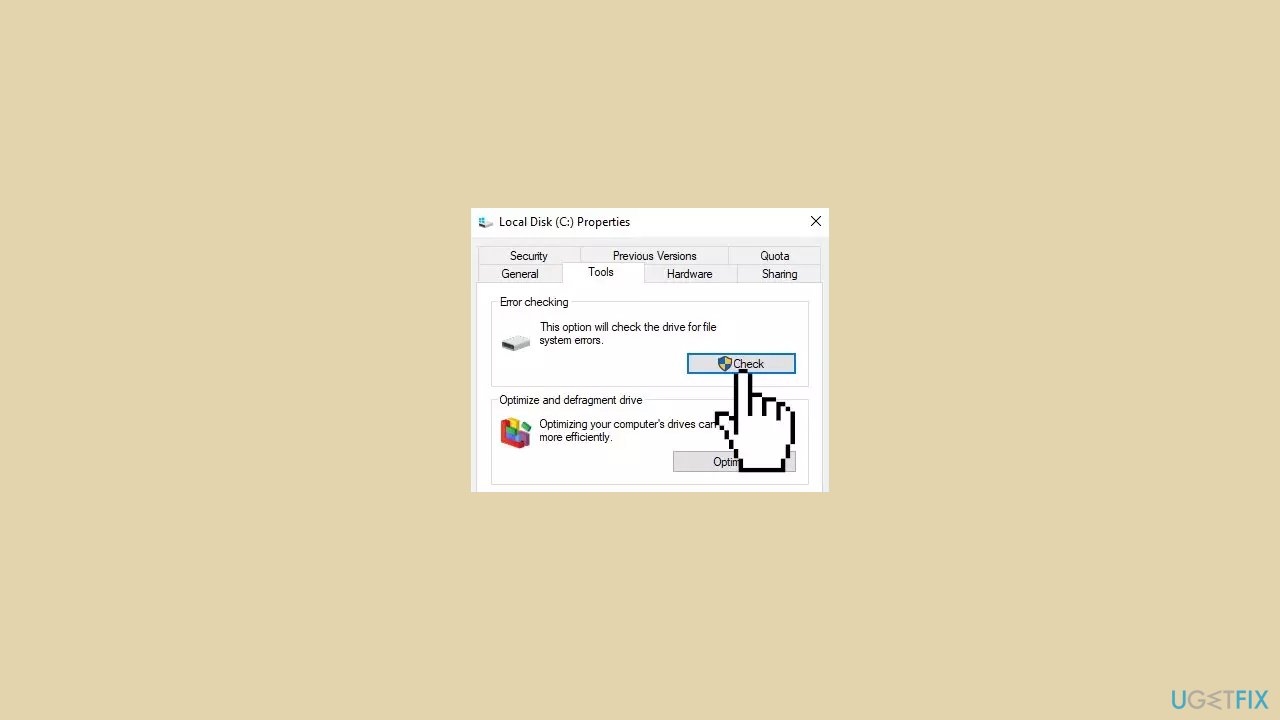
- Under the Error checking section, click on Check.
- If no errors are found during the check, you can proceed by clicking Scan drive.
- If the tool detects errors, follow the provided instructions to fix them.
Bottom line
To fix the ERROR_NOT_SAME_DEVICE issue, users can repair corrupted system files using the Command Prompt with the 'sfc /scannow' command. If these methods do not resolve the problem, consider using backup and restore features or transferring files to the destination drive before deleting them from the source.
Frequently asked questions
The ERROR_NOT_SAME_DEVICE error typically occurs when you try to move or copy files from one drive to another that are not compatible, such as moving files across different partitions or drives.
To fix this issue, ensure that you are copying files within the same drive or use a different method such as compressing the files into a zip folder before transferring.
Yes, to prevent this error, always check that you're moving files between compatible drives or consider using file transfer software that can handle cross-device transfers seamlessly.




Report an issue
What's wrong with this guide? We review every report and update or remove content.
Report received — thank you. We'll review and fix it.
You need a free account to submit a report.
Be the first to comment