How to fix
Windows update error 0x80073D06
on Windows
Resolve Windows update error 0x80073D06 quickly and efficiently. Get expert-tested solutions for Windows 10 and Windows 11, fixed in minutes.

What causes How to fix Windows update error 0x80073D06?
- Issues with the Windows Update service
- Corrupted system files
- Problems with Windows Store components
- Inability to install critical security patches
- Delay in receiving bug fixes
Repairs Windows system files, removes malware, and restores a clean OS state — without reinstalling.
Hello. I tried to install Windows updates but I get the 0x80073D06 error code. What should I do?
Windows users frequently run into the error number 0x80073D06 when trying to install system updates. This specific problem may appear when users try to install operating system updates and is frequently connected to the Windows Store or Windows Update components. This issue can have far-reaching effects on the system's general functionality and security, making it more than just a minor inconvenience.
One significant effect of the 0x80073D06 problem on Windows update users is the inability or delay of critical security patches and bug fixes. Users are left vulnerable to potential security threats when the installation process is hampered by this error, as Windows updates are intended to resolve vulnerabilities and improve system reliability. This scenario emphasizes how crucial frequent updates are to preserving a secure computing environment.
Furthermore, the problem may prevent the release of the most recent Windows updates' enhanced functionality. Users can lose out on updated features, compatibility updates, and optimizations that enhance the user experience. This affects the system's performance as well as users' ability to take advantage of the most recent improvements made to Windows operating systems.
To fix the 0x80073D06 error, users must examine the minute details of their update processes and system setups. Possible fixes include resolving issues with the Windows Update service, confirming the accuracy of system files, and making sure that all necessary parts of the update procedure are operating as intended. Although there are several generic troubleshooting procedures available, users may need to modify their strategy in light of the specifics of their particular systems.
In this guide, you will find 8 steps that should help you fix Windows update error 0x80073D06. You can also run a maintenance tool like [d1] that can fix most system errors, BSODs,[ref en-1] corrupted files, registry[ref en-2] issues, or clear cookies and cache.[ref en-3] Otherwise, follow the step-by-step instructions below.
Method 1. Run the Windows Update Troubleshooter
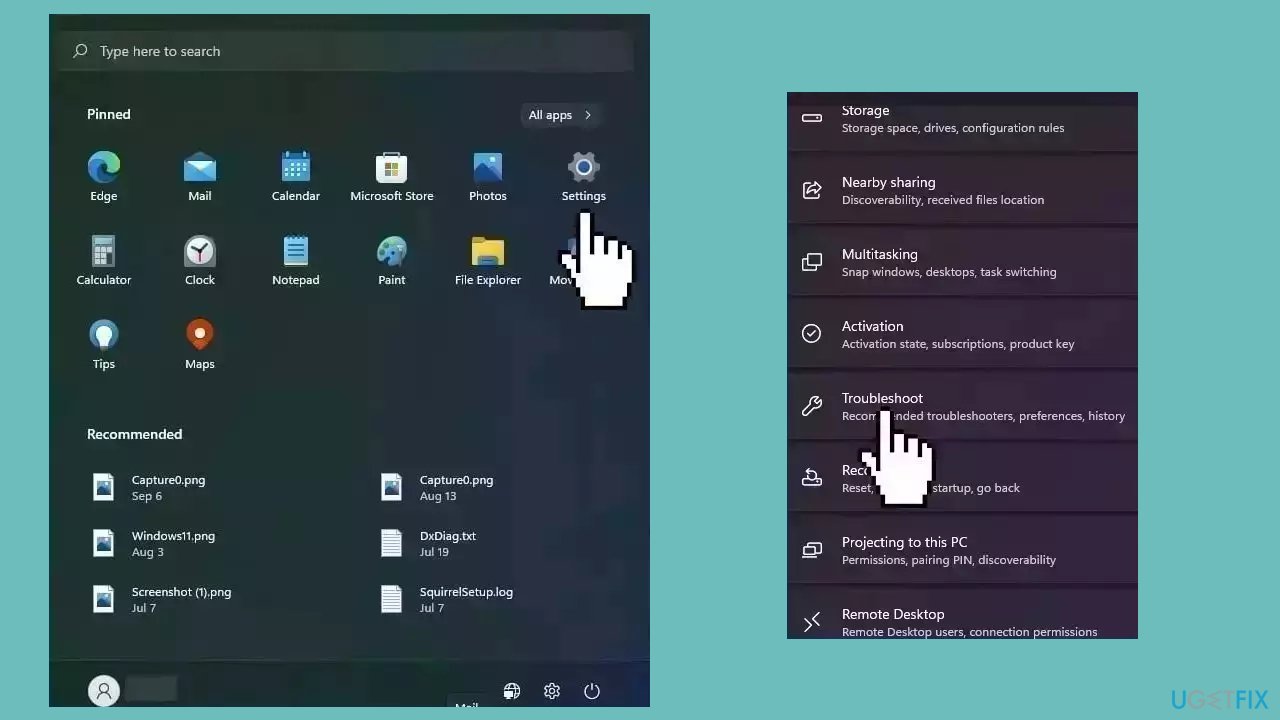
- Press the Windows key + I to open Windows Settings.
- Within the Windows Settings, navigate to the System tab.
- Scroll down the options in the System tab and locate Troubleshoot; click on it.
- Inside the Troubleshoot screen, find and select the Other troubleshooters option.
- A list of various troubleshooters will be displayed.
- Look for the Windows Update troubleshooter in the list.
- Click on the Run button associated with the Windows Update troubleshooter.
- Allow the troubleshooter to complete its process.
- Once the troubleshooter finishes, check your computer to determine if the issue has been resolved.
Method 2. Fix Corrupted System Files
Use Command Prompt commands to repair system file corruption:
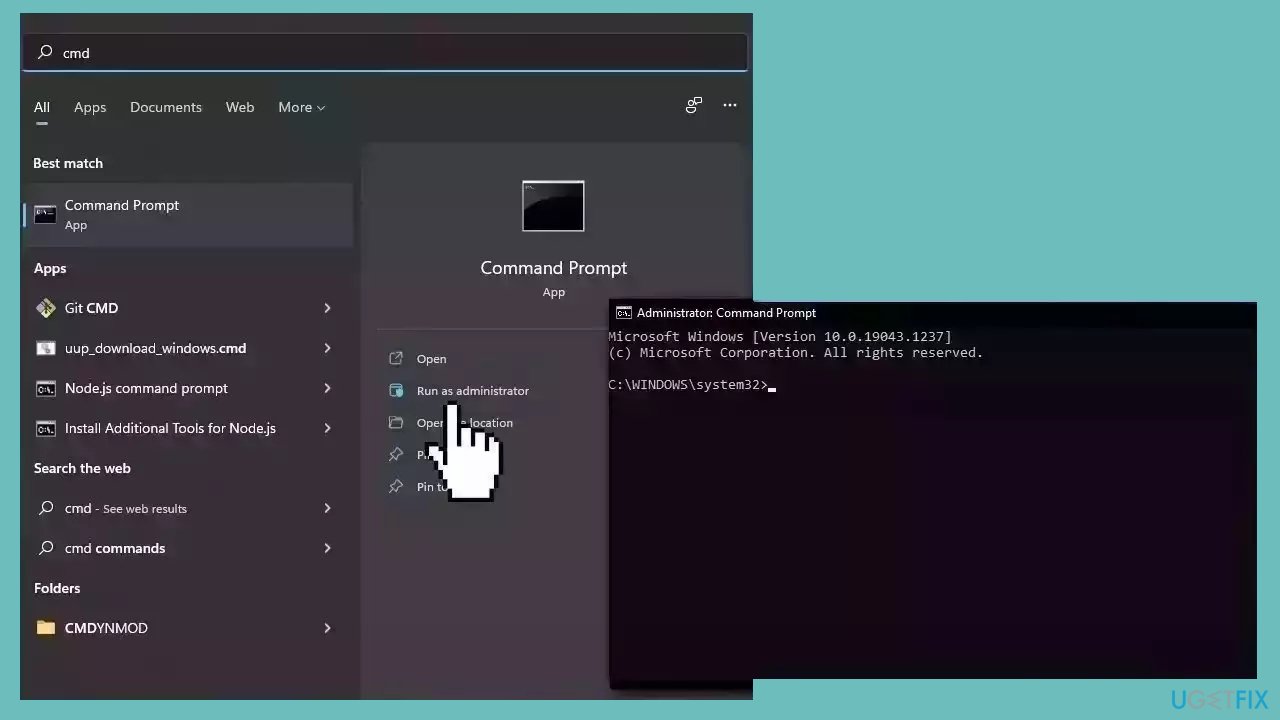
- Open Command Prompt as administrator
- Use the following command and press Enter:
sfc /scannow
- Reboot your system
- If SFC returned an error, then use the following command lines, pressing Enter after each:
DISM /Online /Cleanup-Image /CheckHealth
DISM /Online /Cleanup-Image /ScanHealth
DISM /Online /Cleanup-Image /RestoreHealth
Method 3. Start the Windows Installer Service
- Press the Windows key + R to open the Run dialog.
- Type services.msc in the Run dialog's message box.
- Click OK or press Enter.
- The Services window will open.
- Scroll down to locate the Windows Installer service in the list.
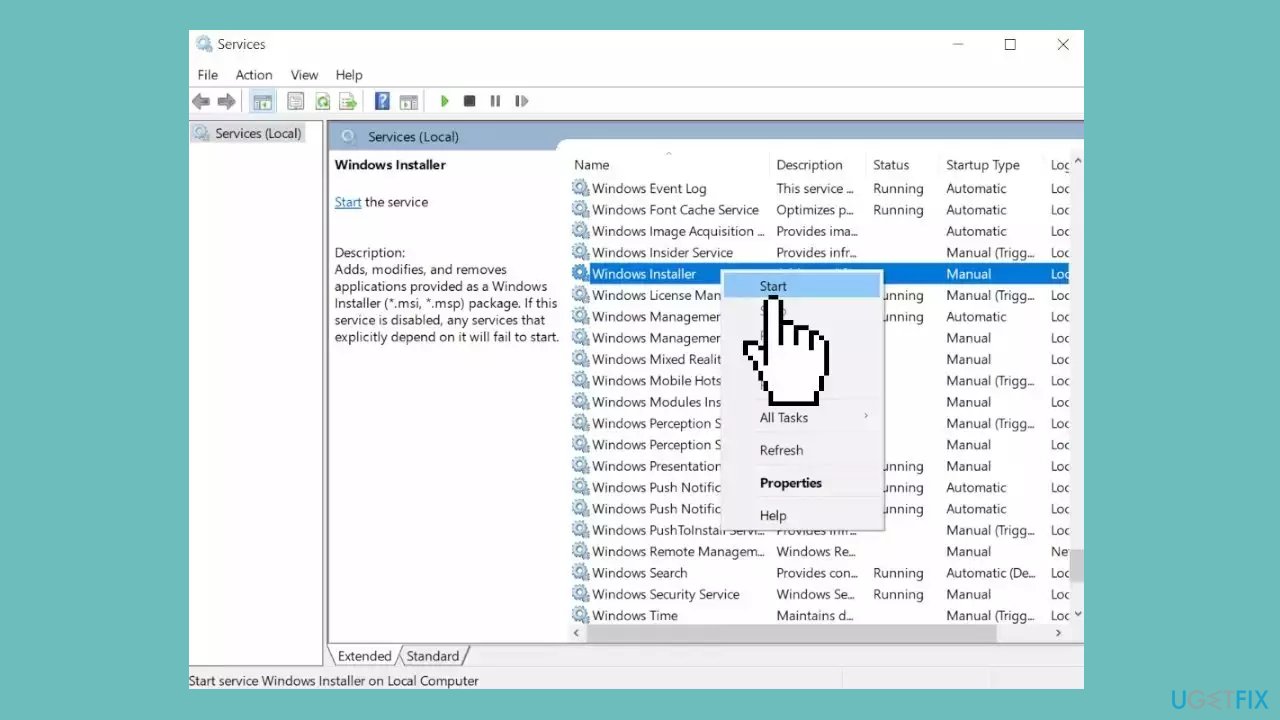
- Right-click on the Windows Installer service.
- Select Start from the context menu that appears.
- Close the Services window.
- Try running Windows Update again to check if the issue is resolved.
Method 4. Restart the Windows Update Service
- Press the Windows key + R to open the Run dialog.
- Type services.msc into the Run dialog's input box.
- Click OK or press Enter.
- The Services window will appear.
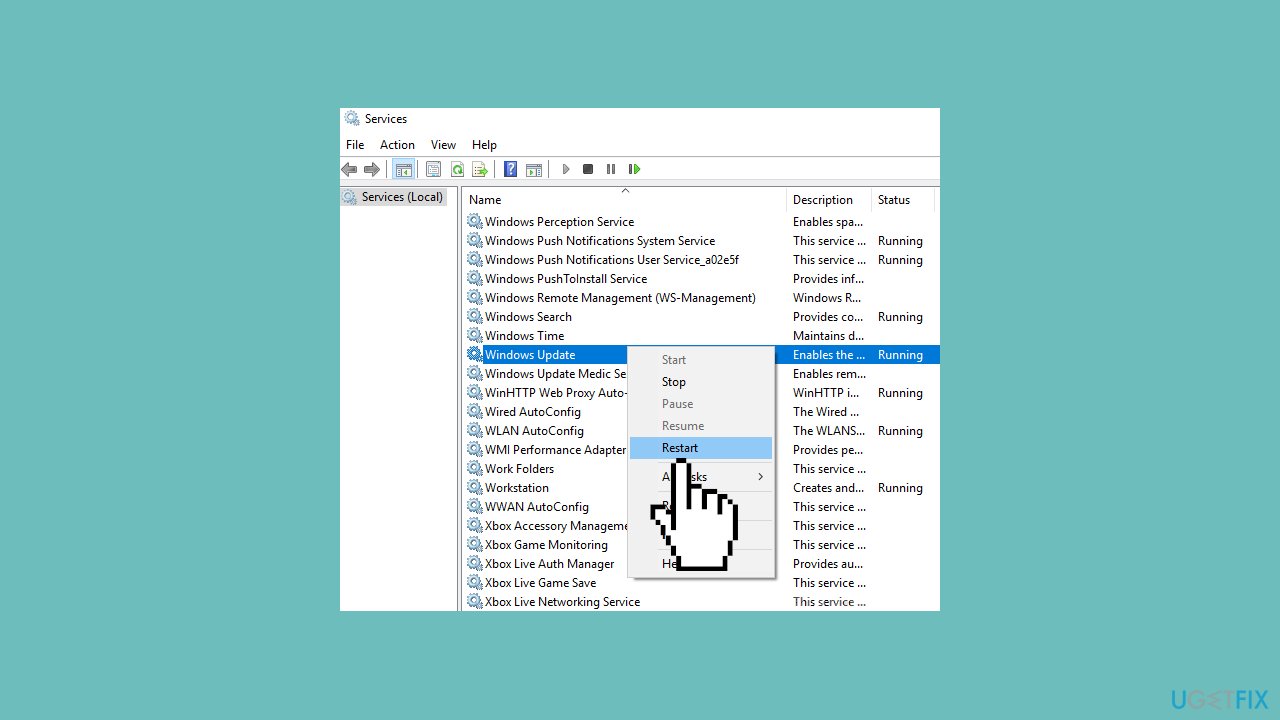
- Scroll through the list of services to locate the Windows Update Service.
- Right-click on the Windows Update Service from the list.
- Choose Restart from the context menu.
Method 5. Delete the Software Distribution Folder
- Open File Explorer and navigate to the C: drive.
- Open the Windows folder.
- Find the folder named Software Distribution and open it.
- Inside the Software Distribution folder, locate the Data Store and Download folders.
- Access the Data Store folder and the Download folder.
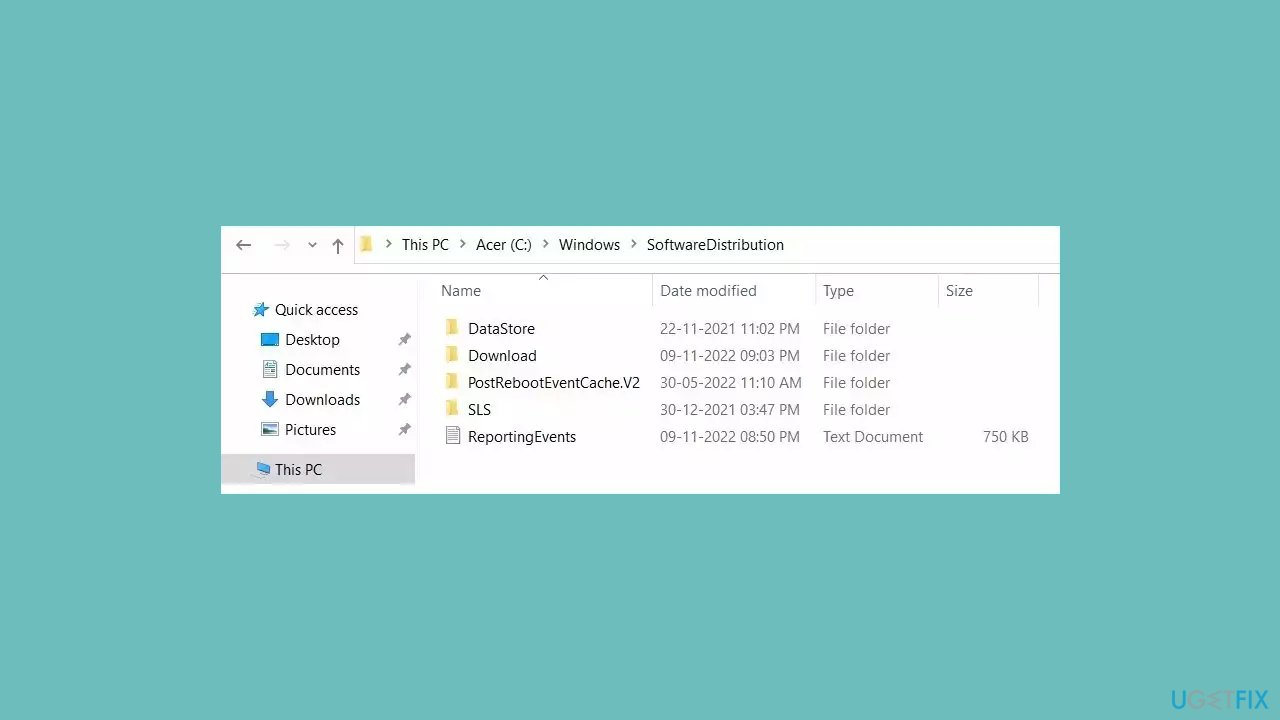
- Delete all the files and folders contained within the Data Store and Download folders.
- Restart your computer to apply the changes.
- After restarting, run Windows Update again to check for updates.
Method 6. Reset Windows Update Components
- Click on Search and type cmd.
- Select Run as administrator.
- When User account control appears, click on Yes.
- Copy and paste the following commands, one at a time, then press Enter after each:
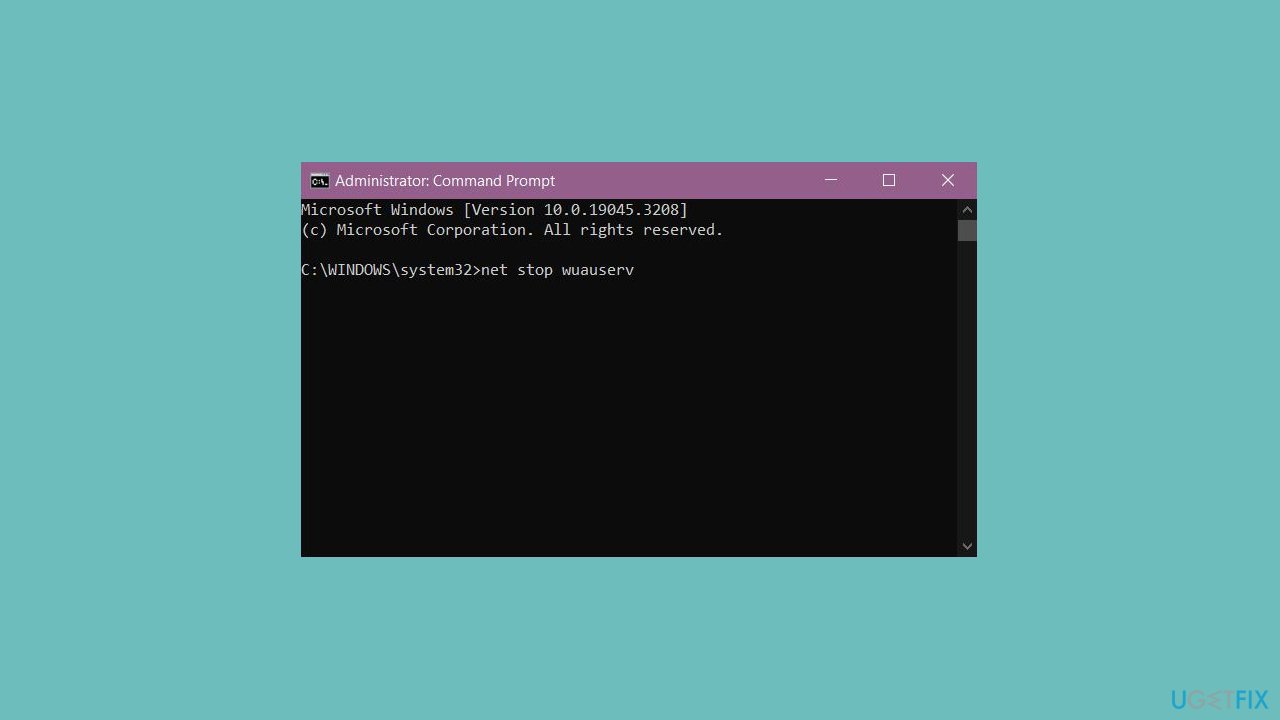
net stop bits
net stop wuauserv
net stop appidsvc
net stop cryptsvc
Del “%ALLUSERSPROFILE%\Application Data\Microsoft\Network\Downloader\*.*”
rmdir %systemroot%\SoftwareDistribution /S /Q
rmdir %systemroot%\system32\catroot2 /S /Q
regsvr32.exe /s atl.dll
regsvr32.exe /s urlmon.dll
regsvr32.exe /s mshtml.dll
netsh winsock reset
netsh winsock reset proxy
net start bits
net start wuauserv
net start appidsvc
net start cryptsvc
-
Restart your PC.
Method 7. Try Clean Boot
- Open the Search menu, type in system configuration, and press Enter.
- Under the Services tab, tick the Hide all Microsoft services box.
- Click on Disable all button.
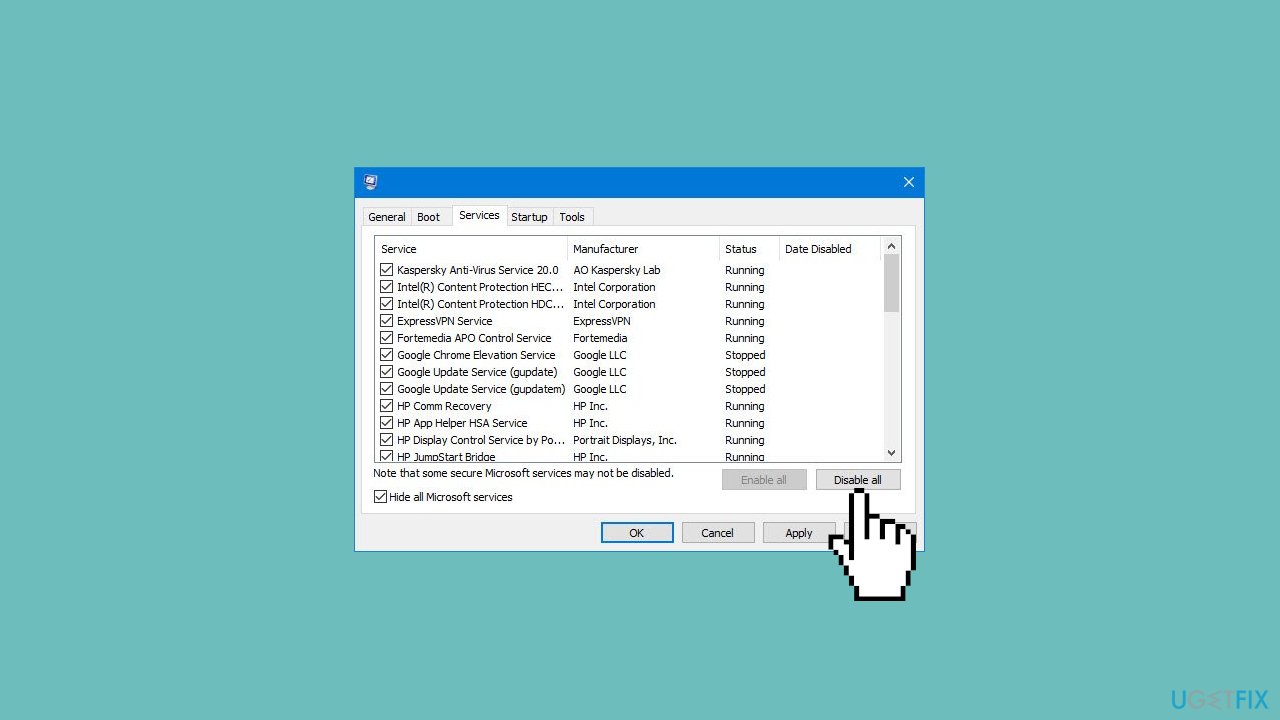
- Head over to the Startup tab and click on Open Task Manager.
- Select a third-party program and click on Disable at the top.
- Repeat this step to disable all third-party apps and programs.
- Restart your PC to enter the clean boot state and see if the issue persists.
- If the issue disappeared in the clean boot state, then you can be certain that a third-party app is causing it.
- Go through all recently installed apps or programs and remove them one by one.
Method 8. Use Microsoft Update Catalog
Whenever Windows updates fail to install automatically, you can always try doing it manually. First, you need to find out which KB number is relevant to you.
- Right-click Start button and pick Settings.
- Go to Update & Security.
- On the right, locate and click View update history.
- From the list, note the KB number that fails to install with the error code.
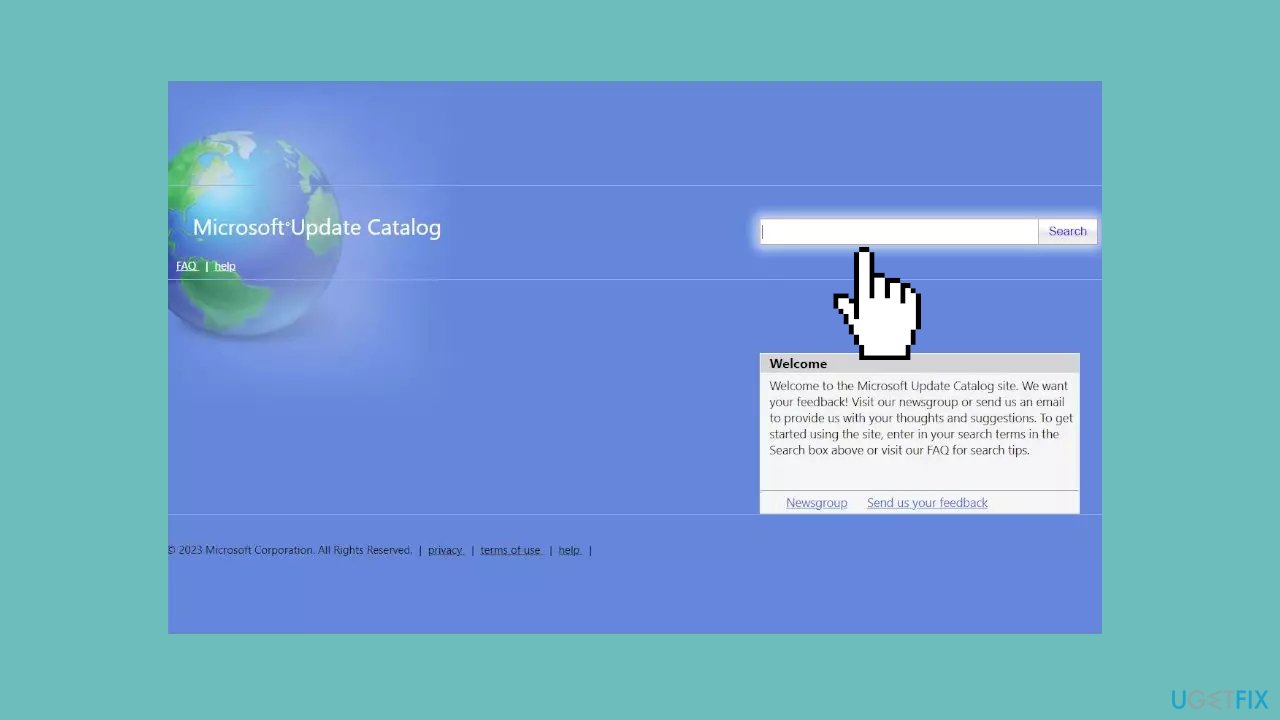
- Go to Microsoft Update Catalog page, type in the KB number, and press Search.
- Download the update and install it manually.
Bottom line
To fix the 0x80073D06 error, users can run the Windows Update Troubleshooter, check system files, and ensure all update components are functioning properly. If these steps do not resolve the issue, consider using a maintenance tool to address system errors.
Frequently asked questions
The error code 0x80073D06 typically indicates that there is a problem with the Windows Update process, often related to corrupted system files or issues with the Windows Store apps.
To resolve the 0x80073D06 error on Windows 10, try running the Windows Update Troubleshooter and resetting the Windows Store cache using the command 'wsreset'.
Yes, you can fix the 0x80073D06 error on Windows 11 by performing a System File Checker scan or a DISM command, both of which do not affect your personal files.




Report an issue
What's wrong with this guide? We review every report and update or remove content.
Report received — thank you. We'll review and fix it.
You need a free account to submit a report.
Be the first to comment