How to fix
USB-C displays not detected
on Windows
Resolve USB-C display detection issues on Windows 11 quickly and efficiently. Expert-tested solutions ensure a seamless experience, fixed in minutes.

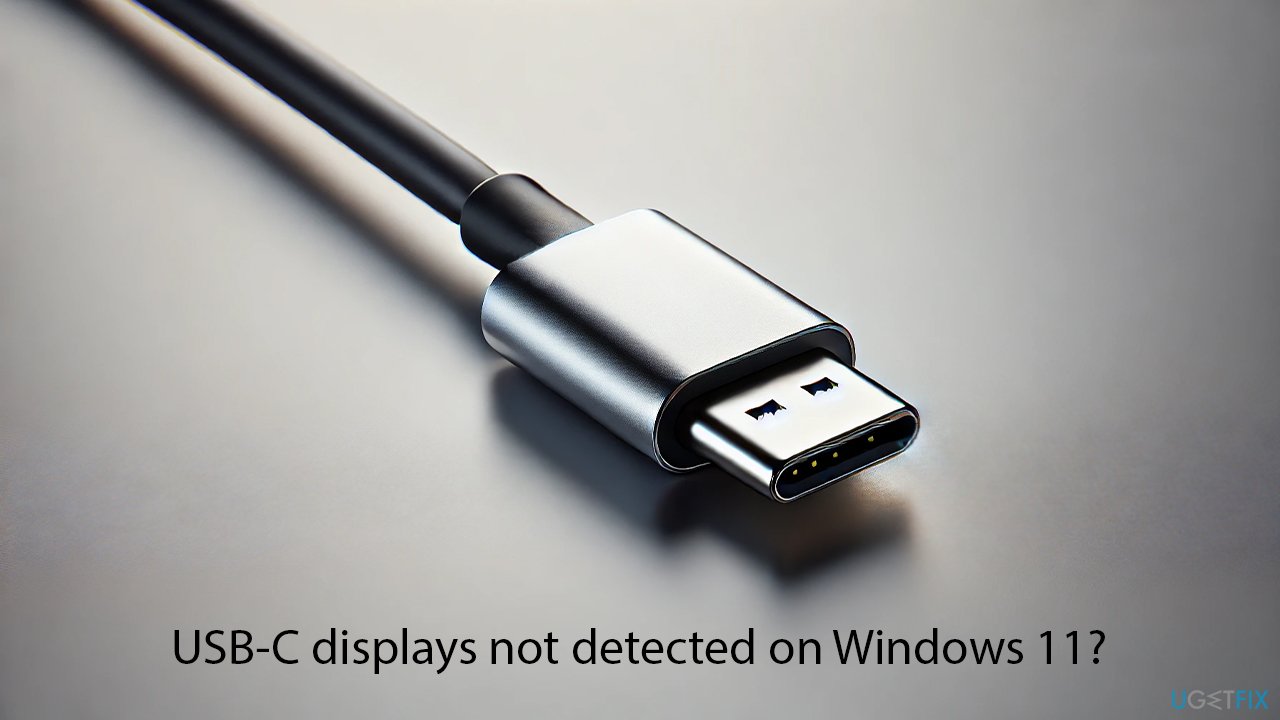
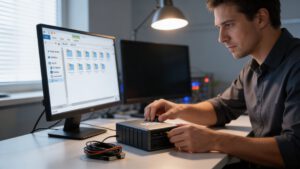
![[Fix] USB-C displays not detected on Windows 11](https://ugetfix.com/wp-content/uploads/articles/askit/fix-usb-c-displays-not-detected-on-windows-11-copy_en-768x432.jpg)
What causes [Fix] USB-C displays not detected on Windows 11?
- Issues with the connection
- Loose or faulty connectors
- Outdated or incompatible drivers
- Problems with the USB-C port
- Issues with the monitor
- Power-related issues
Repairs Windows system files, removes malware, and restores a clean OS state — without reinstalling.
I can't connect my Lenovo laptop to a monitor (it's a Phillips monitor) via the docking station (USB-C). It says Display not detected. Any advice for me?
USB-C displays are a really nice thing for connecting an extra monitor to your Windows 11 laptop or desktop, which helps you get more productive and organized at the same time. But it turns out that for some users their USB-C connected displays are not detected after connecting them to a laptop or docking station. In this regard, the issue may unexpectedly occur after installing Windows updates.
The problem usually arises in trying to connect an external monitor through the USB-C port and ending up with a "Not Detected" message across your screen. Many times, users experience this after their system has been updated or changed, which becomes very frustrating as the display will not connect.
There could be several reasons why this problem would arise: issues with the connection, loose or faulty connectors, outdated or incompatible drivers, or something wrong with the USB-C port or the monitor itself. Of course, some power-related issues can cause this problem when your system does not recognize the display properly.
One way to resolve this is by keeping the power button pressed for a minute during a computer shutdown. Resetting in this manner might show the monitor during the reboot sequence. Physical connections, drivers update, and proper functioning of both the USB-C port and the monitor are some other things to look at when troubleshooting this.
If those are not enough to resolve the issue, you can use the repair app by [d1], which will identify and fix underlying Windows problems that may be preventing the detection of the USB-C display - assuring that your external monitor works well with your Windows 11.
Fix 1. Power cycle your device
Power cycling could bring back the setting and cause detection of the monitor upon rebooting.
For notebooks:
If your laptop has a battery that can be removed:
- Power off the notebook.
- While the notebook is OFF, remove the battery.
- Press and hold the power button for 60 seconds.
- Reinsert the battery.
- Plug the AC adapter (power supply/charging cable) back into the notebook.
If your computer has a non-removable battery:
- Do not attempt to pry the battery out with any tool.
- Disconnect the AC adapter (power supply/charging cable) from the notebook.
- With the notebook turned OFF, press and hold the power button for 60 seconds.
- Release the button if the notebook powers on; continue holding the button if the screen turns white and the unit turns off once again.
- Plug the AC adapter back into the notebook.
For desktops:
- Turn off the desktop.
- Unplug the power cord from the back of the computer.
- Press and hold the power button for 60 seconds.
- Reinsert the power cable into the back end of the desktop.
Fix 2. Check physical connections
This will help ensure no issues arise where the display is not detected.
- Disconnect the USB-C cable from the monitor and laptop.
- Check the cable and ports for damages.
- The cable needs to be reconnected solidly into both the laptop and monitor.
Fix 3. Update the display drivers
The manual technique below may not always be effective, so you can either download the driver from the official website or use programs like [rev id="DriverFix"].
- Right-click on the Start button and select Device Manager from the menu.
- Expand the Display adapters section.
- Right-click on your graphics card and select Update driver.
- Pick Search automatically for drivers.
- If updates are found, allow them to install.
- Restart your computer after updating all necessary drivers.

Fix 4. Use a different USB-C port
Switching to the other port will be useful if one of them is not working well.
- Disconnect the display from the port.
- Now, connect it back to another free USB-C port on your laptop or docking station.
Fix 5. Attempt using a different cable or monitor
Faulty hardware can be the reason for preventing the detection of display.
- Try connecting the monitor with another USB-C cable.
- If there is an opportunity, connect a different USB-C monitor to your laptop in order to check if it gets detected.
Fix 6. Disable and enable the USB-C port
Disabling and then re-enabling the port can reset its functionality.
- Right-click on Start and select Device Manager.
- Expand the Universal Serial Bus controllers node.
- Right-click on USB root hub (USB-C) and select Disable device.
- Click Enable device after a few seconds.

Fix 7. Undo updates or reinstall recent updates
The latest Windows updates might not be able to work with USB-C displays.
- Type Control Panel in Windows search and press Enter.
- Select Programs > Uninstall a program.
- Click on View installed updates on the left side of the window.
- Uninstall the most recent update.
- Proceed with on-screen instructions.
- Don't forget to pause the update.

Bottom line
To resolve the issue of USB-C displays not being detected on Windows 11, try power cycling your device, checking physical connections, and updating drivers. If these steps do not work, consider using a repair app to identify and fix underlying Windows problems.
Frequently asked questions
First, check your USB-C cable and ensure it's securely connected to both the display and your PC. If the issue persists, try updating your graphics drivers through Device Manager.
You can start by testing the USB-C port with another device to confirm it's functioning properly. Additionally, check for any available Windows updates that may resolve compatibility issues.
Yes, go to Display Settings and ensure that the display is set to 'Extend' or 'Duplicate' under Multiple Displays. Also, check the Projection settings by pressing Windows + P.
Report an issue
What's wrong with this guide? We review every report and update or remove content.
Report received — thank you. We'll review and fix it.
You need a free account to submit a report.
Be the first to comment