How to fix
Windows update error 0x800f0904
on Windows
Resolve Windows update error 0x800f0904 quickly with expert-tested solutions. Get your system running smoothly again—zero traces left!

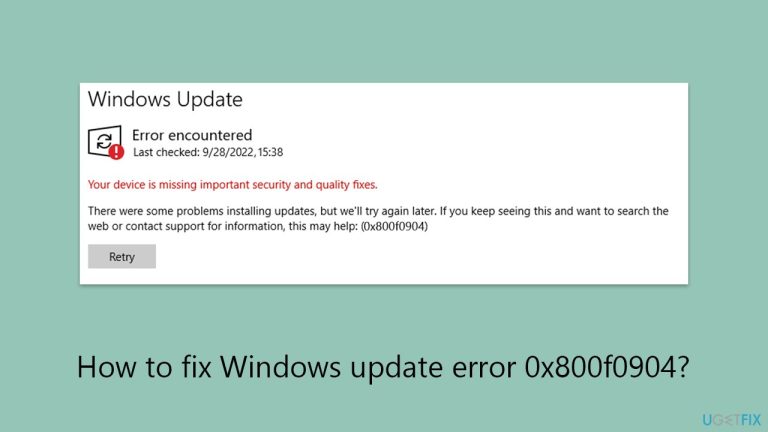
What causes How to fix Windows update error 0x800f0904?
- Missing or corrupted essential system files
- Earlier updates not installed successfully
- Conflicts among Windows Update components
- Low disk space
- Disk base integrity issues
Repairs Windows system files, removes malware, and restores a clean OS state — without reinstalling.
Windows keeps failing to install the latest update with error 0x800f0904. I've restarted the system a few times and even ran the troubleshooter, but nothing works. I’m not sure if it’s a network issue or something wrong with my files.
When trying to install a cumulative or feature update, some Windows users are confronted with update error 0x800f0904 that suddenly and automatically rolls back the process. What is annoying about this error is that it mostly does not give a fine explanation, and users will be left guessing if the problem is hardware, system, or network related.
In the majority of instances, error 0x800f0904 is caused by issues encountered during the preparation or installation stage of the updates. It might be caused if essential system files are missing or corrupted, or if the earlier updates were not installed successfully and the system remained in a partially updated state. In most cases, this error would appear while installing optional features or language packs, especially on previously tailored or trimmed systems using administrative tools or cleanup software.
And yet another possible suspect is a conflict among the Windows Update components. These processes can hang, get out of sync, or be incorrectly configured, with the outcome being failed updates when otherwise the rest of the system looks normal. Low disk space or disk base integrity issues can also be factors, especially if temporary install files can't be created or handled effectively.
To avoid Windows update failure 0x800f0904, one must remove file corruption, system configuration issues, or storage-related barriers. Instructions in detail regarding these and other remedies will be provided in the following steps. For recurring or hard-to-diagnose issues, the [d1] repair tool can also help detect and remedy what is preventing the update from completing successfully.
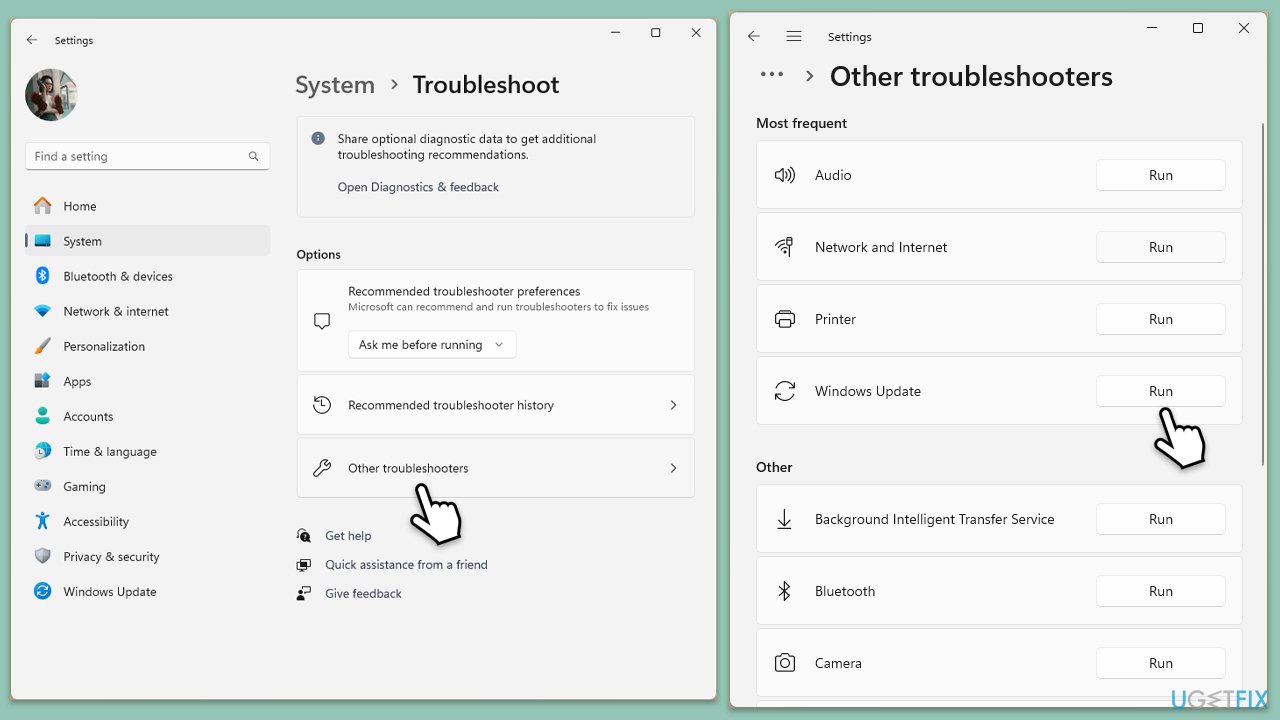
Fix 1. Run the Windows Update troubleshooter
This built-in tool automatically scans for common problems that prevent updates from installing successfully.
- Type Troubleshoot into the Windows search bar and press Enter.
- Next, on the right side of the window, select Additional troubleshooters/Other troubleshooters.
- Scroll down to locate the Windows update option and click on it.
- Click on Run the troubleshooter/Run and allow the process to complete.
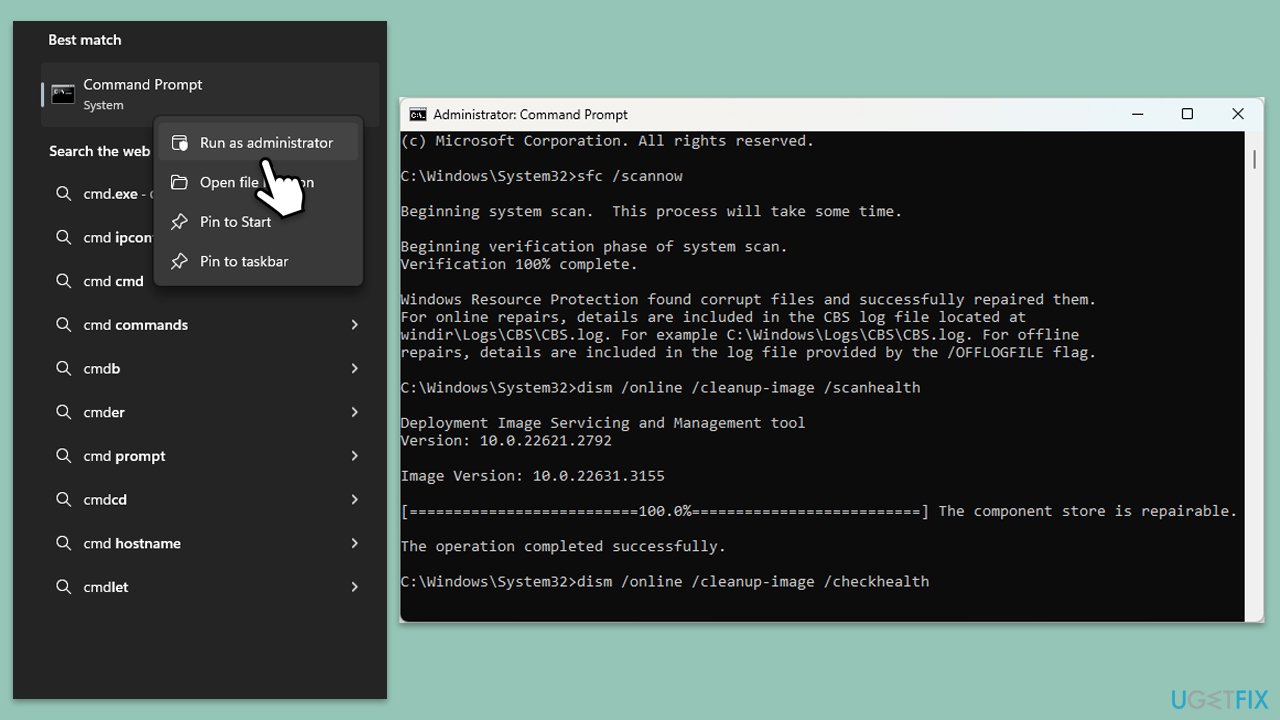
Fix 2. Perform a system file check
Corrupted system files can interfere with the update process - you can address this by running certain commands in an elevated Command Prompt.
- Type cmd in Windows search.
- Right-click on Command Prompt and select Run as administrator.
- When User Account Control window shows up, click Yes.
- Paste the following command into the new window:
sfc /scannow - Press Enter and wait till the scan is executed.
- As soon as the scan finishes, Windows will report whether integrity violations were found and if they could be fixed. Regardless of the outcome, use these commands next, pressing Enter after each:
DISM /Online /Cleanup-Image /CheckHealth
DISM /Online /Cleanup-Image /ScanHealth
DISM /Online /Cleanup-Image /RestoreHealth - (Note: if you get an error executing this last command, add /Source:C:\RepairSource\Windows /LimitAccess to it and try again).
- Close down the Command Prompt and restart your system.
Fix 3. Free up disk space
Lack of storage can cause update errors if temporary files cannot be created.
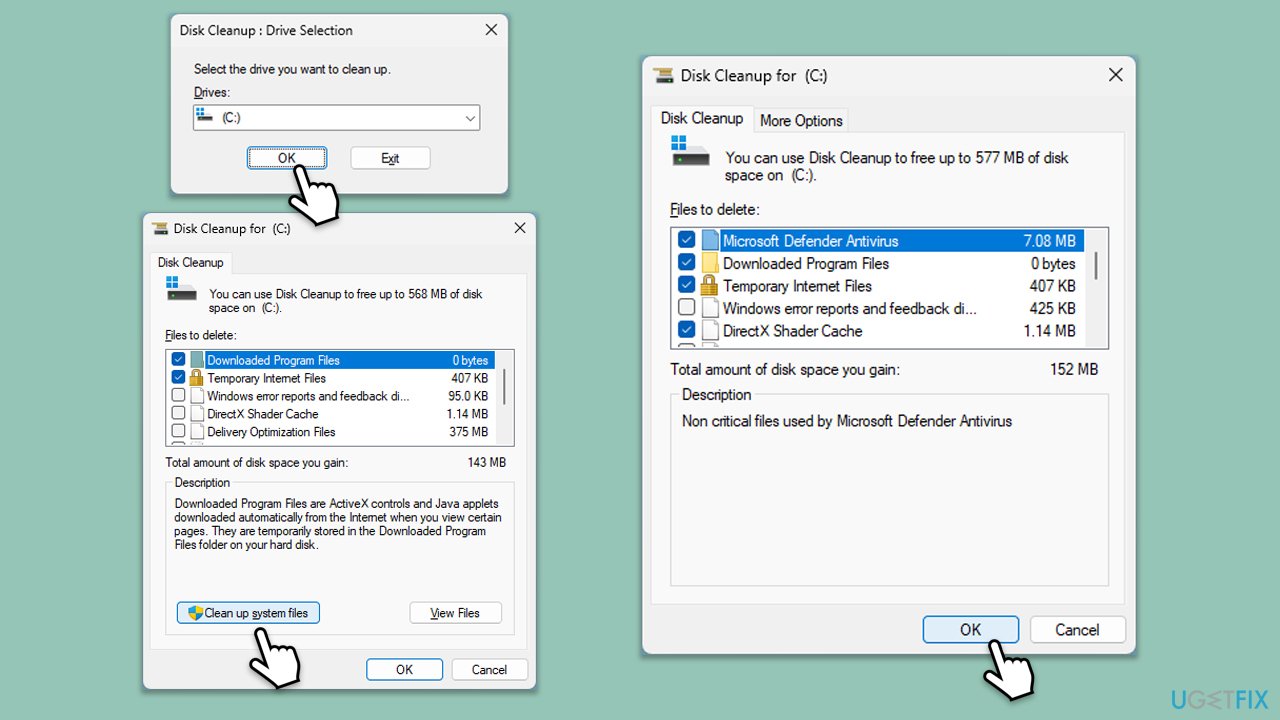
- Type Disk Cleanup in Windows search and hit Enter.
- If your Windows is installed on drive C, pick it from the list (it should be by default) and press OK.
- Click Clean up system files.
- Select your main disk again and click OK.
- Here, select the largest portions of the data used - these typically include Temporary Internet Files, Windows Update, Temporary Files, Recycle Bin, Delivery Optimization Files, and others.
- Click OK - the process should be finished shortly.
Fix 4. Reset Windows Update components
Resetting update components clears outdated cache and fixes stuck services.
- Open Command Prompt as administrator.
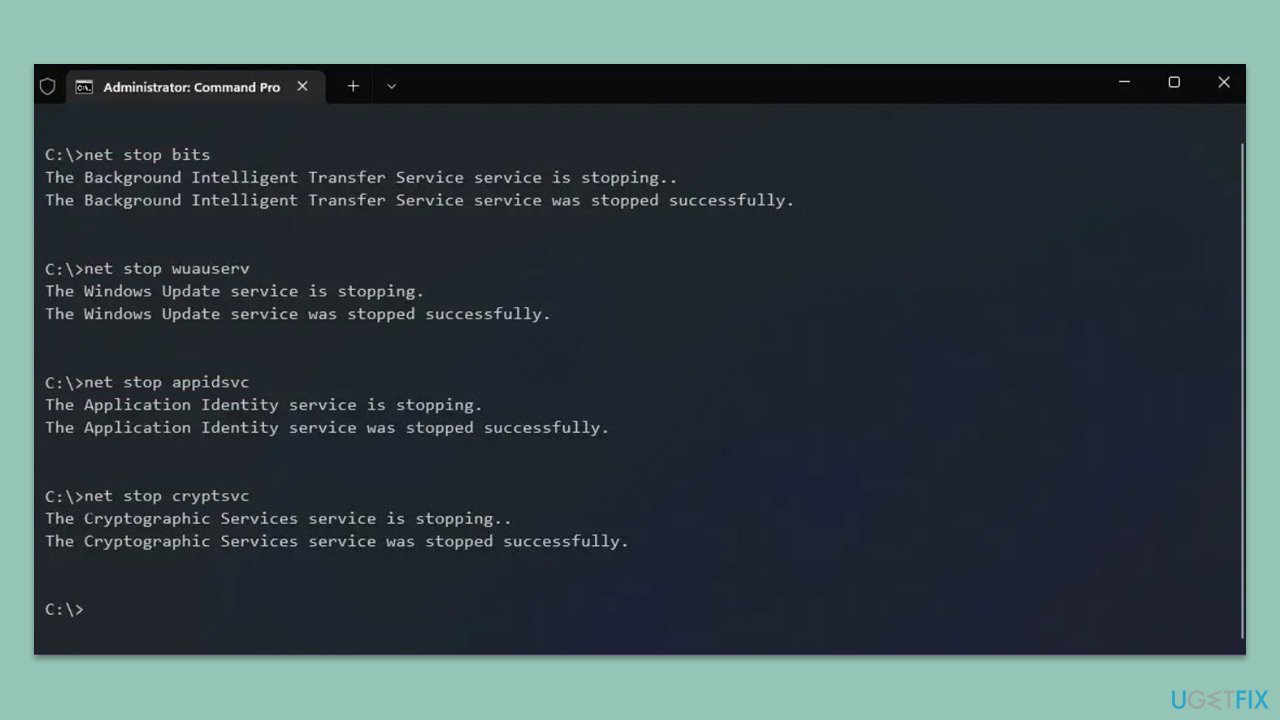
- Stop the Windows Update-related services by running the following commands one at a time, pressing Enter after each one:
net stop wuauserv
net stop cryptSvc
net stop bits
net stop msiserver - Rename the SoftwareDistribution and Catroot2 folders by running the following commands:
ren C:\Windows\SoftwareDistribution SoftwareDistribution.old
ren C:\Windows\System32\catroot2 Catroot2.old
Note: If your Windows installation is not on the C drive, replace "C" with the appropriate drive letter. - Restart the Windows Update-related services by running the following commands:
net start wuauserv
net start cryptSvc
net start bits
net start msiserver - Restart your computer.
Fix 5. Enable the Windows Modules Installer
This service helps install updates and features. If disabled, it may trigger error 0x800f0904.
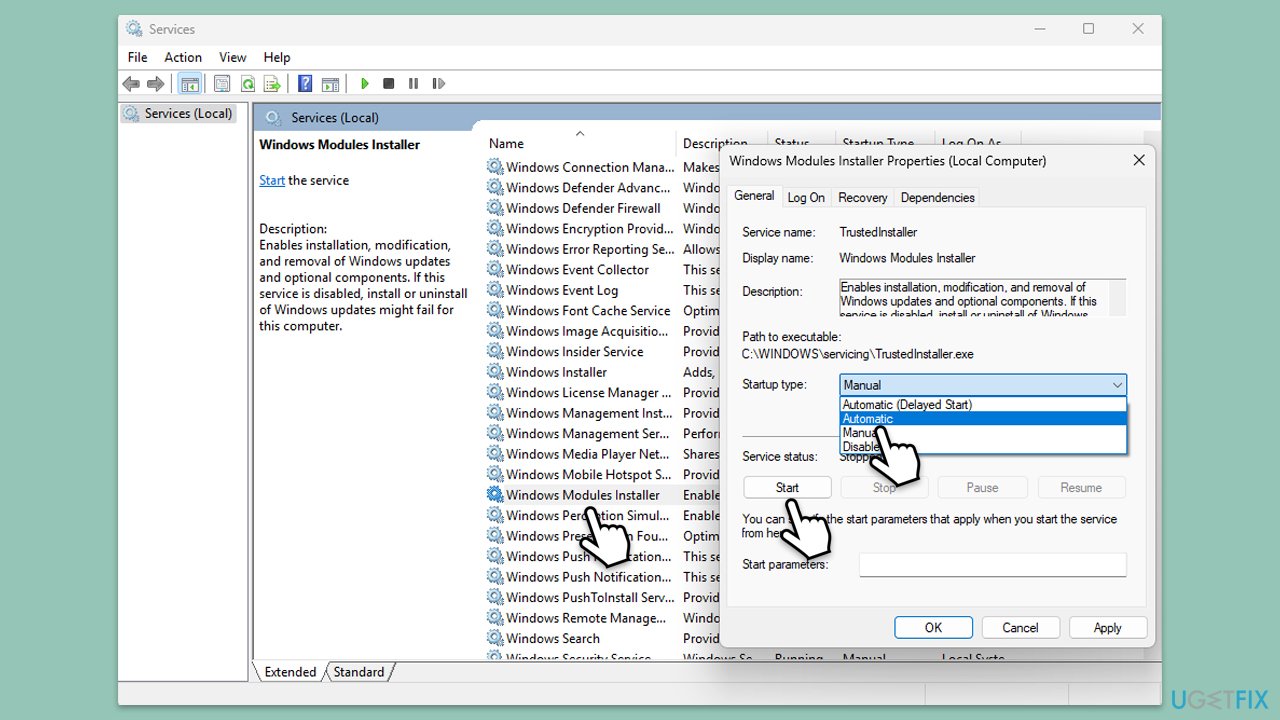
- Type in Services in Windows search and hit Enter.
- Find Windows Modules Installer.
- If it is already running, right-click and pick Restart.
- If the service is not running, double-click it, and select Automatic under the Startup type from the drop-down menu.
- Click Start, Apply, and OK.
- Repeat this process for Windows Update Service, Background Intelligent Transfer Service (BITS), and Cryptographic services.
Fix 6. Install update manually from Microsoft Update Catalog
If automatic updates fail, you can manually download the update package.
- Type in Updates in Windows search and press Enter.
- Select View update history.
- Find the update that failed with the 0x800f0904 error and copy its KB number.
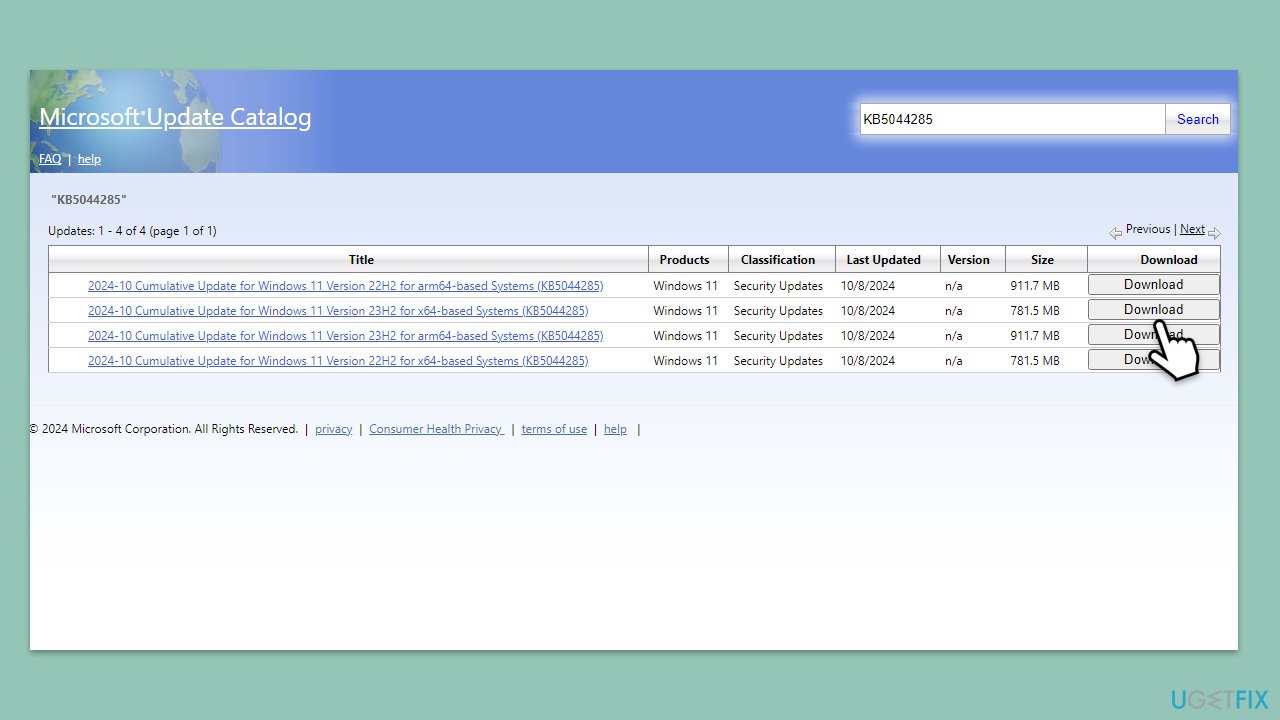
- Open your browser and go to Microsoft Update Catalog.
- Within the search bar, type in the KB number and click Search.
- Find the correct version of the update for your operating system (to check this, right-click on Start and pick System. Under Device specifications and check the System type) and click Download.
- Use on-screen guidelines to finish the installation process and restart your system.
Fix 7. Perform a Clean Boot before updating
Clean boot disables third-party services that may interfere with system processes.
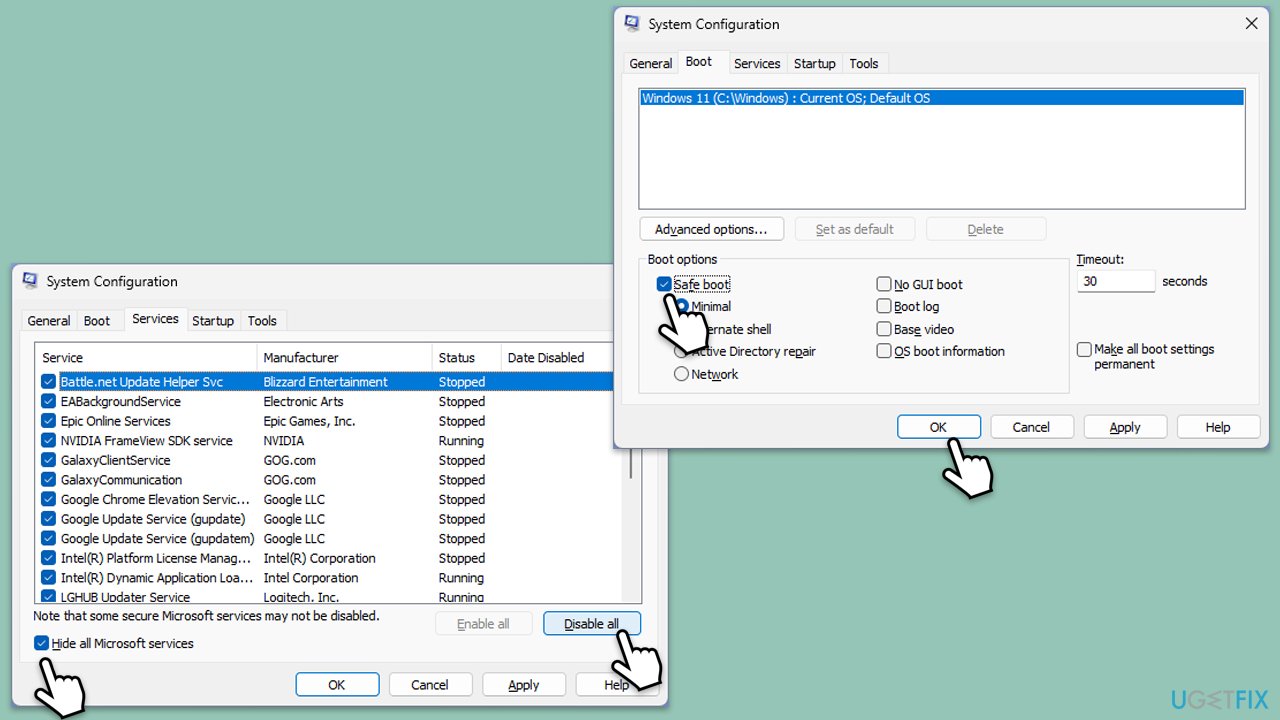
- Type msconfig in Windows Search and press Enter to open the System Configuration window.
- Click on the Services tab and check the Hide all Microsoft Services box.
- Click Disable all to disable non-Microsoft services, then click the Startup tab.
- Open the Task Manager, disable all startup items, and close the Task Manager.
- Go to the Boot tab and mark the Safe boot option.
- Click OK on the System Configuration window and restart your computer.
- Try installing the update again.
Fix 8. Use Media Creation Tool
- Visit the official Microsoft website and download Windows 10 installation media (Windows 11 version).
- Double-click the installer, select Yes when UAC shows up, and agree to the terms.
- Launch the installer.
- Agree to the terms and click Next.
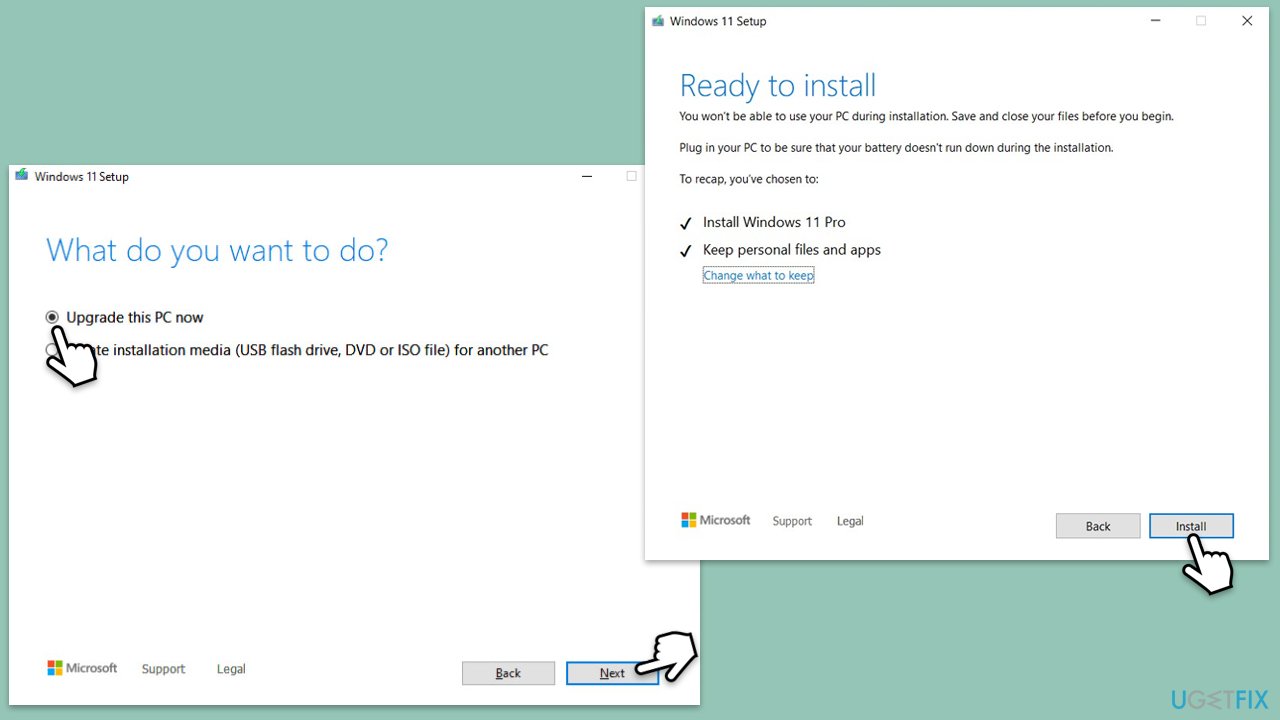
- Select Upgrade this PC now and click Next.
- Windows will start downloading the needed files.
- Agree to terms once again and click Next.
- Before installing, make sure that you are happy with your choices (otherwise, you can click Change what to keep option).
- Finally, click Install to begin the upgrade process.
Bottom line
To fix Windows update error 0x800f0904, you can run the Windows Update troubleshooter, check for disk space issues, and ensure all previous updates are installed correctly. If these steps do not resolve the issue, consider using a repair tool to detect and remedy any underlying problems.
Frequently asked questions
Error 0x800f0904 typically indicates that a necessary update file is missing or corrupted, preventing Windows from completing the update process.
To resolve this error, you can try running the Windows Update Troubleshooter and ensuring that your system files are intact by using the System File Checker tool.
Yes, you can manually fix this error by resetting the Windows Update components or by downloading the latest update manually from the Microsoft Update Catalog.




Report an issue
What's wrong with this guide? We review every report and update or remove content.
Report received — thank you. We'll review and fix it.
You need a free account to submit a report.
Be the first to comment