How to fix
Can’t set Chrome as default browser
on Windows
Resolve issues setting Chrome as your default browser in Windows 10 or 11 effortlessly. Get expert-tested solutions for a smooth experience.

![[Fix] Can’t set Chrome as default browser in Windows](https://ugetfix.com/wp-content/uploads/articles/askit/fix-cant-set-chrome-as-default-browser-in-windows_en-768x432.jpg)
What causes [Fix] Can’t set Chrome as default browser in Windows?
- Default browser settings changed unexpectedly
- Recent Windows update prioritizing Microsoft Edge
- Control Panel settings not updating correctly
- User attempts to set Chrome as default but it reverts
- Icon for Chrome disappears in Control Panel
Repairs Windows system files, removes malware, and restores a clean OS state — without reinstalling.
Something happened to my default browser settings, and I can't seem to figure out how to revert them. Chrome used to be my default browser, and it is no longer the case since a few days ago, and when I try to click "Make default," nothing happens, and I get the prompt again I open the browser. Any clue what is going on?
Google Chrome is a web browser developed by Google that was first released in 2008. Since then, it has become the most popular browser, with over 60% of desktop and mobile users using Chrome to access the internet. This popularity can be attributed to its fast performance, user-friendly interface, and extensive range of extensions and apps.
By default, web browsers like Chrome offer an option for users to set them as the default browser. This means that when a user clicks on a link, the browser automatically opens and loads the webpage. In Windows, the default browser is usually set in the Control Panel or Settings app. However, some Windows users have reported that they are unable to set Chrome as their default browser.
The issue seems to be specific to Windows 10, where Microsoft Edge, the default browser, is given priority over other browsers. Users who attempt to set Chrome as their default browser notice that the icon in the Control Panel disappears after they click the button to make it the default. This leaves Microsoft Edge as the default browser, even though the user has attempted to change it.
The cause of this issue is unknown, but some speculate that it is due to a recent Windows update that prioritizes Microsoft Edge. This has been frustrating for users who prefer to use Chrome and want it to be their default browser.
To work around this issue, some users have found success in setting Chrome as their default browser through the browser settings rather than through the Windows settings. If that does not work, there are several other solutions you could try, e.g., uninstall the latest Windows update if it was caused by it.
Below we provide several methods to fix the issue where users can't set Chrome as a default browser. We recommend checking the system with a powerful PC repair tool [d1] to ensure no underlying issues are causing this.
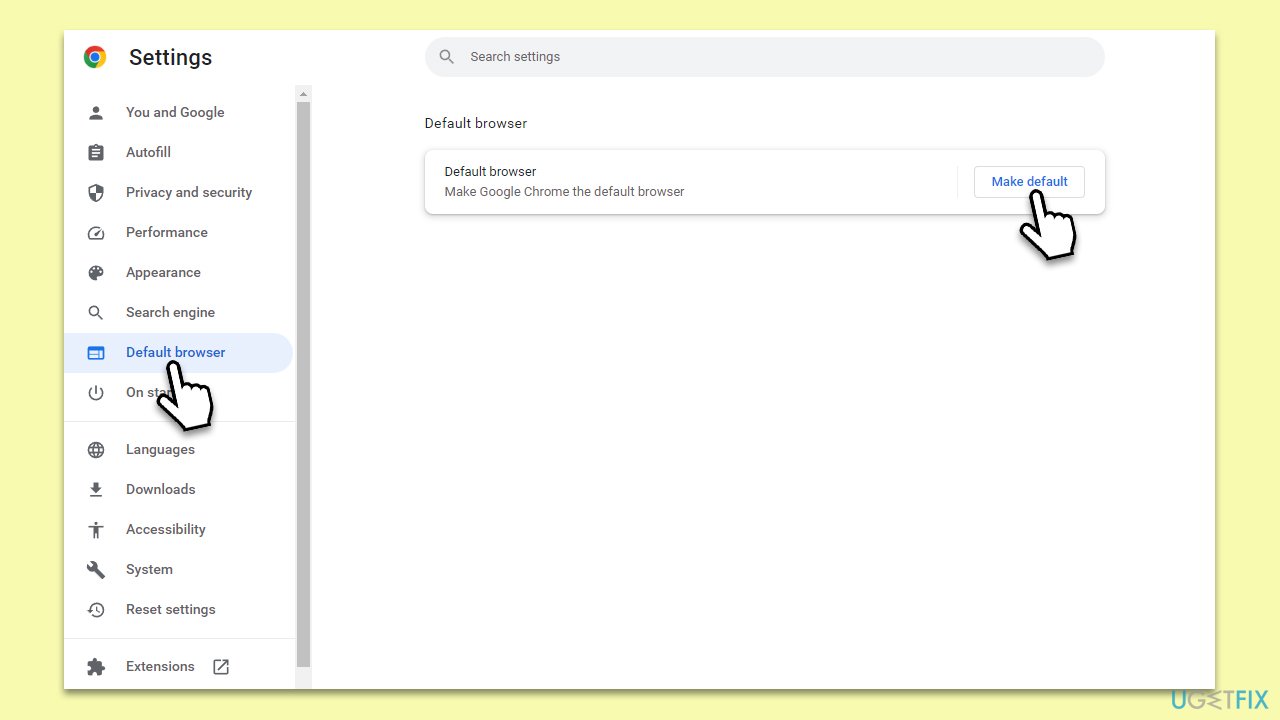
Fix 1. Set Chrome as default via browser settings
If you can't set Chrome as the default browser via the prompt or Control Panel, you can try doing so via browser settings:
- Click three vertical dots in the top-right corner of the browser and select Settings.
- On the left side, click Default browser.
- Click Make default.
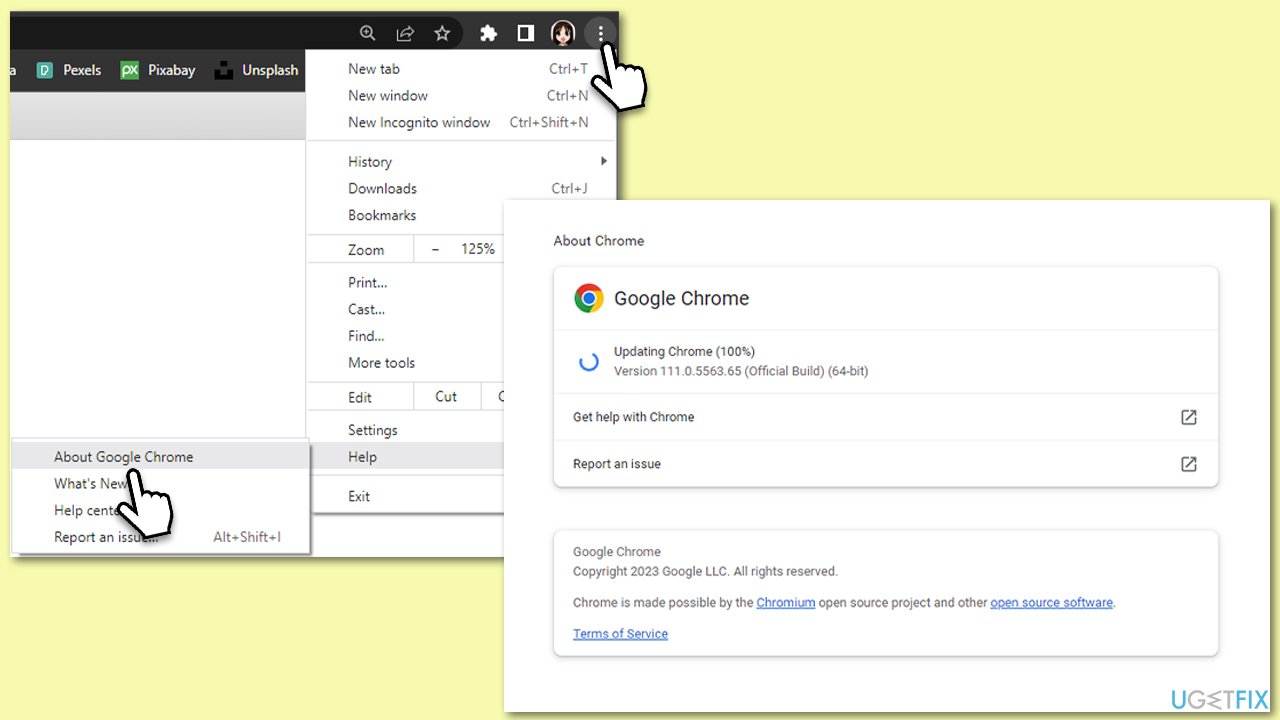
Fix 2. Make sure Chrome is up to date
General bugs can be fixed by applying the latest updates, so make sure Chrome is updated.
- Click on the three vertical dots in the top-right corner of the browser.
- Select Help > About Google Chrome.
- Wait till the browser is updated and click Relaunch.
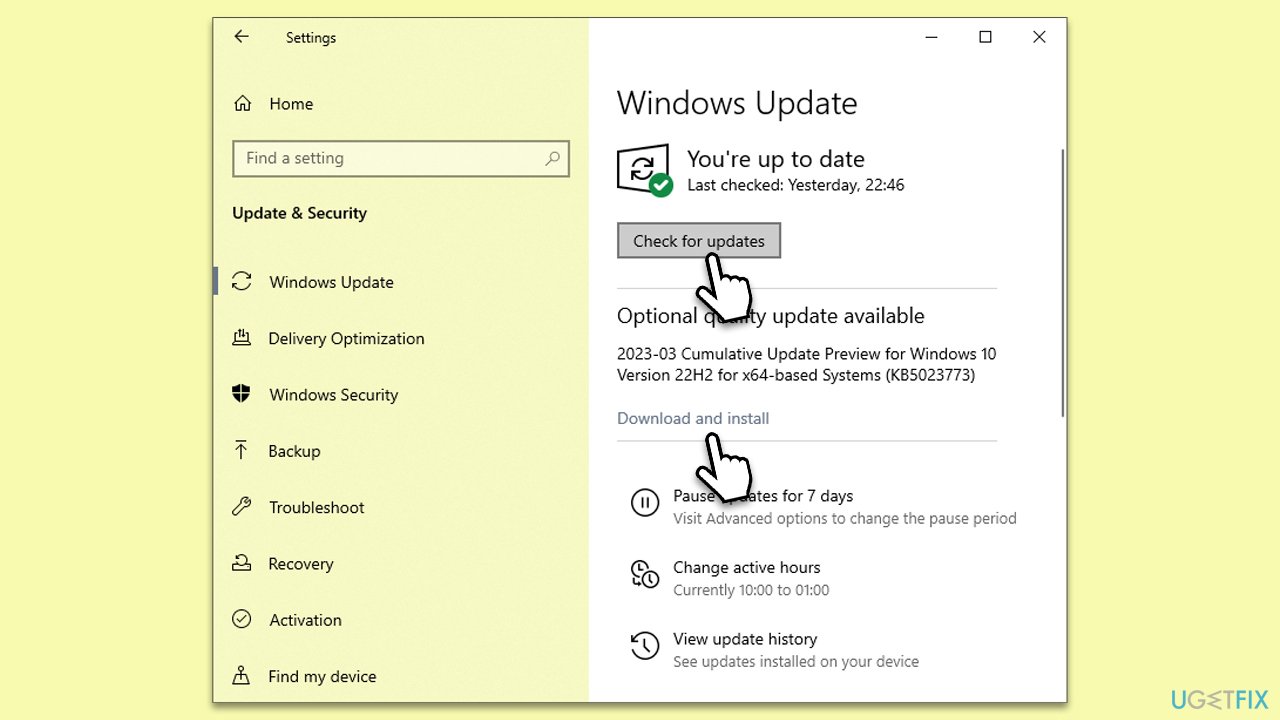
Fix 3. Update Windows
Similarly to Chrome, Windows can get bugged for many reasons, and Microsoft ships bug fixes regularly.
- Type Updates in Windows search and press Enter.
- In this window, click Check for updates.
- If optional updates are available, install them too.
- When everything is installed, restart your system.
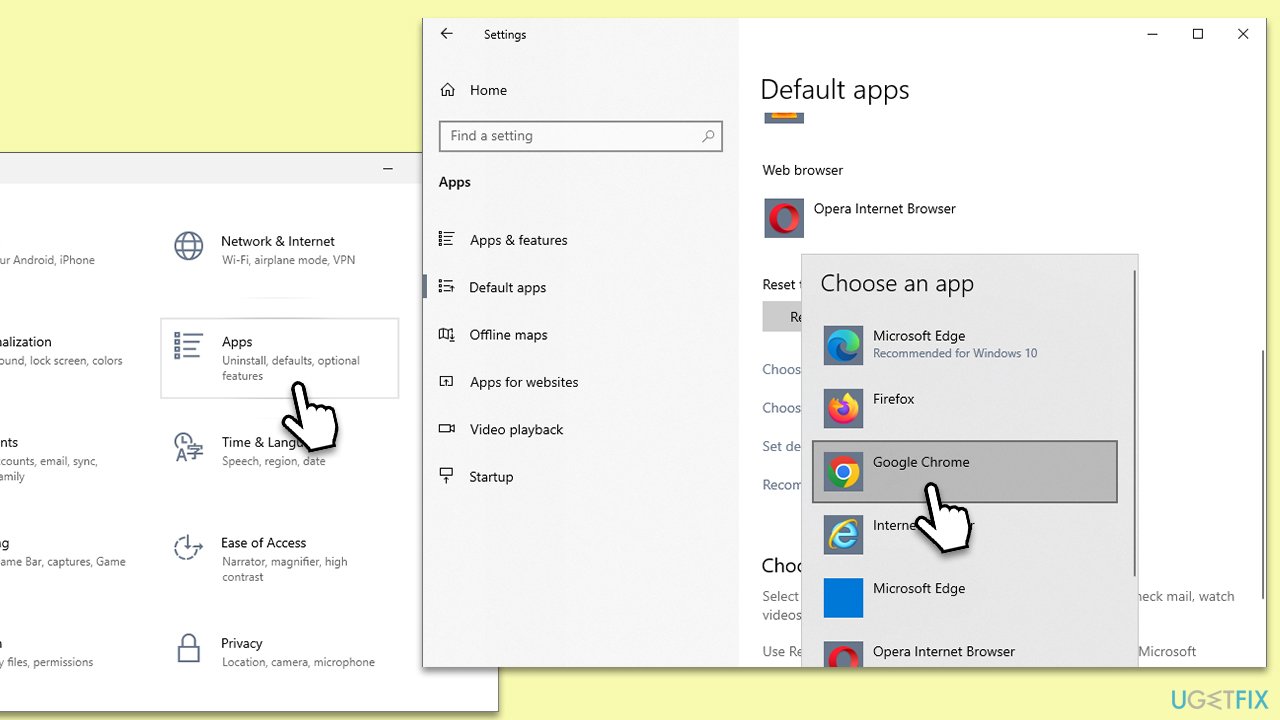
Fix 4. Try using the Settings app
- Click on Start and pick Settings.
- Go to the Apps section and pick Default apps.
- Scroll down to locate the Web browser.
- Click on the current option and select Google Chrome.
Fix 5. Use elevated Command Prompt
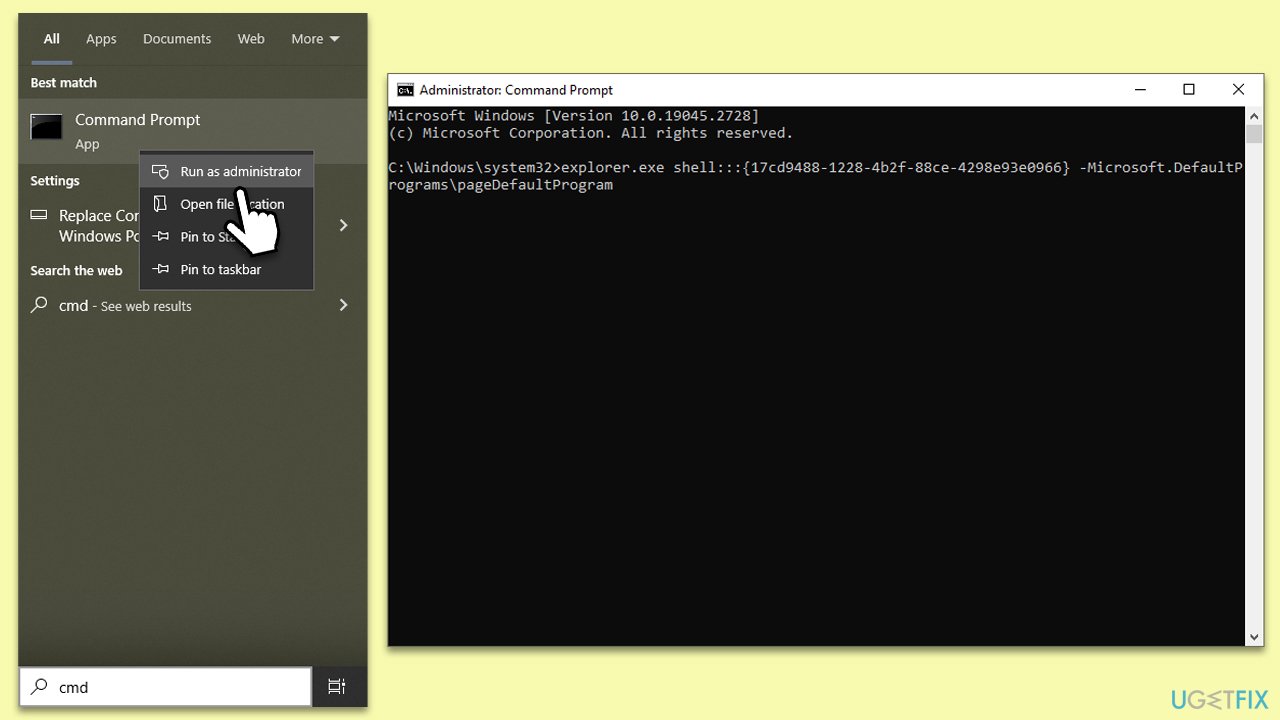
You should run Command Prompt as administrator and execute a command to change the default browser, which should force Windows to obey.
- Type cmd in Windows search.
- Right-click on the Command Prompt result and select Run as administrator.
- When User Account Control shows up, click Yes.
- In the new window, copy and paste the following command and press Enter:
explorer.exe shell:::{17cd9488-1228-4b2f-88ce-4298e93e0966} -Microsoft.DefaultPrograms\pageDefaultProgram - Close down the window and see if the problem is solved.
Fix 6. Create a new account
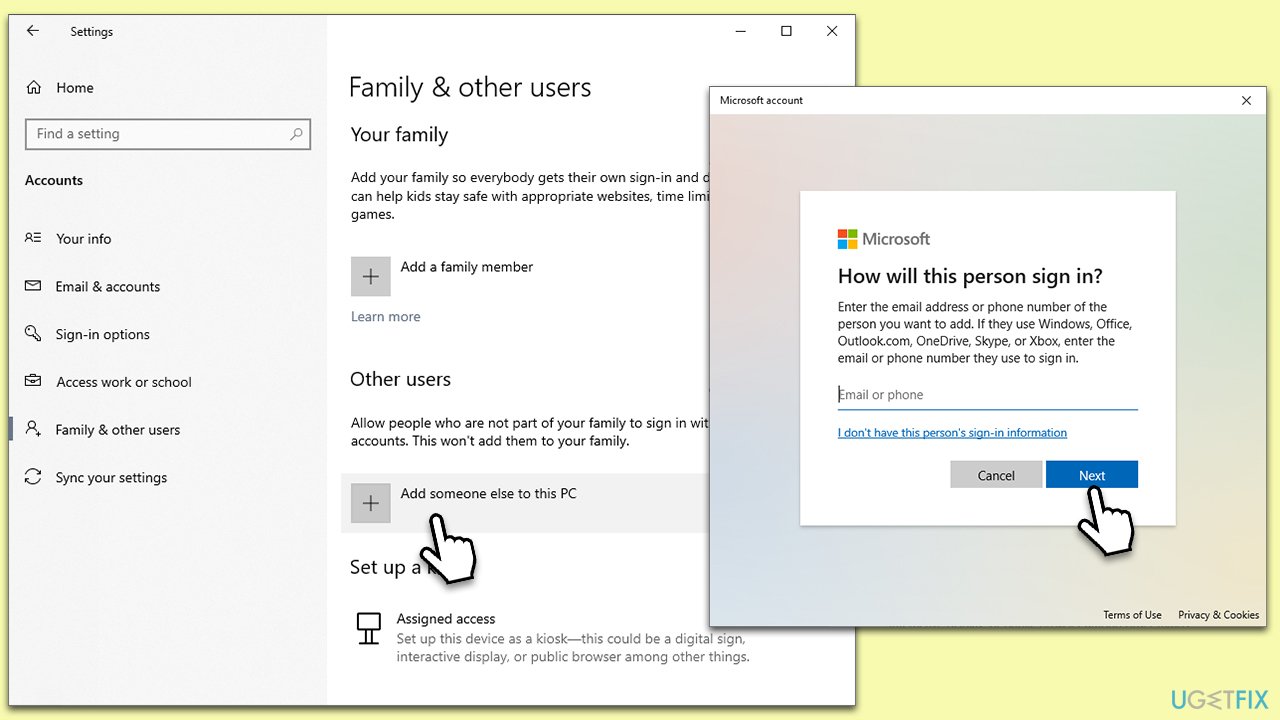
Creating a new user account helped users to solve this issue. Here's how:
- Right-click on Start and pick Settings.
- Go to the Accounts section.
- Select Family & other users on the left.
- Under Other users, click Add someone else to this PC.
- Pick I don't have this person's sign-in information > Add a user without a Microsoft account.
- Enter the required information and click Next.
- Reboot your system once done and try using the new account.
Bottom line
To fix the issue of not being able to set Chrome as the default browser, users can try setting it through the browser settings instead of Windows settings. If that does not work, consider uninstalling the latest Windows update that may have caused the problem. If none of these solutions work, further troubleshooting may be necessary.
Frequently asked questions
This issue may occur due to incorrect settings or conflicts with other browsers. Make sure to check the default apps settings in Windows 10 and select Chrome as your default browser manually.
If you're unable to set Chrome as the default browser in Windows 11, try resetting the default app settings or reinstalling Chrome to resolve potential conflicts.
You can fix this error by ensuring that Chrome is updated to the latest version and by checking for any pending Windows updates that might affect app settings.




Report an issue
What's wrong with this guide? We review every report and update or remove content.
Report received — thank you. We'll review and fix it.
You need a free account to submit a report.
Be the first to comment