How to fix
“A driver can’t load on this device” error
on Windows
Resolve the "A driver can’t load on this device" error in Windows 10 and 11 quickly. Expert-tested solutions ensure smooth performance, fixed in minutes.

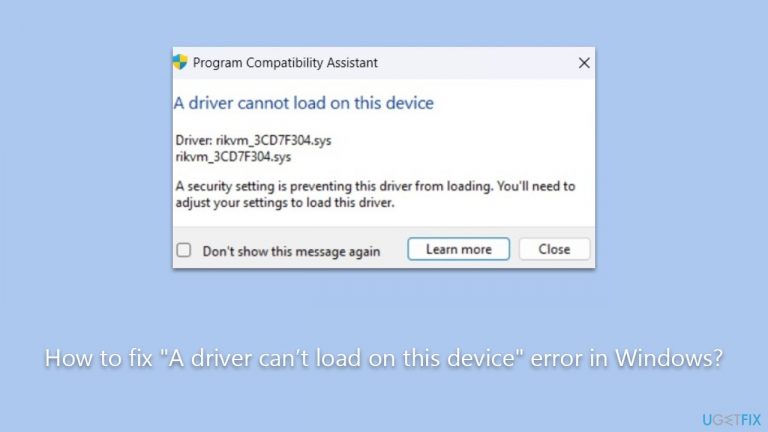
What causes How to fix “A driver can’t load on this device” error in Windows?
- Drivers can become outdated
- Drivers can get corrupted
- Incorrect driver installation for another version of Windows
- Malicious software can alter or corrupt driver files
- Driver conflicts with other installed software
Repairs Windows system files, removes malware, and restores a clean OS state — without reinstalling.
Hi. Every time I boot my PC, I receive an error that says "A driver can’t load on this device" from Program Compatibility Assistant. The related driver is cpuz136_x64.sys. I just close the error message and continue using Windows with no problems, although I'd like to get rid of this issue.
Drivers are integral components within the Windows operating system. They act as intermediaries, facilitating communication between the operating system and the computer hardware. By translating high-level operating system commands into instructions that hardware devices can understand, drivers play a pivotal role in ensuring that all connected components function harmoniously. In essence, they serve as the language translators for the software-hardware conversation.
However, as crucial as drivers are to the overall performance and stability of a Windows system, they are not without their share of challenges. Anomalies related to drivers can cause various system issues, one of which is the "A driver can’t load on this device" error, which r is typically flagged by the Program Compatibility Assistant, a Windows tool designed to identify and address potential software compatibility issues.
When this error surfaces, it usually points to a particular problematic driver. For instance, it might reference driver files such as cpuz136_x64.sys, rikvm_3cd7F304.sys, or HWiNFO64.sys.
There are multiple reasons you might encounter the "A driver can’t load on this device" error. Over time, drivers can become outdated or get corrupted, leading to compatibility problems with newer software or system updates.
Sometimes, you might mistakenly install a driver meant for another version of Windows or another device altogether, leading to mismatches that result in this error. Malicious software can also alter or corrupt driver files, causing them to malfunction. Additionally, the error can arise from conflicts between a driver and another software installed on your system.

If you encounter the "A driver can’t load on this device" error, it's essential to pinpoint the root cause to apply the most appropriate solution - detailed instructions will be furnished below, guiding you through the troubleshooting and rectification process. Lastly, for an all-encompassing solution, consider using the [d1] PC repair tool, a dedicated software designed to address a myriad of PC-related issues.
Fix 1. Disable the Memory Integrity feature
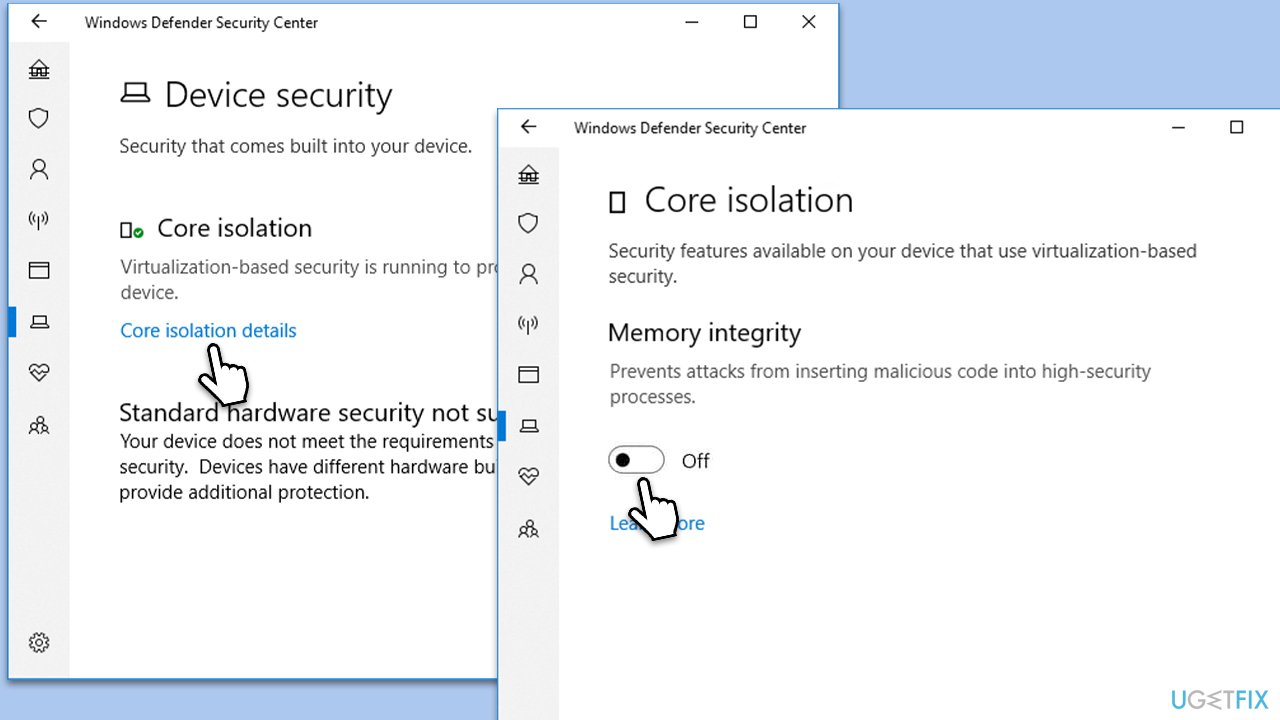
The Memory Integrity feature in Windows is designed to protect your system from threats by isolating certain processes to prevent malicious actors from tampering with them. However, certain drivers might not be compatible with Memory Integrity. While disabling it might sound like a security risk, your device's security will not be compromised, provided you have Microsoft Defender or other trusted security software actively running.
- Open Settings.
- Navigate to Update & Security, then to Windows Security.
- Select Device security.
- Scroll down to the Core isolation section.
- Click Core isolation details.
- Under Memory integrity, ensure the switch is set to the OFF position.
Fix 2. Update the problematic driver
Updating the driver that's incompatible with Memory Integrity might resolve the "A driver can’t load on this device" error.
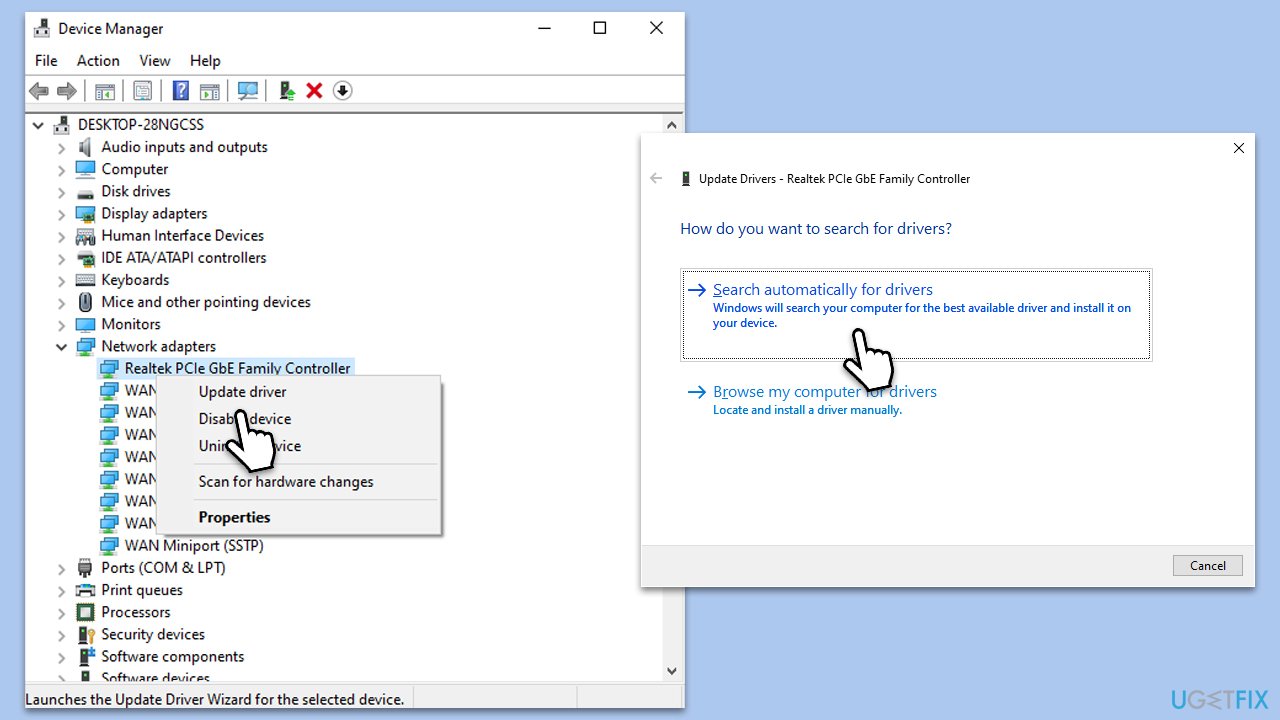
- Right-click on the Start button and select Device Manager.
- Look for devices with a yellow exclamation mark or the device related to the named driver.
- Right-click on the device and choose Update driver.
- Select Search automatically for driver.
- Follow the on-screen instructions and complete the update.
- Restart your computer.
If you can't determine which driver is associated with the problem, the easiest solution would be to employ an automatic driver update software, such as [rev id="DriverFix"].
Fix 3. Install all Windows updates
Windows regularly releases updates that contain bug fixes and compatibility patches for various issues.
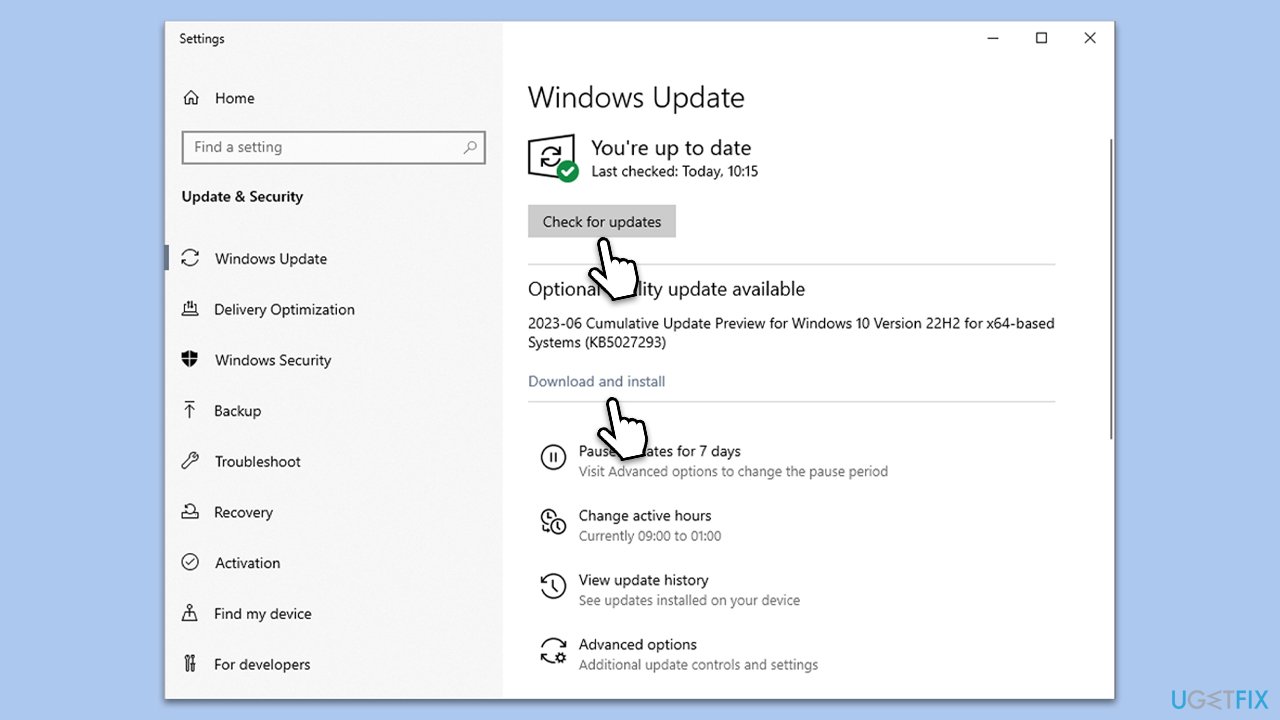
- Type Updates in Windows search and press Enter.
- When the new window opens, click Check for updates and wait.
- If there are optional updates available, install them as well.
- Restart your computer to implement the changes.
Fix 4. Check for malware
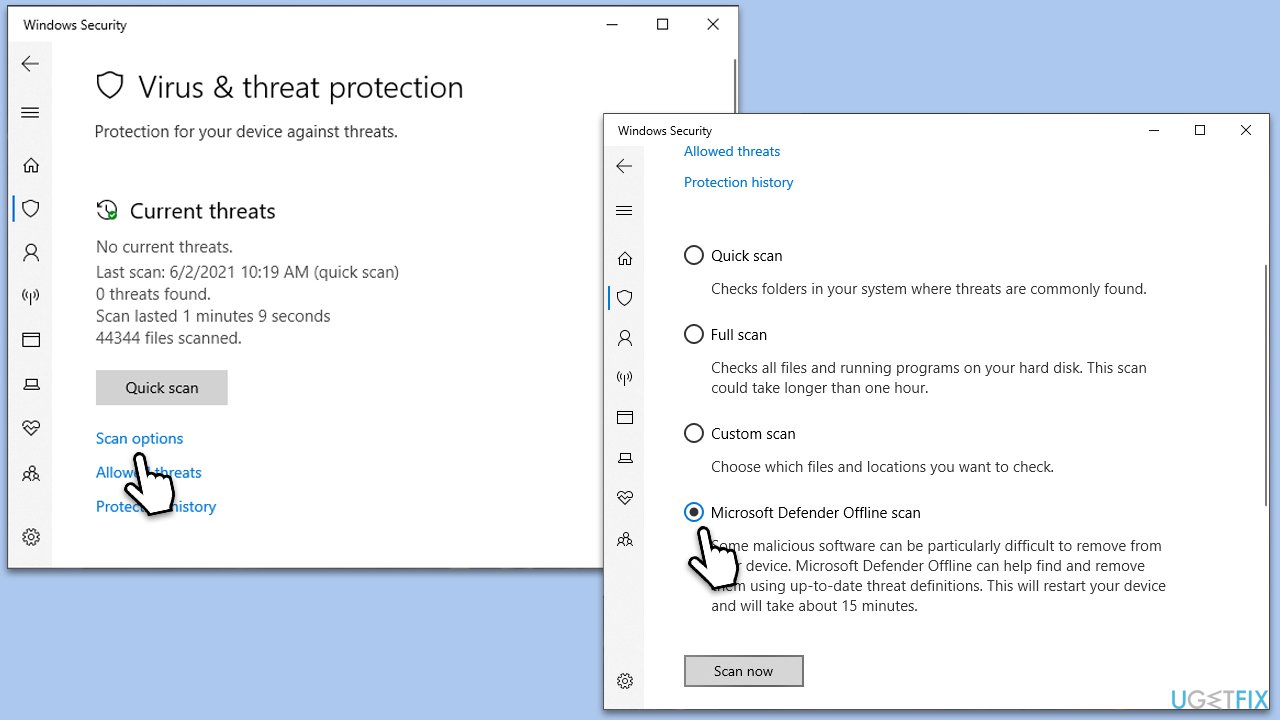
Malware can interfere with system files, including drivers. Running a comprehensive malware scan can help detect and remove such threats. You can use Microsoft Safety Scanner or the built-in Windows Defender:
- Type Windows Security in the Windows search bar and hit Enter.
- Select Virus & threat protection.
- Pick Scan options.
- Choose Microsoft Defender Offline scan and click Scan now.
- Your computer will immediately reboot and begin a deep scan.
Fix 5. Try Clean Boot to check for software conflicts
A clean boot starts Windows with a minimal set of drivers and startup programs, helping identify if software conflicts are causing the issue.
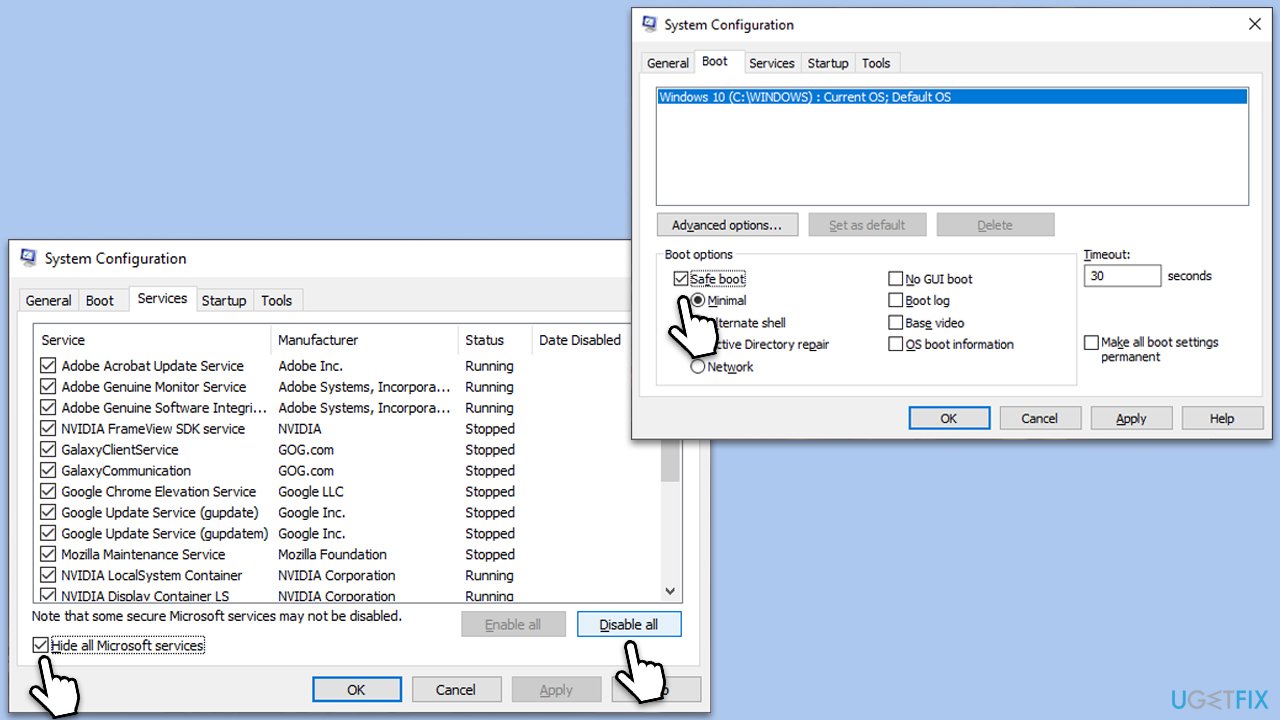
- Type msconfig in Windows search and press Enter.
- Pick the Services tab.
- Mark Hide all Microsoft services and select Disable all.
- Select the Startup tab and click Open Task Manager.
- In the Task Manager, right-click on each of the items and select Disable, then close the Task Manager.
- Go to the Boot tab, mark the Safe Boot option, then click Apply and OK.
Once in Clean Boot State, follow these steps:
- Observe your computer's behavior. If the error related to "A driver can’t load on this device" doesn't appear, it's likely that some non-Microsoft service or startup program is causing the conflict.
- To pinpoint the problematic software, re-enable services and startup items in small groups (or one-by-one for precision) and restart your computer after each change. When the error reappears, the last group of services or startup items you enabled contains the culprit.
- Once you identify the conflicting software, you can decide to update it, uninstall it, or seek support from the software's developer or vendor.
Fix 6. Use System Restore
System Restore can revert your computer's state to a previous point in time, possibly before the error occurred.
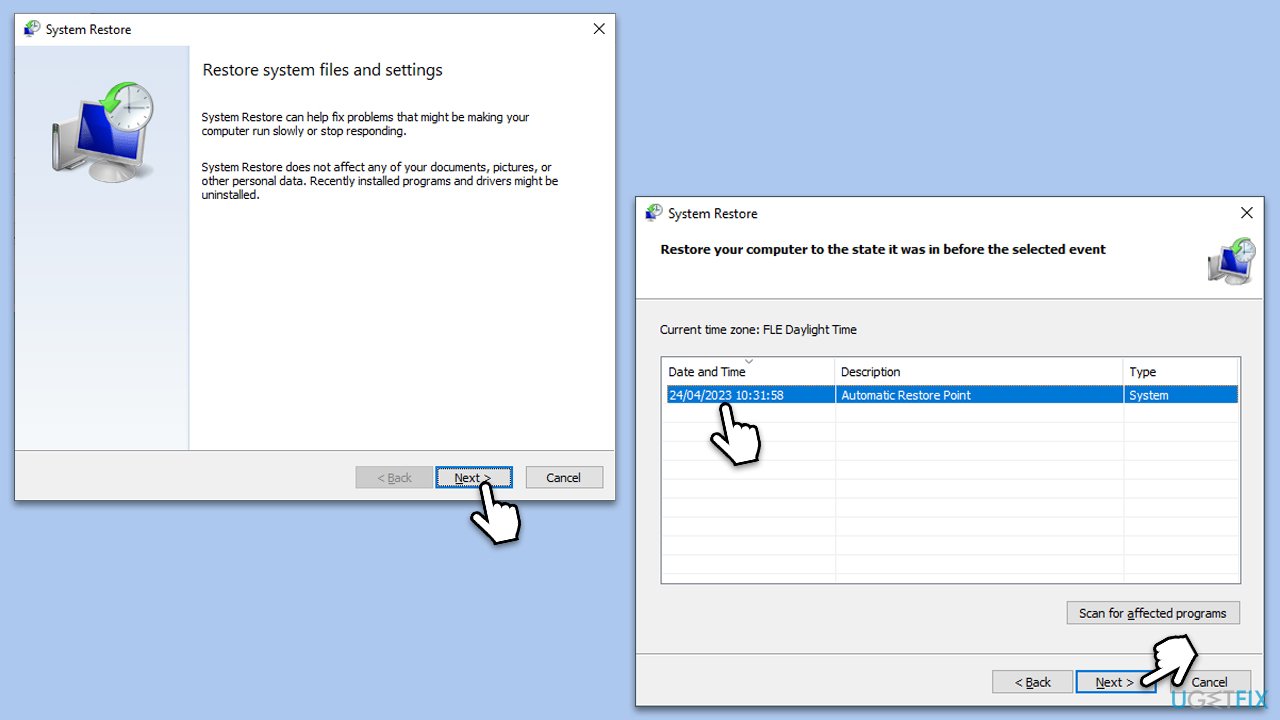
- Type in Create a Restore point in Windows search and press Enter.
- In the System Protection tab, pick System restore.
- Click Next.
- Click Show more restore points (if available).
- Pick the time before the problem occurred and click Next.
- Your computer will restart.
Bottom line
To fix the "A driver can’t load on this device" error, you can update or reinstall the problematic driver, check for malware, or resolve any software conflicts. If these solutions do not work, consider seeking further assistance or looking for additional troubleshooting resources.
Frequently asked questions
First, ensure that your Windows 10 is up to date by checking for updates in the Settings app. If the error persists, try reinstalling the problematic driver through Device Manager.
You can visit the manufacturer's website to verify driver compatibility with Windows 11, or use the Device Manager to check for updated drivers that support the latest OS version.
To prevent this error, regularly update your drivers and Windows OS, and avoid using outdated or unsupported hardware components on your Windows 10 or Windows 11 system.




Report an issue
What's wrong with this guide? We review every report and update or remove content.
Report received — thank you. We'll review and fix it.
You need a free account to submit a report.
Be the first to comment