How to fix
KB5034204 fails to install
on Windows
Resolve the KB5034204 installation error in Windows 11 quickly with our expert-tested solutions and clear screenshots for a hassle-free experience!

What causes How to fix KB5034204 fails to install in Windows 11?
- Network disruptions
- Power failures
- Misconfigured services
- Corruption of system files
- Insufficient storage
Repairs Windows system files, removes malware, and restores a clean OS state — without reinstalling.
Hi, I was wondering if you could help me. I can't install KB5034204 on my Windows 11 machine. Could you help me with this, please?
Windows operating system should be kept updated at all times. Updates are key in addressing numerous security risks, enhancing overall performance, rectifying bugs, and offering additional advantages to users. Typically, these updates are released semi-monthly, often on the second or third Tuesday, a practice known as Patch Tuesday.
The update KB5034204, introduced on January 9, 2024, targets Windows 11 versions 22621.3078 and 22631.3078 and was accessible to all participants of the Windows Insider program. This update tackled various issues, including malfunctions in the start menu experienced by certain users, and problems with WMI, and introduced new features like digital handwriting and enhanced eye control settings in the system.
Despite the anticipation of this update, many encountered difficulties during its installation. Some users were confronted with error codes towards the end of the update process for KB5034204, while others reported no error codes, with their system merely postponing the update for a later attempt.
The reasons behind such update failures are diverse, ranging from network disruptions and power failures to misconfigured services and corruption of system files. Failure in updating can manifest in various ways, including error messages or a decrease in system performance, such as frequent crashes or sluggishness. Promptly resolving these update issues is vital to prevent further complications with your computer.
For those who can't install KB5034204, we offer a variety of solutions. These include addressing issues related to misconfigured services, problems with the update file cache, insufficient storage, and system file corruption, among others. We also suggest the use of an automated PC repair tool [d1], which can efficiently deal with many of these issues.
Fix 1. Run Windows update and network adapter troubleshooters
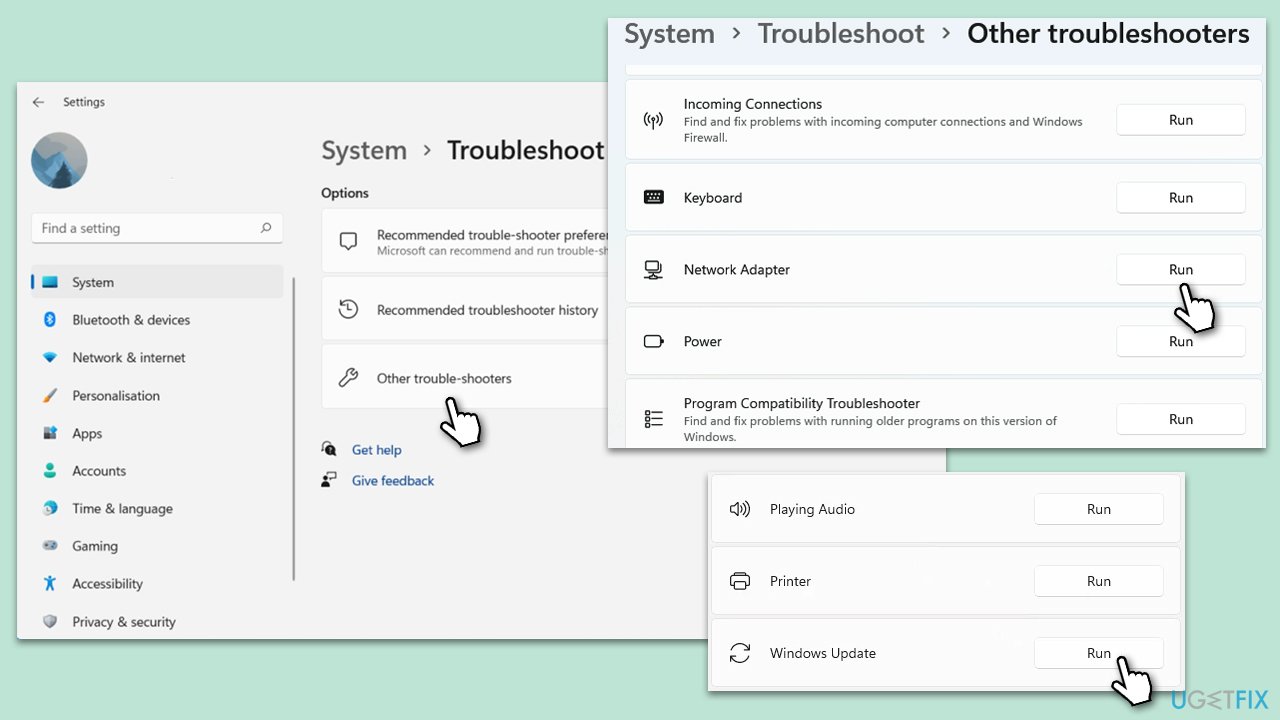
To tackle update installation issues, employing the Windows Update and network adapter troubleshooters is a smart move. These tools are designed to diagnose and rectify common problems with updates and network settings. Use the following steps:
- Type troubleshoot in Windows search and press Enter or go to Start > Settings > System > Troubleshoot.
- From the list of Options, pick Other trouble-shooters.
- Scroll down to locate the Windows Update and click Run.
- After that, run the Network adapter troubleshooter.
- Wait for it to finish, then apply changes and reboot the system.
Fix 2. (Re)Start relevant services
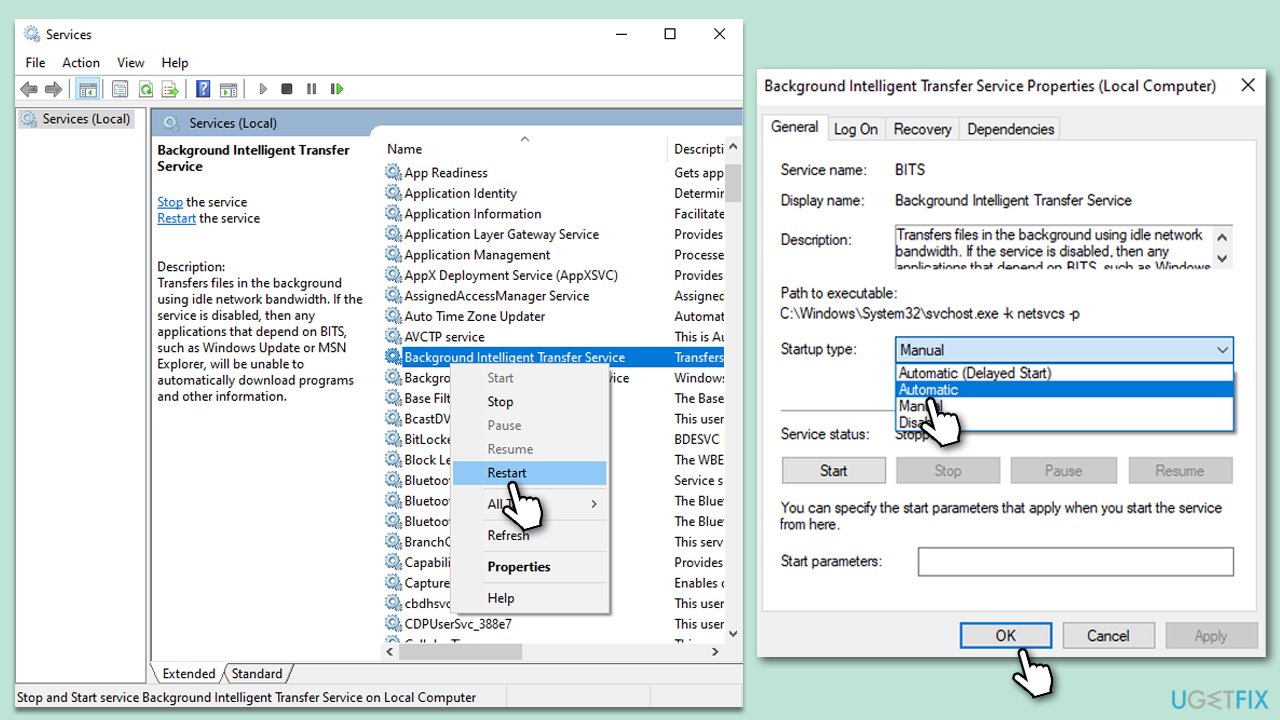
Restarting services such as Windows Update Service, BITS, and Cryptographic Service can often clear up update issues. These core services are crucial for the download and installation of updates.
- Type in Services in Windows search and hit Enter.
- Scroll down a bit to find Background Intelligent Transfer Service (BITS).
- If it is already running, right-click and select Restart.
- If the service is not running, double-click it, pick Automatic under the Startup type drop-down menu.
- Click Start, Apply, and OK.
- Repeat this process for Windows Update and Cryptographic services.
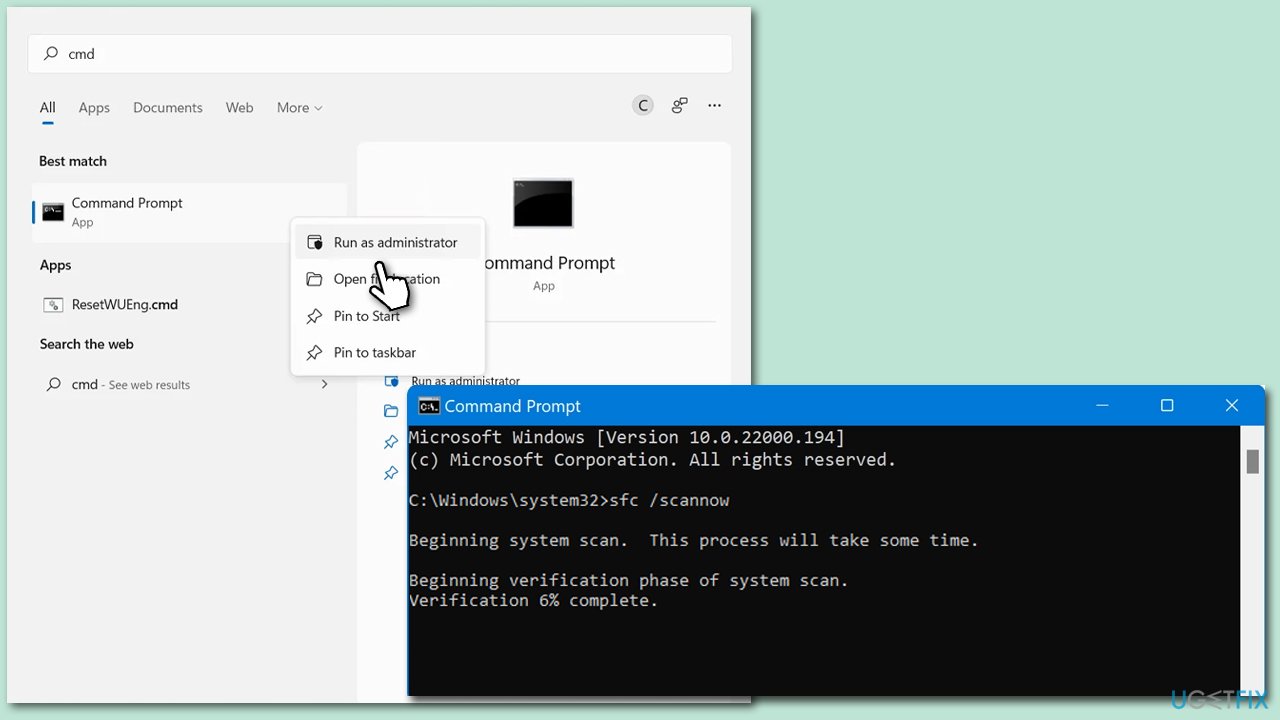
Fix 3. Perform SFC and DISM scans
- Type cmd in Windows search.
- Right-click on Command Prompt and select Run as administrator.
- User Account Control will ask whether you want to make changes - click Yes.
- Use the following command lines, pressing Enter each time:
sfc /scannow - After the scan is done, copy the following commands and press Enter:
DISM /Online /Cleanup-Image /CheckHealth
DISM /Online /Cleanup-Image /ScanHealth
DISM /Online /Cleanup-Image /RestoreHealth
(Note: if you get an error executing this last command, add /Source:C:\RepairSource\Windows /LimitAccess to it and try again). - Restart your PC.
Fix 4. Use Disk Cleanup
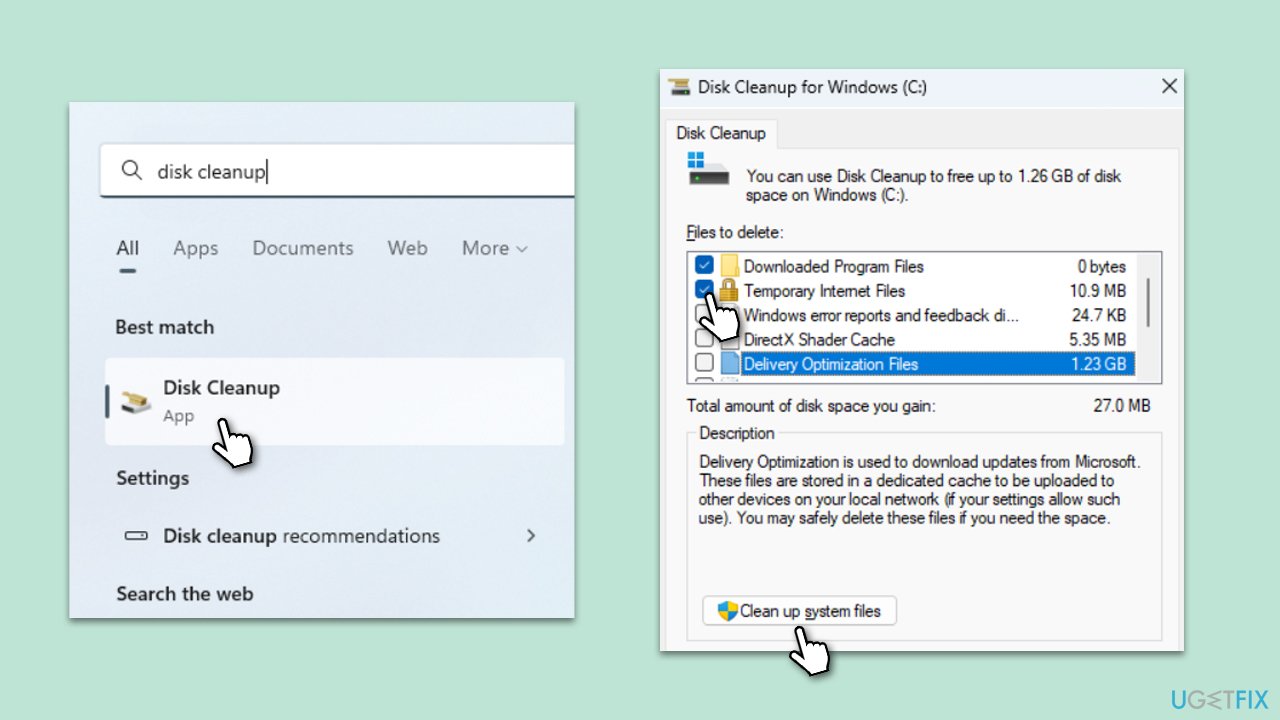
Running Disk Cleanup can free up space on your hard drive, which is often a prerequisite for installing updates. This utility removes unnecessary files, including temporary files and system cache, which not only provides space for the update but can also improve overall system performance.
- Type Disk Cleanup in Windows search and hit Enter.
- If your Windows is installed on drive C, pick it from the list (it should be by default) and press OK.
- Click Clean up system files.
- Select your main disk again and click OK.
- Here, select the largest portions of the data used - these typically include Temporary Internet Files, Windows Update, Temporary Files, Recycle Bin, Delivery Optimization Files, and others.
- Click OK - the process should be finished shortly.
Fix 5. Enter Clean Boot
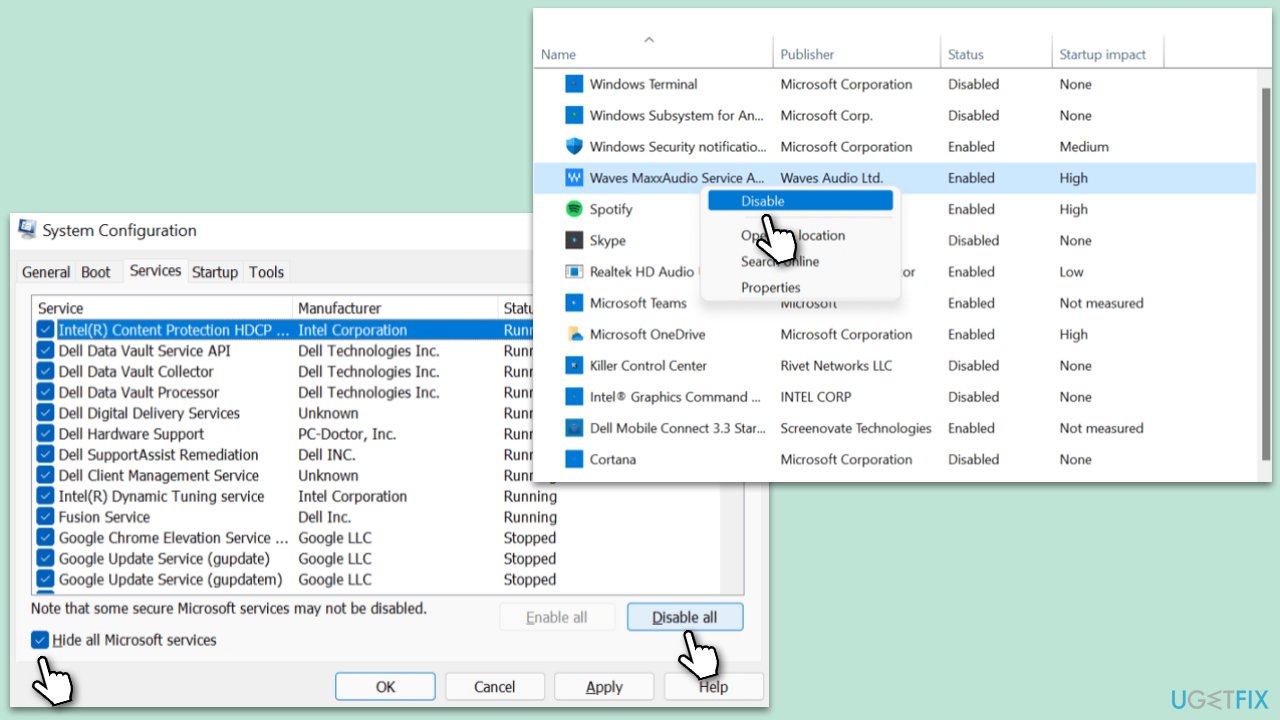
Performing a Clean Boot starts Windows with a minimal set of drivers and startup programs. This can help identify if background programs are interfering with the update. Clean booting is a troubleshooting technique that isolates software conflicts.
- Press the Win + R to open the Run dialog.
- Type msconfig and press Enter.
- In the System Configuration window, select the Services tab.
- Check the box that says Hide all Microsoft services.
- Click on Disable all.
- Go to the Startup tab and click on Open Task Manager.
- Disable all startup items.
- Restart your computer and try installing the update in this clean boot state.
Fix 6. Reset Windows Update components
This process can resolve issues by refreshing update components.
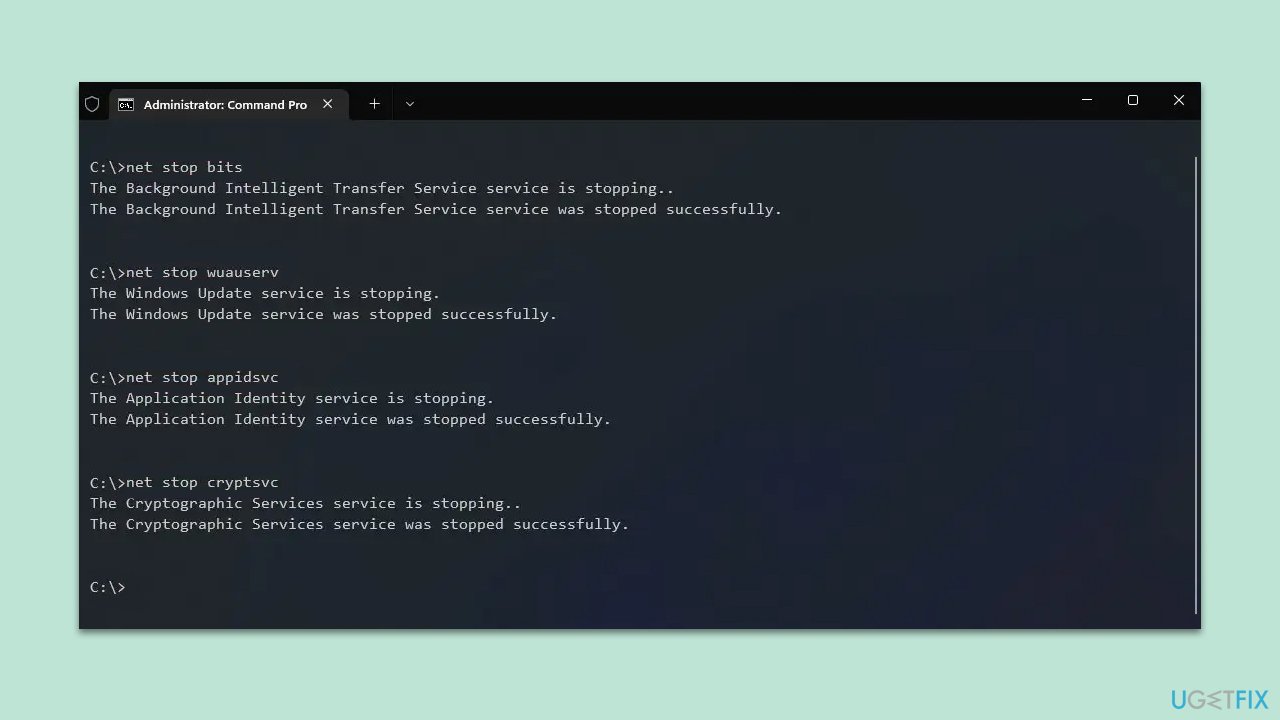
- Open Command Prompt as administrator again
- In the new window, copy and paste each of these commands, pressing Enter every time:
net stop bits
net stop wuauserv
net stop appidsvc
net stop cryptsvc
Del "%ALLUSERSPROFILE%\Application Data\Microsoft\Network\Downloader\*.*"
rmdir %systemroot%\SoftwareDistribution /S /Q
rmdir %systemroot%\system32\catroot2 /S /Q
regsvr32.exe /s atl.dll
regsvr32.exe /s urlmon.dll
regsvr32.exe /s mshtml.dll
netsh winsock reset
netsh winsock reset proxy
net start bits
net start wuauserv
net start appidsvc
net start cryptsvc - Restart your device and try updating again.
Bottom line
To fix the installation failure of KB5034204, you can run the Windows Update and network adapter troubleshooters, address issues related to misconfigured services, and check for sufficient storage. If these solutions do not resolve the problem, consider using an automated PC repair tool to handle various underlying issues.
Frequently asked questions
First, try running the Windows Update Troubleshooter to fix any underlying issues. If that doesn't work, consider manually downloading the update from the Microsoft Update Catalog.
The failure could be due to corrupted system files, insufficient disk space, or conflicts with third-party software. Running a system file check or ensuring enough disk space may resolve the issue.
You can check for compatibility issues by reviewing the update history in Settings under 'Windows Update' or using the Windows Update Assistant. Additionally, ensure that your device meets the minimum system requirements for the update.




Report an issue
What's wrong with this guide? We review every report and update or remove content.
Report received — thank you. We'll review and fix it.
You need a free account to submit a report.
Be the first to comment