How to fix
Windows update error 0x800f8001
on Windows
Resolve Windows 10 and Windows 11 update error 0x800f8001 quickly with our expert-tested solutions and detailed screenshots for a smooth fix.

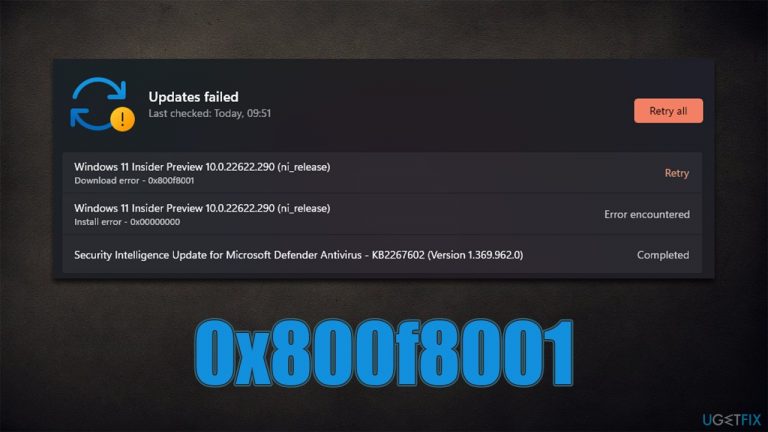
What causes How to fix Windows update error 0x800f8001?
- Damaged system files
- Hardware issues
- Poor internet connection
- Temporary server issues
Repairs Windows system files, removes malware, and restores a clean OS state — without reinstalling.
Hello, I am trying to install the newest update for the Windows Insider Program, but it keeps failing with 0x800f8001. Is there anything that could fix this issue for me? Thanks in advance.
Windows updates are vital addendums to any system, as they provide multiple benefits for users regarding new features, security, and stability. Microsoft operates Windows as a service, hence it ships its updates at least once a month, which usually happens on Tuesday.
Besides the regular update cycle, users who opt into the Windows Insider Program[ref en-3] are entitled to updates that are not available to the rest of the regular users. These patches allow those who opt in the program to test out the newest, sometimes experimental features and give feedback to Microsoft, which results in a better product overall.
0x800f8001 is one of the more recent Windows update errors that affected users who are using the Windows Insider Program. According to users' reports, the update would simply not download or get stuck in the middle of the installation, returning the update error.
Windows update errors are very common, and most users would experience one of such issues at least once at some point, regardless if they are using the regular Windows or are participating in the Insider program. Both of the situations can be equally as annoying, as regular users may not get the vital updates that fix bugs[ref en-1] or patch vulnerabilities [ref en-2] while those using the Insider program can't try out the newest features - this completely negates the purpose of the program.
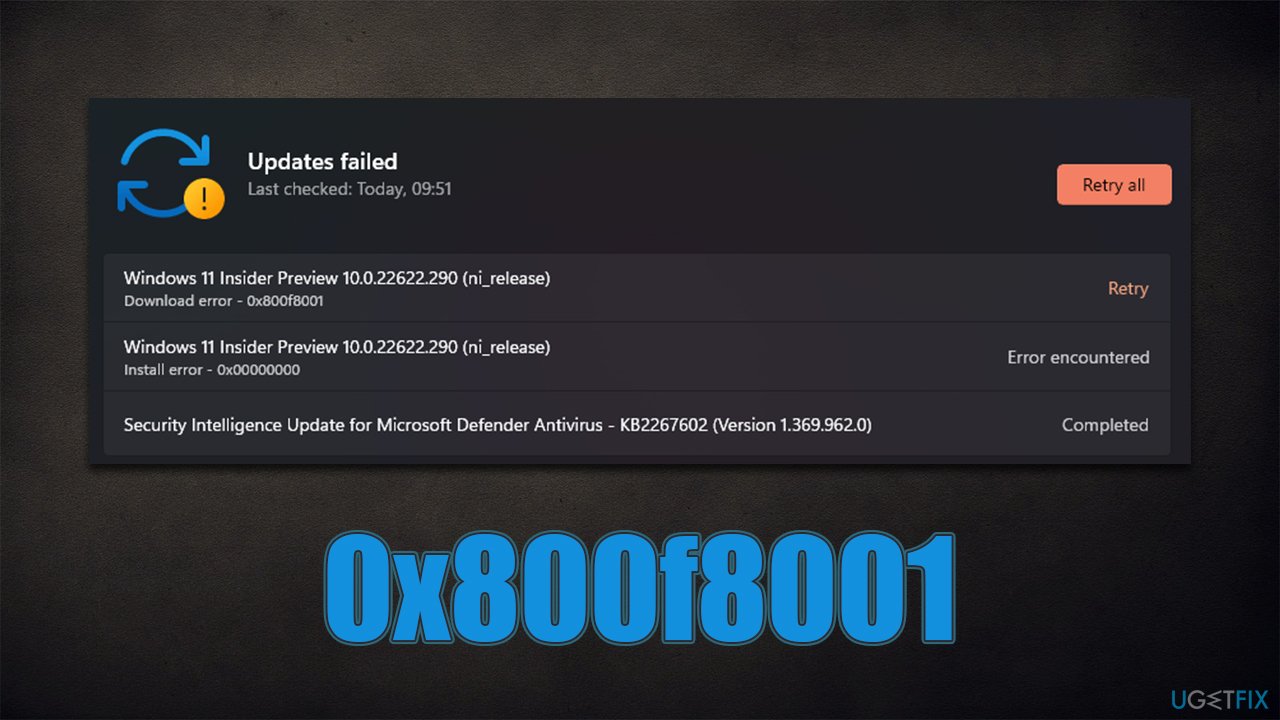
In some cases, the 0x800f8001 error might be temporary, as Microsoft might suffer from server issues. Thus, you should first try waiting a few hours or maybe even a day and see if the matter resolves itself. If the issue is persistent, it is time to take action, as there is likely to be a culprit for the error to occur - damaged system files, hardware issues, poor internet connection, etc., can all be the reason for the update error.
Before you proceed with manual solutions to fix the 0x800f8001 error, we recommend you run a scan with [d1] PC repair and maintenance utility. It can find the system corruption automatically and fix the damaged sectors, ultimately resolving the most common Windows issues, including
1. Try the troubleshooter
We always recommend starting by running a troubleshooter, as it could sometimes find the problem and fix it for you.
- Type Troubleshoot in Windows search
- Select Additional troubleshooters
- Find Windows Update from the list
- Click it and select Run the troubleshooter
- Apply the recommended fixes and restart your machine.
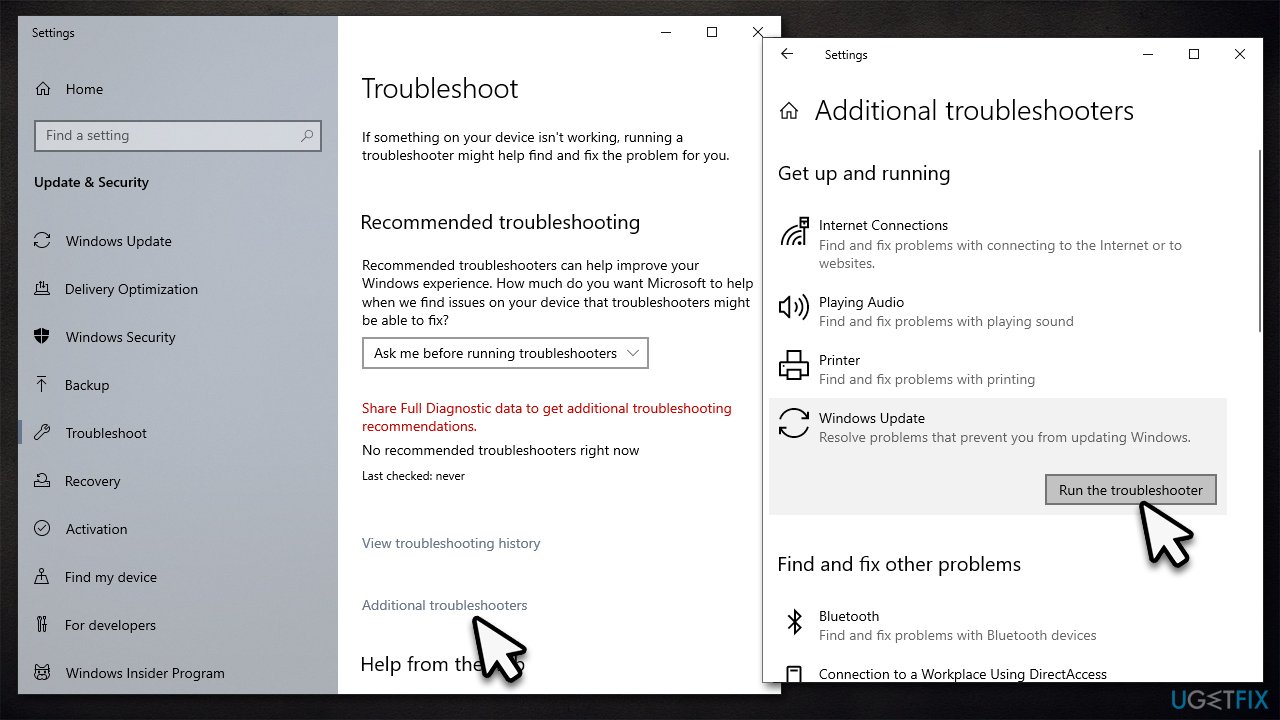
How to fix windows update error 0x800f8001 run the troubleshooter
2. Reset Windows Update components
- Type cmd in Windows search
- Right-click on Command Prompt result and select Run as administrator
- Type each of these command lines, pressing Enter every time (wait till the command is fully executed):
net stop bits
net stop wuauserv
net stop appidsvc
net stop cryptsvc
Del "%ALLUSERSPROFILE%\Application Data\Microsoft\Network\Downloader\*.*"
rmdir %systemroot%\SoftwareDistribution /S /Q
rmdir %systemroot%\system32\catroot2 /S /Q
regsvr32.exe /s atl.dll
regsvr32.exe /s urlmon.dll
regsvr32.exe /s mshtml.dll
netsh winsock reset
netsh winsock reset proxy
net start bits
net start wuauserv
net start appidsvc
net start cryptsvc - Restart your device and attempt to download the update once more.
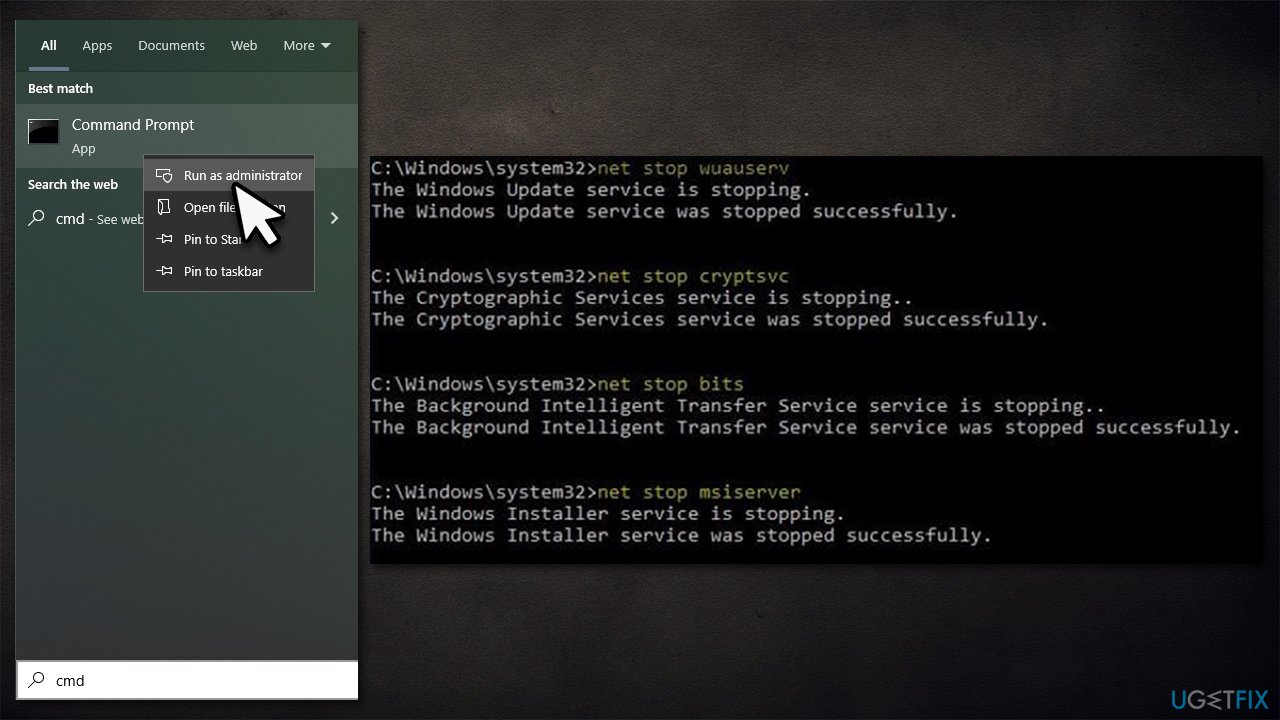
How to fix windows update error 0x800f8001 reset windows update components
3. Repair damaged system files
If some of your system components are damaged, the update procedure may fail. Try repairing this damage with the help of SFC and DISM.
- Open Command Promot as administrator as explained above
- Paste the following command into the new window:
sfc /scannow - Press Enter and wait till the scan is finished
- Once done, run this set of commands, pressing Enter after each:
DISM /Online /Cleanup-Image /CheckHealth
DISM /Online /Cleanup-Image /ScanHealth
DISM /Online /Cleanup-Image /RestoreHealth - Restart your PC.
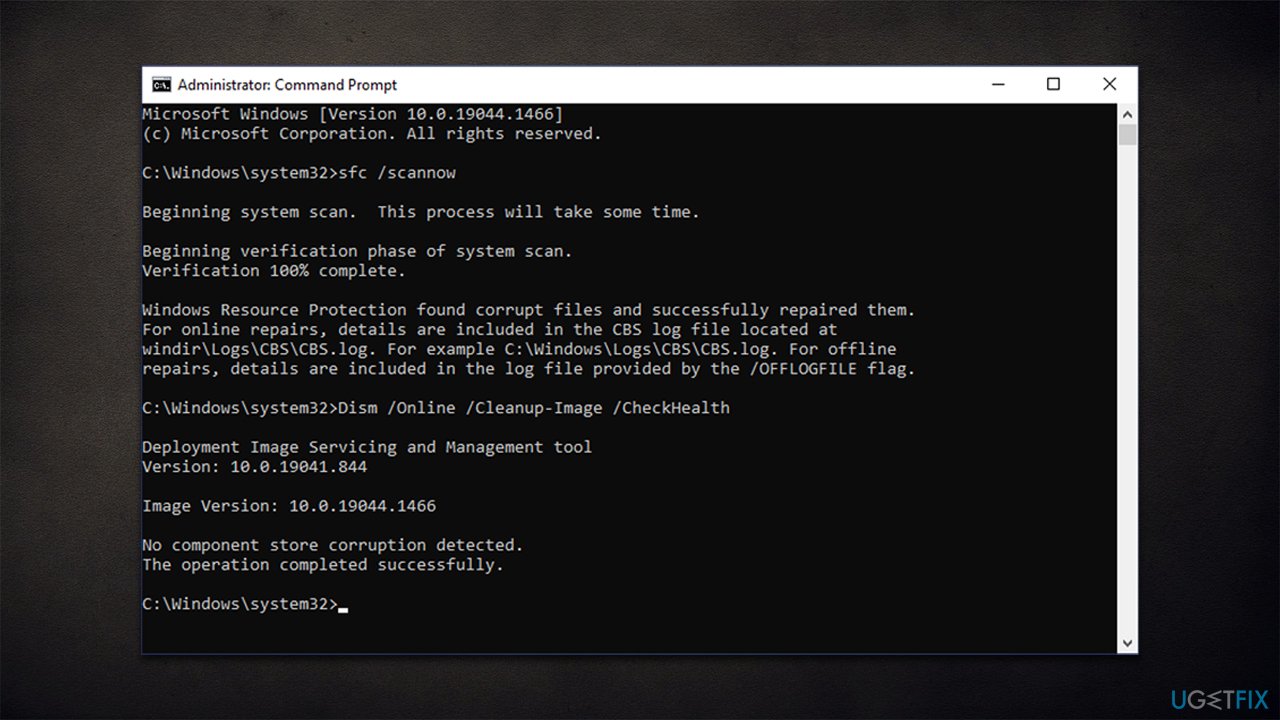
How to fix windows update error 0x800f8001 run sfc and dism
4. Download the update manually
If you participate in the Insider Program, you can try downloading the update manually from the official Microsoft website. Simply choose the version you require (for example, 22621), and download and install it.
5. Reinstall the most recent update
Sometimes, Windows can't go with the next Windows update if the previous one was buggy or was not correctly installed. In such a case, you should uninstall the previous update installed and then initiate the process to install all the available updates at once.
- Type Control Panel in Windows search and press Enter
- Go to Programs > Uninstall a Program
- Select View installed updates on the left
- Sort the updates by the Installed On column
- Find the most recent update, right-click and select Uninstall
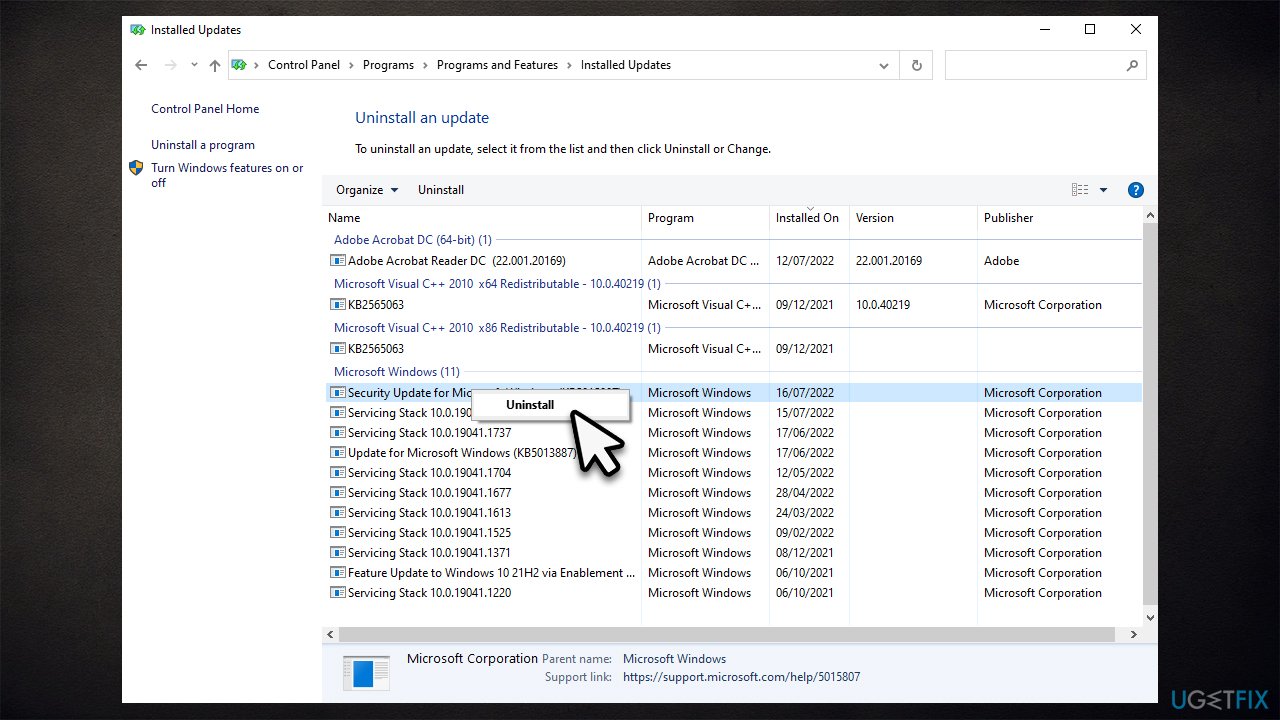
How to fix windows update error 0x800f8001 reinstall the update - Follow on-screen instructions and restart your system
- Finally, run the Windows update process once more.
Bottom line
To fix the 0x800f8001 error, you can try waiting for a few hours to see if the issue resolves itself due to temporary server problems. If the error persists, check for damaged system files, hardware issues, or ensure your internet connection is stable. If none of these solutions work, further troubleshooting may be necessary.
Frequently asked questions
This error often occurs due to corrupted system files, issues with the Windows Update service, or missing update components.
To run the troubleshooter, go to Settings > Update & Security > Troubleshoot > Additional troubleshooters, and select 'Windows Update' to start the process.
Yes, resetting Windows Update components is a safe method to fix this error, and it can help restore the update service functionality on both Windows 10 and Windows 11.




Report an issue
What's wrong with this guide? We review every report and update or remove content.
Report received — thank you. We'll review and fix it.
You need a free account to submit a report.
Be the first to comment