How to fix
KB5028849 fails to install
on Windows
Resolve the KB5028849 installation failure in Windows 10 effortlessly with our expert-tested solutions. Get your updates fixed in minutes!

What causes How to fix KB5028849 fails to install in Windows 10?
- Software conflicts
- Corrupt system files
- Insufficient disk space
- Network-related issues
Repairs Windows system files, removes malware, and restores a clean OS state — without reinstalling.
Hello. I tried installing the KB5028849 update on my Windows PC but it fails. What should I do?
The KB5028849[ref en-1] update for Windows 10 Version 21H2 and Windows 10 Version 22H2 released on July 11, 2023, introduces cumulative reliability improvements in .NET Framework 3.5 and 4.8.1. This update is important because it aims to improve the overall stability and performance of these framework versions on Windows 10 systems. Microsoft's goal is to provide a more reliable and secure experience for users who use applications built on the .NET Framework by addressing various bugs, security vulnerabilities, and compatibility issues.
Unfortunately, the KB5028849 update fails to install on some Windows 10 machines. This installation failure can be caused by a number of factors, including software conflicts, corrupt system files, insufficient disk space, or network-related issues. Users who encounter this issue may be frustrated and inconvenienced because they are unable to benefit from the update's improvements and fixes.
The severity of this problem varies depending on the user's reliance on the .NET Framework and the specific applications they use. The .NET Framework is a critical component for running a wide range of applications and services on Windows, including Microsoft and third-party software. If the update fails to install, users may encounter compatibility issues, decreased system performance, or even security vulnerabilities that the update has addressed.
There are several potential solutions to the KB5028849 installation failure. Users can try to troubleshoot the problem by checking for sufficient disk space, running Windows Update Troubleshooter, temporarily disabling third-party software, or manually installing the update. Additionally, maintaining a stable network connection and verifying system integrity with tools such as System File Checker (SFC) can aid in the resolution of the problem.
In this guide, you will find 7 steps that should help you fix KB5028849 fails to install in Windows 10. You can also try a maintenance tool like [d1] that can fix most system errors, BSODs,[ref en-2] corrupted files, registry[ref en-3] issues, or clear cookies and cache. Otherwise, follow the step-by-step instructions below.
Solution 1. Fix Corrupted System Files
Use Command Prompt commands to repair system file corruption:
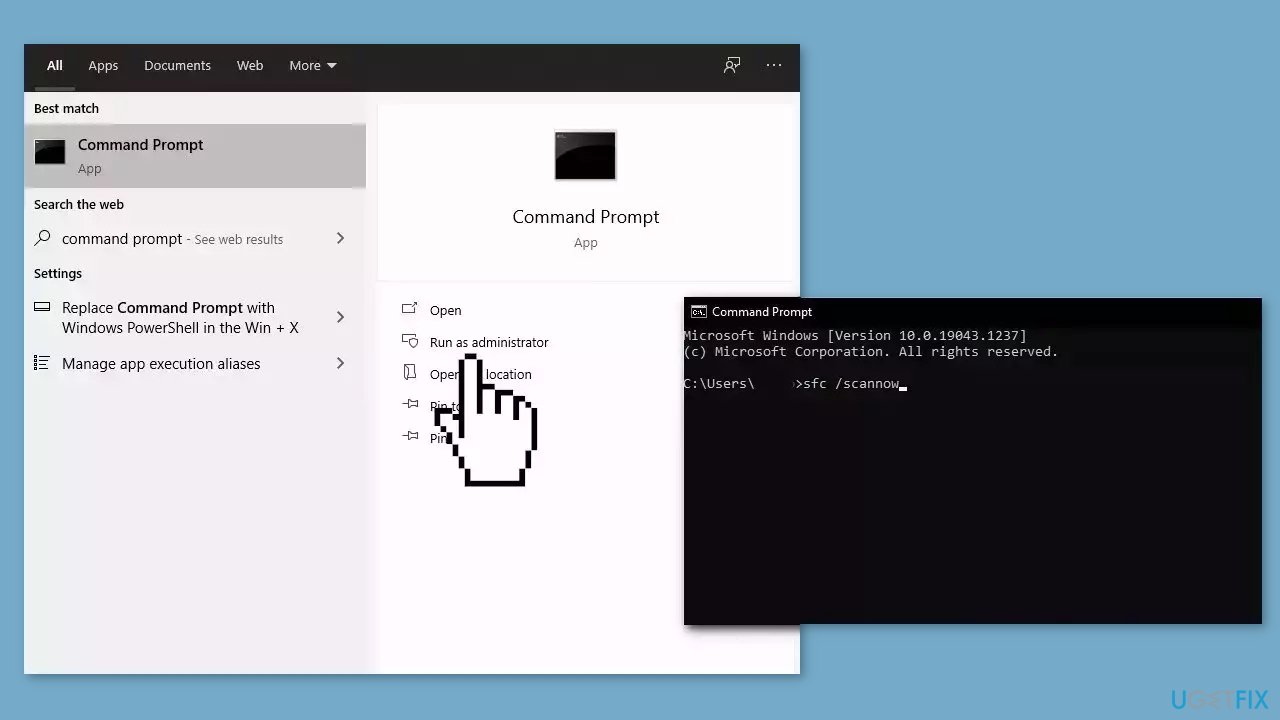
- Open Command Prompt as administrator
- Use the following command and press Enter:
sfc /scannow
- Reboot your system
- If SFC returned an error, then use the following command lines, pressing Enter after each:
DISM /Online /Cleanup-Image /CheckHealth
DISM /Online /Cleanup-Image /ScanHealth
DISM /Online /Cleanup-Image /RestoreHealth
Solution 2. Run the Windows Update Troubleshooter
- Press the Windows + X keys and go to Settings.
- Go to Update and Security.
- Click Troubleshooter.
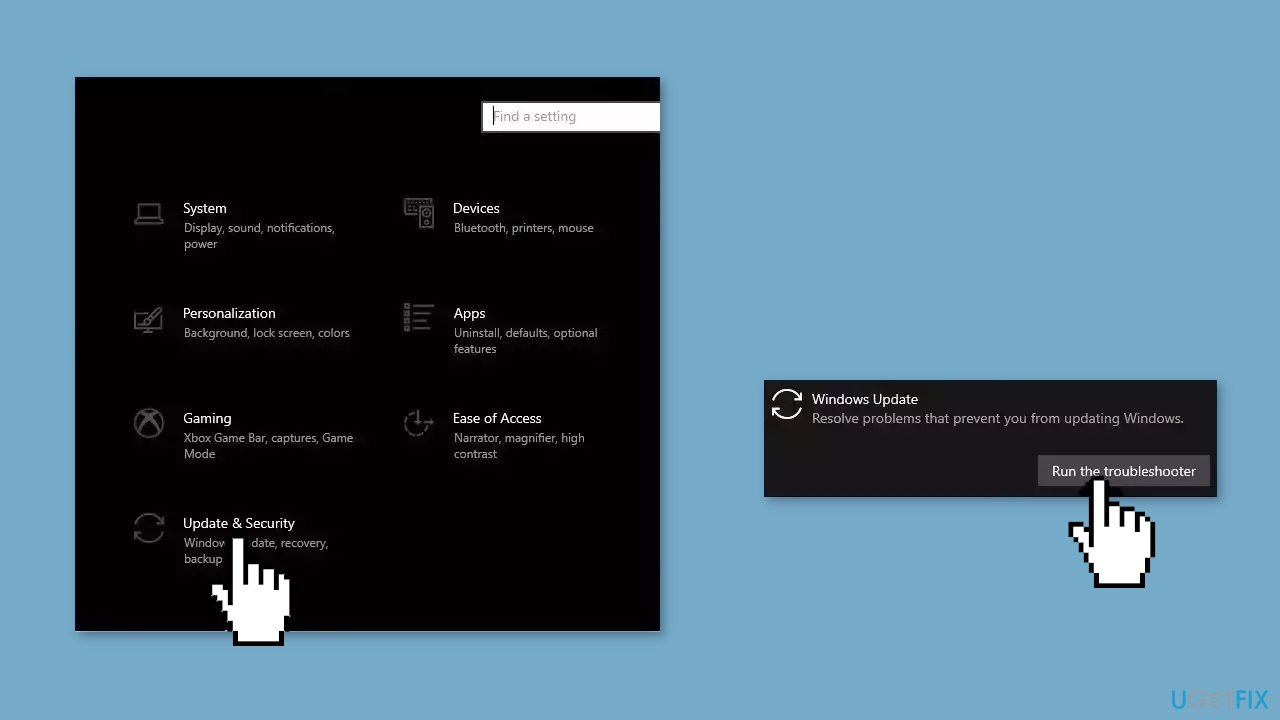
- Select Additional troubleshooters.
- Run the Update troubleshooter.
- Restart.
Solution 3. Update Drivers
- In the search box on the taskbar, enter device manager, then select Device Manager.
- Select a category to see the names of devices, then right-click the one you’d like to update.
- Select Search automatically for updated driver software.
- Select Update Driver.
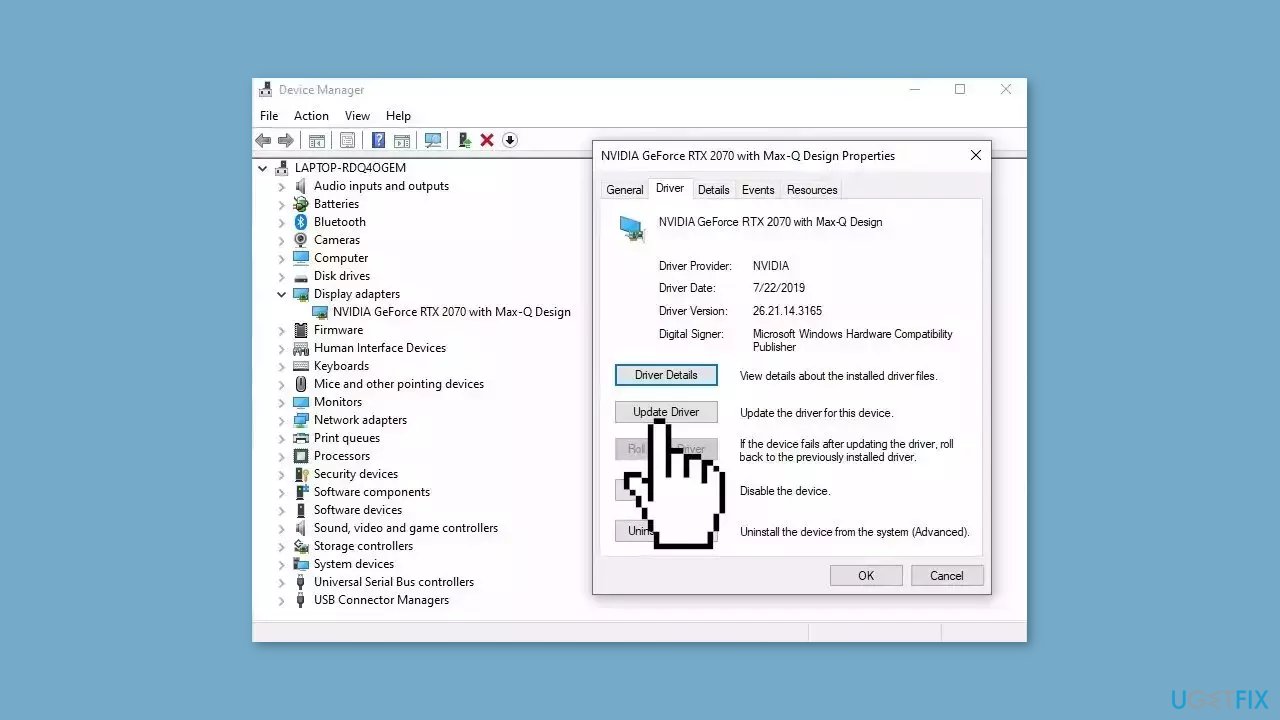
- If Windows doesn't find a new driver, you can try using an automatic tool like [rev id="DriverFix"] which can find the best drivers for your system.
Solution 4. Restart Windows Services
- Type services in the search bar and launch the Services utility.
- Find Windows Update in the list.

- Double-click on it, set the Startup type to Automatic, and click Apply.
- Now click on Restart the Service.
- Do the same with Background Intelligent Transfer Service.
Solution 5. Install the Update Manually
- Open your browser and go to the Microsoft Update Catalog.
- You will be presented with several versions of the KB5028849 update.
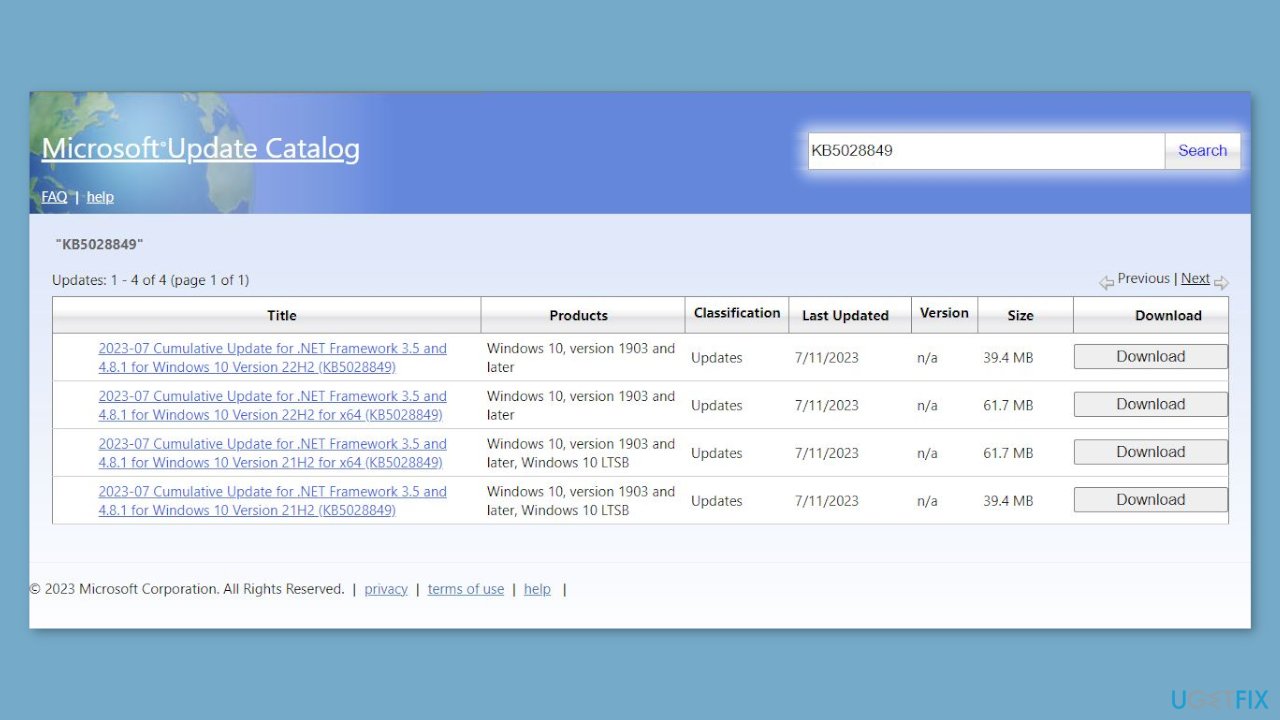
- Find the correct update for your OS version (you can check it by right-clicking Start and picking System > Windows specifications > Version is what you are looking for) and click Download.
- Follow the on-screen instructions and install the update.
- Reboot your system.
Solution 6. Try Clean Boot
- Open the Search menu, type in system configuration, and press Enter.
- Under the Services tab, tick the Hide all Microsoft services box.
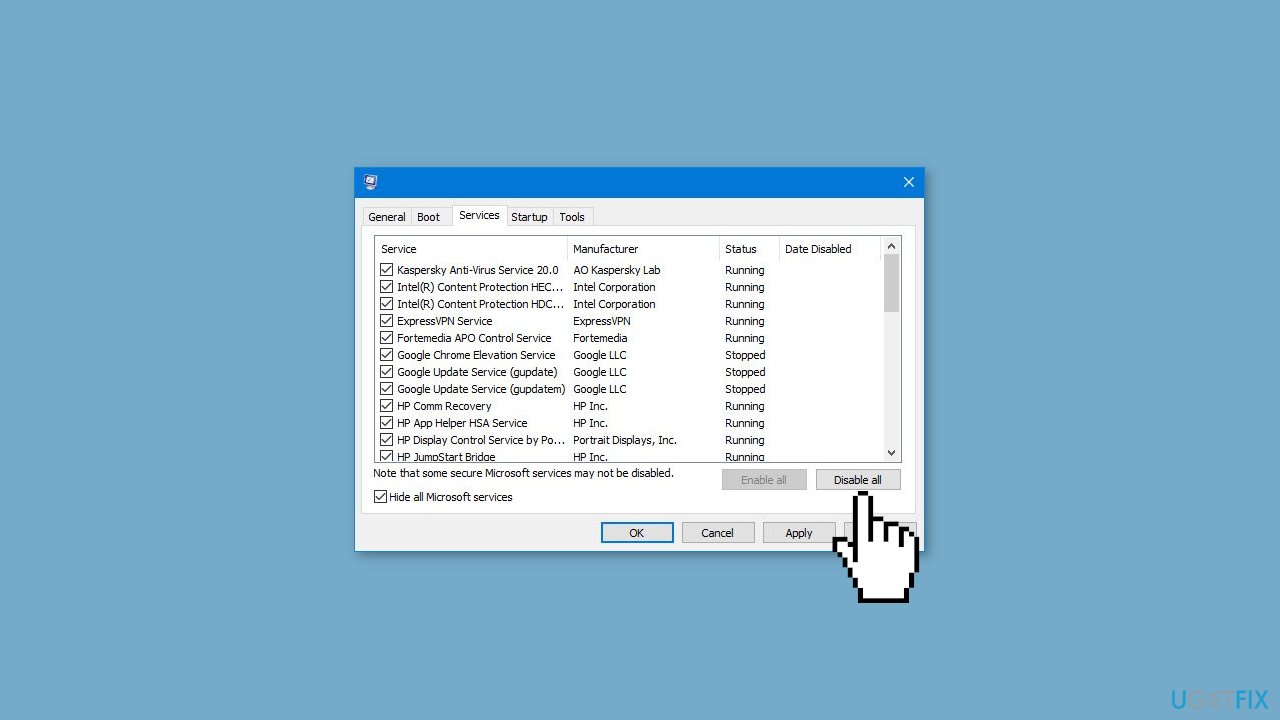
- Click on Disable all button.
- Head over to the Startup tab and click on Open Task Manager.
- Select a third-party program and click on Disable at the top.
- Repeat this step to disable all third-party apps and programs.
- Restart your PC to enter the clean boot state and see if the issue persists.
- If the issue disappeared in the clean boot state, then you can be certain that a third-party app is causing it.
- Go through all recently installed apps or programs and remove them one by one.
Solution 7. Update via Media Creation Tool
- Visit the official Microsoft website and download Windows 10 installation media.
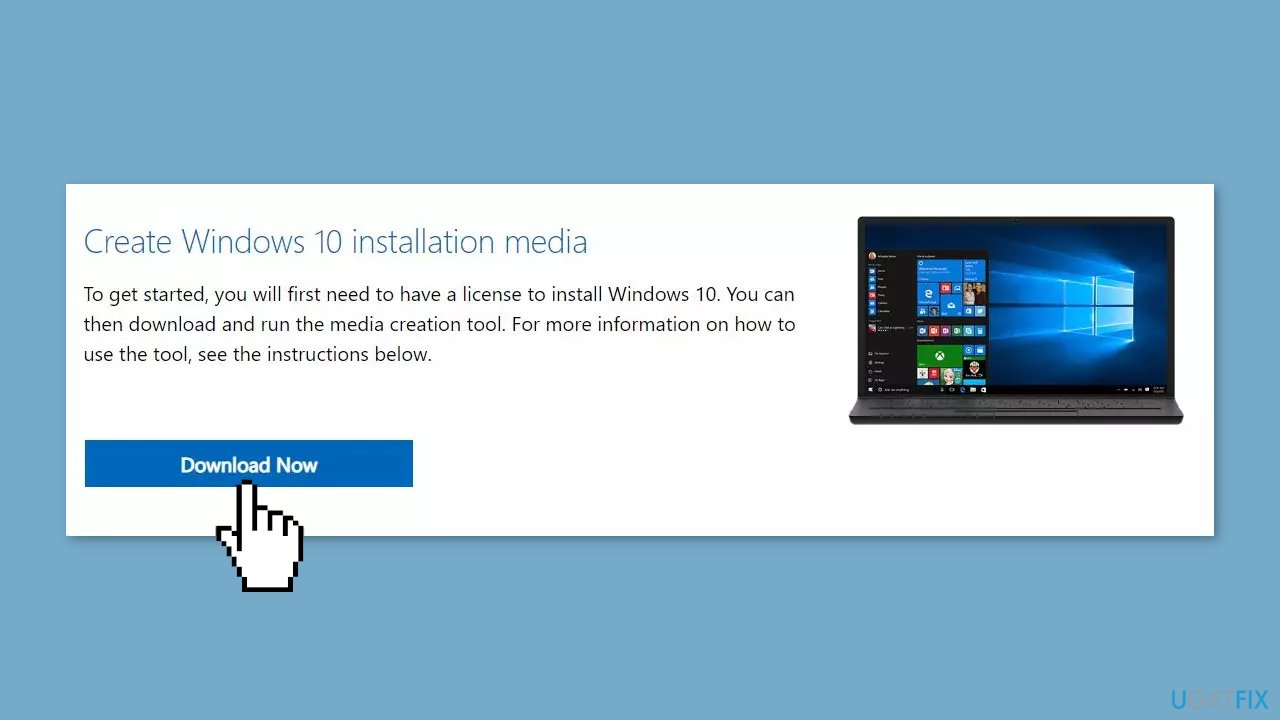
- Double-click the installer and select Yes when UAC shows up.
- Agree to terms and click Next.
- Select Upgrade this PC now and select Next.
- Proceed with on-screen instructions.
- Your PC will restart.
Bottom line
To fix the KB5028849 installation failure, users can check for sufficient disk space, run the Windows Update Troubleshooter, temporarily disable third-party software, or manually install the update. Additionally, maintaining a stable network connection and verifying system integrity with tools like System File Checker (SFC) can help resolve the issue. If none of these solutions work, consider using a maintenance tool to address system errors.
Frequently asked questions
First, try running the Windows Update Troubleshooter from Settings > Update & Security > Troubleshoot. If that doesn't work, consider resetting the Windows Update components manually.
Yes, you can download the standalone update package from the Microsoft Update Catalog and install it manually on your Windows 10 system.
You can check the installed updates by going to Settings > Update & Security > Windows Update > View update history.




Report an issue
What's wrong with this guide? We review every report and update or remove content.
Report received — thank you. We'll review and fix it.
You need a free account to submit a report.
Be the first to comment