How to fix
KB5030214 fails to install
on Windows
Resolve the KB5030214 installation issue on Windows 10 quickly and effectively. Follow our expert-tested guide for seamless troubleshooting. Fixed in mi…

What causes How to fix KB5030214 fails to install in Windows 10?
- Handle leak issue affecting Microsoft Distributed Transaction Coordinator (DTC)
- Memory exhaustion leading to system performance issues
- Incorrect reporting of 'BackupDirectory' policy setting for Windows Local Administrator Password Solution (LAPS)
- Errors when accessing SMB shared resources due to insufficient memory resources
- Potential system crashes or instability due to resource depletion
Repairs Windows system files, removes malware, and restores a clean OS state — without reinstalling.
Hello. I tried installing the KB5030214 update on Windows 10 but it won't work. Is there anything I can do?
The Windows 10 KB5030214 [ref en-1] update is intended to fix a number of serious problems with the operating system. A handle leak issue that affects the Microsoft Distributed Transaction Coordinator (DTC) is one of the main problems it addresses. Due to memory exhaustion, this specific problem can significantly affect system performance. When the handle leak happens, it slowly depletes system resources until the system eventually runs out of memory. Performance issues, system crashes, or even total system instability may arise from this.
This update also fixes a problem with the Resultant Set of Policy (RSOP). It specifically addresses an issue where the "BackupDirectory" policy setting for Windows Local Administrator Password Solution (LAPS) is not being reported correctly. When the policy setting is set to "Back up to AAD" (Azure Active Directory), this problem occurs. Administrators may not have a comprehensive understanding of the security posture of their system if this parameter is not reported appropriately, which can raise compliance and security issues.
The upgrade also addresses issues with the Server Message Block (SMB). When trying to access shared resources, users who rely on SMB shared folders could get errors like "Not enough memory resources" or "Insufficient system resources." These mistakes can interfere with file sharing and teamwork, reducing productivity and perhaps leading to data loss or access problems.
Installing the KB5030214 update is advised to fix these problems. This version includes remedies for the issues found, assisting in restoring system stability, enhancing the precision of policy reporting, and resolving SMB access difficulties. Users who are having this problem should check to see if their systems are up to date.
However, if you are having issues when trying to install KB5030214, you will find 7 steps that should help you fix KB5030214 fails to install in Windows 10. You can also run a system repair tool like [d1] that can fix most system errors, BSODs,[ref en-2] corrupted files, and registry[ref en-3] issues. Otherwise, follow the step-by-step instructions.
Method 1. Run the Windows Update Troubleshooter
- Press the Windows + X keys and go to Settings
- Go to Update and Security
- Click Troubleshooter
- Select Additional troubleshooters
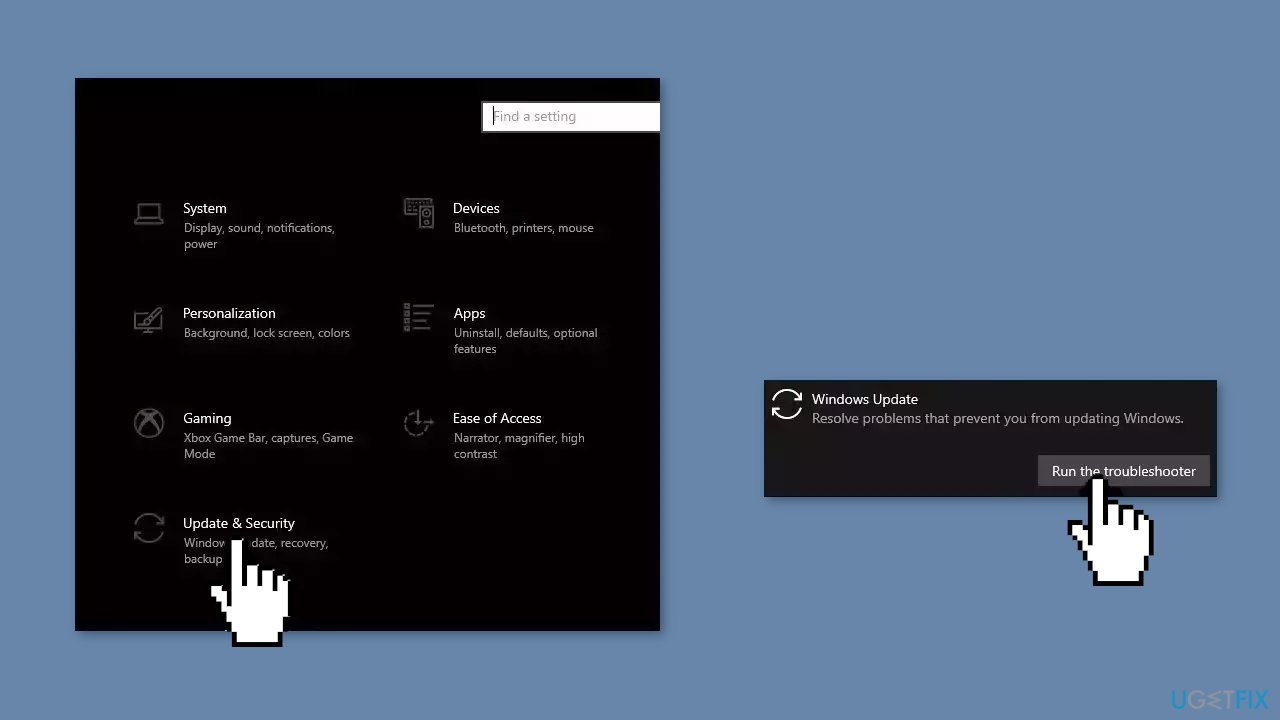
- Run the Update troubleshooter
- Restart
Method 2. Fix Corrupted System Files
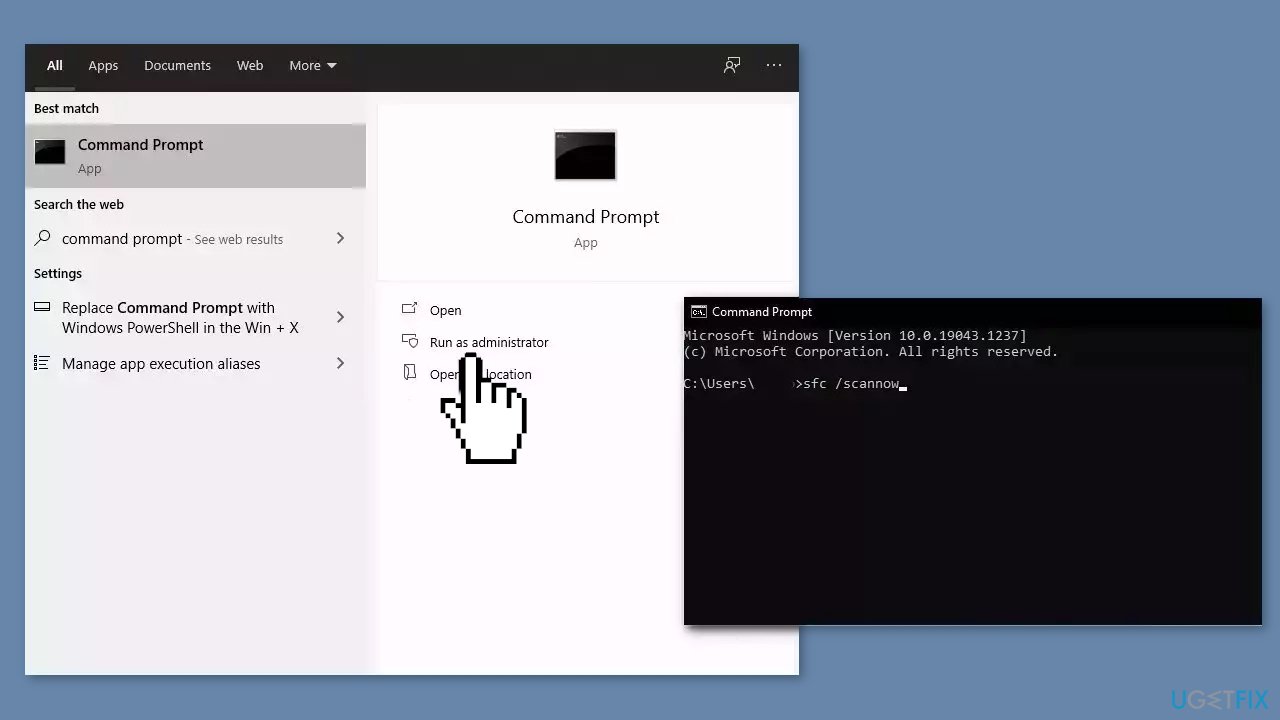
Use Command Prompt commands to repair system file corruption:
- Open Command Prompt as administrator
- Use the following command and press Enter:
sfc /scannow
- Reboot your system
- If SFC returned an error, then use the following command lines, pressing Enter after each:
DISM /Online /Cleanup-Image /CheckHealth
DISM /Online /Cleanup-Image /ScanHealth
DISM /Online /Cleanup-Image /RestoreHealth
Method 3. Restart Windows Services
- Type services in the search bar and launch the Services utility
- Find Windows Update in the list
- Double-click on it, set the Startup type to Automatic, and click Apply
- Now click on Restart the Service
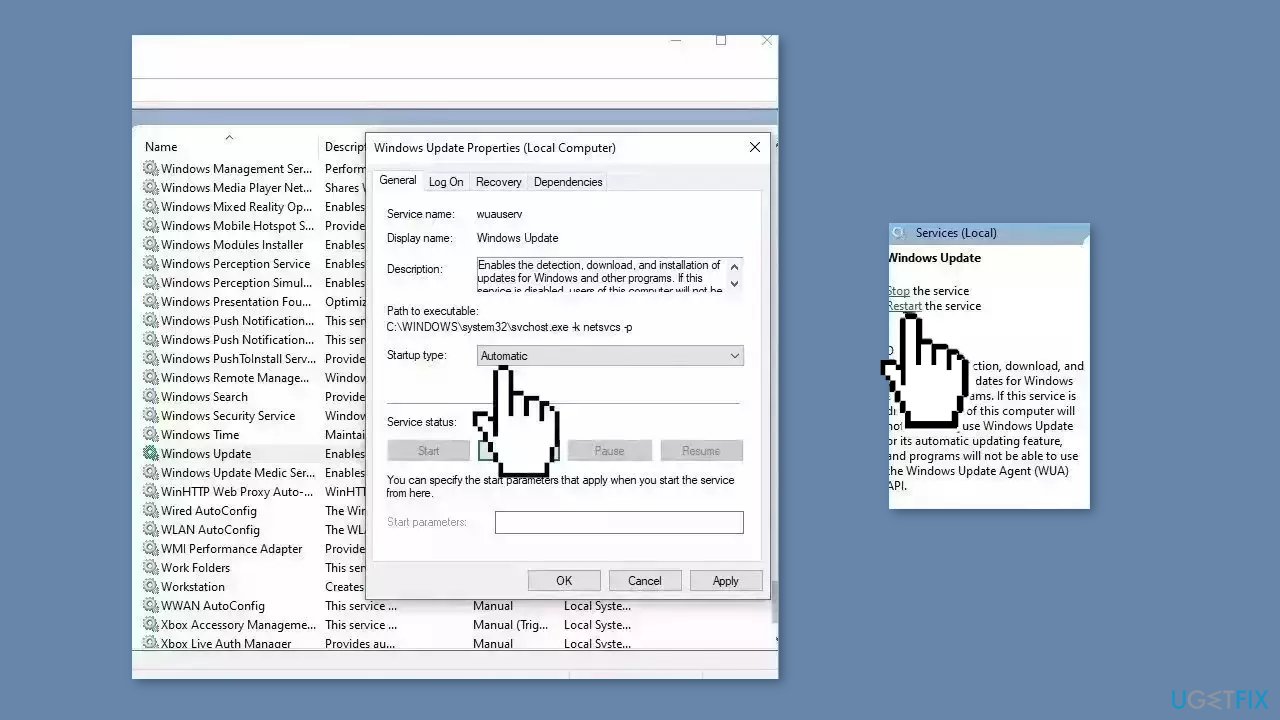
- Do the same with Background Intelligent Transfer Service
Method 4. Update Drivers
- In the search box on the taskbar, enter device manager, then select Device Manager
- Select a category to see the names of devices, then right-click the one you’d like to update
- Select Search automatically for updated driver software
- Select Update Driver
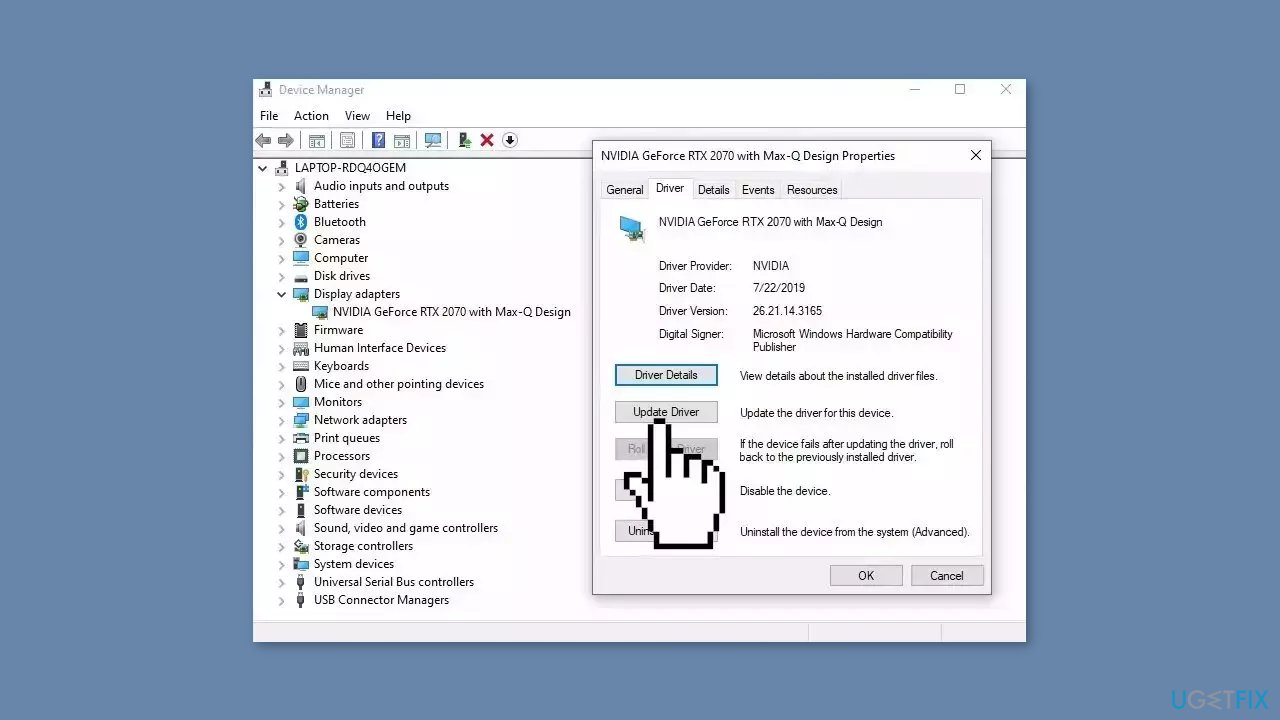
- If Windows doesn't find a new driver, you can try using an automatic tool like [rev id="DriverFix"] which can find the best drivers for your system
Method 5. Install the Update Manually
- Open your browser and go to the Microsoft Update Catalog.
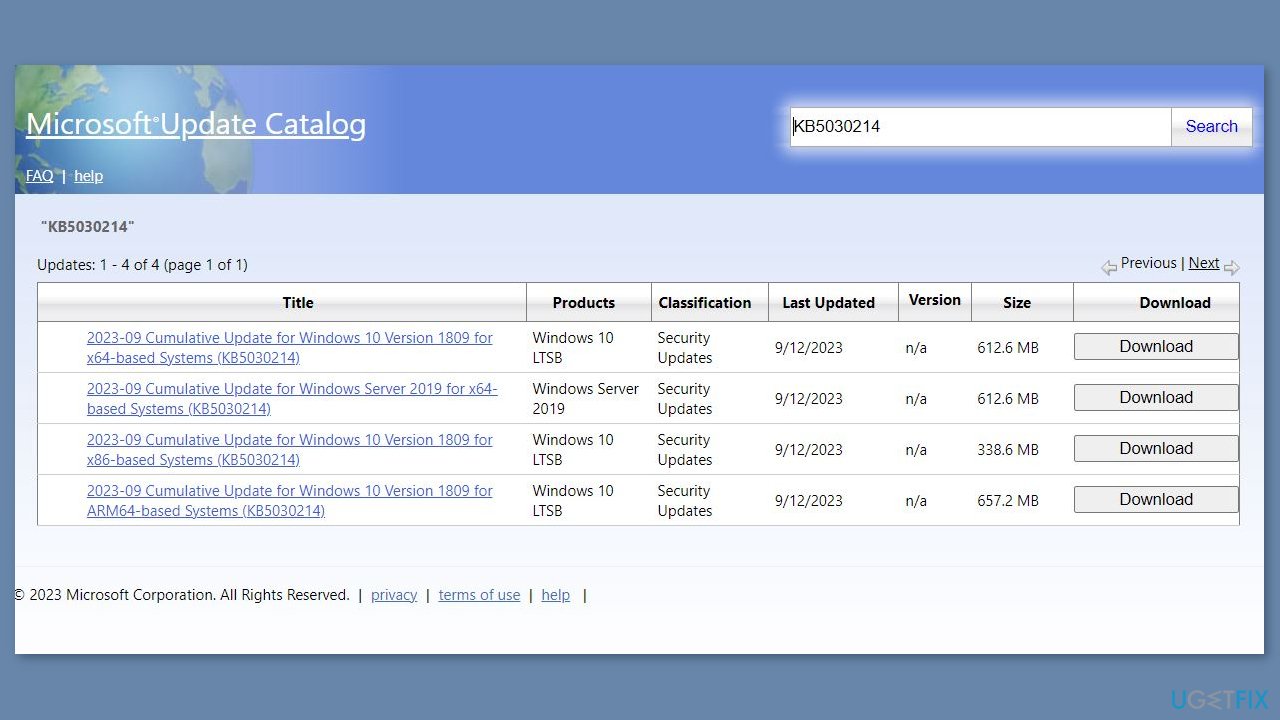
- You will be presented with several versions of the KB5030214 update.
- Find the correct update for your OS version (you can check it by right-clicking Start and picking System > Windows specifications > Version is what you are looking for) and click Download.
- Follow the on-screen instructions and install the update.
- Reboot your system.
Method 6. Try Clean Boot
- Open the Search menu, type in system configuration, and press Enter
- Under the Services tab, tick the Hide all Microsoft services box
- Click on Disable all button
- Head over to the Startup tab and click on Open Task Manager
- Select a third-party program and click on Disable at the top
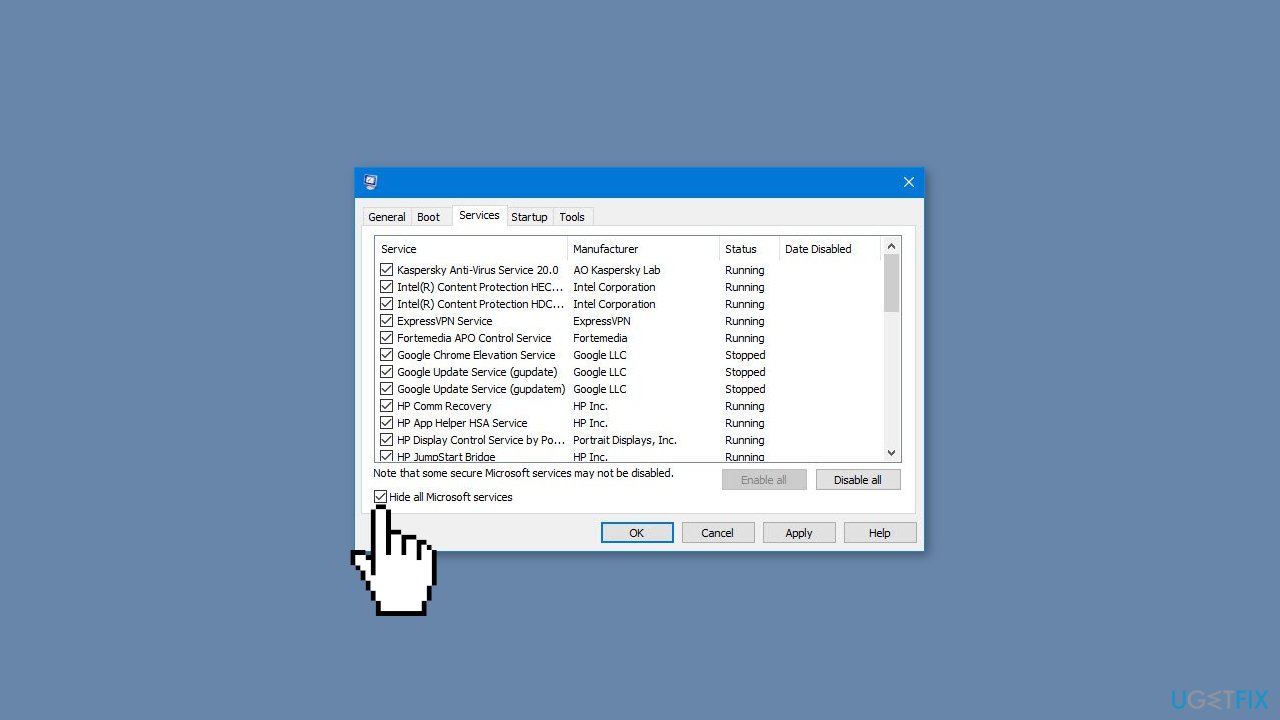
- Repeat this step to disable all third-party apps and programs
- Restart your PC to enter the clean boot state and see if the issue persists
- If the issue disappeared in the clean boot state, then you can be certain that a third-party app is causing it
- Go through all recently installed apps or programs and remove them one by one
Method 7. Use Media Creation Tool
- Visit the official Microsoft website and download Windows 10 installation media.
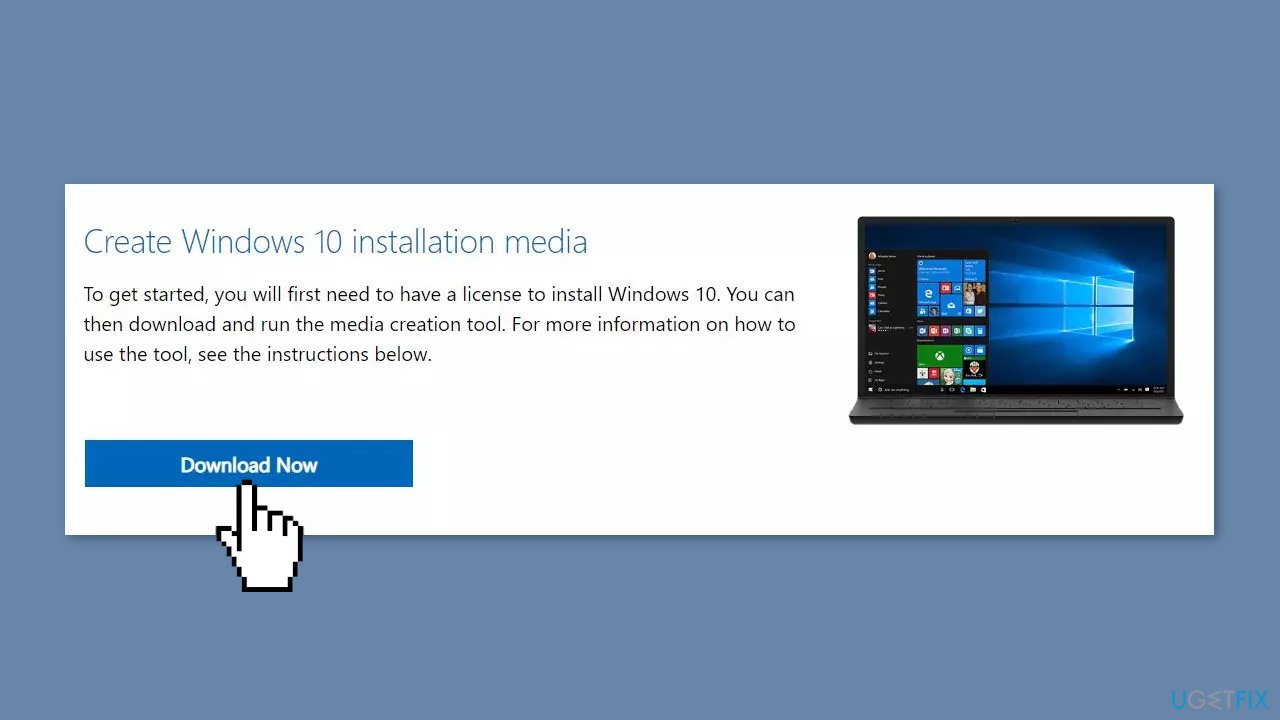
- Double-click the installer and select Yes when UAC shows up.
- Agree to terms and click Next.
- Select Upgrade this PC now and select Next.
- Proceed with on-screen instructions.
- Your PC will restart.
Bottom line
To fix the KB5030214 installation failure, users should ensure their systems are up to date and follow the provided 7 steps for troubleshooting. Additionally, running a system repair tool can help address underlying system errors. If these solutions do not resolve the issue, further investigation may be necessary.
Frequently asked questions
First, try running the Windows Update Troubleshooter to identify and fix any issues. If that doesn't work, consider manually downloading the update from the Microsoft Update Catalog.
Yes, third-party antivirus programs can interfere with the installation process, so it's recommended to temporarily disable them before attempting the update again.
Common error codes include 0x8007000E and 0x800F0922, which typically indicate memory issues or problems with the Windows Update components.




Report an issue
What's wrong with this guide? We review every report and update or remove content.
Report received — thank you. We'll review and fix it.
You need a free account to submit a report.
Be the first to comment