How to fix
KB5041881 fails to install
on Windows
Resolve KB5041881 installation issues in Windows 11 effortlessly with our expert-tested solutions. Fix it in minutes and stay updated!

What causes How to fix KB5041881 fails to install in Windows 11?
- Corrupted system files
- Corrupted update cache
- Conflicting updates
- Incompatible software
- Issues with Windows Update components
Repairs Windows system files, removes malware, and restores a clean OS state — without reinstalling.
Hello, I require some help and hopefully you can provide it for me. One of this month's updates (KB5041881) fails to install for me, and I am not quite sure what to do.
On August 30, 2024, Microsoft released Windows 11 Insider Preview Build 22635.4145 (KB5041881) to the Beta Channel, offering new features like the Microsoft 365 app pinned to the taskbar for quick access to Copilot, improvements to the Start menu, enhanced mouse settings, and a new Gamepad keyboard layout. The update also includes various fixes, such as resolving issues in File Explorer, hibernate errors, and BitLocker decryption problems.
However, some users have encountered issues when trying to install KB5041881 onto their Windows 11 devices. It reportedly doesn't succeed in installation; either it stops at a certain point during the download or gives an error message with no clear explanation. In such scenarios, users might find themselves unable to apply critical security patches, hence leaving the operating system vulnerable.
This could be for numerous reasons. Once in a while, this may happen because some system files or update cache are corrupted, and the system cannot process the update. The cause of such interruption of this installation process may come from conflicting updates or incompatible software.
To fix KB5041881 failing to install, users could try clearing the Windows Update cache, resetting update components, or using tools such as the Windows Update Troubleshooter to diagnose and repair the problem. Other options are manual downloading of the update and running an install from the Microsoft Update Catalog when the installation does not go through in an automatic mode. Specific instructions on how to do this are given further in the post.
If you would like a more straightforward approach, then use a reputable PC repair tool ([d1]) that finds and replaces corrupted files, system settings, and problems with updates.
Fix 1. Run Windows update troubleshooter
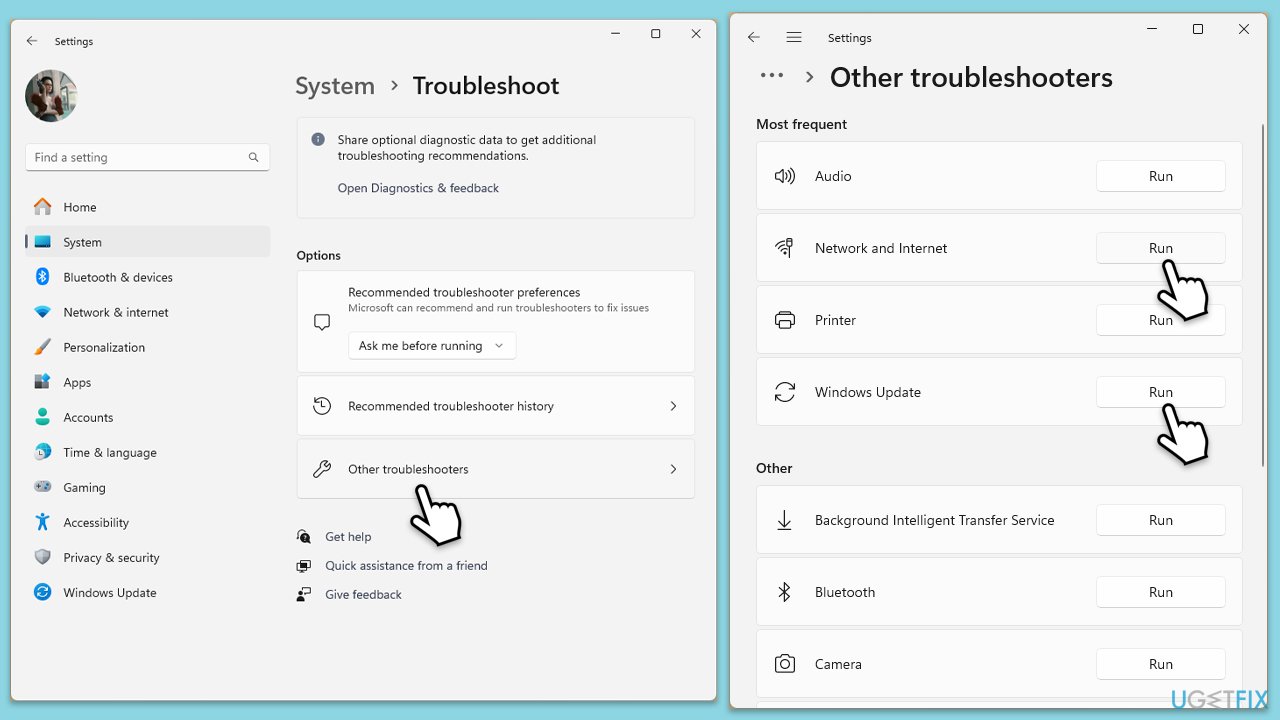
The Windows Update Troubleshooter can detect and automatically fix common update issues, including failed installations.
- Type Troubleshoot in Windows search and press Enter.
- Go to Other troubleshooters.
- Find Windows Update from the list and click Run.
- The troubleshooter will automatically scan your system for potential problems and display any issues it finds.
- If the troubleshooter finds any issues, it will provide recommended solutions.
- Repeat this with Network troubleshooter.
Fix 2. Reset Windows Update Components
Sometimes, manually resetting the Windows Update components can resolve issues with failed updates.
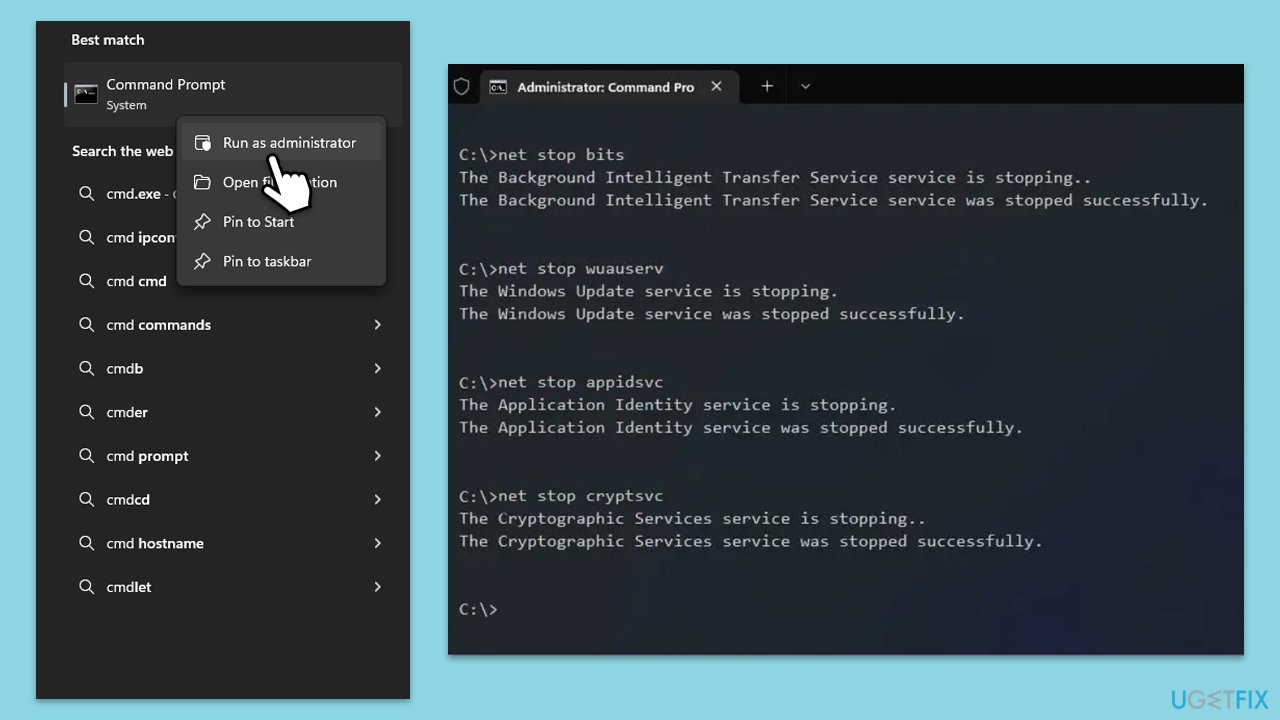
- Type cmd in Windows search.
- Right-click on Command Prompt and select Run as administrator.
- When the User Account Control window pops up, click Yes.
- Type the following commands one by one in Command Prompt and press Enter after each:
net stop wuauserv
net stop cryptSvc
net stop bits
net stop msiserver
Ren C:\Windows\SoftwareDistribution SoftwareDistribution.old
Ren C:\Windows\System32\catroot2 Catroot2.old - When these commands are executed, the last thing to do is to re-enable relevant services:
net start wuauserv
net start cryptSvc
net start bits
net start msiserver - Reboot your device.
Fix 3. Free up disk space
Lack of sufficient disk space can cause update failures. Freeing up space can allow the update to install correctly.
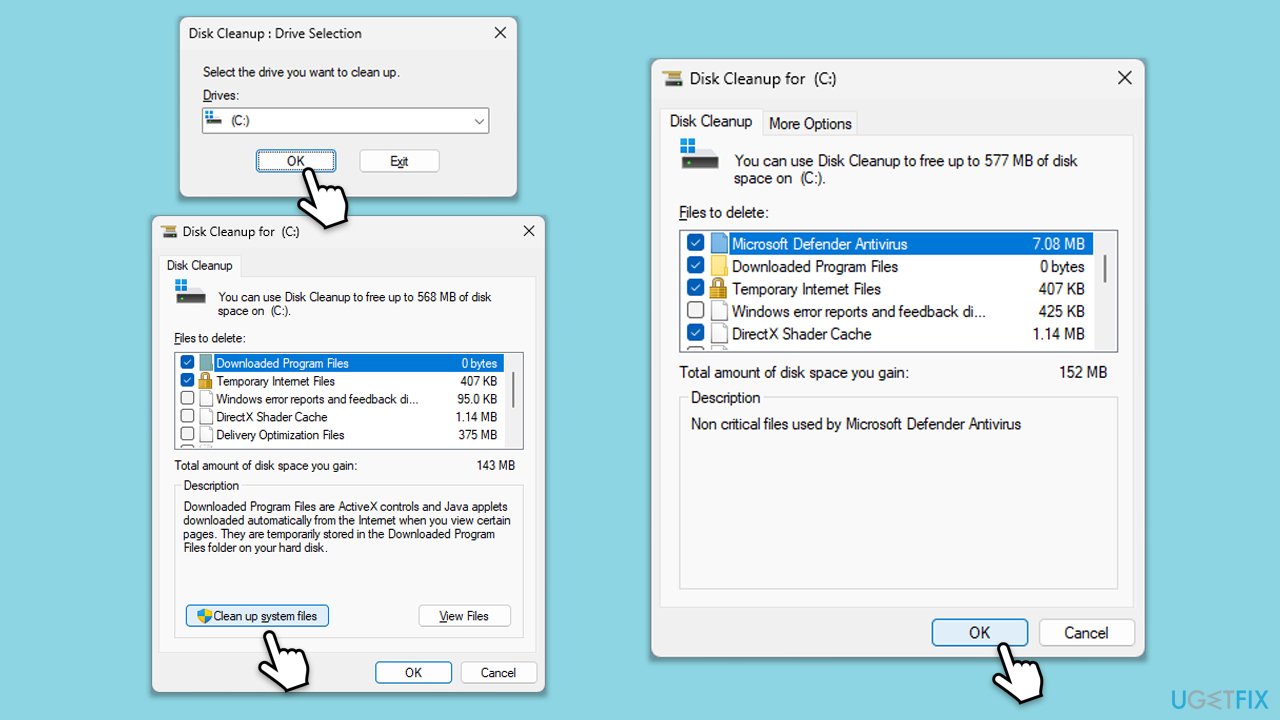
- Type Disk Cleanup in Windows search and press Enter.
- If your Windows is installed on drive C, pick it from the list (it should be by default) and press OK.
- Click Clean up system files.
- Select your main disk again and click OK.
- Here, select the largest portions of the data used - these typically include Temporary Internet Files, Windows Update, Temporary Files, Recycle Bin, Delivery Optimization Files, and others.
- Click OK - the process should be finished shortly.
Fix 4. Repair corrupted system files
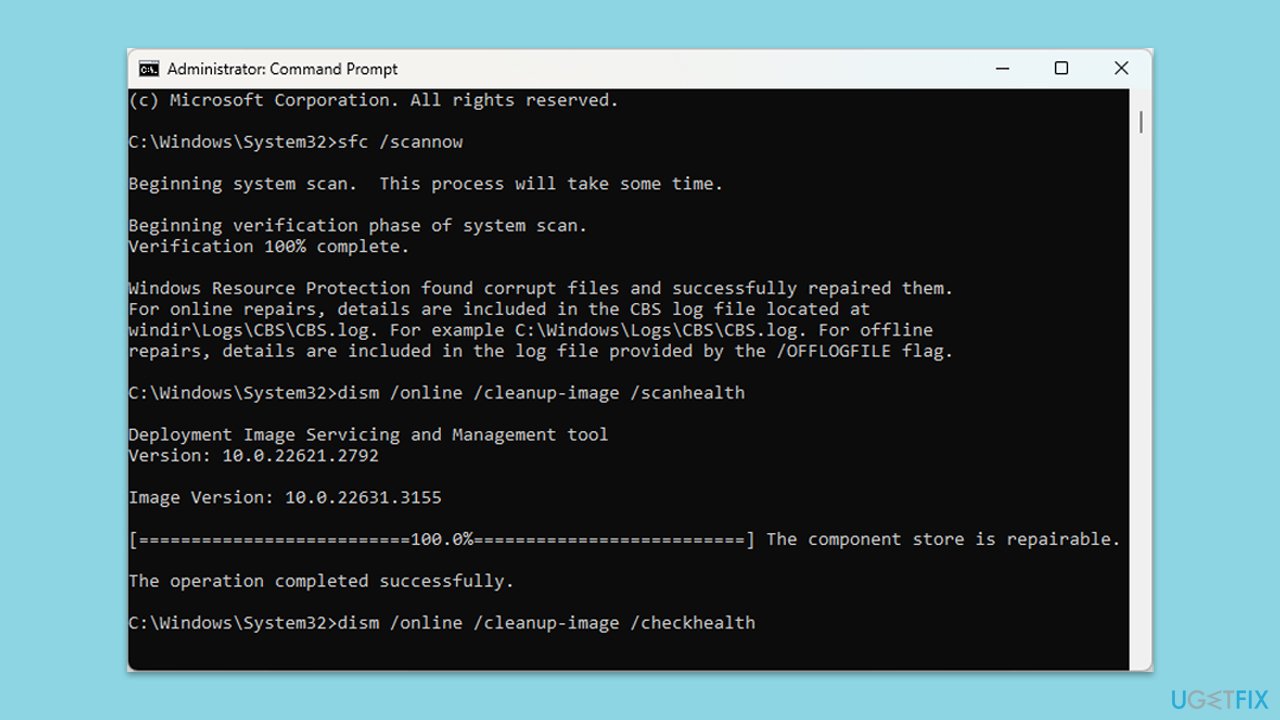
Corrupted system files can prevent updates from installing. Running the System File Checker (SFC) and DISM tools can repair these files.
- Open Command Prompt as administrator.
- Then, copy and paste the following command, pressing Enter after:
sfc /scannow - Wait till the scan is finished. If Windows finds system file integrity violations, it will attempt to fix them. After this, use the set of the following commands, pressing Enter each time:
DISM /Online /Cleanup-Image /CheckHealth
DISM /Online /Cleanup-Image /ScanHealth
DISM /Online /Cleanup-Image /RestoreHealth - Close down the Command Prompt and restart your device.
Fix 5. Perform a Clean Boot
A clean boot disables third-party software and services that might interfere with Windows Update.
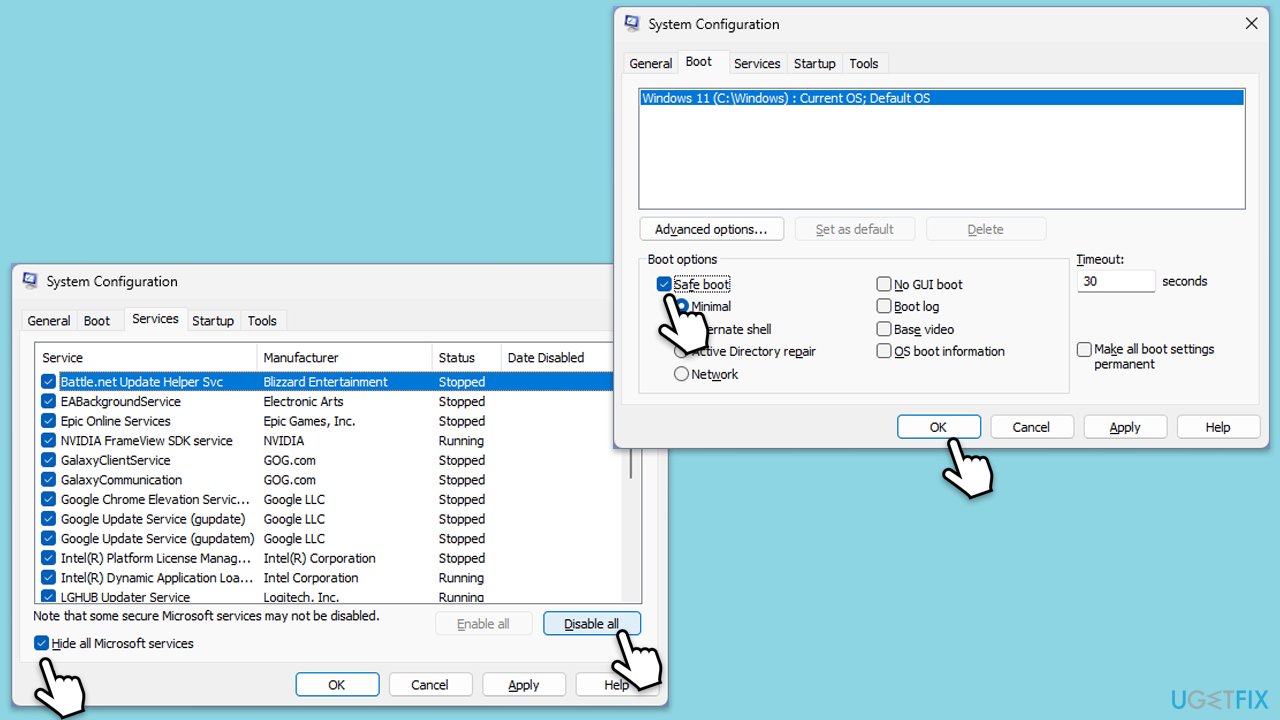
- Type msconfig in the Windows search box and press Enter.
- Pick the Services tab.
- Mark Hide all Microsoft services and select Disable all.
- Select the Startup tab and click Open Task Manager.
- In the Task Manager, right-click on each of the items and select Disable, then close the Task Manager.
- Go to the Boot tab, mark the Safe Boot option, then click Apply and OK.
- On the System Configuration window, click OK.
- Restart your PC and attempt to install the update.
Bottom line
To fix the KB5041881 installation failure, users can try clearing the Windows Update cache, resetting update components, or using the Windows Update Troubleshooter. If these methods do not resolve the issue, consider manually downloading the update from the Microsoft Update Catalog or using a reputable PC repair tool.
Frequently asked questions
First, try running the Windows Update Troubleshooter by going to Settings > Update & Security > Troubleshoot. If that doesn't work, consider resetting the Windows Update components to ensure a clean installation.
Yes, you can manually download the update from the Microsoft Update Catalog website and install it by following the on-screen instructions. Make sure to choose the correct version that matches your system architecture.
Common reasons include corrupted system files, insufficient disk space, or conflicts with third-party software. Running a system file check or ensuring enough storage can often resolve these issues.




Report an issue
What's wrong with this guide? We review every report and update or remove content.
Report received — thank you. We'll review and fix it.
You need a free account to submit a report.
Be the first to comment