How to fix
KB5046732 fails to install
on Windows
Resolve KB5046732 installation issues in Windows 11 with expert-tested solutions for a smooth system update. Fix it in minutes with clear guidance!

What causes How to fix KB5046732 fails to install in Windows 11?
- Corrupted update components
- Insufficient disk space
- Malware or security conflicts
- Service configuration issues
- System file corruption
Repairs Windows system files, removes malware, and restores a clean OS state — without reinstalling.
Hello. I was wondering if you could help me with KB5046732 failing to install. I tried running the troubleshooter, but it did not find anything wrong. And now I am stuck here with the updates pending.
KB5046732 is designed to address user experience enhancements and fixes, such as improvements to taskbar features, updates to File Explorer for better Android integration, and expanded privacy settings. It also includes refinements to Dynamic Lighting settings, Task Manager dark mode support, and gaming stability improvements.
Why does KB5046732 fails to install?
Several factors can lead to KB5046732 failing to install:
- Corrupted update components. Windows Update relies on certain files and services, which, if corrupted, can halt the installation process.
- Insufficient disk space. Updates often require temporary storage during installation. Lack of free space can disrupt the process.
- Malware or security conflicts. Malicious software or overly aggressive antivirus settings may block the update.
- Service configuration issues. Essential services like Windows Update or Background Intelligent Transfer Service (BITS) may be disabled or misconfigured.
- System file corruption. Damaged system files critical to Windows functionality can prevent updates from being applied.
To solve a problem with KB5046732 failing to install, numerous methods should be tried; first, restart critical services like Windows Update and the Background Intelligent Transfer Service to ensure that download and install update components are running okay.
Another great approach would be to clear the update cache by removing the temporary files in the SoftwareDistribution folder. This would ensure that problems caused by any corrupted update components are resolved. Additionally, ensuring that enough disk space is available is critical because lack of storage disrupts the process of installation. Running SFC and DISM scans may help to find and repair corrupted system files that interfere with the update process.
For automated solutions, using a reliable repair tool like [d1] can detect and address underlying issues affecting updates. If these steps do not work, manually downloading the update from the Microsoft Update Catalog can often bypass problems with automatic installation.
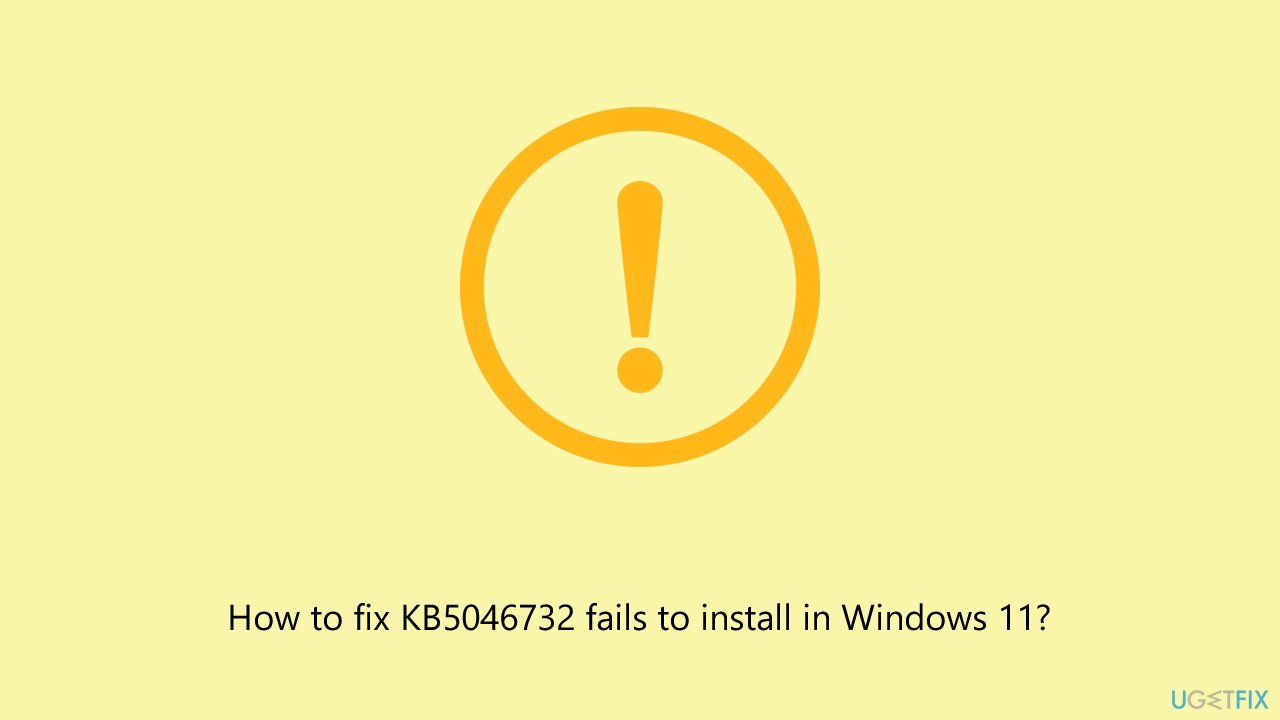
Fix 1. Run Windows update and network troubleshooters
If you haven't done so, it is recommended you start by running troubleshooters that could look into Windows update and network issues.
- Type Troubleshoot in Windows search and press Enter.
- Go to Other troubleshooters.
- Find Windows Update from the list and click Run.
- The troubleshooter will automatically scan your system for potential problems and display any issues it finds.
- If the troubleshooter finds any issues, it will provide recommended solutions.
- Repeat this process with Network & internet troubleshooter to check for connection issues.
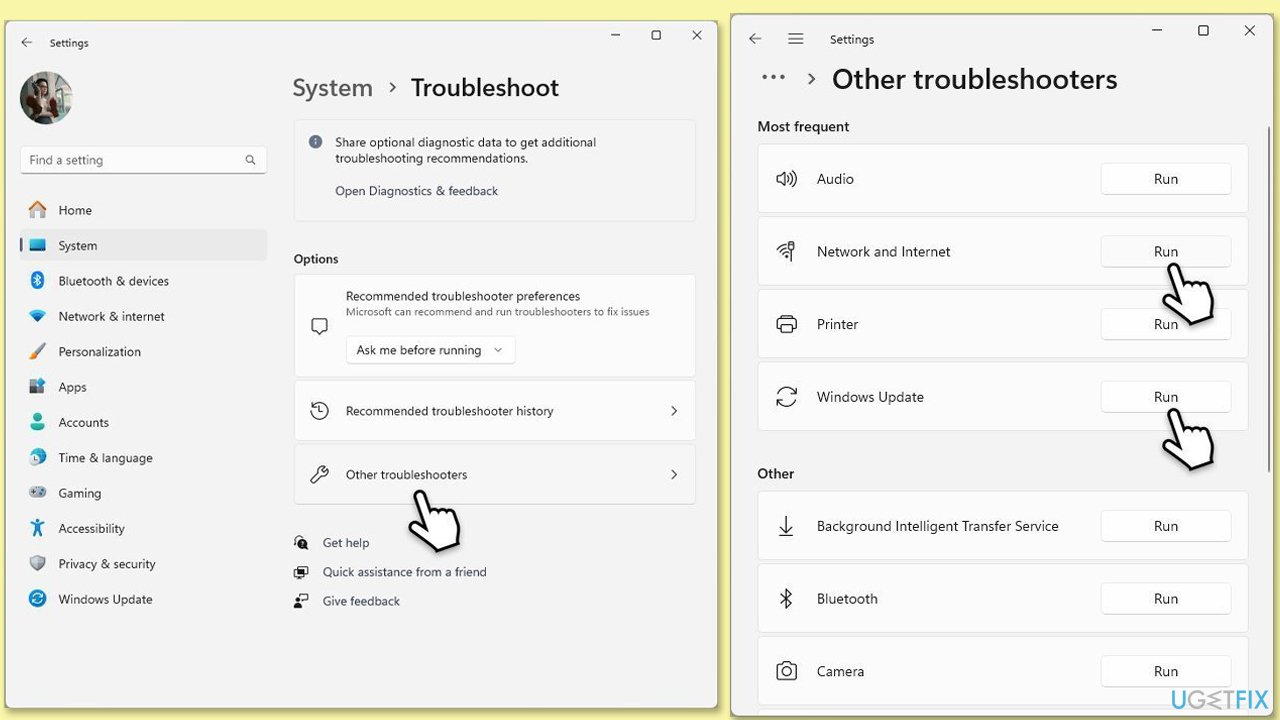
Fix 2. Run Disk Cleanup
Disk Cleanup is useful when your system lacks space or certain cache files, such as Windows update cache files in this case, are corrupted or bugged.
- Type Disk Cleanup in Windows search and press Enter.
- If your Windows is installed on drive C, pick it from the list (it should be by default) and press OK.
- Click Clean up system files.
- Select your main disk again and click OK.
- Here, select the largest portions of the data used - these typically include Temporary Internet Files, Windows Update, Temporary Files, Recycle Bin, Delivery Optimization Files, and others.
- Click OK - the process should be finished shortly.
Fix 3. Fix corrupted system files
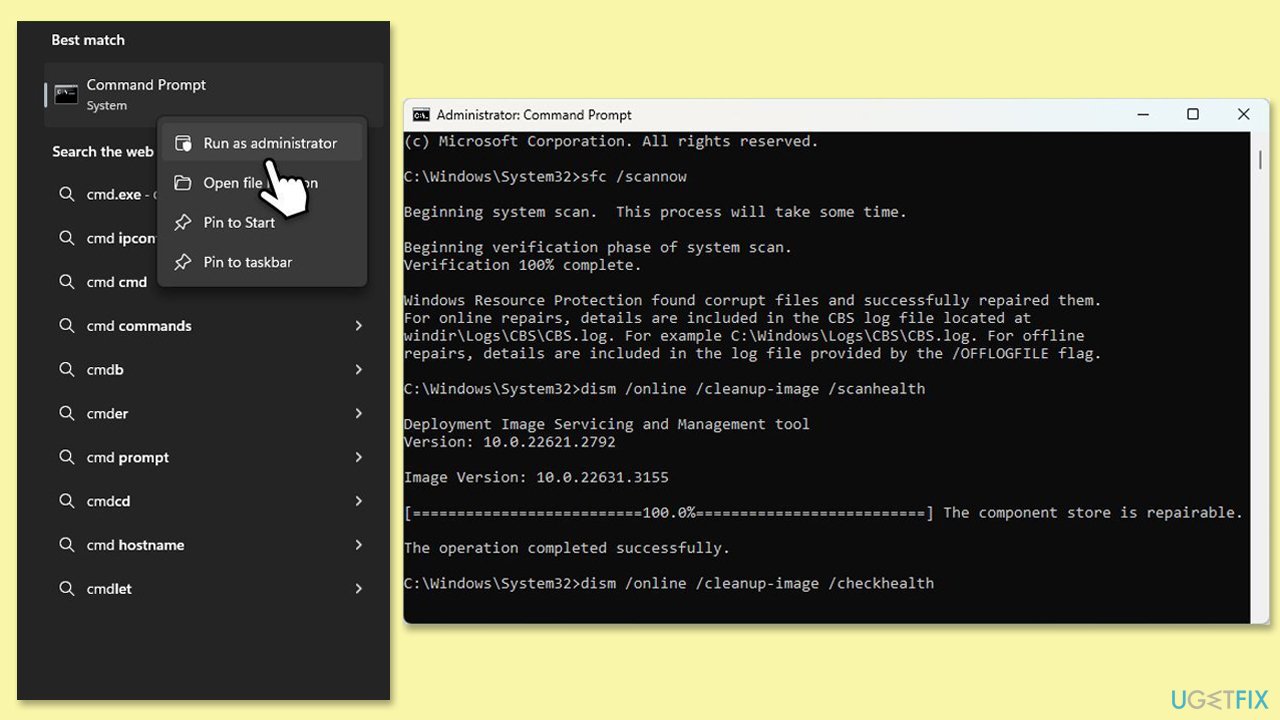
To deal with system file corruption, run SFC and DISM scans via elevated Command Prompt.
- Type cmd in Windows search.
- Right-click on Command Prompt and pick Run as administrator.
- When UAC asks you whether you want to make changes, agree by pressing Yes.
- Next, copy and paste the following commands, pressing Enter each time:
sfc /scannow
DISM /Online /Cleanup-Image /CheckHealth
DISM /Online /Cleanup-Image /ScanHealth
DISM /Online /Cleanup-Image /RestoreHealth
(Note: if you get an error executing the last command, add /Source:C:\RepairSource\Windows /LimitAccess to it and try again.) - Restart your device.
Fix 4. Reset Windows update components
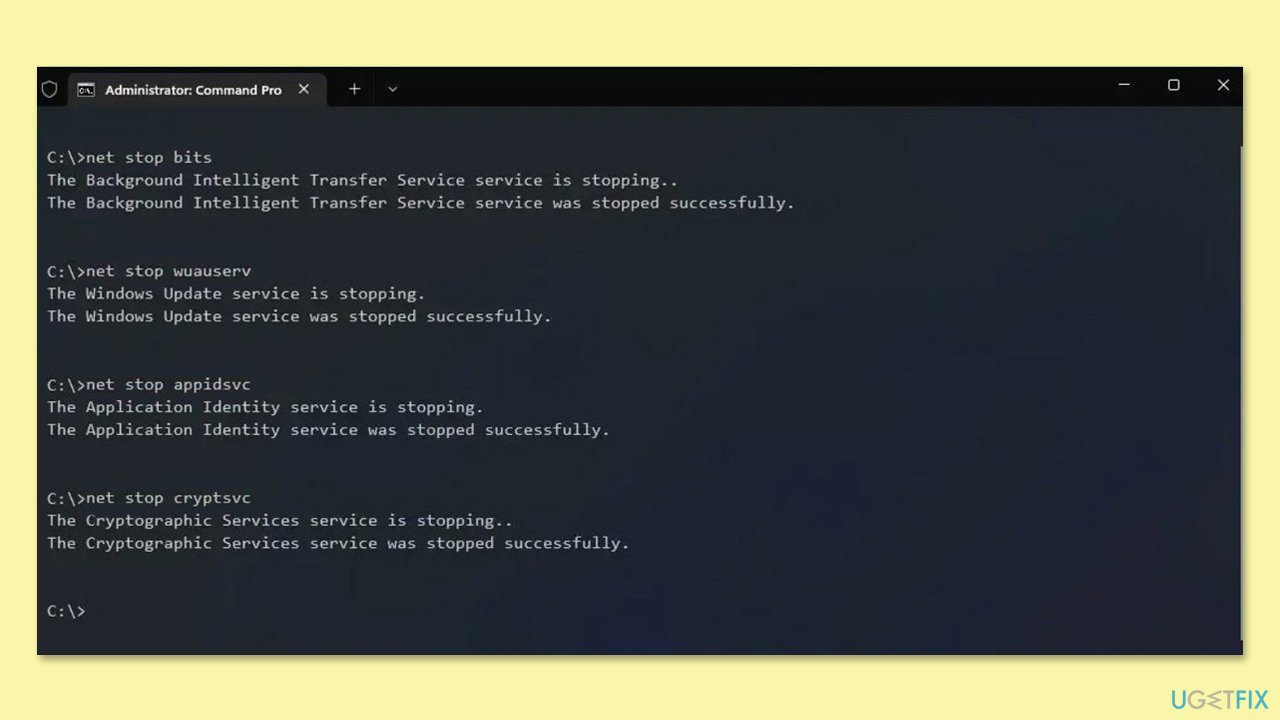
- Open Command Prompt as administrator.
- Copy and paste each of these commands, pressing Enter each time:
net stop bits
net stop wuauserv
net stop appidsvc
net stop cryptsvc
Del “%ALLUSERSPROFILE%\Application Data\Microsoft\Network\Downloader\*.*”
rmdir %systemroot%\SoftwareDistribution /S /Q
rmdir %systemroot%\system32\catroot2 /S /Q
regsvr32.exe /s atl.dll
regsvr32.exe /s urlmon.dll
regsvr32.exe /s mshtml.dll
netsh winsock reset
netsh winsock reset proxy
net start bits
net start wuauserv
net start appidsvc
net start cryptsvc - Restart your computer.
Fix 5. Check relevant services
Windows-update related services should be running for the updates to succeed.
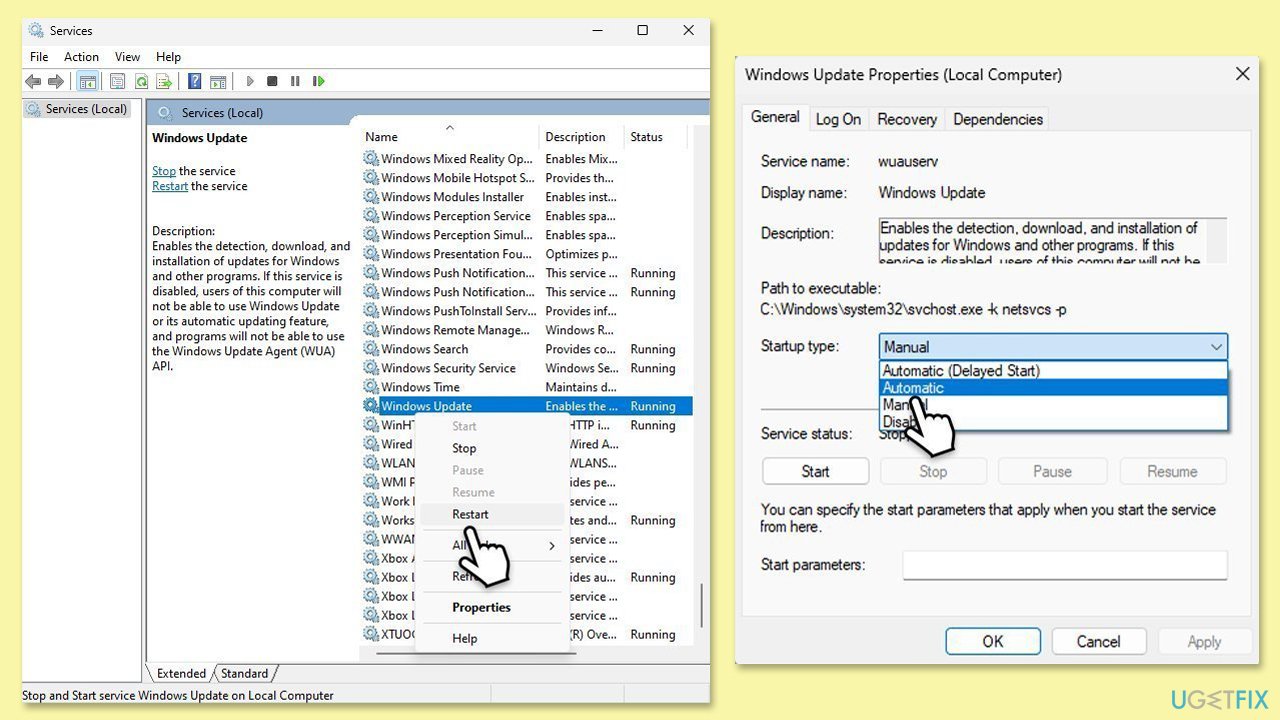
- Type in Services in Windows search and press Enter.
- Scroll down a bit to find Windows Update.
- If it is already running, right-click and select Restart.
- If the service is not running, double-click it, and pick Automatic under the Startup type drop-down menu.
- Click Start, Apply, and OK.
- Repeat the process with the Background Intelligent Transfer Service (BITS), Cryptographic, and Windows Installer services.
Fix 6. Install the update manually
If automatic methods do not work, you can always try to install the update via Microsoft Update catalog.
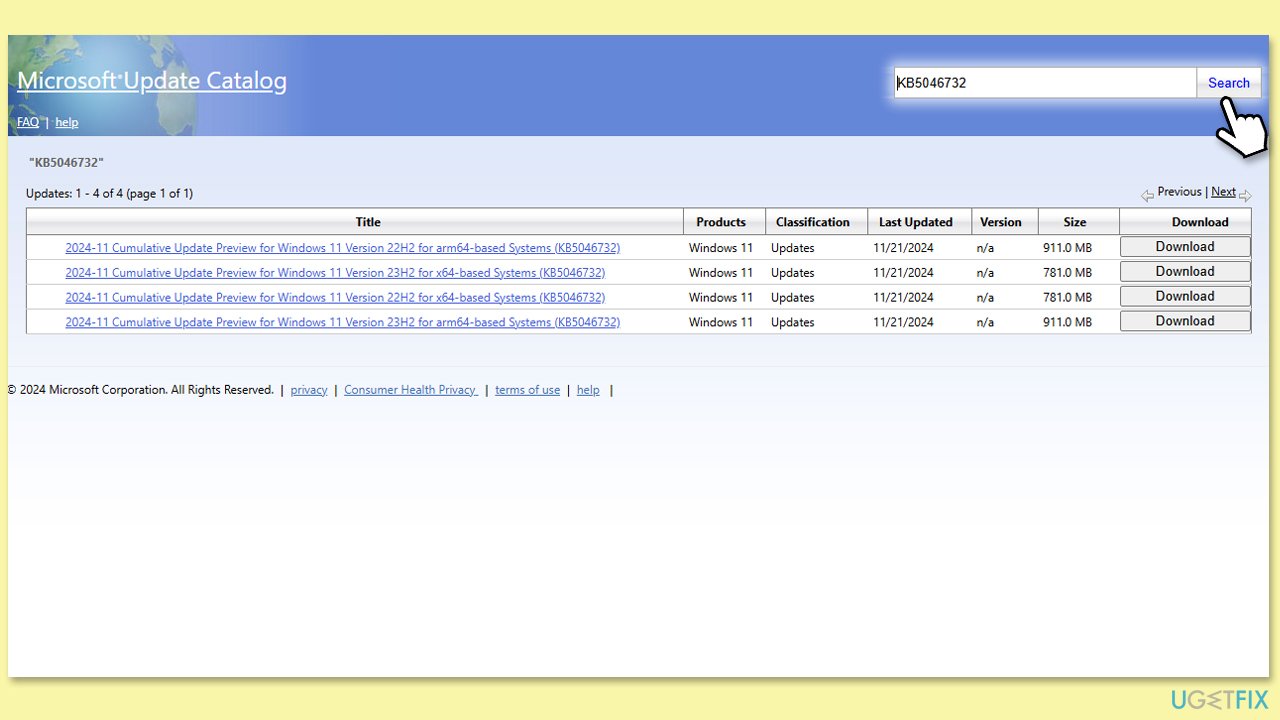
- Open your browser and go to Microsoft Update Catalog.
- In the search box, type in KB5046732 and press Search.
- Find the correct version of the update for your operating system (to check this, right-click on Start and pick System. Under Windows specifications, check the Version) and click Download.
- Follow on-screen guidelines to finish the installation process and restart your computer.
Fix 7. Check for software conflicts
Before accessing Clean boot, we recommend you scan your system with a reliable anti-malware software. If no infections are found, you can always try disabling your security software temporary.
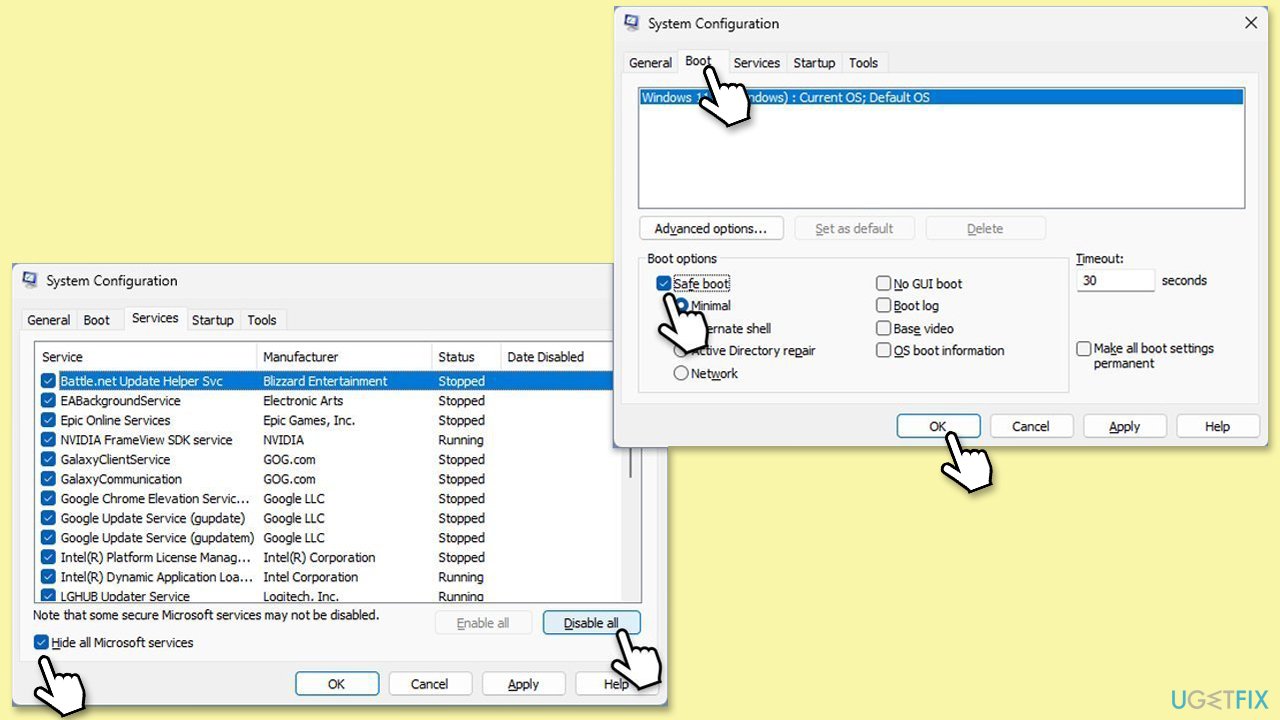
- Type msconfig in Windows Search and press Enter to open the System Configuration window.
- Click on the Services tab and check the Hide all Microsoft Services box.
- Click Disable all to disable non-Microsoft services, then click the Startup tab.
- Open the Task Manager, disable all startup items, and close the Task Manager.
- Go to the Boot tab and mark the Safe boot option.
- Click OK on the System Configuration window and restart your device.
- Try installing update again.
Bottom line
To fix KB5046732 failing to install, you can restart critical services, clear the update cache, ensure sufficient disk space, and run SFC and DISM scans. If these methods do not resolve the issue, consider using a reliable repair tool or manually downloading the update from the Microsoft Update Catalog.
Frequently asked questions
Try running the Windows Update Troubleshooter to detect and fix issues automatically. If that doesn't work, consider manually downloading the update from the Microsoft Update Catalog.
Yes, common error codes include 0x800f0922 and 0x80073701, which indicate problems with Windows Update components or system files.
Yes, temporarily disabling your antivirus software can help resolve conflicts that may prevent the update from installing, but remember to re-enable it afterward.




Report an issue
What's wrong with this guide? We review every report and update or remove content.
Report received — thank you. We'll review and fix it.
You need a free account to submit a report.
Be the first to comment