How to fix
KB5053598 fails to install
on Windows
Resolve the KB5053598 installation error in Windows 11 effortlessly with our expert-tested solutions. Get your PC running smoothly again! Fixed in minutes.

What causes How to fix KB5053598 fails to install in Windows 11?
- General issues
- System file corruption
- Bugged caches
- Conflicting software
Repairs Windows system files, removes malware, and restores a clean OS state — without reinstalling.
How can I update Windows if KB5053598 is not installing for me? I tried restarting the PC, running the troubleshooter, and waiting for several hours - nothing is helping. Anything else I can do?
Windows 11 receives regular updates to enhance security, fix bugs, and introduce new features. One aspect of this update process is Patch Tuesday, which occurs on the second Tuesday of each month, and when Microsoft cumulatively updates systems to maintain them as secure and up-to-date as possible.
Microsoft released the KB5053598 update on March 11, 2025, as OS Build 26100.3476. The cumulative update includes security improvements and other fixes to enhance system performance and reliability. Further information regarding this update can be found on the official Microsoft support website.
Unfortunately, there have been complaints from some of the users about instances where KB5053598 fails to install and has glitched out during update. This can not only prevent the newest improvements and bug fixes to be implemented, but also leave the device potentially vulnerably to cyberattacks.
As with any update-related issue, there is no one solution that would work for all. The causes why KB5053598 will not install could vary, necessitating a range of troubleshooting measures. Below, we have come up with a step-by-step guide to resolve this problem considering various possible causes:
-
General issues. Running the Windows Update troubleshooter can help identify and resolve common problems that prevent updates from installing.
-
System file corruption. Corrupted system files can block updates from installing. Repairing these manually or using the assistance of specialized tools such as [d1] will restore system integrity and enable updates to install successfully.
-
Bugged caches. Corrupted or outdated cache files can interfere with the updating process. Flushing Windows Update components will delete these caches and allow updates to proceed.
- Conflicting software. Third-party software, more so security software, in some instances may hinder updates from being installed. Isolating and temporarily uninstalling any such software may resolve installation issues.
By performing the appropriate measures based on the specific cause, users can overcome issues of KB5053598 not installing and keep their Windows 11 systems updated and secure.
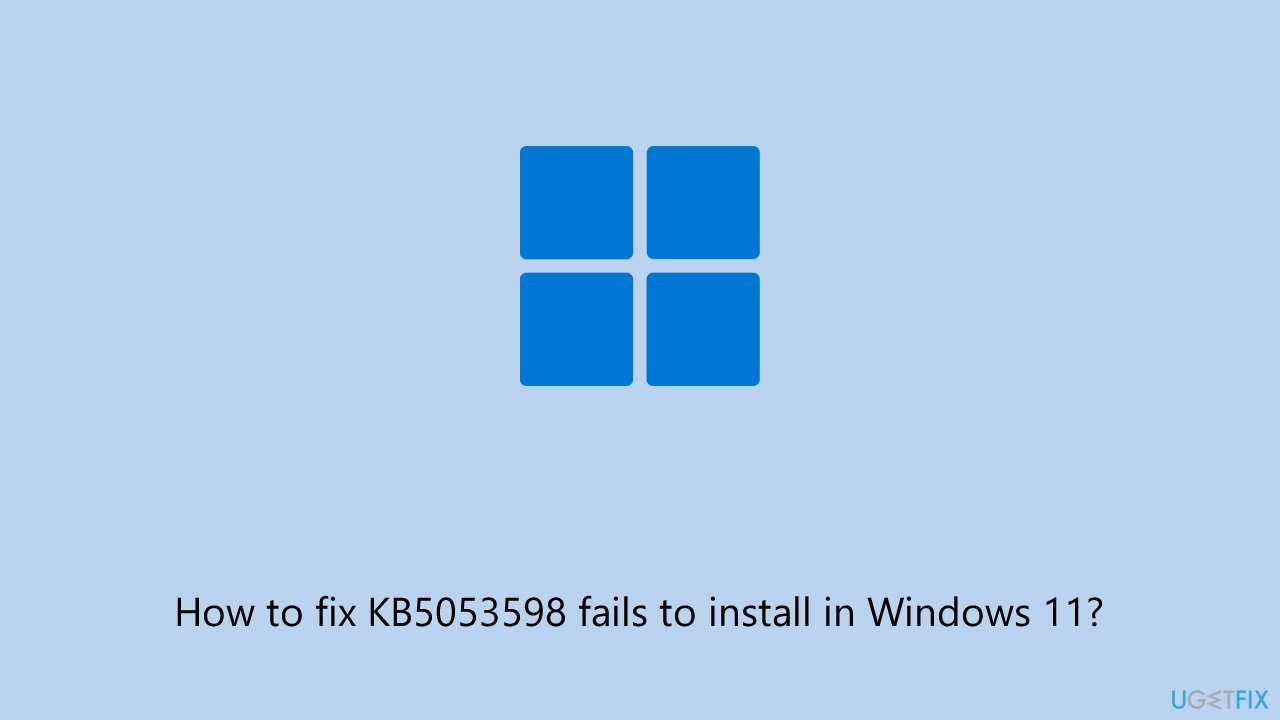
Fix 1. Run troubleshooters
Windows has built-in troubleshooters that can detect and resolve common update issues, as well as network problems.
- Type Troubleshoot in Windows search and press Enter.
- Go to Other troubleshooters.
- Find Windows Update from the list and click Run.
- The troubleshooter will automatically scan your system for potential problems and display any issues it finds.
- If the troubleshooter finds any issues, it will provide recommended solutions.
- Repeat this process with Network & Internet troubleshooter.
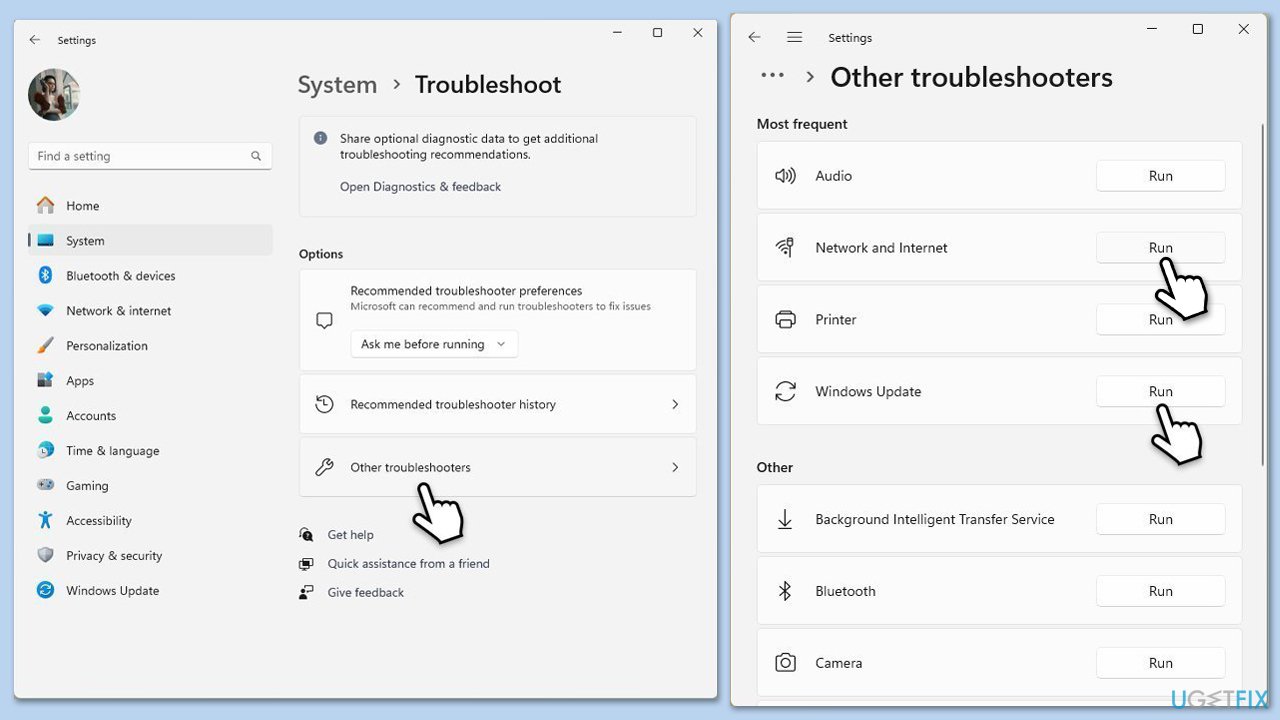
Fix 2. Perform Disk Cleanup
Insufficient storage can prevent Windows from downloading and installing updates. Clearing unnecessary files can free up space and allow the update to proceed.
- Type Disk Cleanup in Windows search and hit Enter.
- If your Windows is installed on drive C, pick it from the list (it should be by default) and press OK.
- Click Clean up system files.
- Select your main disk again and click OK.
- Here, select the largest portions of the data used - these typically include Temporary Internet Files, Windows Update, Temporary Files, Recycle Bin, Delivery Optimization Files, and others.
- Click OK - the process should be finished shortly.
Fix 3. Reset Windows Update components
Corrupted update files or services can cause installation failures. Resetting Windows Update components clears the cache and reinitializes the update process.
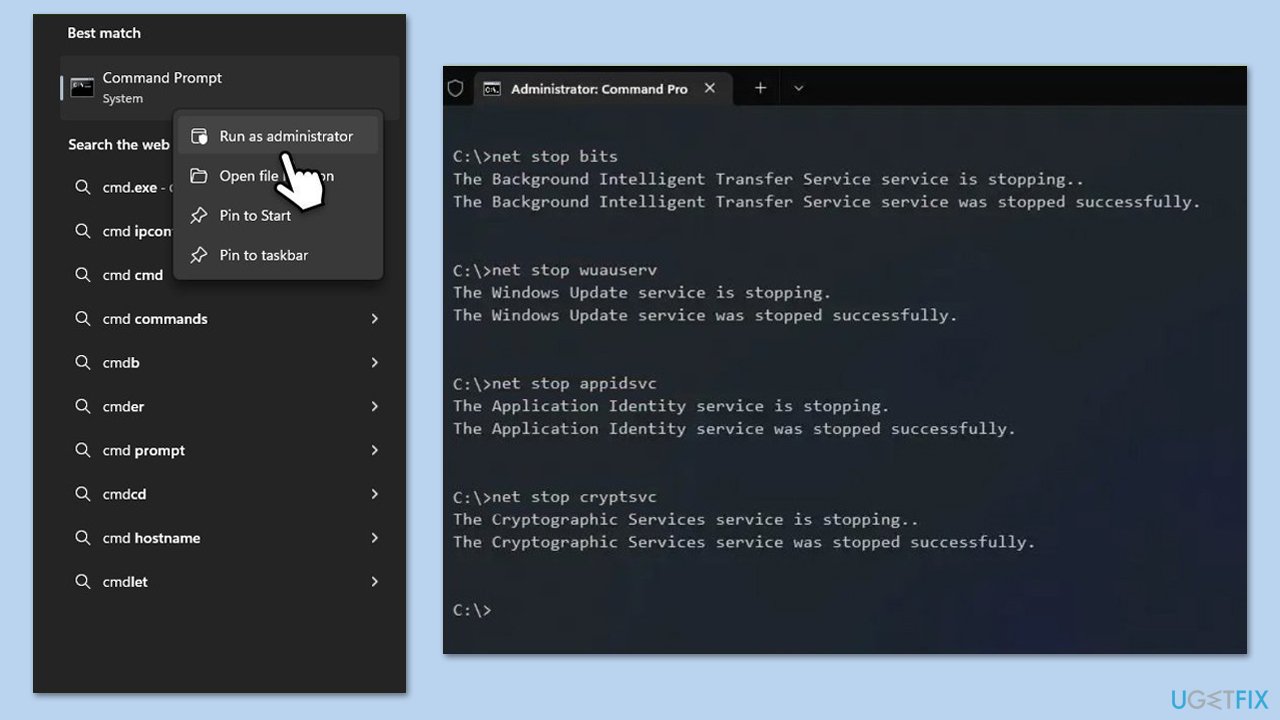
- Type in cmd in Windows search.
- Right-click on Command Prompt and select Run as administrator.
- User Account Control window will show up - click Yes when prompted.
- Stop the Windows Update Services by entering the following commands, one at a time, and pressing Enter after each:
net stop wuauserv
net stop cryptSvc
net stop msiserver
net stop bits - Rename the SoftwareDistribution and Catroot2 folders with the following commands:
ren C:\Windows\SoftwareDistribution SoftwareDistribution.old
ren C:\Windows\System32\catroot2 catroot2.old - Restart the services you stopped earlier with these commands:
net start wuauserv
net start cryptSvc
net start msiserver
net start bits - Close the Command Prompt window and try updating Windows again.
Fix 4. Run the System File Checker and DISM
Corrupt system files can interfere with Windows updates. Running these built-in repair tools can restore missing or damaged files.
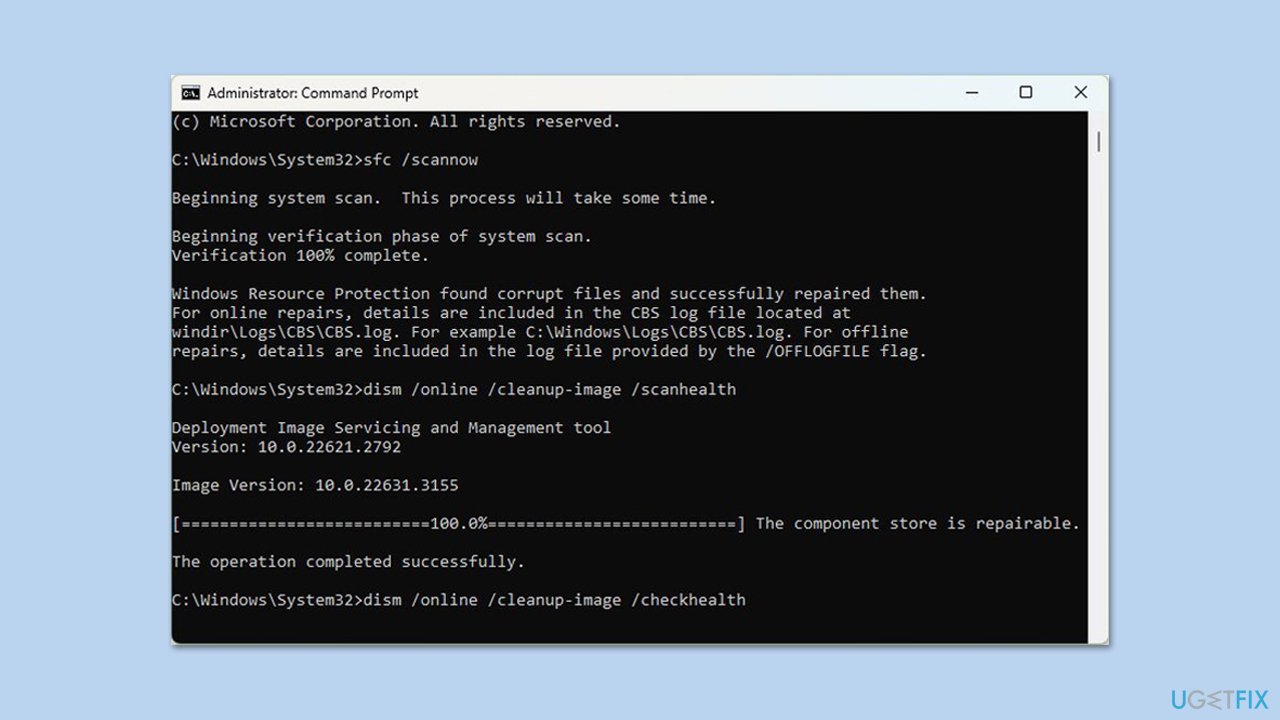
- Open Command Prompt as administrator.
- Then, copy and paste the following command, pressing Enter after:
sfc /scannow - Wait till the scan is finished. If Windows finds system file integrity violations, it will attempt to fix them. After this, use the set of the following commands, pressing Enter each time:
DISM /Online /Cleanup-Image /CheckHealth
DISM /Online /Cleanup-Image /ScanHealth
DISM /Online /Cleanup-Image /RestoreHealth - (Note: if you get an error executing this last command, add /Source:C:\RepairSource\Windows /LimitAccess to it and try again).
- Close down the Command Prompt and restart your computer.
Fix 5. Install the update manually
If Windows Update fails to install KB5053598 automatically, downloading and installing it manually from the Microsoft Update Catalog can be an alternative solution.
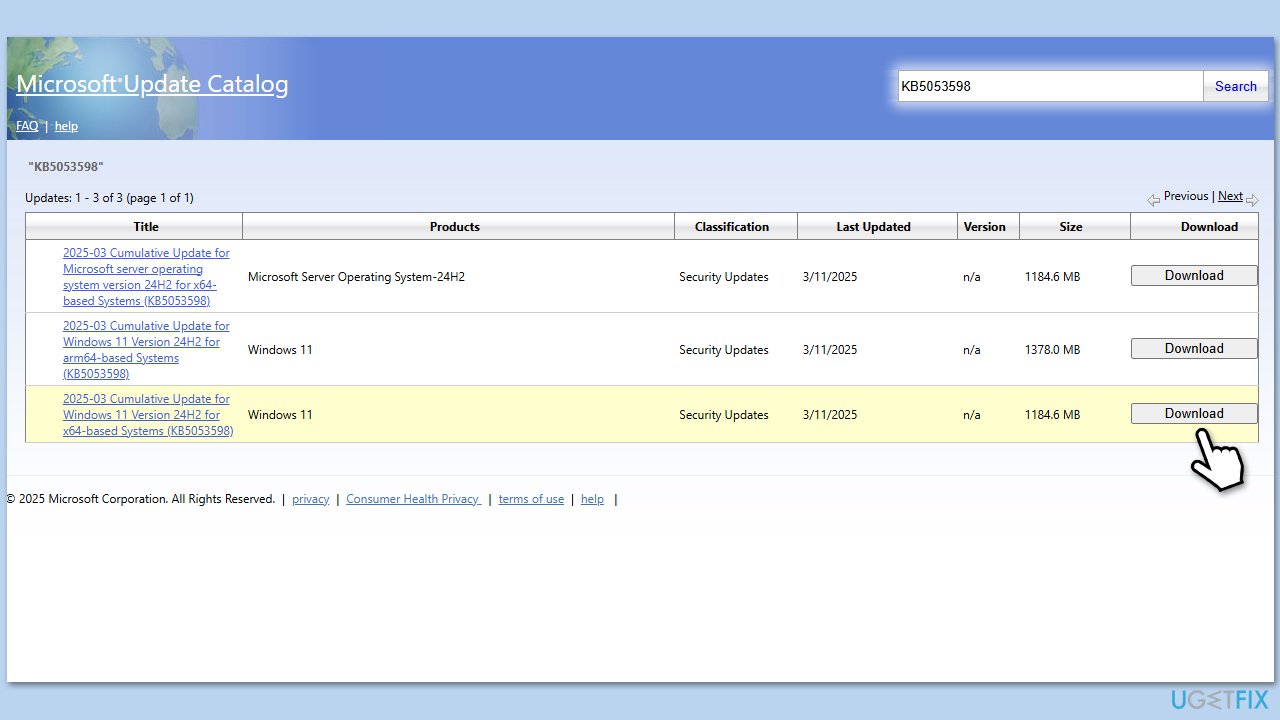
- Go to the official Microsoft Update Catalog website.
- Type the KB number into the search bar (in this case, KB5053598), and click Search.
- You will find many different versions on the update – you need to find the one that matches your PC specs and Windows version (as a home user, ignore Windows server versions).
- After picking the correct version, click the Download button and proceed with the on-screen instructions.
- Restart your computer to implement the new updates.
Fix 6. Enable Windows Update services
If essential update services are disabled, Windows might fail to install updates.
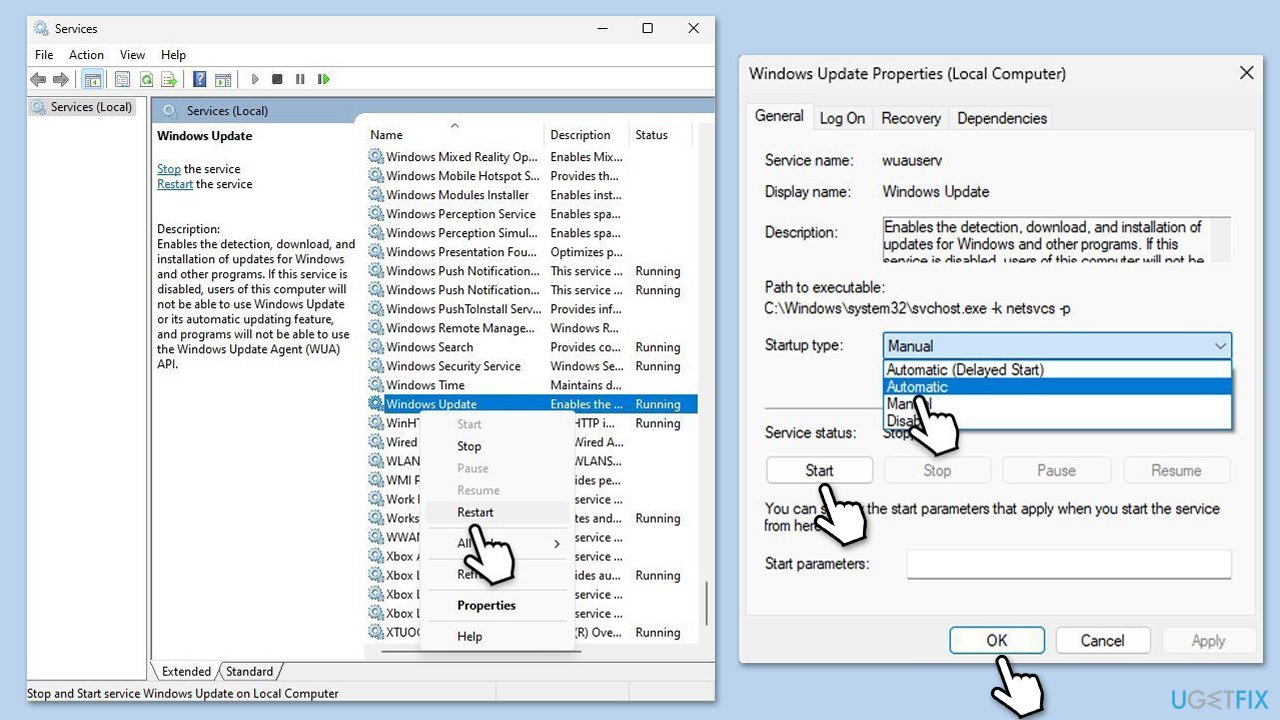
- Type Services in the Windows search bar and press Enter.
- Next, locate the Background Intelligent Transfer Service, Cryptographic Service, and Windows Update Service by scrolling through the list of services.
- Right-click on each service, and from the context menu, select Restart.
- In case a service is not running, double-click on it and select Automatic under the Startup type. Afterward, click on Start and then click OK.
Fix 7. Perform a Clean Boot
Conflicting background programs can interfere with Windows updates. Performing a clean boot starts Windows with minimal services and can help pinpoint software conflicts.
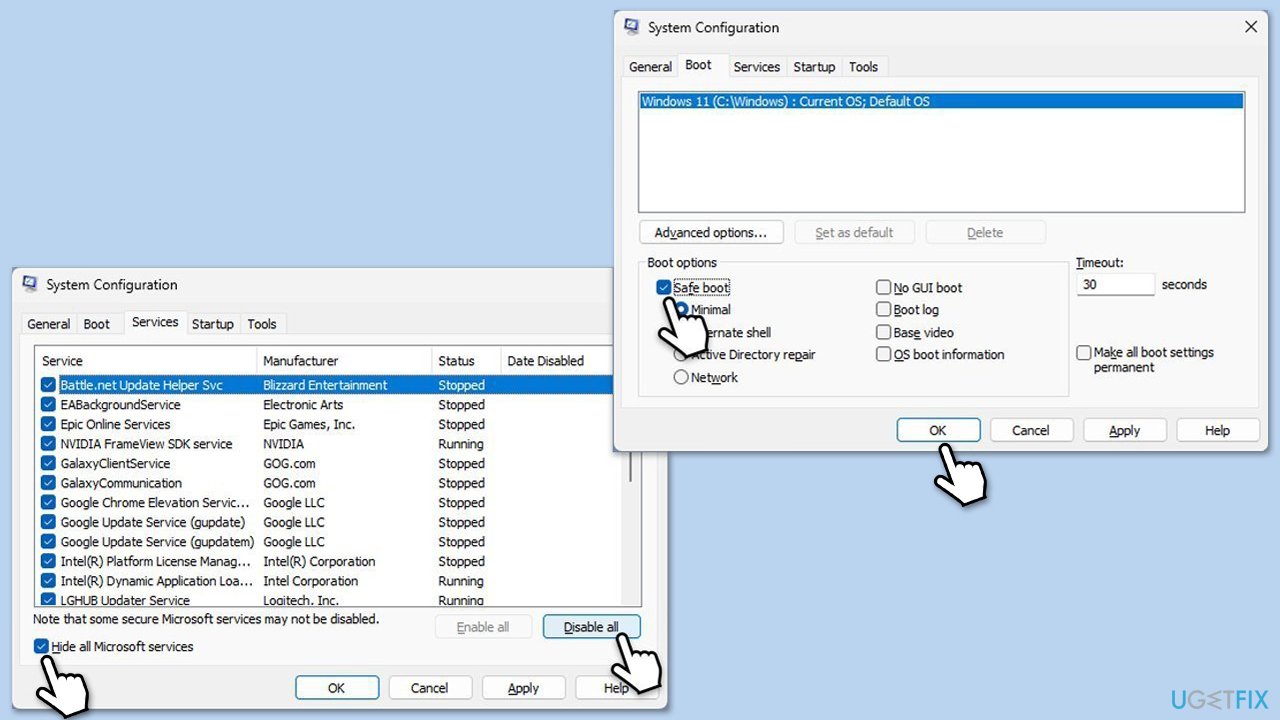
- Type msconfig in Windows Search and press Enter.
- Click on the Services tab and check the Hide all Microsoft Services box.
- Click Disable all to disable non-Microsoft services, then click the Startup tab.
- Open the Task Manager, disable all startup items, and close the Task Manager.
- Go to the Boot tab and mark the Safe boot option.
- Click OK on the System Configuration window and restart your computer.
- Try installing the update again.
Bottom line
To resolve the KB5053598 installation issue, users can run the Windows Update troubleshooter, repair corrupted system files, flush Windows Update components, and temporarily uninstall conflicting third-party software. If these measures do not resolve the problem, further investigation or assistance from Microsoft support may be necessary.
Frequently asked questions
First, try running the Windows Update Troubleshooter to identify and fix any issues. If that doesn't work, consider manually downloading the update from the Microsoft Update Catalog.
Yes, you can uninstall the update by going to Settings > Update & Security > Windows Update > View update history > Uninstall updates.
Make sure your Windows 11 is fully updated and that you have enough disk space, as insufficient space can cause installation failures.



Report an issue
What's wrong with this guide? We review every report and update or remove content.
Report received — thank you. We'll review and fix it.
You need a free account to submit a report.
Be the first to comment