How to fix
KB5053656 fails to install
on Windows
Resolve KB5053656 installation issues on Windows 10 effortlessly. Get expert-tested solutions to fix the error fast and efficiently.

What causes How to fix KB5053656 fails to install in Windows 10?
- Weak Internet Connection
- Corrupted System Files
- Low Disk Space
- Antivirus Software Interference
Repairs Windows system files, removes malware, and restores a clean OS state — without reinstalling.
KB5053656 is not installing for me today, and it's kind of weird because it goes almost all the way to 100% and then just stops. Could you help me with this? I'm on Windows 10 22H2.
Windows update failure is a common annoyance, typically blocking users from installing critical security patches, feature updates, and performance enhancements. When they happen, your system is deprived of valuable improvements. One update recently giving people headaches is KB5053656, which has been refusing to install for some individuals.
What is KB5053656?
KB5053656 is a cumulative update preview for Windows 11, version 23H2, released on March 25, 2025. It delivers bug fixes and minor tweaks to enhance system stability. As a preview build, it’s an optional release Microsoft uses to test upcoming changes before the next big update - ideal for early adopters, though it can sometimes run into trouble.
Why KB5053656 is not installing and how to fix it
When KB5053656 fails to install, a few culprits might be behind it. Here’s what could be going wrong and how to fix it:
- If a weak internet connection is causing it, then stabilizing your network would be a solution. An unstable connection can disrupt downloads, causing KB5053656 not installing. Restart your router for a stronger signal.
- If corrupted system files are causing it, then repairing them would be a solution. Damaged files can prevent updates, leading to KB5053656 failing to install. Windows tools can address this.
- If low disk space is causing it, then freeing up storage would be a solution. A packed drive can stop KB5053656 not installing.
- If antivirus software is causing it, then disabling it temporarily would be a solution. Security programs might interfere, so pause them during the update.
Addressing these issues can be complex. To simplify the process, consider using a powerful PC repair application [d1] that can automatically diagnose and resolve underlying problems. For those who prefer manual troubleshooting, detailed instructions are provided below.
Fix 1. Run Windows update and Network troubleshooters
Start with built-in troubleshooters to rule out most common causes of the update error.
- Type Troubleshoot in Windows search and press Enter.
- Click Additional troubleshooters if you can't see them listed.
- Scroll down to find the Windows Update option.
- Click and select Run the troubleshooter.
- Apply the offered changes and close down the troubleshooter.
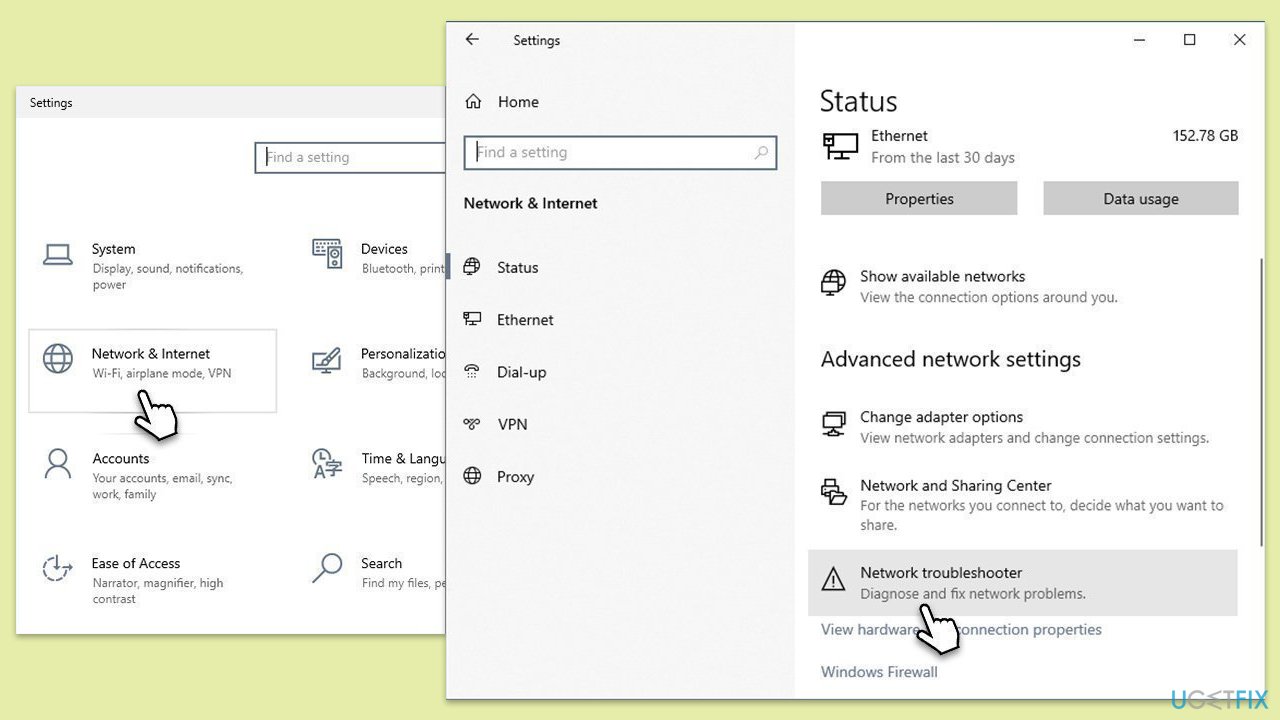
To run network troubleshooter, follow these steps:
- Right-click on Start and pick Settings.
- Go to the Network & Internet section.
- On the right side, find the Advanced network settings section.
- Click Network troubleshooter and wait.
- The fixes will be automatically applied.
Fix 2. Check for corrupted files
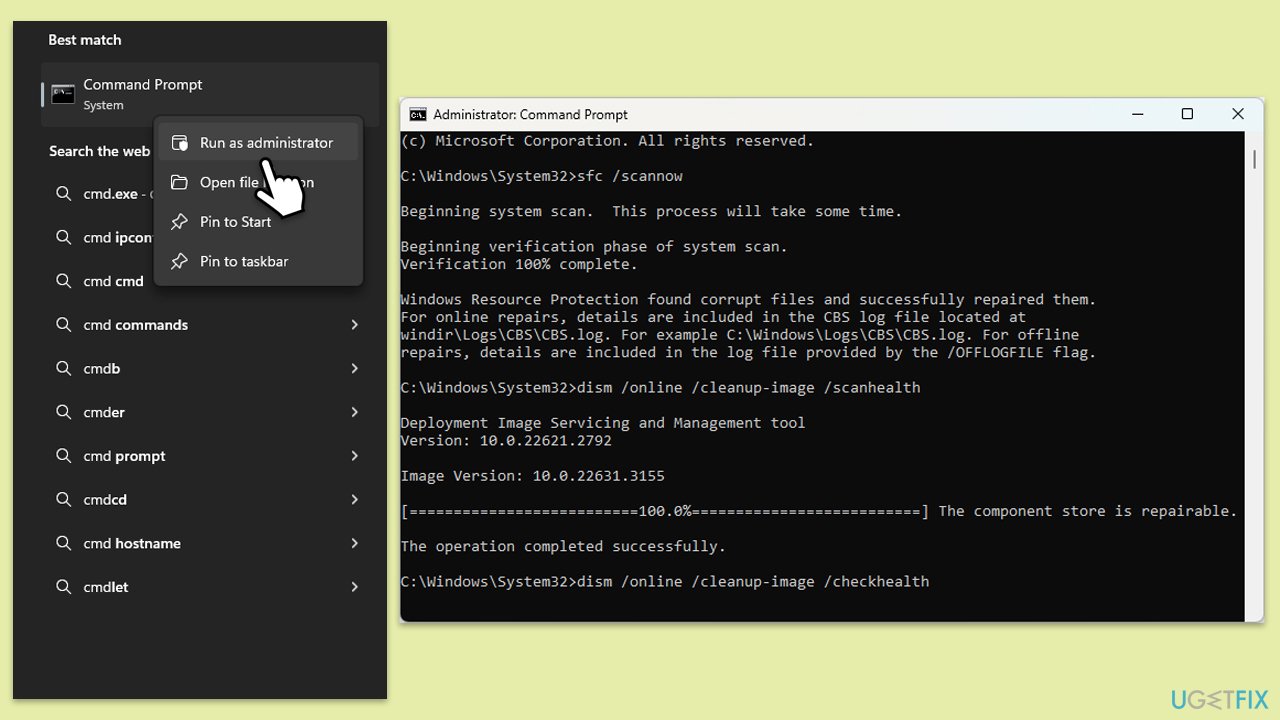
- Type cmd in Windows search.
- Right-click on Command Prompt and pick Run as administrator.
- User Account Control window will show up - click Yes when prompted.
- Then, copy and paste the following command, pressing Enter after:
sfc /scannow - Wait till the scan is finished. If Windows finds system file integrity violations, it will attempt to fix them. After this, use the set of the following commands, pressing Enter each time:
DISM /Online /Cleanup-Image /CheckHealth
DISM /Online /Cleanup-Image /ScanHealth
DISM /Online /Cleanup-Image /RestoreHealth - (Note: if you get an error executing this last command, add /Source:C:\RepairSource\Windows /LimitAccess to it and try again).
- Close down the Command Prompt and restart your device.
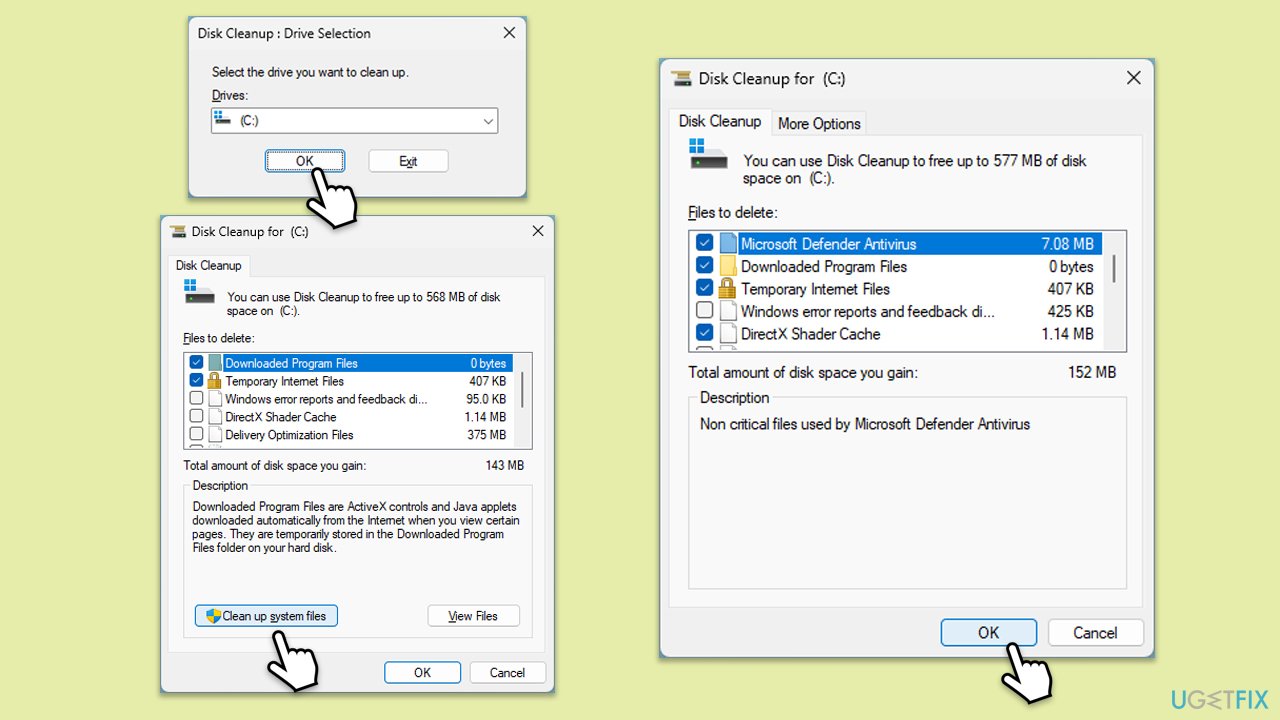
Fix 3. Perform Disk Cleanup
- Type Disk Cleanup in Windows search and press Enter.
- If your Windows is installed on drive C, pick it from the list (it should be by default) and press OK. If you only use one drive, this step will be skipped.
- At the bottom of the window, click on Clean up system files.
- Select the main drive again if required and wait.
- While marking sections like Windows Update Cleanup and Windows upgrade log files is mandatory, you can also pick other sections if you think they aren't useful to you, such as Temporary Internet Files or Delivery Optimization Files, and others.
- Click OK - the process should be finished shortly.
Fix 4. Check your disk for issues
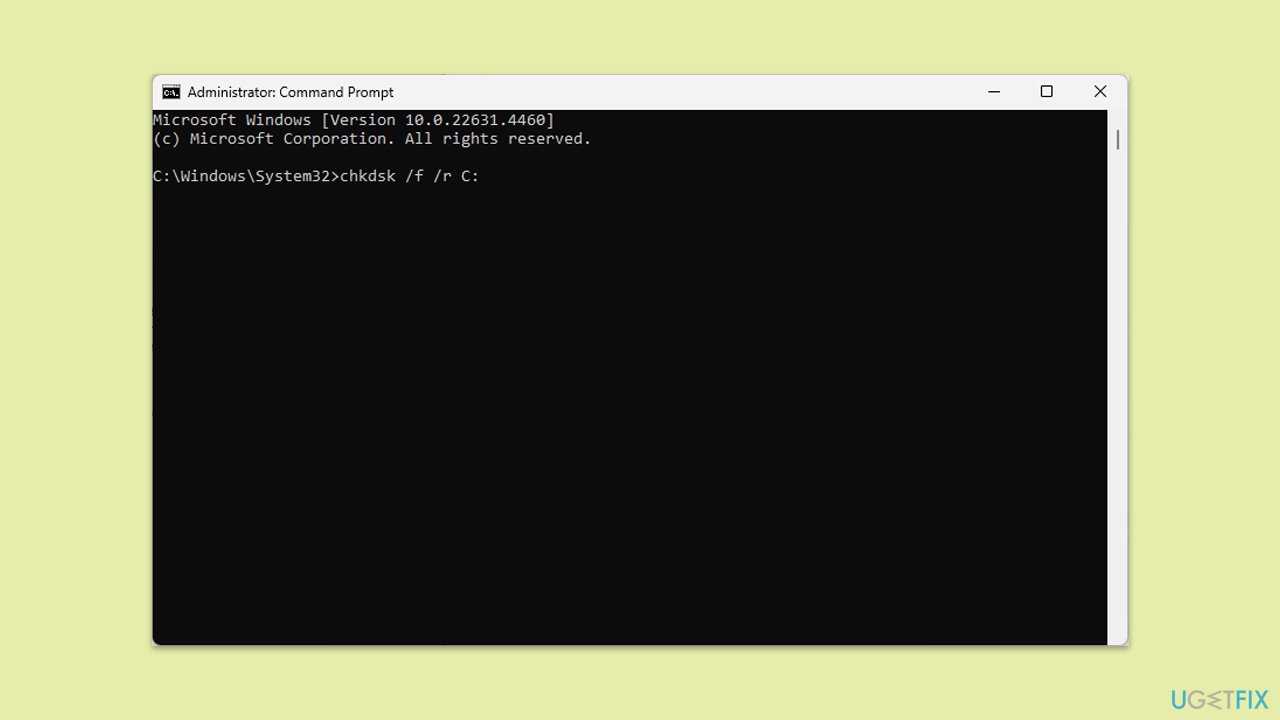
- Open Command Prompt as administrator.
- In the new window, type in the following command and press Enter after:
chkdsk c: /f
(Note: use chkdsk c: /f /r /x command if you are using SSD as your primary partition. Also, replace c: with another drive letter if you are not using default) - If you receive an error, type in Y, close down Command Prompt, and restart your computer.
- Wait till the scan is finished.
Fix 5. Disable security software
- Right-click on the antivirus or firewall icon in the system tray.
- Select the option to disable.
- Try to install the update.
- Remember to re-enable your security software after the update.
Fix 6. Reset Windows update components
Resetting Windows Update components involves disabling services related to Windows Update, clearing the update cache, and then enabling the services once again. This generally resolves update issues caused by cache or service problems.
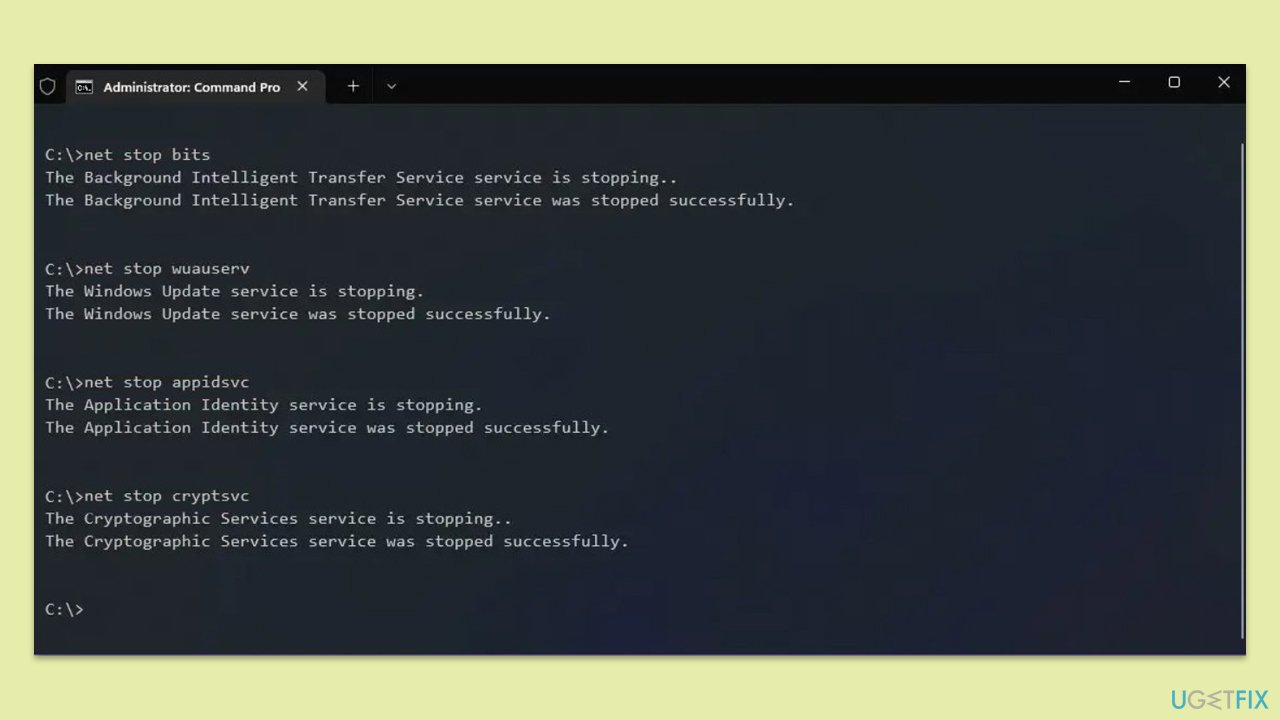
- Open Command Prompt as administrator.
- Copy and paste in each of these commands, pressing Enter every time:
net stop bits
net stop wuauserv
net stop appidsvc
net stop cryptsvc
Del “%ALLUSERSPROFILE%\Application Data\Microsoft\Network\Downloader\*.*”
rmdir %systemroot%\SoftwareDistribution /S /Q
rmdir %systemroot%\system32\catroot2 /S /Q
regsvr32.exe /s atl.dll
regsvr32.exe /s urlmon.dll
regsvr32.exe /s mshtml.dll
netsh winsock reset
netsh winsock reset proxy
net start bits
net start wuauserv
net start appidsvc
net start cryptsvc - Restart your system.
Bottom line
To fix the installation failure of KB5053656, you can stabilize your internet connection, repair corrupted system files, free up disk space, or temporarily disable antivirus software. If these solutions do not resolve the issue, consider using a powerful PC repair application or follow detailed manual troubleshooting instructions.
Frequently asked questions
Try running the Windows Update Troubleshooter, which can automatically find and fix issues related to updates. If the problem persists, consider manually downloading and installing the update from the Microsoft Update Catalog.
You can check the installed updates by going to Settings > Update & Security > Windows Update > View update history. Look for KB5053656 in the list of installed updates.
Ensure that your Windows 10 system is fully updated with the latest cumulative updates prior to attempting to install KB5053656. Additionally, check that you have enough disk space and that your system is not experiencing any other issues.




Report an issue
What's wrong with this guide? We review every report and update or remove content.
Report received — thank you. We'll review and fix it.
You need a free account to submit a report.
Be the first to comment