How to fix
KB5058515 fails to install
on Windows
Resolve the KB5058515 installation error in Windows 11 quickly and efficiently. Expert-tested solutions ensure your system runs smoothly. Fixed in minutes!

What causes How to fix KB5058515 fails to install in Windows 11?
- System file corruption
- Low disk space
- Issues with update components
- Interference from antivirus software
Repairs Windows system files, removes malware, and restores a clean OS state — without reinstalling.
I’ve been trying to install the latest Windows 11 update, KB5058515, on my PC, but it keeps failing with a message about an issue during installation. I’ve checked for updates multiple times and restarted my system, but the problem persists, leaving my device without the latest fixes.
Windows updates play an important role in keeping systems secure, functional, and updated with the latest features. Each update carries a unique KB number and may include important fixes, performance improvements, or user interface updates. Installing updates does not, however, always go as planned. A case in point is KB5058515, which fails to install for some Windows 11 users, particularly in the Insider Beta Channel.
KB5058515 was released in May 2025 as a cumulative preview update for Windows 11 version 24H2. It includes improvements to the lock screen widgets, the "Open with" dialog, and additional features in the Windows Backup experience. While the update was well-received, many users have reported that KB5058515 is not installing, and in most instances, there is no explanation provided.
Those who are experiencing KB5058515 not installing typically see the update download, but then either hang on install or fail with a generic error. This may be due to system file corruption, low disk space, issues with the update components, or even interference from antivirus software.
If system files are corrupted, then a file scan can help. If low disk space is the reason, then freeing up storage can resolve the issue. If a third-party antivirus program is interfering, then temporarily disabling it can help. Resetting Windows Update components or installing the pending updates first may also be necessary.
All manual step-by-step processes are provided below. For those who want an easier and more automated way, it is recommended to run the system through a good [d1] repair tool.
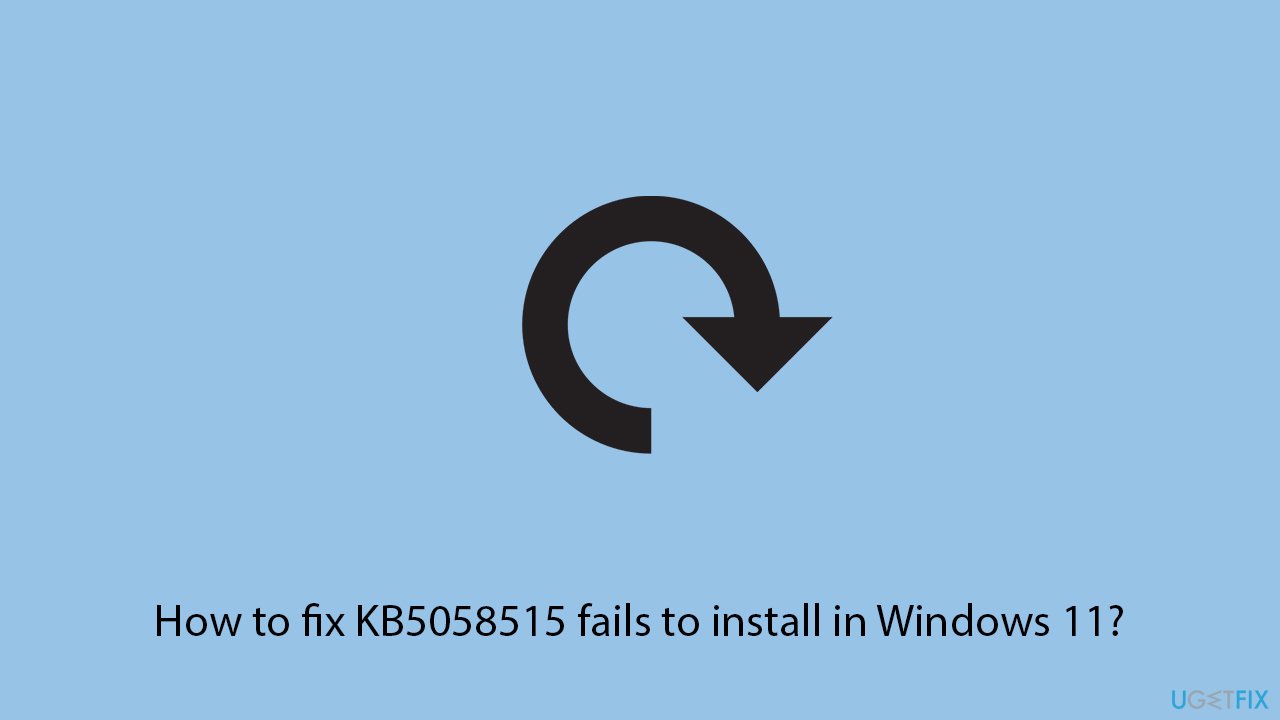
Fix 1. Run Windows update troubleshooter
When an update fails to install, Windows Update Troubleshooter automatically finds and fixes the issue. It looks for problems that can cause damaged download files, stop Windows Update services, or hinder network connectivity.
- Type troubleshoot in Windows search and press Enter, or go to Start > Settings > System > Troubleshoot.
- From the list of Options, pick Other troubleshooters.
- Scroll down to locate the Windows Update and click Run.
- Wait for it to finish, then apply changes and reboot the system.
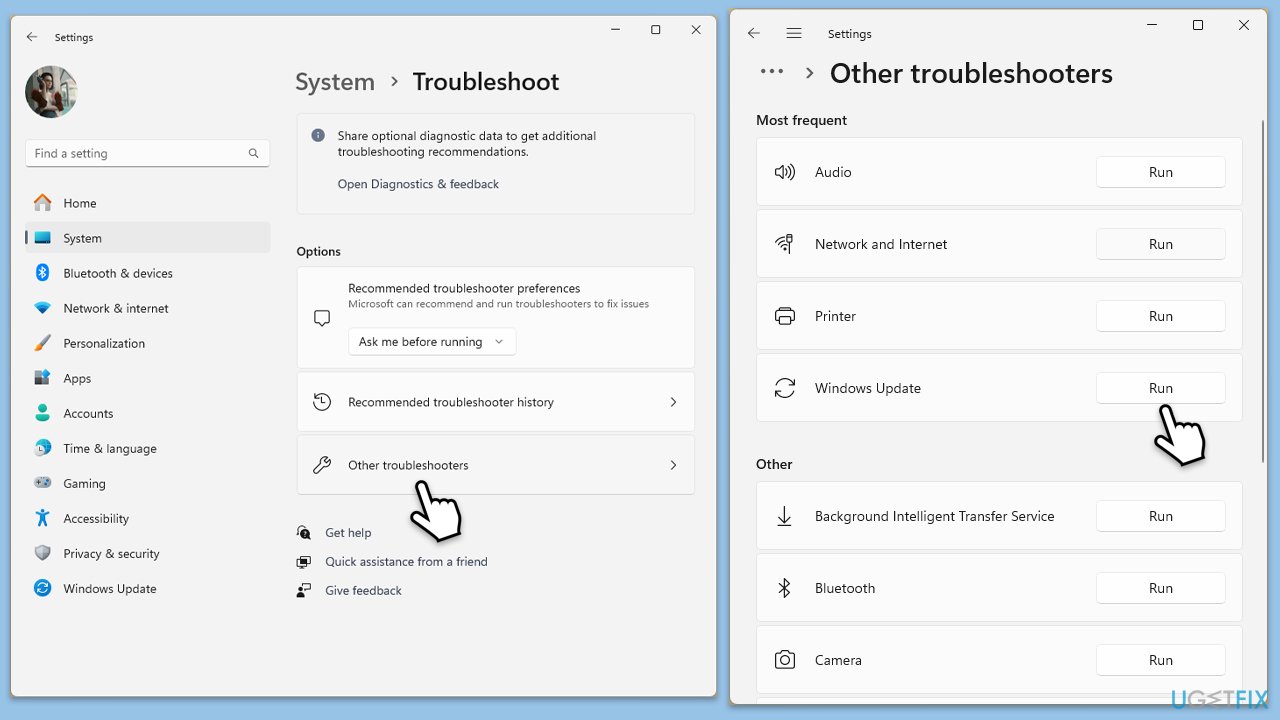
Fix 2. Run Disk Cleanup
Disk Cleanup assists in clearing up system cache and temporary files that could be interfering with the installation of updates. You can free up space and get rid of possible issues by deleting superfluous files.
- Type Disk Cleanup in Windows search and hit Enter.
- If your Windows is installed on drive C, pick it from the list (it should be by default) and press OK.
- Click Clean up system files.
- Select your main disk again and click OK.
- Here, select the largest portions of the data used - these typically include Temporary Internet Files, Windows Update, Temporary Files, Recycle Bin, Delivery Optimization Files, and others.
- Click OK - the process should be finished shortly.
Fix 3. Repair corrupted Windows files
Installing updates could not work if your system files have been corrupted in some way. To remedy this, take the following actions:
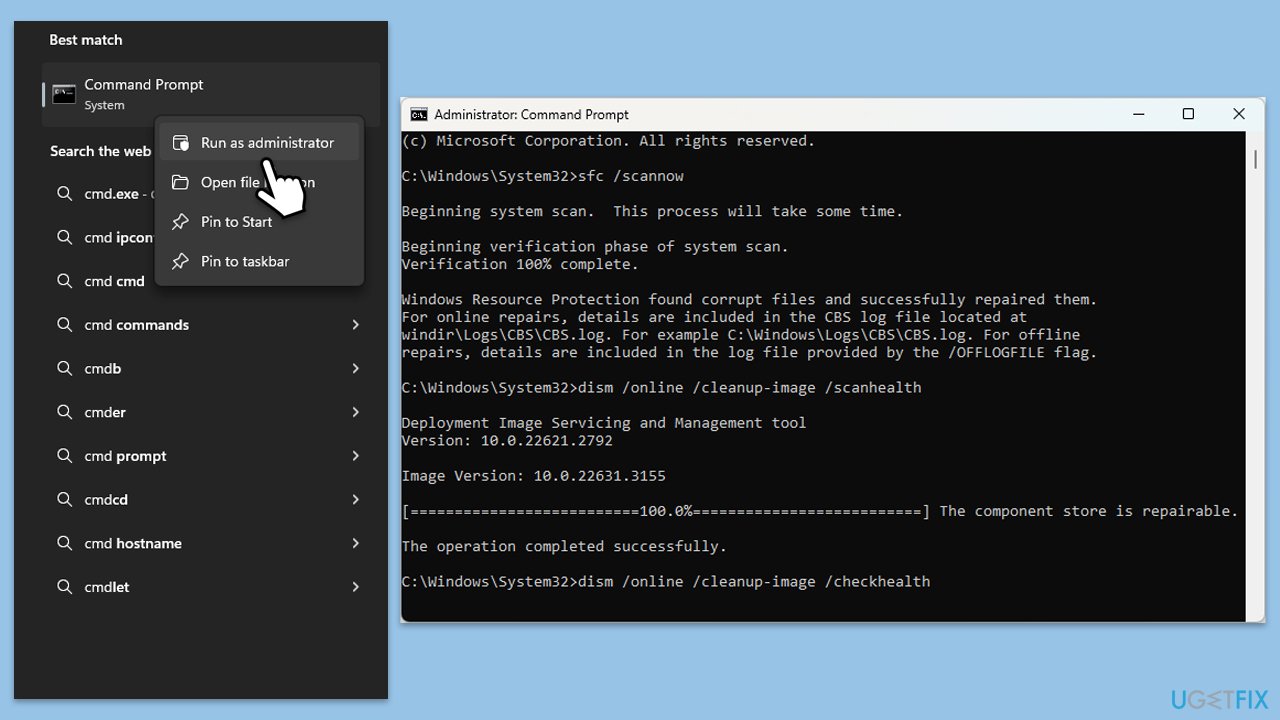
- Type cmd in Windows search.
- Right-click on Command Prompt and pick Run as administrator.
- User Account Control will ask whether you want to allow changes – click Yes.
- Copy and paste this command and hit Enter:
sfc /scannow - Wait for the scan to finish.
- As soon as it finishes, Windows will report whether integrity violations were found and if they could be fixed. Regardless of the outcome, use these commands next, pressing Enter after each:
Dism /Online /Cleanup-Image /CheckHealth
Dism /Online /Cleanup-Image /ScanHealth
Dism /Online /Cleanup-Image /RestoreHealth
(Note: if you get an error executing this last command, add /Source:C:\RepairSource\Windows /LimitAccess to it and try again.) - Close down the Command Prompt and restart your computer.
Fix 5. Check relevant services
Services are critical components of the Windows ecosystem; if any of its operations are disturbed, it may cause problems with a specific function, such as the Windows update process.
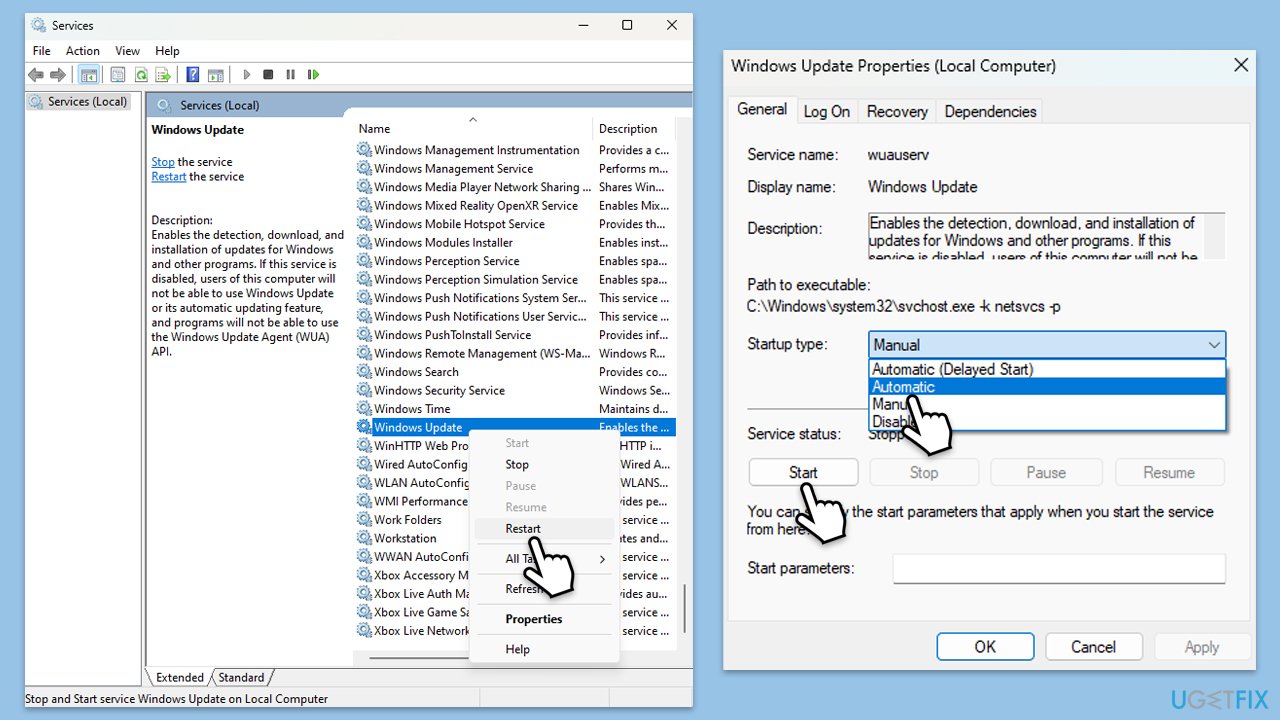
- Type Services in Windows search and press Enter.
- Locate Windows Update.
- If it is already running, right-click and select Restart.
- if the service is not running, double-click it, and pick Automatic under the Startup type from the drop-down menu.
- Click Start, Apply, and OK.
- Repeat this process with the following services:
Background Intelligent Transfer Service (BITS)
Cryptographic
Windows Installer - Restart your computer.
Fix 6. Run Clean Boot
A Clean Boot launches Windows with a limited collection of drivers and launch programs, which can assist in determining whether background processes are interfering with the upgrade.
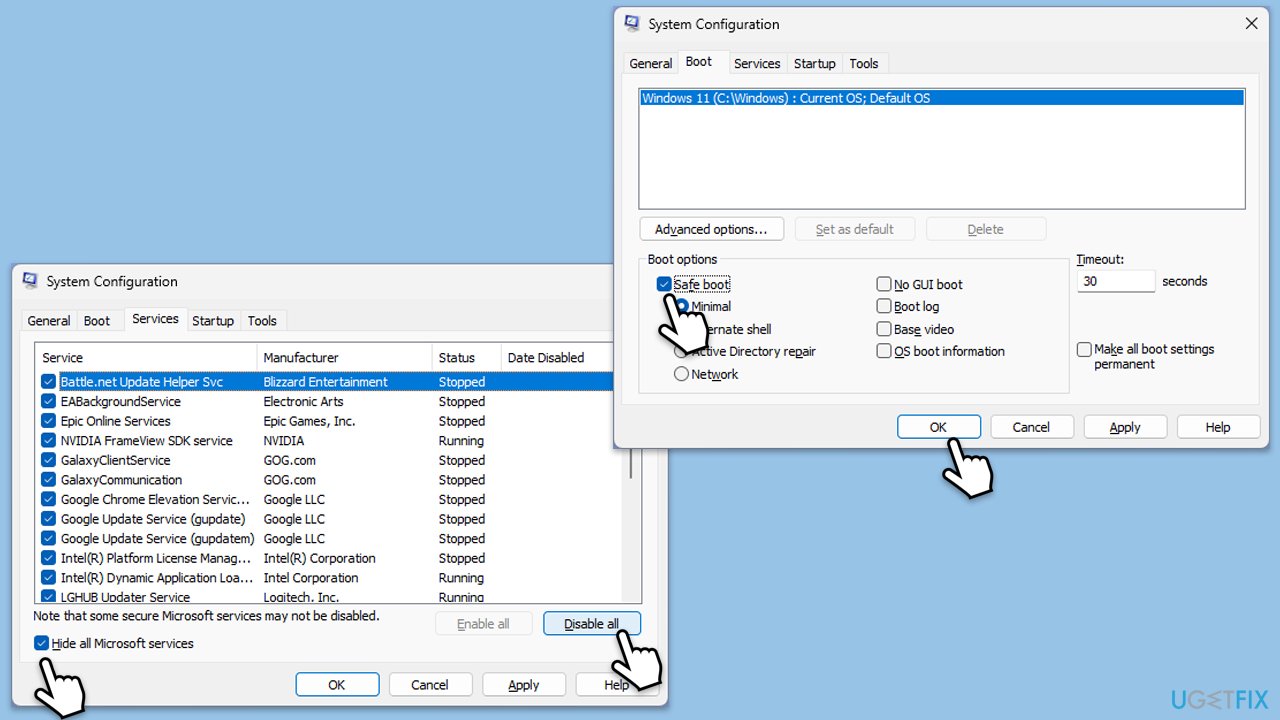
- Type msconfig in the Windows search box and press Enter.
- Pick the Services tab.
- Mark Hide all Microsoft services and select Disable all.
- Select the Startup tab and click Open Task Manager.
- In the Task Manager, right-click on each of the items and select Disable, then close the Task Manager.
- Go to the Boot tab, mark the Safe Boot option, then click Apply and OK.
- On the System Configuration window, click OK.
- Restart your computer and attempt the update.
Fix 7. Reset Windows Update components
Resetting Windows Update components can remove corrupted or stuck update files, allowing the update to install successfully.
- Open Command Prompt as administrator.
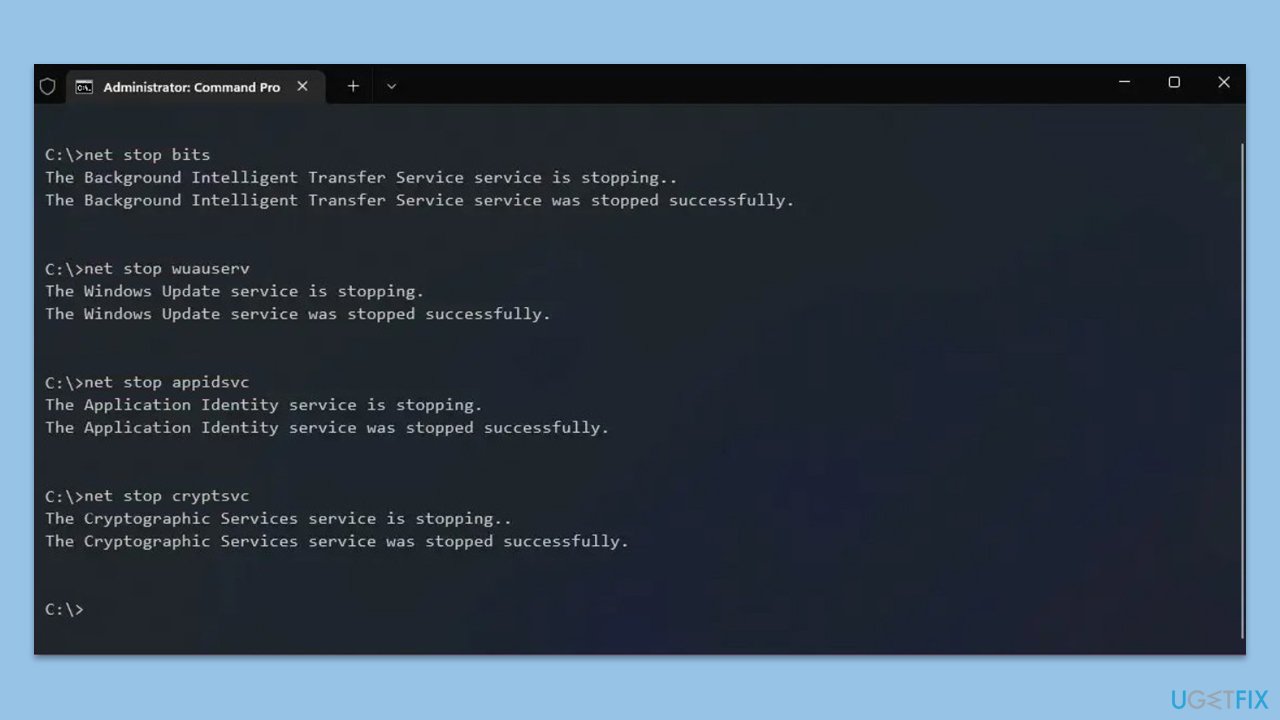
- Stop the Windows Update-related services by running the following commands one at a time, pressing Enter after each one:
net stop wuauserv
net stop cryptSvc
net stop bits
net stop msiserver - Rename the SoftwareDistribution and Catroot2 folders by running the following commands:
ren C:\Windows\SoftwareDistribution SoftwareDistribution.old
ren C:\Windows\System32\catroot2 Catroot2.old
Note: If your Windows installation is not on the C drive, replace "C" with the appropriate drive letter.
regsvr32.exe /s atl.dll
regsvr32.exe /s urlmon.dll
regsvr32.exe /s mshtml.dll
netsh winsock reset
netsh winsock reset proxy - Restart the Windows Update-related services by running the following commands:
net start wuauserv
net start cryptSvc
net start bits
net start msiserver - Reboot your computer.
Bottom line
To fix the installation failure of KB5058515, you can run the Windows Update Troubleshooter, free up storage space, temporarily disable third-party antivirus software, or reset Windows Update components. If these steps do not resolve the issue, consider using a repair tool for a more automated solution.
Frequently asked questions
Try running the Windows Update Troubleshooter to automatically detect and fix issues related to Windows updates. If that doesn't work, consider manually downloading the update from the Microsoft Update Catalog.
Yes, third-party antivirus software can interfere with the installation process of updates like KB5058515. Temporarily disabling your antivirus may help resolve the issue.
Yes, restarting your device can clear any temporary files or locks that may be preventing the installation of KB5058515 and allow the update to proceed.




Report an issue
What's wrong with this guide? We review every report and update or remove content.
Report received — thank you. We'll review and fix it.
You need a free account to submit a report.
Be the first to comment