How to fix
“Mpr.dll is either not designed for Windows or contains an error”
on Windows
Resolve the "Mpr.dll is either not designed for Windows or contains an error" issue on Windows 10/11 effortlessly. Expert-tested solutions inside!


What causes How to fix “Mpr.dll is either not designed for Windows or contains an error”?
- Corrupted software installations
- Missing DLL files
- Accidental deletion of system files
- Corrupted updates
- Disk damage
Repairs Windows system files, removes malware, and restores a clean OS state — without reinstalling.
Hello. Recently I started seeing the "Mpr.dll is either not designed for Windows or contains an error" message when trying to install applications. What should I do?
Recently, some Windows users have run into serious issues. People report witnessing "Mpr.dll is either not designed for Windows or contains an error" message when trying to install applications or connect to the Internet. The error was reported to appear after corrupt software installations.
And there is no surprise there as missing DLL (Dynamic-Link Library)[ref en-1] errors most often appear after corrupted updates, and installations. These system files contain code and data that can be used by multiple programs at the same time. That is why users may fail to open multiple programs and receive the same error.
Additionally, accidental deletion is more common than you may think. Users often go to places they should not, like the registry,[ref en-2] and delete important system files without realizing the repercussions. Do not delete any files if you are not sure what they are for.
If you experience the "Mpr.dll is either not designed for Windows or contains an error" message and want to fix it, we have a 6 step guide that could help you. However, manual troubleshooting can be a lengthy process. [d1] is a maintenance tool that can fix various system errors, BSoDs,[ref en-3] corrupted files, registry issues, and more. Otherwise, follow the step-by-step instructions below.
Solution 1. Fix Corrupted System Files
Use Command Prompt commands to repair system file corruption:
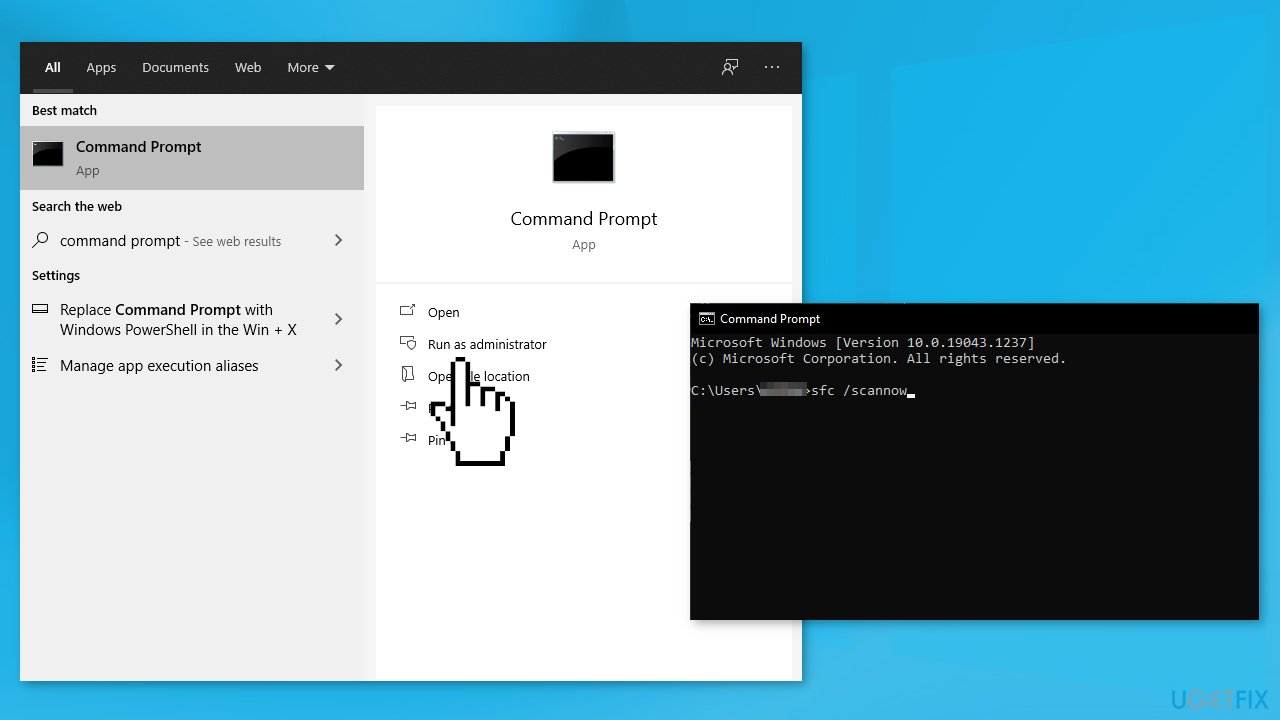
- Open Command Prompt as administrator
- Use the following command and press Enter:
sfc /scannow
- Reboot your system
- If SFC returned an error, then use the following command lines, pressing Enter after each:
DISM /Online /Cleanup-Image /CheckHealth
DISM /Online /Cleanup-Image /ScanHealth
DISM /Online /Cleanup-Image /RestoreHealth
Solution 2. Check Disk
- Ensure that your disk is not damaged. You can perform checks using Administrative Command Prompt:
- If you are using an HDD as your main driver (where your operating system is installed - C: by default), use the following command and press Enter:
chkdsk c: /f - If you are using SSD, use this command:
chkdsk c: /f /r /x
- If you receive an error, type in Y and hit Enter
- Restart your device to perform the check
Solution 3. Use System Restore
System Restore can roll back the system back to a previous point when the error was not present. Use this utility and choose a restore point before the error started appearing.
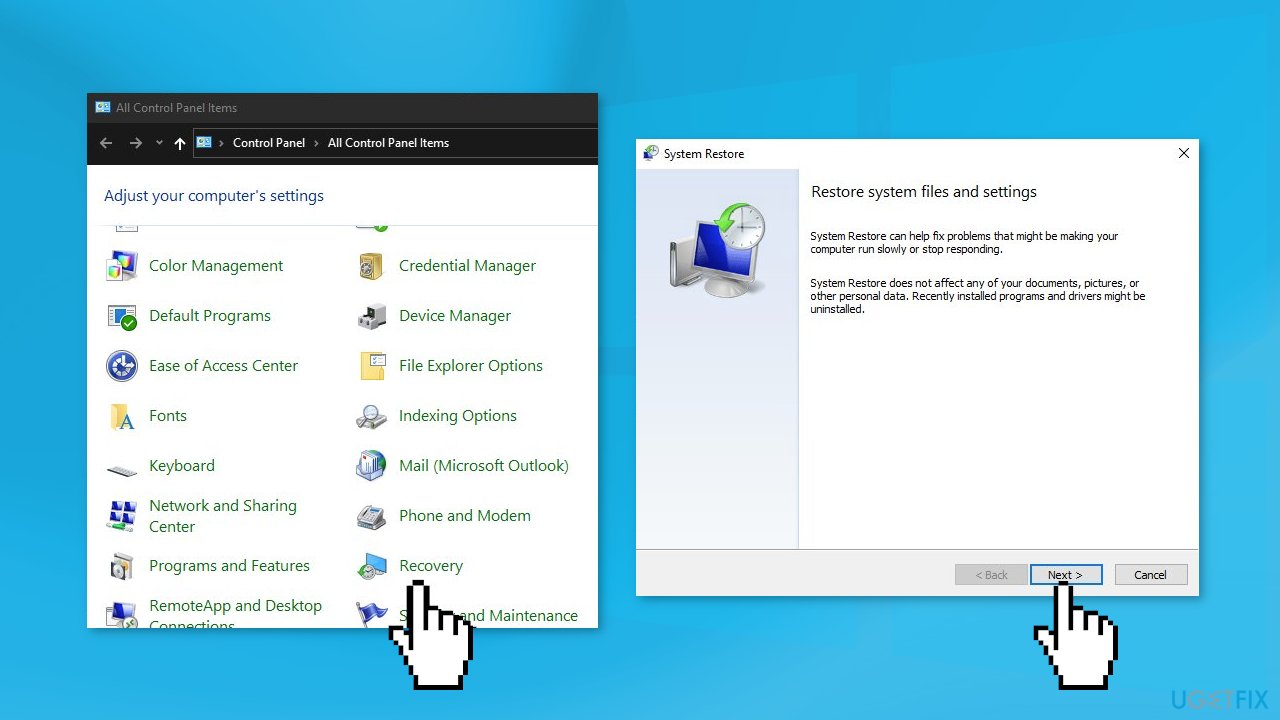
- Search for Control Panel in your taskbar
- Change the view mode to Large icons
- Click on Recovery, then Open System Restore
- If prompted, enter your user password
- Follow the on-screen instructions and wait for the wizard to complete the restoration
- Restart your computer
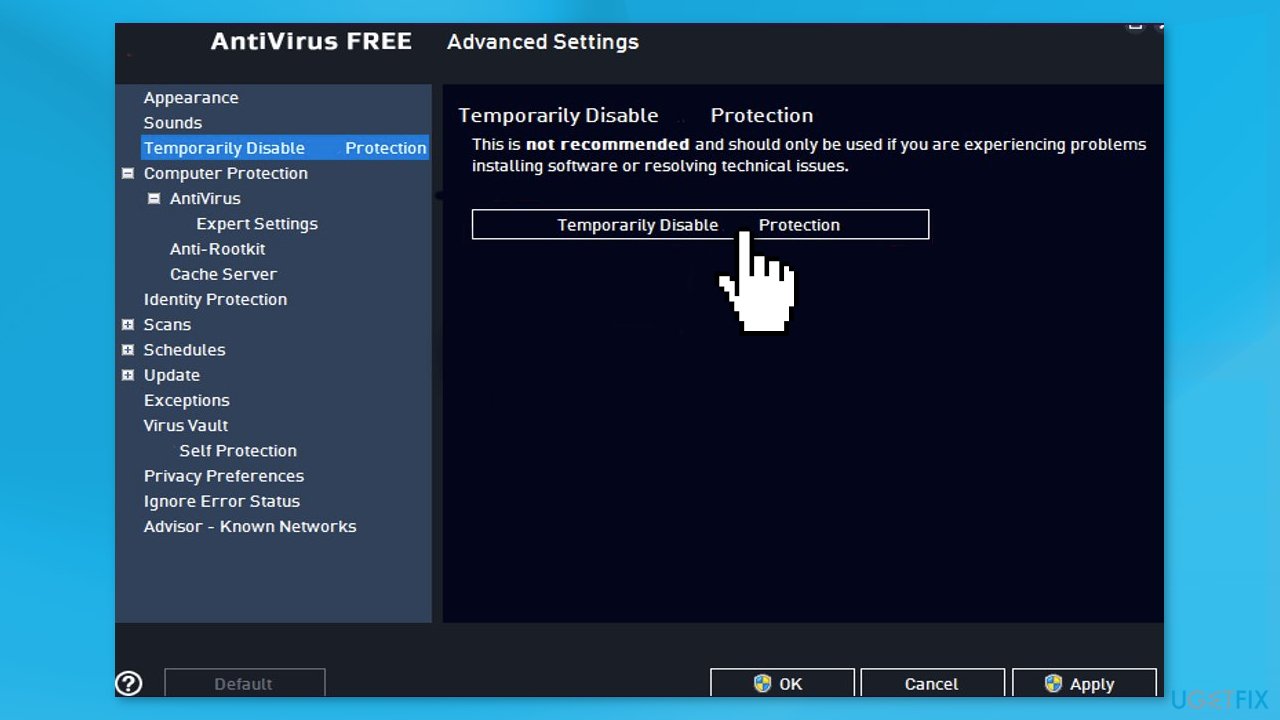
Solution 4. Disable Third-Party Security Software
If you have any third-party antivirus software installed on your system, disable it before proceeding to the next step. Sometimes, security tools can interfere with installation processes. Go to your antivirus settings and find the disable protection.
Solution 5 Perform a Repair Upgrade
- Download the Windows 10 ISO file from the official Microsoft website
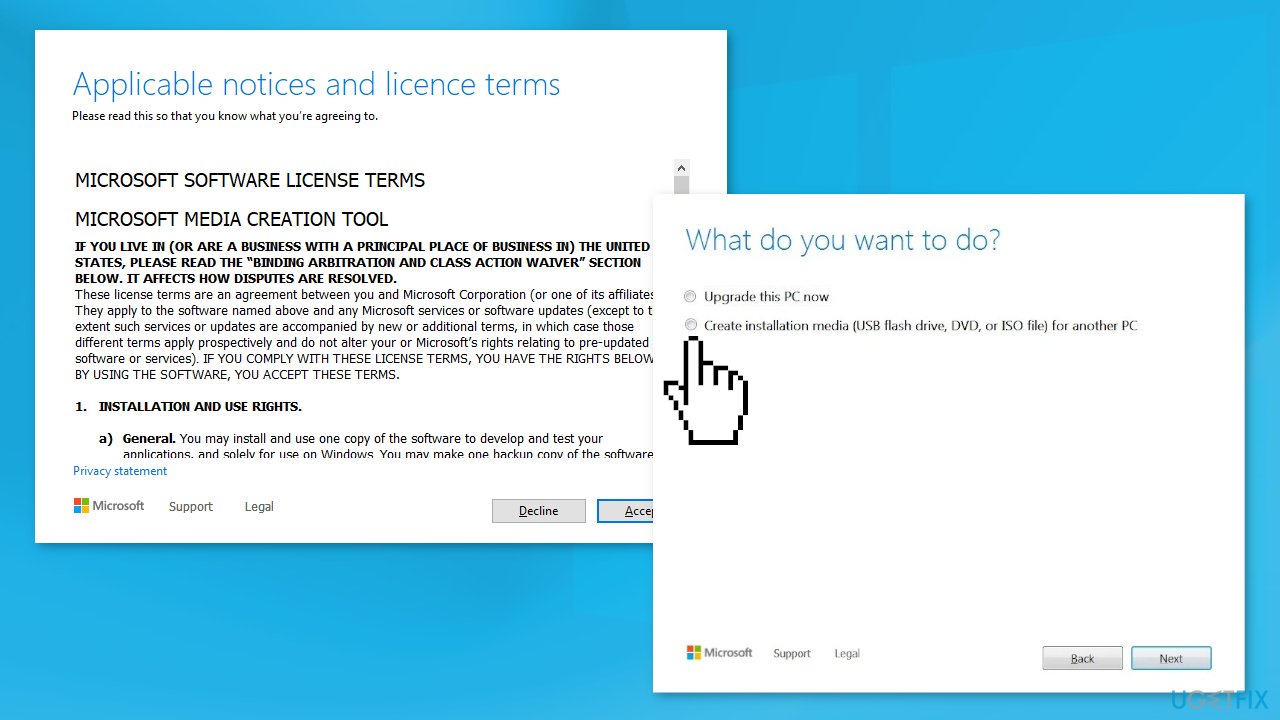
- If you agree to the license terms, select Accept
- On the What do you want to do? page, select Create installation media for another PC and then select Next
- Select the language, edition, and architecture (64-bit or 32-bit) for Windows 10
- In Select which media you want to use, Select ISO file then click Next
- Select the download location then click Save
- Windows 10 ISO file will be downloaded
- Right-click Windows 10 ISO file and click Mount
- Open Setup.exe
- To get important updates, select Download and install updates
- Ensure that Keep personal files and applications is checked
- Click on Install to start the upgrade
Solution 6. Reset Windows
- Press Windows key + I to open the Settings app
- Then select Update & Security from the menu
- Select Recovery in the left panel
- Click on the Get Started button under the Reset this PC section
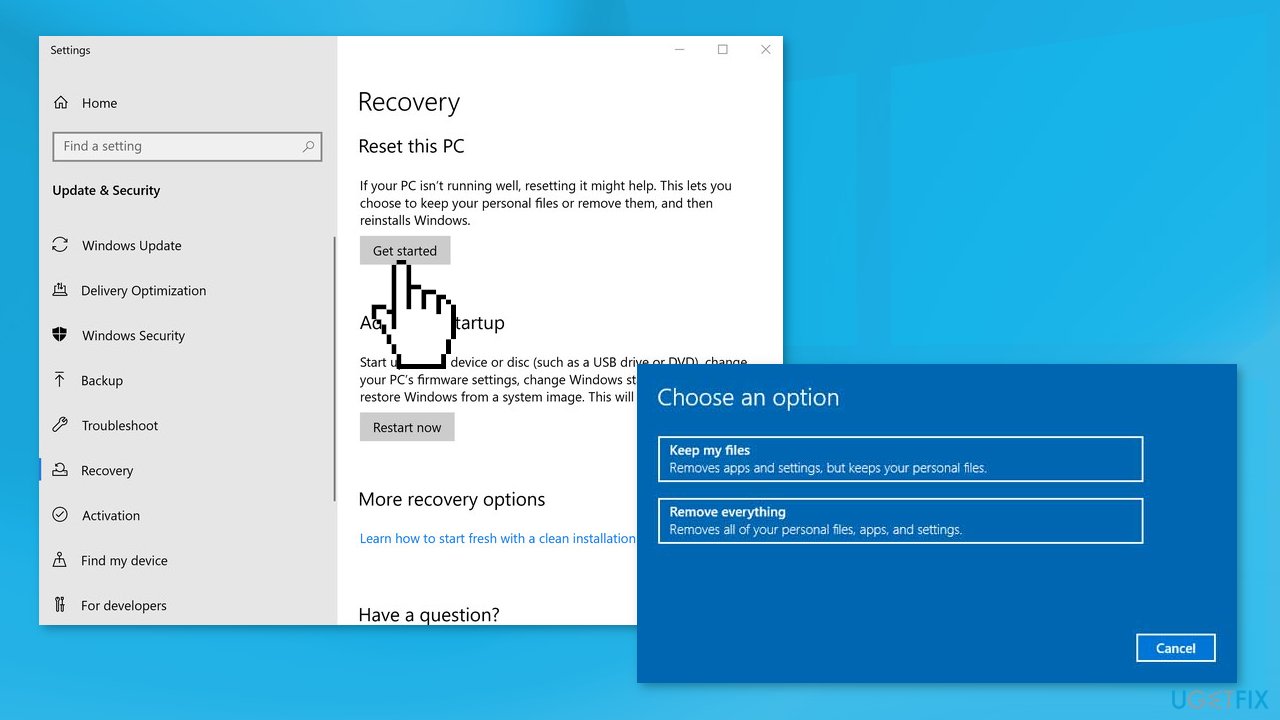
- Choose to Keep my files and click Next
- Click Reset to begin the process. Wait for a while, your computer will begin to install Windows
Bottom line
To fix the 'Mpr.dll is either not designed for Windows or contains an error' message, you can repair corrupted system files using Command Prompt commands and check your disk for damage. If these solutions do not resolve the issue, consider using a maintenance tool to fix various system errors.
Frequently asked questions
This error typically occurs due to a corrupted or incompatible Mpr.dll file, often resulting from system updates or malware infections on Windows 10.
You can replace the Mpr.dll file by downloading a compatible version from a reliable source, then copying it to the C:\Windows\System32 folder, followed by restarting your Windows 11 PC.
Yes, you can use the System File Checker (SFC) tool by running 'sfc /scannow' in the Command Prompt to automatically repair corrupted system files, including Mpr.dll, on Windows 10.




Report an issue
What's wrong with this guide? We review every report and update or remove content.
Report received — thank you. We'll review and fix it.
You need a free account to submit a report.
Be the first to comment