
How to fix the NetAdapterCx.sys blue screen (BSOD) in Windows

Prefer to fix it yourself? The manual steps follow.
- 7methods
- 10 to 45 minutes
- Intermediate
Applies to Windows 11 and Windows 10 PCs with an Ethernet, Wi-Fi or mobile broadband adapter whose driver uses NetAdapterCx
7 methods in this guide
Hello, I am experiencing quite an annoying issue where, in some cases, my computer blue screens after waking up from sleep. It doesn't happen consistently, so I am not sure what precisely is causing it. I've been struggling with this for several months, and I am not sure what to do. The stop code is system_thread_exception_not_handled. What failed: netadaptercx.sys.
NetAdapterCx.sys is the Network Adapter WDF Class Extension, a Microsoft file that network card drivers run on top of. When a stop screen says What failed: NetAdapterCx.sys, the fault is almost always in your Ethernet or Wi-Fi driver, not in Windows. Update that adapter driver from its maker first.
NetAdapterCx.sys is a Microsoft framework file that network adapter drivers are built on, so the crash nearly always starts in the adapter driver above it. Install the newest Ethernet or Wi-Fi driver from your PC or adapter maker (Fix 1). If the crashes began after an update, roll that driver back (Fix 2). If they happen on wake from sleep, change the adapter's power settings (Fix 4).
| Error | A stop screen (blue, or black on newer Windows 11) with What failed: NetAdapterCx.sys. The stop code above it is most often SYSTEM_THREAD_EXCEPTION_NOT_HANDLED or SYSTEM_SERVICE_EXCEPTION. |
|---|---|
| Where it appears | At random while the PC is online, or right after it wakes from sleep or starts from a Fast Startup shutdown, when the network adapter powers up again. |
| Main cause | A faulty, outdated or freshly updated network adapter driver (Ethernet, Wi-Fi or mobile broadband) that runs on top of NetAdapterCx. |
| Fastest fix | Install the newest adapter driver from the PC or adapter maker's support page (Fix 1). |
| Also written as | netadaptercx.sys, NetAdapterCx, net adapter cx, (netadaptercx), NetAdapterCx.sys failed, netadaptercx dmp. |
| Who makes it | Microsoft. It is part of Windows since Windows 10 version 2004 and lives in C:\Windows\System32\drivers. |
| Affects | Windows 11 and Windows 10. Windows 10 left support on 14 October 2025, so new adapter drivers for it are not guaranteed. |
| Vendor status | No Microsoft known issue for NetAdapterCx.sys was found on 15 October 2026. Fixes come from the adapter maker's driver updates. |
| Where the cause is logged | C:\Windows\Minidump, one .dmp file per crash. The stack in WinDbg shows the adapter driver that called NetAdapterCx. |
| Time to fix | 10 minutes for a driver update or rollback. 30 minutes or more when you have to test power settings across several sleep cycles. |
Facts checked on 15 October 2026. Steps written for Windows 11 (25H2 and 26H2) and Windows 10 22H2.
What NetAdapterCx.sys is and why the stop screen names it
NetAdapterCx.sys is the Network Adapter WDF Class Extension. Microsoft added it in Windows 10 version 2004 so that network card makers can write their drivers with the Windows Driver Frameworks instead of the older NDIS miniport model. The vendor's driver, called the client driver, sits on top. NetAdapterCx sits in the middle and talks to NDIS and the Windows kernel on the driver's behalf.
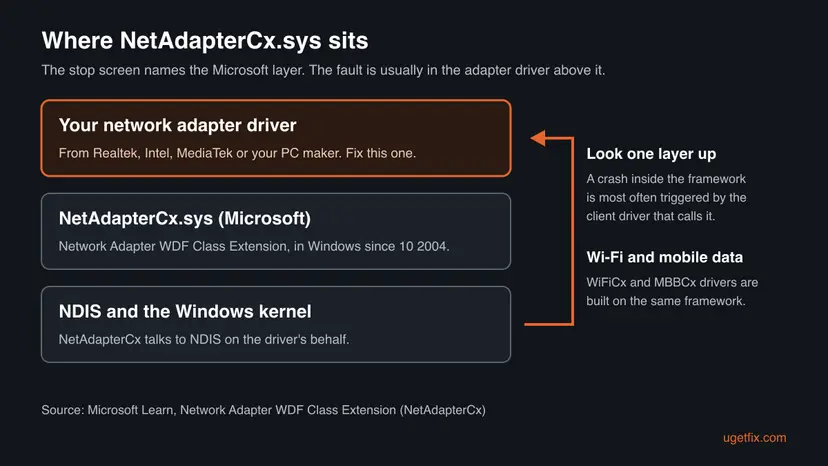
Microsoft's own description of the file says it ships with Windows, so you never download or replace it yourself. Microsoft also publishes the source code of NetAdapterCx.sys on GitHub so that driver makers can debug their own network drivers against it. That is the important clue: when the crash happens inside NetAdapterCx, the usual trigger is a call from the client driver above it.
| What you see | What it means |
|---|---|
What failed: NetAdapterCx.sys or netadaptercx.sys failed | The crash happened while code in the network framework was running |
(netadaptercx) in a crash tool or Event Viewer | The module name without the .sys ending, the same file |
| Stop code: SYSTEM_THREAD_EXCEPTION_NOT_HANDLED | A system thread hit an error nobody caught; the driver named under it was running |
| SYSTEM_SERVICE_EXCEPTION with netadaptercx.sys | The error happened while a system call was passing through the driver |
| WiFiCx or MBBCx | Microsoft's Wi-Fi and mobile broadband extensions, built on NetAdapterCx |
NetAdapterCx.sys is a genuine Windows file. Deleting or replacing it from a DLL site breaks networking or the next boot. The fix is always in the driver that uses it, or in Windows' own repair tools.
Why NetAdapterCx.sys crashes: the causes, most common first
Not every network card uses NetAdapterCx. In 2023 an Intel support technician confirmed that, by design, only the Intel Wi-Fi 6E AX411 driver (from version 22.90.1.1) used it among Intel's wireless cards, while the AC 9560, AX200, AX210 and AX211 drivers did not. Users most often report the crash with newer Ethernet and Wi-Fi drivers, which fits that picture: the newer the driver model, the more likely it calls NetAdapterCx.
| How often | Cause | Sign | Fix |
|---|---|---|---|
| Most often | An old, generic or buggy adapter driver | Crashes at random while online; the driver came with Windows or is years old | Fix 1 |
| Often | A new driver or Windows update brought a bad driver version | Crashes started on a known date, right after an update | Fix 2 |
| Often | The adapter fails to wake up from a low-power state | Crashes after sleep, hibernation or a Fast Startup boot, as in the reader's question | Fix 4, Fix 5 |
| Less often | A damaged driver install or two drivers fighting over one adapter | Crashes come back after an update; the adapter shows twice or with a warning sign | Fix 3 |
| Less often | A VPN, firewall or traffic filter that hooks into the network stack | Crashes began after installing such a tool and stop in a clean boot | Fix 6 |
| Rarely | Damaged Windows system files | SFC reports files it could not repair | Fix 7 |
Users on Windows Insider preview builds have reported netadaptercx.sys problems that disappeared with the next build, for example around build 25145 in 2022. On a preview build, update to the newest flight before anything else.
Find the adapter driver behind the crash in the .dmp file
The stop screen only shows the module that was running. The crash dump also shows who called it, and that is the driver you want. It takes ten minutes and saves you from updating the wrong adapter. The same method is shown with screenshots in our ACE-BASE.sys guide.
- Open File Explorer and go to
C:\Windows\Minidump. Windows writes one small.dmpfile per crash there, named by date. - Install Microsoft's debugger: open Terminal and run
winget install Microsoft.WinDbg. - Start WinDbg as administrator, select File > Open dump file and open the newest
.dmpfile. - Type
!analyze -vin the command box and press Enter. Wait until the analysis ends. - Read MODULE_NAME and IMAGE_NAME. They will say
NetAdapterCxandNetAdapterCx.sys. - Scroll to STACK_TEXT. The lines name each module as
module!function. A module other thannt,Wdf01000,ndisorNetAdapterCxis the adapter driver. Write its name down. - Match that file name to an adapter. In Terminal, this lists every adapter with its driver file, maker and version:
Get-NetAdapter | Format-List Name, InterfaceDescription, DriverFileName, DriverProvider, DriverVersionString, DriverDate
If C:\Windows\Minidump is empty, update both the Ethernet and the Wi-Fi driver in Fix 1. A laptop with a cable and Wi-Fi can crash on either adapter.
How to fix the NetAdapterCx.sys blue screen
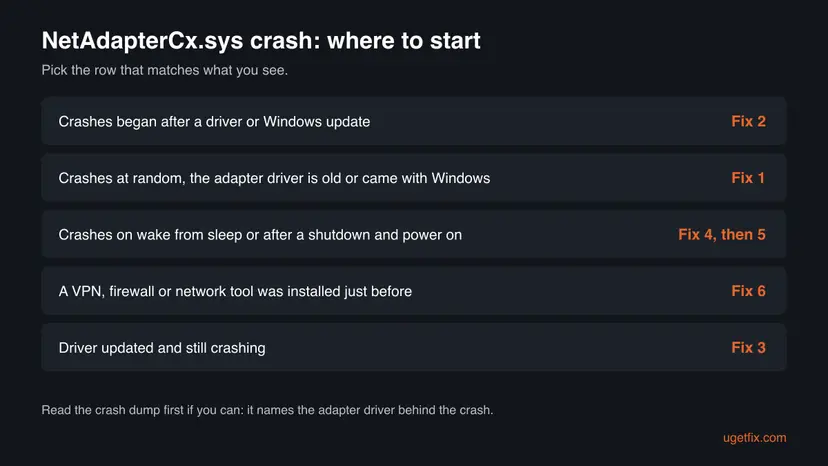
Fix 1 helps most readers. Fix 2 is for crashes that began after an update, Fixes 4 and 5 for crashes on wake from sleep. Keep a driver for your adapter on a USB stick or in your Downloads folder before you start: some steps leave you offline.
| What you see | Start with | Then |
|---|---|---|
| Crashes at random while online; the adapter driver is old or came with Windows | Fix 1 | Fix 3 |
| Crashes began right after a driver or Windows update | Fix 2 | Fix 1 |
| Crashes after waking from sleep, as in the reader's question | Fix 4 | Fix 5 |
| Crashes on the first start of the day, not after a restart | Fix 5 | Fix 4 |
| A VPN, firewall or network tool was installed just before | Fix 6 | Fix 1 |
| Driver updated and the crash still returns | Fix 3 | Fix 7 |
Fix 1. Install the newest network adapter driver from the PC or adapter maker
10 minutesLow riskThe crash happens at random while the PC is online, or the dump names an Ethernet or Wi-Fi driver.
NetAdapterCx is Microsoft's framework and changes only with Windows updates. The client driver on top is the part that changes, and driver makers fix exactly this kind of crash in new versions.
- Find the adapter's name: right-click Start, select Device Manager and expand Network adapters. Note the Ethernet and Wi-Fi entries, for example a Realtek PCIe GbE or 2.5GbE controller or an Intel Wi-Fi card.
- On a laptop or a branded desktop, open the support page of the PC maker and enter your model or serial number. On a self-built PC, use the motherboard maker's page or the adapter maker's own driver page.
- Download the newest LAN or WLAN driver for your Windows version and save it before you change anything.
- Run the installer, or in Device Manager use Update driver > Browse my computer for drivers and point to the unpacked folder.
- Restart the PC and use it normally, including a sleep and wake if that is when it crashed.
Windows Update also offers some network drivers under Optional updates. Step by step, with screenshots of each Device Manager button: Update, roll back or reinstall a driver
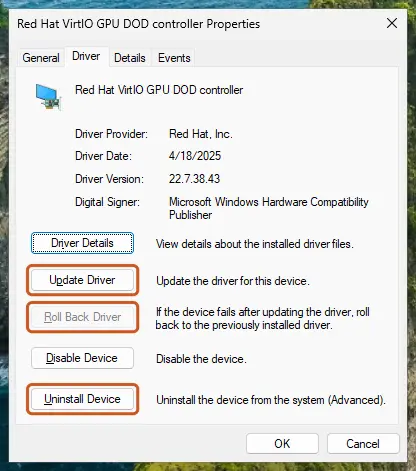
It worked if: The Driver tab shows the new version and date, and the PC runs and wakes from sleep without a stop screen for several days.
If not: If the crashes began after an update, go to Fix 2. If they happen on wake, go to Fix 4.
Fix 2. Roll back the adapter driver or remove the update that brought it
10 minutesLow riskThe stop screens started right after a driver update or a Windows update.
A new adapter driver can carry a bug that the old one did not. Returning to the previous version tests that in minutes and keeps the PC usable until the maker ships a fixed one.
- Right-click Start, select Device Manager and expand Network adapters.
- Right-click the adapter from the dump, or the one updated last, and select Properties.
- Open the Driver tab and select Roll Back Driver. Choose a reason and select Yes.
- Restart the PC.
- If Roll Back Driver is greyed out, Windows kept no earlier driver. Download the previous version from the maker's page and install it instead.
- If the driver came with a Windows update, remove that update: How to uninstall a Windows update
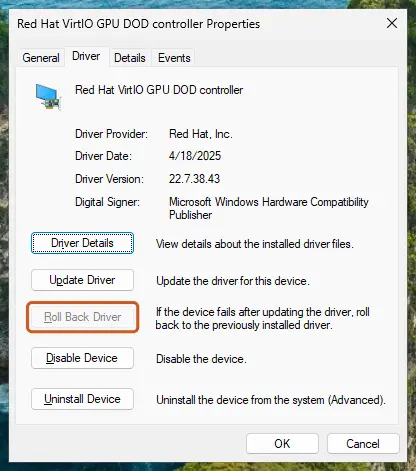
After a rollback, Windows Update may offer the same driver again. Check Settings > Windows Update > Advanced options > Optional updates and do not install that network driver until the maker publishes a newer one.
It worked if: The Driver tab shows the older version and the crashes stop.
If not: If the old driver crashes too, the install itself may be damaged. Go to Fix 3.
Fix 3. Remove the adapter driver completely and install it again
15 minutesRead the warningUpdating did not help, the adapter shows a warning sign, or it is listed twice.
A half-updated driver or a leftover older package can stay bound to the adapter. Removing the driver package and installing one clean copy gives NetAdapterCx a single, consistent client driver.
Removing the network driver cuts the connection until the new one is installed. Download the driver from Fix 1 first and keep it on the PC. Saved Wi-Fi passwords stay in Windows, but custom adapter settings such as a static IP may need to be set again.
- Make sure the maker's driver installer is saved on the PC.
- In Device Manager, right-click the adapter and select Uninstall device.
- Tick Attempt to remove the driver for this device and select Uninstall.
- Restart the PC. Windows may install a basic driver of its own.
- Run the maker's installer you saved, then restart once more.
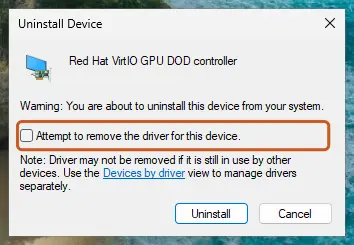
It worked if: The adapter appears once, without a warning sign, with the maker's driver version on the Driver tab.
If not: If the crash comes on wake, go to Fix 4. If it comes at random, go to Fix 6.
Fix 4. Stop the network adapter from powering down and waking the PC
10 minutesLow riskThe PC crashes after waking from sleep or hibernation, or wakes by itself at night.
On wake, the adapter driver and NetAdapterCx bring the card back from a low-power state. Microsoft documents power management as one of the jobs a NetAdapterCx client driver must handle, and a driver that gets it wrong crashes exactly then.
- In Device Manager, expand Network adapters, right-click the adapter and select Properties.
- Open the Power Management tab and clear Allow the computer to turn off this device to save power. Some Wi-Fi drivers do not show this tab.
- Clear Allow this device to wake the computer unless you need Wake-on-LAN.
- Open the Advanced tab, select Wake on Magic Packet in the list and set Value to Disabled. Do the same for Wake on pattern match if it is there.
- Select OK and restart the PC.
- Test with three or four sleep and wake cycles over a day or two, since the crash does not happen every time.
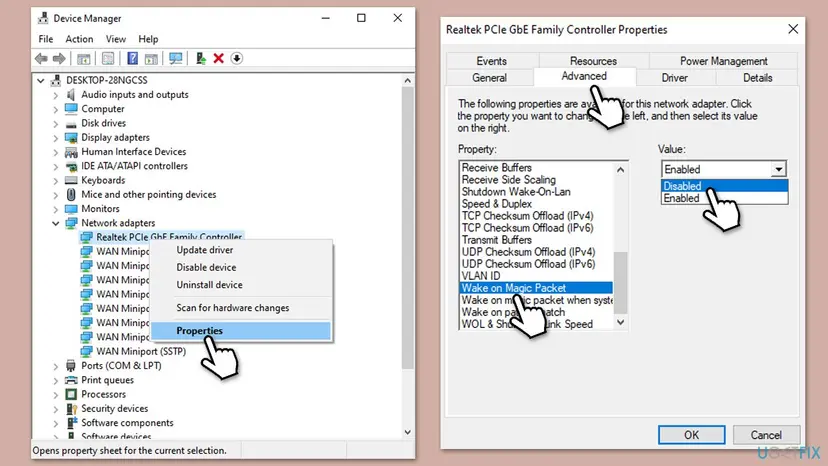
The names on the Advanced tab differ between makers. Look for entries that start with Wake on, WOL or Energy Efficient Ethernet, and change one at a time so you know which one helped.
It worked if: Several sleep and wake cycles pass without a stop screen, and the PC no longer wakes on its own.
If not: If the crash comes on the first start of the day instead, go to Fix 5.
Fix 5. Turn off Fast Startup
5 minutesLow riskThe crash comes after a shut down and power on, but not after a restart.
With Fast Startup, a shutdown is a partial hibernation, so the adapter driver must resume from a saved state instead of starting fresh. A restart always starts fresh, which is why the crash skips it.
- Press Win + R, type
powercfg.cpland press Enter. - Select Choose what the power buttons do, then Change settings that are currently unavailable.
- Clear Turn on fast startup (recommended) and select Save changes.
- Shut down once so the next start is a full one. Step by step with screenshots: Turn off Fast Startup
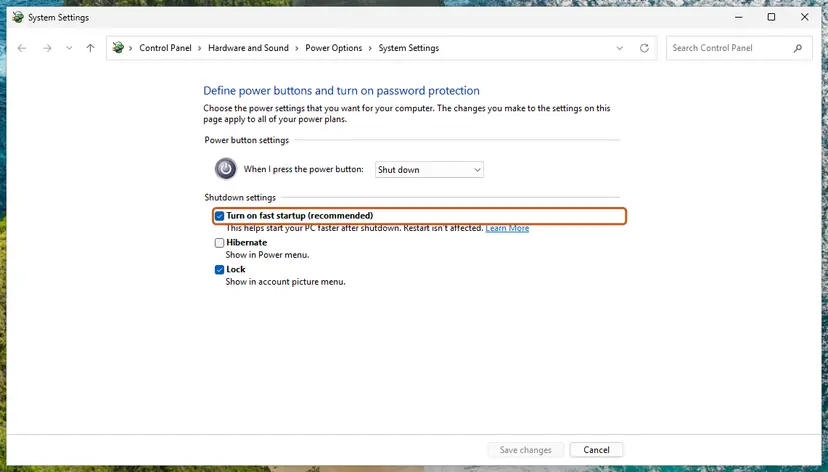
It worked if: Starting the PC takes a few seconds longer and the stop screen no longer follows a cold start.
If not: Go back to Fix 1 and try a different driver version, or go to Fix 6.
Fix 6. Find a VPN, firewall or network tool that clashes with the adapter driver
30 minutesLow riskThe crash started after you installed a VPN, a third-party firewall, a traffic monitor or a gaming network booster.
Such tools load their own filter drivers into the same network stack that NetAdapterCx serves. A bad filter can pass broken data down to the adapter driver, and the crash then lands in NetAdapterCx.
- Start Windows with only Microsoft services and no startup apps. Step by step: How to perform a clean boot in Windows
- Use the PC as usual, including sleep, until the time it usually crashed.
- If the crash is gone, turn the other services back on in small groups and restart after each group.
- When it returns, the last group holds the tool. Update it to its newest version or uninstall it.
- To test a third-party antivirus or firewall, pause it for one session and turn it back on afterwards: Turn off Microsoft Defender protection for a moment
- Set System Configuration back to a normal start when you are done.
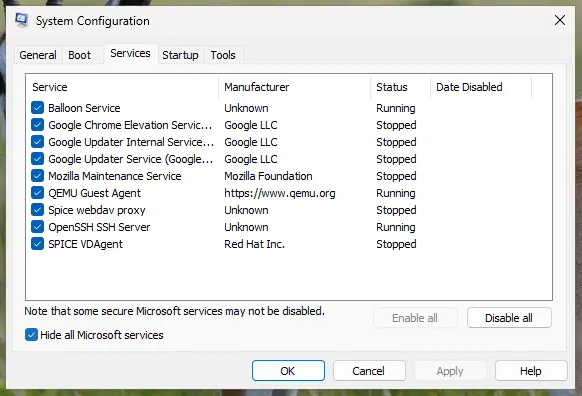
It worked if: The PC runs through a full day in the clean boot, and also in a normal start once the one tool is removed or updated.
If not: If the crash also happens in a clean boot, go to Fix 7.
Fix 7. Repair Windows system files
20 minutesNo riskEvery driver fix above failed, or SFC has never been run on this PC.
NetAdapterCx.sys itself is a Windows file. It is rarely damaged, but DISM and SFC check it together with the other Windows components and replace a broken copy from Microsoft's store.
DISM fetches clean Windows components, then SFC replaces damaged system files. Step by step with screenshots: Run DISM and SFC to repair Windows system files
In Terminal (Admin), one after the other:
DISM.exe /Online /Cleanup-Image /RestoreHealth
sfc /scannow
If the crashes started on a known date and nothing else helped, System Restore can take Windows and its drivers back to that date without touching your files: Undo recent changes with System Restore
It worked if: SFC reports no integrity violations or says it repaired them, and the stop screens stop.
If not: Collect the dumps and contact your PC or adapter maker, as described in the next section.
Still crashing: what to check and whom to ask
Only the maker of the adapter driver can fix a bug inside it, and only Microsoft can fix NetAdapterCx itself. Give them what they need to reproduce the crash.
- The three newest
.dmpfiles fromC:\Windows\Minidump, zipped. - The output of the
Get-NetAdaptercommand from the dump section above. - Your Windows edition and version from Settings > System > About.
- When the crash happens: at random, after sleep, or after a cold start.
- Any VPN, firewall or network tool you use.
| Where to report | When |
|---|---|
| Your PC or motherboard maker's support | Always first: they ship the tested adapter driver for your model |
| The adapter maker's support forum (Realtek, Intel, MediaTek) | If the PC maker has no newer driver |
| Feedback Hub in Windows, category Network and Internet | If the dump shows no third-party driver in the stack at all |
Crashes with many different stop codes, crashes that also name storage or graphics drivers, or memory test errors point to hardware. Test the RAM with How to test your RAM with Windows Memory Diagnostic. A failing network card can also be ruled out by disabling it and using a USB adapter for a few days.
How to keep the NetAdapterCx.sys blue screen from coming back
- Get network drivers from the PC or adapter maker and check for new ones every few months.
- Note the driver version that works, so you can return to it.
- Keep a copy of the working driver installer on the PC.
- Install Windows updates, which carry fixes for NetAdapterCx itself.
- Delete or replace NetAdapterCx.sys, or download it from a DLL or driver site.
- Use third-party driver updater programs for network cards.
- Run several VPN clients or network boosters side by side.
- Turn off Windows security features to make the crash stop.
Windows 10 left support on 14 October 2025. Adapter makers may stop testing new drivers on it, so a PC that can run Windows 11 has better odds of getting a fixed driver.
Frequently asked questions
What is NetAdapterCx?
NetAdapterCx is the Network Adapter WDF Class Extension, a Microsoft component of Windows since Windows 10 version 2004. It lets makers of Ethernet, Wi-Fi and mobile broadband cards write their drivers with the Windows Driver Frameworks, while NetAdapterCx handles the communication with NDIS, the Windows network layer. Its file is NetAdapterCx.sys in C:\Windows\System32\drivers. It is a genuine Windows file, not malware, and it does nothing on its own: it serves the network driver that uses it.
What does netadaptercx.sys failed mean?
It means Windows stopped while code inside NetAdapterCx.sys was running and named that file under What failed on the stop screen. It does not prove that the file itself is broken. Most often a network adapter driver above it passed bad data or failed to wake up, and the error surfaced inside the framework. Update or roll back the Ethernet and Wi-Fi drivers first, as in Fixes 1 and 2.
How do I fix SYSTEM_THREAD_EXCEPTION_NOT_HANDLED with netadaptercx.sys?
Treat it as a network driver crash. SYSTEM_THREAD_EXCEPTION_NOT_HANDLED means a system thread hit an error that nobody caught, and the line What failed: NetAdapterCx.sys says it happened in the network framework. Install the newest adapter driver from your PC maker (Fix 1). If it happens after sleep, as for the reader above, also change the adapter's power settings (Fix 4) and turn off Fast Startup (Fix 5).
Is SYSTEM_SERVICE_EXCEPTION with netadaptercx.sys a different problem?
Not really. SYSTEM_SERVICE_EXCEPTION means the error happened while a system call was being handled, and SYSTEM_THREAD_EXCEPTION_NOT_HANDLED means it happened in a system thread. With netadaptercx.sys named in both cases, the cause and the fixes are the same: the adapter driver first, then power settings, then tools that filter network traffic. The crash dump tells you which adapter driver was involved.
How do I open a netadaptercx dmp file?
Install WinDbg with winget install Microsoft.WinDbg, start it as administrator, select File > Open dump file and open the newest file in C:\Windows\Minidump. Type !analyze -v and press Enter. MODULE_NAME will say NetAdapterCx. The useful part is STACK_TEXT: a module there that is not nt, Wdf01000, ndis or NetAdapterCx is the network driver to update or roll back. The steps are in the dump section above.
Can I delete or replace NetAdapterCx.sys?
No. It is part of Windows, and network drivers built on it stop working without it, so you can lose all networking or get a new crash at boot. Copies from DLL download sites can also be outdated or tampered with. If you suspect the file itself is damaged, let Windows replace it with DISM and SFC (Fix 7). That restores the copy that matches your Windows build.
Why does the blue screen happen only after sleep?
Because waking from sleep is the moment the network adapter must come back from a low-power state, and that work runs through the adapter driver and NetAdapterCx together. A driver that handles power changes badly crashes then and nowhere else, which also explains why it does not happen every time. Fix 4 stops the adapter from powering down and from waking the PC, and Fix 5 removes the partial hibernation that Fast Startup uses.
Does my network card use NetAdapterCx?
Only drivers written for the newer model use it. Intel support said in 2023 that, of its wireless cards, only the Wi-Fi 6E AX411 driver used NetAdapterCx, by design. Other makers do not publish a list we could confirm. The reliable way to find out is the crash dump: the module in STACK_TEXT right next to NetAdapterCx is the driver built on it. Then match it with the Get-NetAdapter command shown above.
Should I use a driver updater program to fix it?
No. Get network drivers from Windows Update or from the PC or device maker. Third-party driver updaters often pick a generic package that is not tested for your PC, which can cause exactly this kind of crash. Use the maker's support page for your model, as in Fix 1. Keep the old version's installer too, in case you need Fix 2.
I searched in another language. Is this the right page?
Yes, if your stop screen names netadaptercx.sys. This page covers that one crash in Windows 11 and Windows 10. Short searches in Russian, Korean, French, Czech or Italian, such as how to check it or how to solve it, lead here too: check the crash dump as shown above, then follow the fixes in order.
Sources
- Microsoft Learn: Network Adapter WDF Class Extension (NetAdapterCx) (learn.microsoft.com)
- Microsoft on GitHub: Network Adapter Class Extension to WDF, source of NetAdapterCx.sys (github.com)
- Intel Community: No NetAdapterCx support in driver for Intel Wireless-AC 9560 (Intel staff answer) (community.intel.com)
Did this fix work?
One click, no account. It tells the next reader which guides are worth their time.
Questions and experiences: fix the NetAdapterCx.sys blue screen (BSOD) in Windows
Still broken, or found a fix we did not cover? Ask here: members and our editors answer. Reading is open; writing needs a free account.
…