How to fix
Rpcrt4.dll missing or not found error
on Windows
Solve the rpcrt4.dll missing error on Windows 10 and 11 effortlessly. Get expert-tested solutions to fix your system issues in minutes.

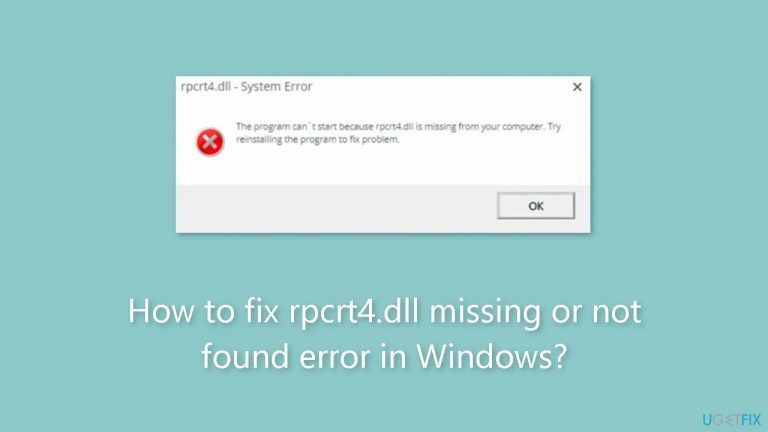
What causes How to fix rpcrt4.dll missing or not found error in Windows?
- Missing rpcrt4.dll file
- Corrupted rpcrt4.dll file
- Application failures due to dependency on rpcrt4.dll
- Networking issues affecting access to resources
- System instability causing crashes or freezes
Repairs Windows system files, removes malware, and restores a clean OS state — without reinstalling.
Hello. I keep getting the "rpcrt4.dll is missing" or "rpcrt4.dll was not found" errors on my Windows PC. Is there a way to fix this?
The Windows "rpcrt4.dll missing or not found" error is a frequent problem that can seriously impair users' access to specific programs or services. Remote Procedure Call Runtime, or Rpcrt4.dll, is an essential system file that makes it easier for various software applications, hardware, and network services to communicate with one another. This dynamic link library (DLL)[ref en-1] file is necessary for many Windows applications because it offers features that are necessary for network and internet connections, which provide smooth communication between computers and other devices.
When this error occurs, it typically means that the rpcrt4.dll file is either missing or corrupted. When attempting to execute particular programs or services that depend on the functionality offered by rpcrt4.dll, users may run into this problem. This error can have very disruptive effects. Users could run into the following issues:
- Application failures: applications that depend on the Remote Procedure Call Runtime may fail to start or operate correctly. This could include a wide range of software, from basic utilities to more complex applications.
- Networking issues: connectivity problems may arise, affecting a user's ability to access network resources, including shared files, printers, and internet services.
- System instability: in some cases, a missing or corrupted rpcrt4.dll file can lead to system instability, causing crashes or freezing of the Windows operating system.
There are a few possible fixes available to users for the "rpcrt4.dll missing or not found" error. To restore the system to a prior state where rpcrt4.dll was intact, use Windows' System Restore tool. SFC can be used to scan and fix missing or corrupted system files, such as rpcrt4.dll. Reinstalling those apps might be helpful if the error is unique to them because it can restore the required system files and dependencies.
In this guide, you will find 6 steps that should help you fix rpcrt4.dll missing or not found error in Windows. You can also run a maintenance tool like [d1] that can fix most system errors, BSODs,[ref en-2] corrupted files, and registry[ref en-3] issues. Otherwise, follow the step-by-step instructions below.

Method 1. Check Internet Connection
- Disconnect the cable connecting the computer to the modem.
- Turn off the modem and the router.
- Restart the computer.
- After your computer has restarted, turn on the modem or the router.
- Connect the cable from the computer to the modem or the router.
- Restart the computer.
- Ensure that all network cables are securely connected.
Method 2. Fix Corrupted System Files
Use Command Prompt commands to repair system file corruption:
- Open Command Prompt as administrator
- Use the following command and press Enter:
sfc /scannow

- Reboot your system
- If SFC returned an error, then use the following command lines, pressing Enter after each:
DISM /Online /Cleanup-Image /CheckHealth
DISM /Online /Cleanup-Image /ScanHealth
DISM /Online /Cleanup-Image /RestoreHealth
Method 3. Install Windows Updates
- Click Start and select Settings.
- Go to the Windows Update section.
- Click Check for updates and wait.

- Go to the Advanced options and install optional updates.
- Reboot your system.
Method 4. Scan for Malware
It is possible that a malware infection may be the cause of rpcrt4.dll missing or not found error in Windows. It is important to run a comprehensive security scan to rule out this possibility and ensure that the computer is not infected. This can help to prevent further issues with the Windows operating system and ensure that it is functioning properly.
If you have access to a security scanner, or if your organization pays for one, you can use it to scan your entire system to check for a virus infection. Otherwise, you can use Windows Defender to scan your system:
- Click on the Windows Start menu or press the Windows key on your keyboard.
- Type Microsoft Defender in the search bar and click on Microsoft Defender Antivirus to open the application.
- Click on the Virus & threat protection option in the left-hand menu.
- Click on the Quick scan or Full scan option, depending on your preference.

- If you choose Quick scan, Microsoft Defender Antivirus will scan the most vulnerable and commonly infected areas of your computer.
- If you choose Full scan, Microsoft Defender Antivirus will scan your entire computer, including all files, folders, and programs.
- Click on the Scan now button to start the selected scan type and wait for the scan to complete.
- The time it takes will depend on the size of your hard drive and the number of files being scanned.
- Once the scan is complete, you will be informed of any detected threats, and you can choose to quarantine or remove them.
- If no threats are found, Microsoft Defender Antivirus will inform you that your device is secure.
Method 5. Use System Restore
System Restore is a feature in Microsoft Windows that allows users to revert their computer's state to a previous point in time. This can be helpful if you have made changes to your system that are causing problems.
- Press the Windows key + R on your keyboard to open the Run box.
- Type SystemPropertiesProtection and press Enter.
- Go to the System Protection tab.

- You will see the System Restore… button. Click it to run System Restore.
- Follow the prompts until you can select a restore point.
- Select the one you want (ideally before the issue started occurring) and go ahead with the process.
Method 6. Repair Install Windows
- Visit Microsoft's official website.
- Choose the desired product language and OS edition for Windows 11.
- Download the Windows 11 ISO file.
- Locate the downloaded ISO file and double-click it.
- In the prompt that appears, click Open.
- Run the setup.exe file.

- When the UAC (User Account Control) dialog box appears, click Yes to continue.
- Click Next to proceed with the installation.
- Accept Microsoft's license terms by clicking Accept.
- Make sure the setup option reads Keep personal files and apps.
- Click Install to begin the Windows 11 repair upgrade.
- Wait patiently for the repair upgrade to complete.
Bottom line
To fix the rpcrt4.dll missing or not found error, you can use Windows' System Restore tool, run the SFC scan to repair system files, or reinstall affected applications. If these solutions do not resolve the issue, consider using a maintenance tool to fix system errors.
Frequently asked questions
The rpcrt4.dll missing error in Windows 10 can be caused by corrupted system files, malware infections, or accidental deletion of the DLL file.
You can restore the rpcrt4.dll file on Windows 11 by using the System File Checker tool by running 'sfc /scannow' in Command Prompt as an administrator.
No, downloading rpcrt4.dll from third-party websites is not safe as it may lead to further complications or malware; it's best to restore it through official Windows tools.




Report an issue
What's wrong with this guide? We review every report and update or remove content.
Report received — thank you. We'll review and fix it.
You need a free account to submit a report.
Be the first to comment