How to fix
Wbload.dll missing or not found error
on Windows
Resolve the Wbload.dll missing error on Windows 10 and 11 quickly and easily. Enjoy a smooth experience with expert-tested solutions. Fixed in minutes!

What causes How to fix Wbload.dll missing or not found error in Windows?
- Corrupted Wbload.dll file
- Missing Wbload.dll file
- Registry issues
- Software conflicts
- Hardware problems
Repairs Windows system files, removes malware, and restores a clean OS state — without reinstalling.
Hi, I was attempting to launch a program and received an error saying that Wbload.dll is missing. Any tips on how to deal with this? Thanks.
Dynamic Link Libraries (DLLs) are an integral part of the Windows operating system, as they contain shared code and resources that can be utilized by multiple programs simultaneously.
By incorporating a modular approach to software development, DLLs enable developers to create and update specific parts of a program without recompiling the entire application. As a result, programs can be more memory efficient and have reduced disk space requirements.
Despite the importance of DLLs, some users may encounter errors, such as the "Wbload.dll missing or not found" error. This error can occur due to various reasons, including a corrupted or missing Wbload.dll file, registry issues, software conflicts, or hardware problems.
A corrupted or missing file might be the result of accidental deletion, damage during a system update, or malware activity. Registry issues can arise from invalid or outdated entries in the Windows registry, while software conflicts can be attributed to incompatibilities between software applications or improper installation or uninstallation of programs. Hardware issues, such as a failing hard drive, can also cause DLL files to become inaccessible.
Understanding the potential causes behind the "Wbload.dll missing or not found" error is crucial in resolving the issue and ensuring the smooth functioning of the Windows operating system.
Users should be aware of the role of DLLs in their system and take appropriate measures to address the error, such as scanning for malware, updating the Windows operating system, and keeping device drivers up-to-date. By addressing these potential causes, users can work towards restoring the proper functioning of their system and reducing the likelihood of encountering similar errors in the future.
We also would recommend running a scan with a potent PC repair tool [d1], which could address issues related to the Wbload.dll error. For example, the app could resolve registry issues or repair corrupted system files.
Method 1. Update your drivers
Corrupted drivers may cause DLL errors; thus, make sure that your drivers are fully updated. You can start with the Windows update feature:
- Type Updates in Windows search and press Enter.
- Here, click Check for updates, and Windows will check if there are new updates available.
- If optional packages are offered, install them too.
- Once done, restart your PC and see if your problem is resolved.
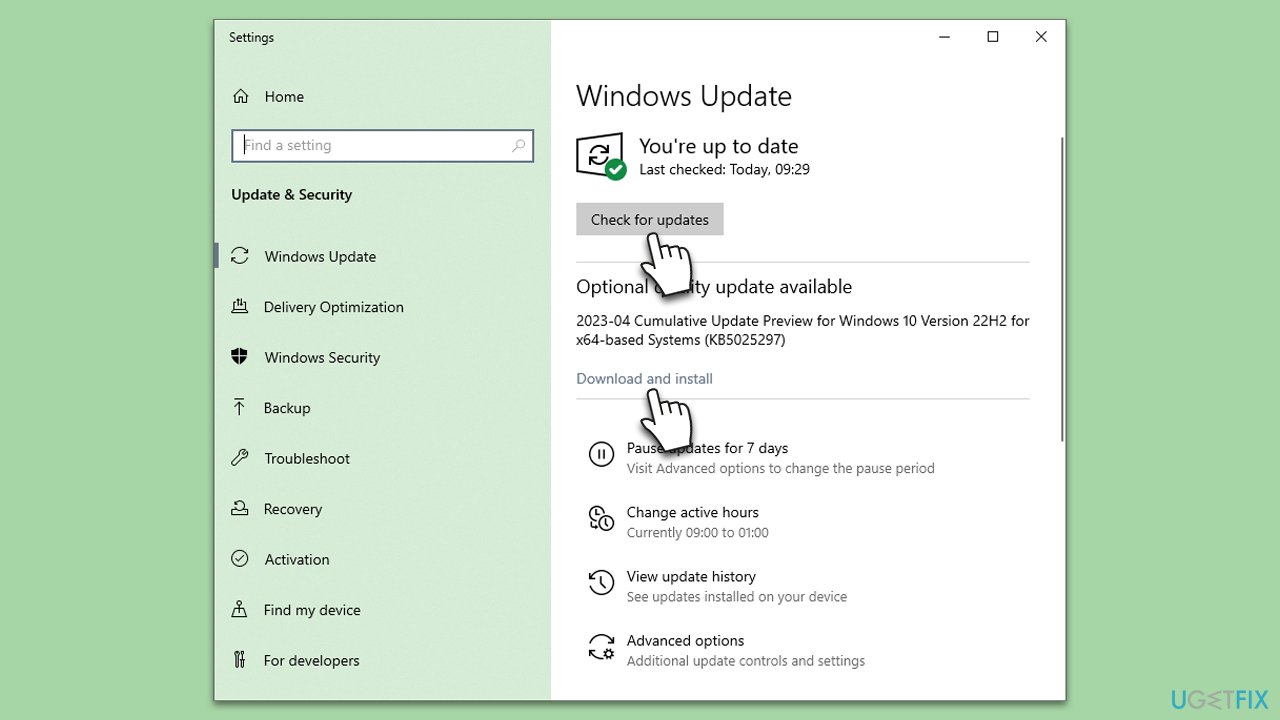
Updating Windows may not always be the most dependable method for installing the newest driver software for your hardware. Instead, it is advisable to use an automatic driver updater like [rev id="DriverFix"] or manually download the software from the official manufacturer's website to ensure you have the latest drivers.
Method 2. Check for file corruption
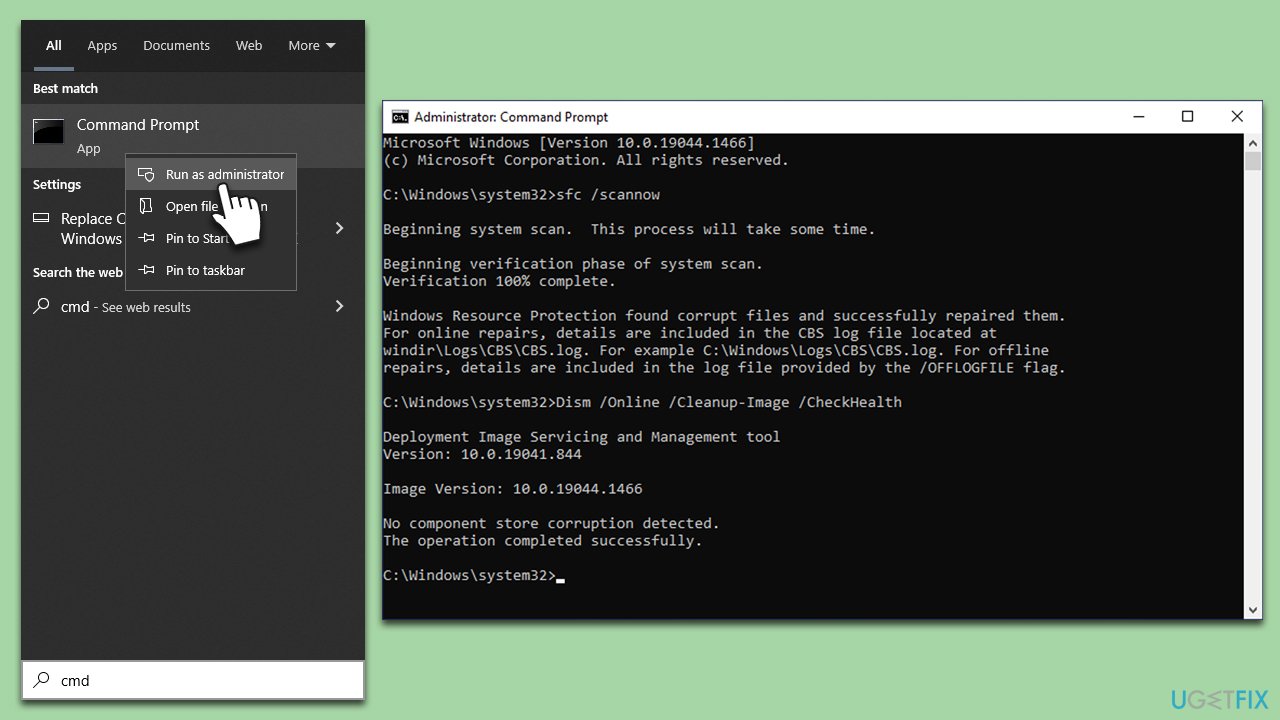
- Type cmd in Windows search.
- Right-click on Command Prompt and pick Run as administrator.
- When User Account Control (UAC) asks you whether you want to allow changes, click Yes.
- Use the following command and press Enter:
sfc /scannow - When the scan is complete, you should also run the following commands to repair Windows image files:
DISM /Online /Cleanup-Image /CheckHealth
DISM /Online /Cleanup-Image /ScanHealth
DISM /Online /Cleanup-Image /RestoreHealth - Restart your system.
Method 3. Scan for malware
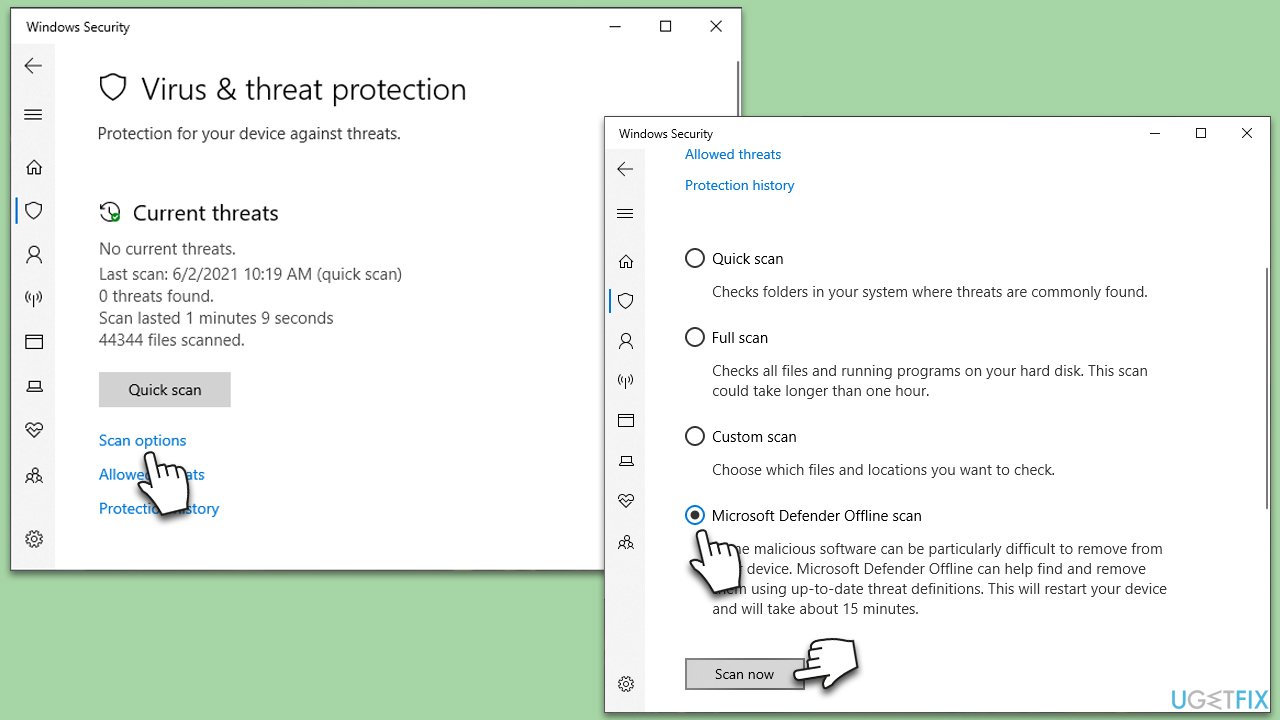
DLL errors can occasionally suggest the presence of malware infections. As a result, it is essential to first verify that the system is not compromised. You have the option to use any trustworthy third-party security software, or you can utilize Microsoft Security Scanner, downloadable from the official website. Another option is to perform an Offline scan using Windows Defender:
- Type Windows Security in the Windows search bar and hit Enter.
- Select Virus & threat protection.
- Pick Scan options.
- Choose Microsoft Defender Offline scan and click Scan now
- Your computer will immediately reboot and begin a deep scan.
Method 4. Reinstall the app
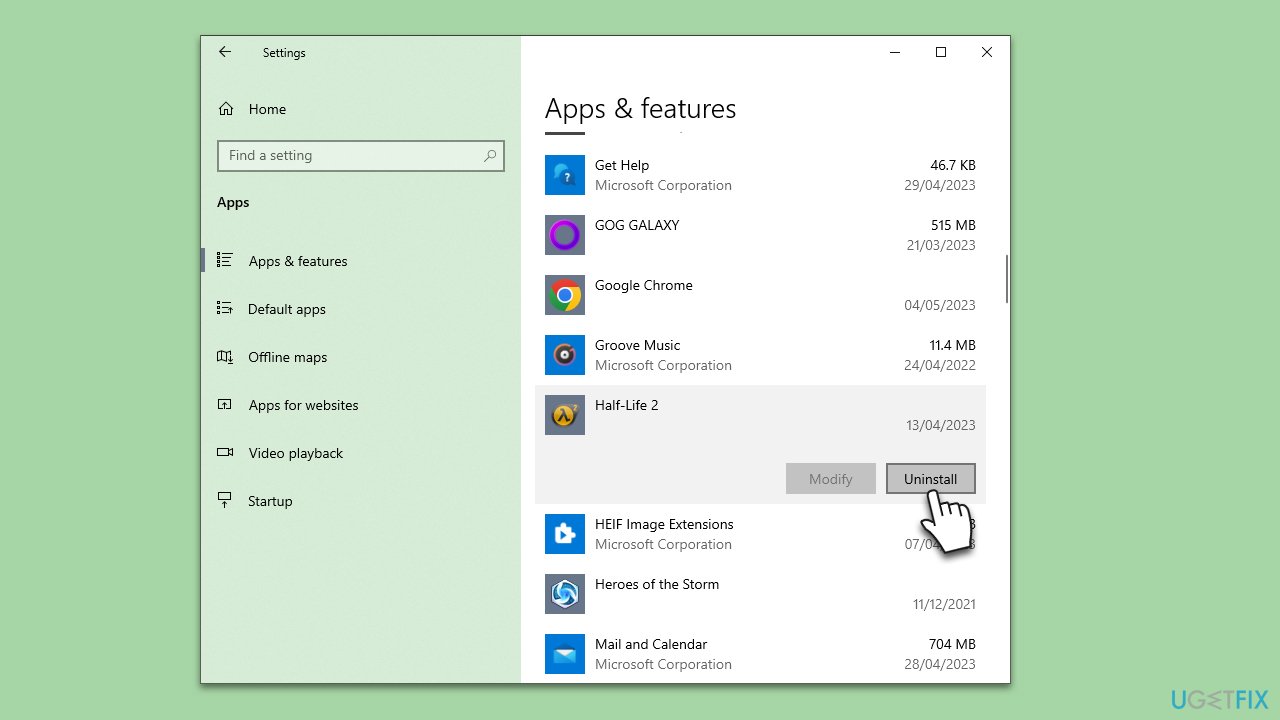
- Right-click on Start and pick Apps and Features.
- Scroll down to find the application that's causing the error.
- Click Uninstall and then confirm with Uninstall.
- Follow the prompts to finish the process.
Method 5. Try Clean Boot
Once you have completed a clean boot, you can continue with the troubleshooting process to determine the root cause of the problem. If the issue doesn't persist during the clean boot, it's likely due to a third-party service or startup item.
To identify the troublesome service or application, reactivate the disabled items individually or in small batches, restarting your computer after each modification. When the problem resurfaces, the most recently enabled item(s) is likely responsible. The following steps will guide you on how to access the Clean Boot environment:
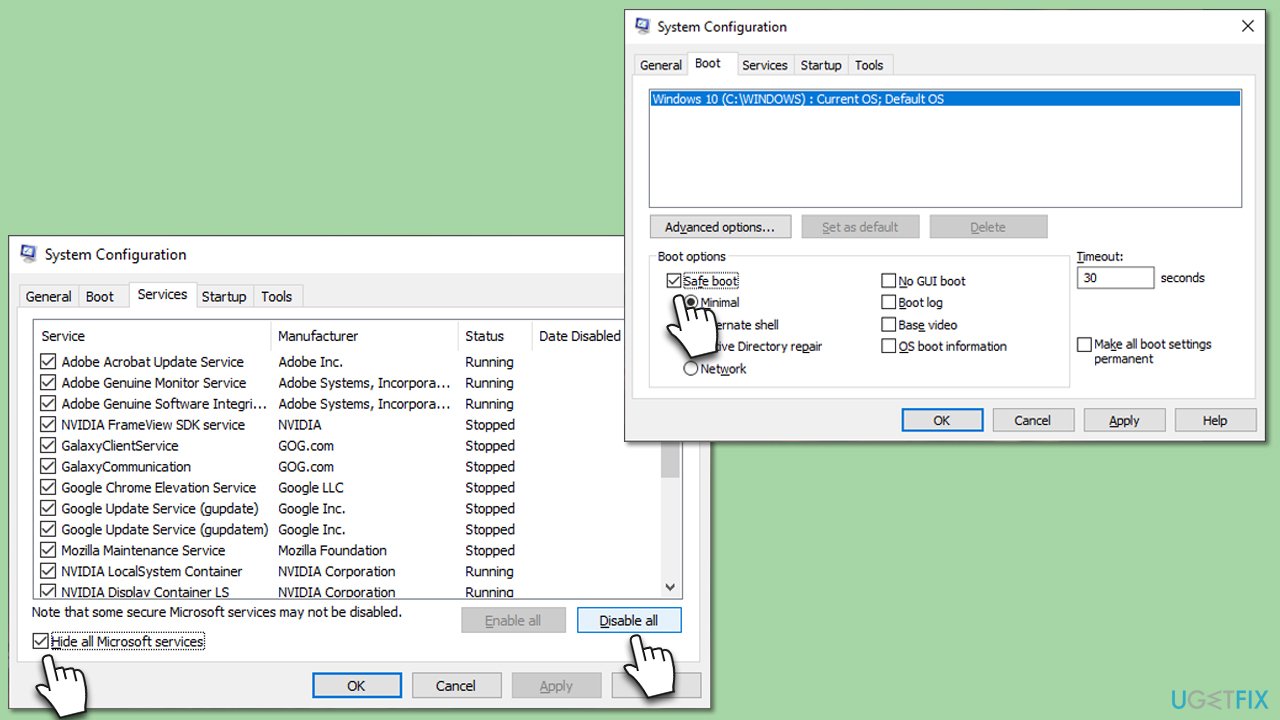
- Type msconfig in Windows search and press Enter.
- Pick the Services tab.
- Mark Hide all Microsoft services and select Disable all.
- Select the Startup tab and click Open Task Manager.
- In the Task Manager, right-click on each of the items and select Disable, then close the Task Manager.
- Go to the Boot tab, mark the Safe Boot option, then click Apply and OK.
- Try downloading the update in this mode.
Bottom line
To fix the Wbload.dll missing or not found error, users can scan for malware, update the Windows operating system, and keep device drivers up-to-date. Additionally, running a scan with a PC repair tool may help address registry issues or repair corrupted system files. If none of these solutions work, further investigation into the specific software or hardware may be necessary.
Frequently asked questions
The Wbload.dll missing error can occur due to corrupted or accidentally deleted system files, or it may result from issues with installed applications that rely on this DLL.
You can restore the Wbload.dll file by running the System File Checker tool using the command 'sfc /scannow' in the Command Prompt with administrator privileges.
Yes, there are third-party DLL repair tools available that can scan your system for missing DLL files and help you restore them, but ensure they are from a reputable source to avoid further issues.




Report an issue
What's wrong with this guide? We review every report and update or remove content.
Report received — thank you. We'll review and fix it.
You need a free account to submit a report.
Be the first to comment