How to fix
Windows update error 0x80070646
on Windows
Resolve Windows update error 0x80070646 quickly and efficiently with our expert-tested solutions. Get your system running smoothly again, fixed in minutes!

What causes How to fix Windows update error 0x80070646?
- Damaged update components
- Cached files causing interference
- Insufficient permissions for the update service
- Damaged system files
- Interference from third-party applications
- Network issues such as unstable links or proxy settings
Repairs Windows system files, removes malware, and restores a clean OS state — without reinstalling.
I have been trying to install the latest updates on my Windows 11 computer, but I am always receiving error code 0x80070646 with the description Something didn't go as planned. The update is downloading but refuses to install, and my computer keeps prompting me to try again. I have tried restarting my computer multiple times, but the error persists. How can I fix it?
Windows Update is an extremely useful feature in Windows 10 and 11 that secures your system and keeps it updated by patches, security updates, and other features. It is done in the background so that the device is protected from threats and compatible with modern software. Users might experience that at certain times problems like error code 0x80070646 arise that obstruct this process and make the system vulnerable to threats.
The 0x80070646 error typically occurs while installing an update, and then you receive a message like Something didn't go as planned or We couldn't complete the updates. In some cases, the update downloads successfully, but it falls short of installing repeatedly with repeated requests to attempt again.
This problem is usually caused by issues with the Windows Update service itself, such as damaged update components or cached files that cause interference during the installation process. Other causes are insufficient permissions for the update service, damaged system files, or interference from third-party applications like antivirus software. Network issues, such as unstable links or proxy settings, can also make the update fail, as can low system drive disk space.
Several troubleshooting measures can resolve this error, depending on what its root cause is. Rebooting update components, repairing system files, or manually installing the update are excellent remedies. Permissions might need to be reconfigured or disk space cleared. The following steps list eight detailed repairs to fix Windows Update.
For an even faster solution, we recommend that you install [d1], a computer maintenance software that can automatically fix system file corruption, service problems, and other Windows issues that may be causing the 0x80070646 error.
Fix 1. Run the Windows Update troubleshooter
Built-in troubleshooters can detect and resolve common update issues, such as problems with the update service or corrupted caches, making it a good first step.
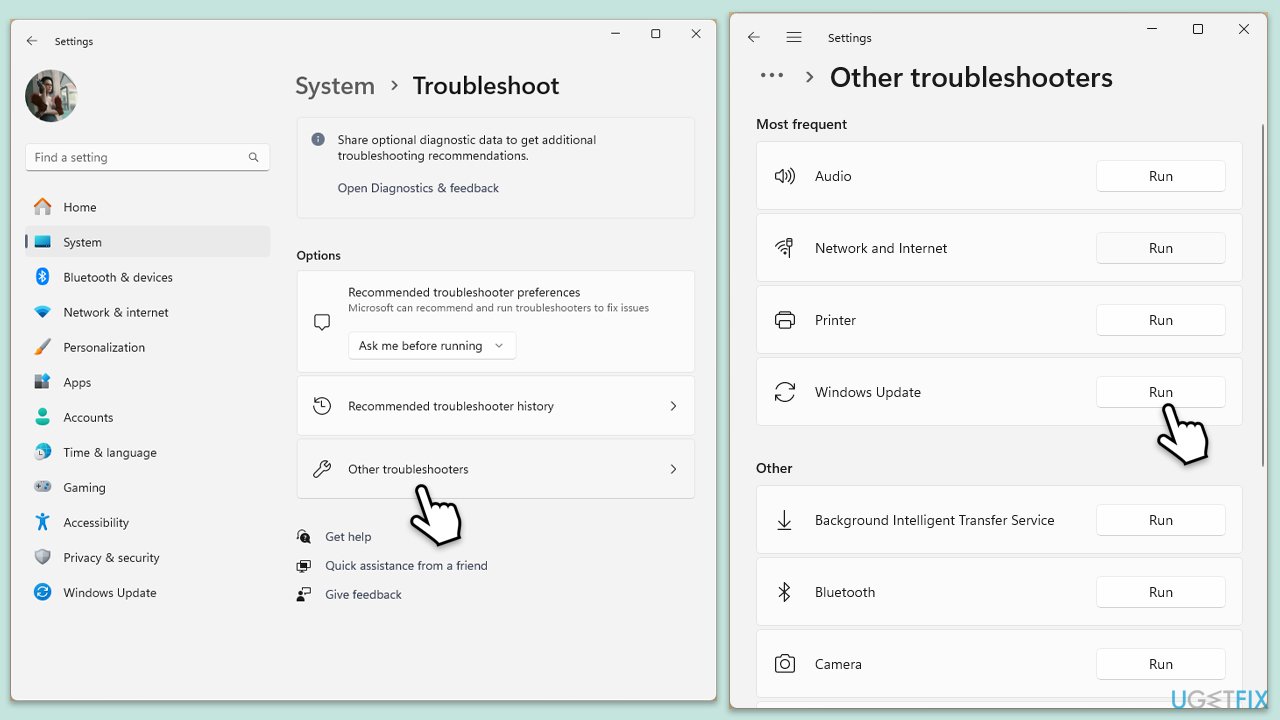
- Type Troubleshoot in Windows search and press Enter.
- Select Additional troubleshooters/Other troubleshooters.
- Find Windows Update from the list.
- Click it and select Run the troubleshooter/Run.
- Restart your computer when the update process is finished.
Fix 2. Repair corrupted files
Corrupted system files can interfere with the update process, leading to errors like 0x80070646. SFC and DISM tools can repair these files and restore functionality.
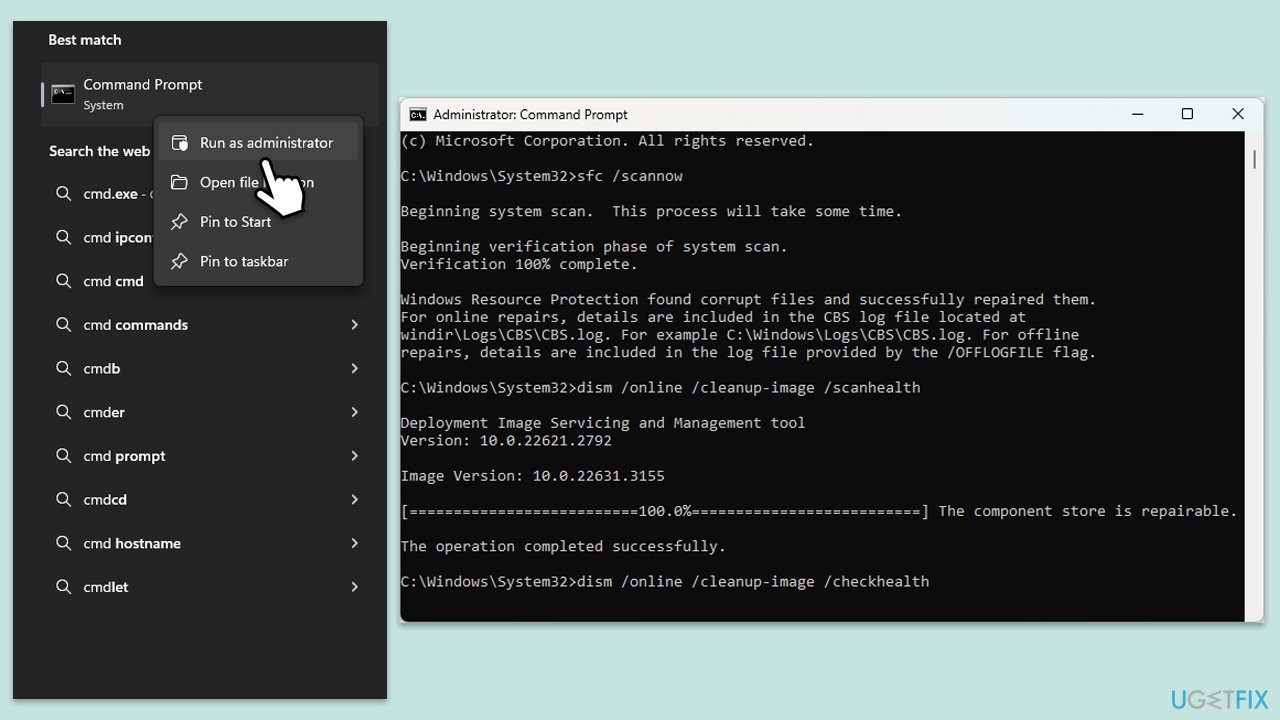
- Type cmd in Windows search.
- Right-click on Command Prompt and select Run as administrator.
- When User Account Control shows up, click Yes.
- In the Command Prompt window, paste the following command and press Enter:
sfc /scannow - Wait for the scan to complete.
- Once the SFC scan is finished, run the following set of DISM commands, pressing Enter after each one:
DISM /Online /Cleanup-Image /CheckHealth
DISM /Online /Cleanup-Image /ScanHealth
DISM /Online /Cleanup-Image /RestoreHealth
(Note: if you get an error executing this last command, add /Source:C:\RepairSource\Windows /LimitAccess to it and try again). - After completing the DISM commands, restart your system.
Fix 3. Free up disk space
Insufficient storage on the system drive can cause updates to fail, as Windows needs space to download and apply update files. Ensuring enough free space can resolve this.
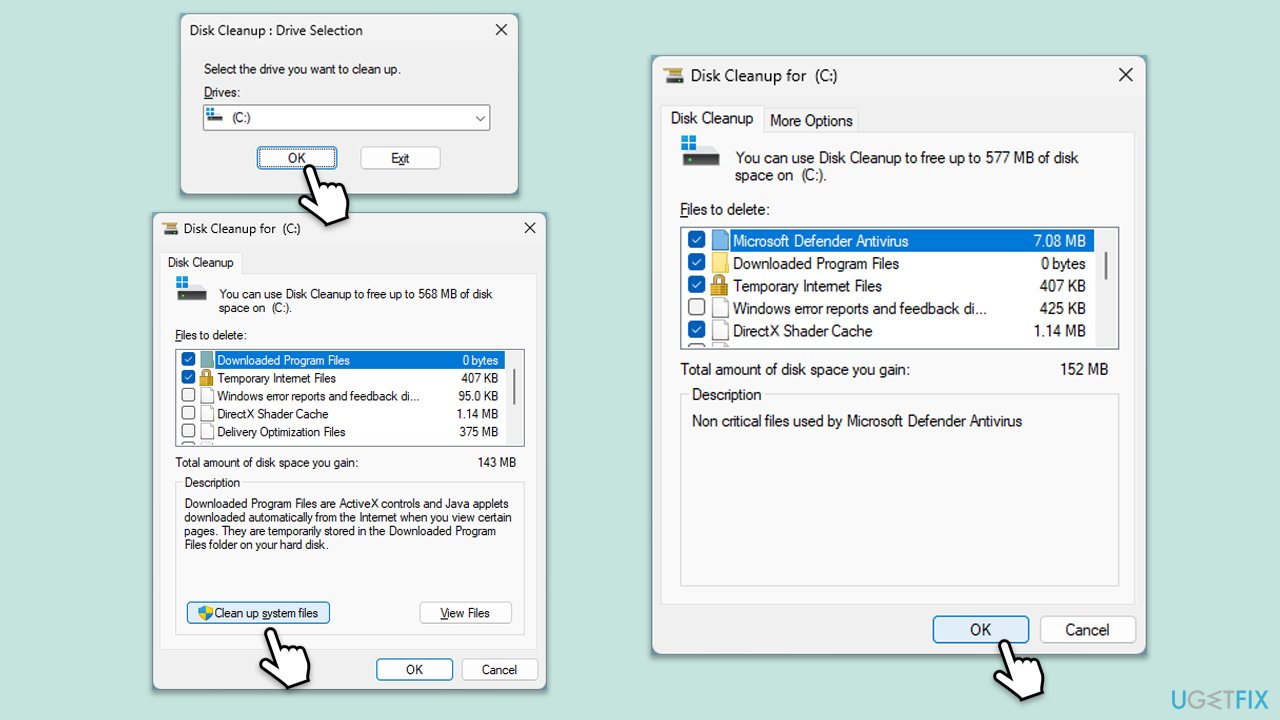
- Type Disk Cleanup in Windows search and hit Enter.
- If your Windows is installed on drive C, pick it from the list (it should be by default) and press OK.
- Click Clean up system files.
- Select your main disk again and click OK.
- Here, select the largest portions of the data used - these typically include Temporary Internet Files, Windows Update, Temporary Files, Recycle Bin, Delivery Optimization Files, and others.
- Click OK - the process should be finished shortly.
Fix 4. Reset Windows Update components
Corrupted update components, such as the update cache or services, can prevent installations from completing. Resetting them clears problematic files and restarts essential services.
- Open Command Prompt as administrator.
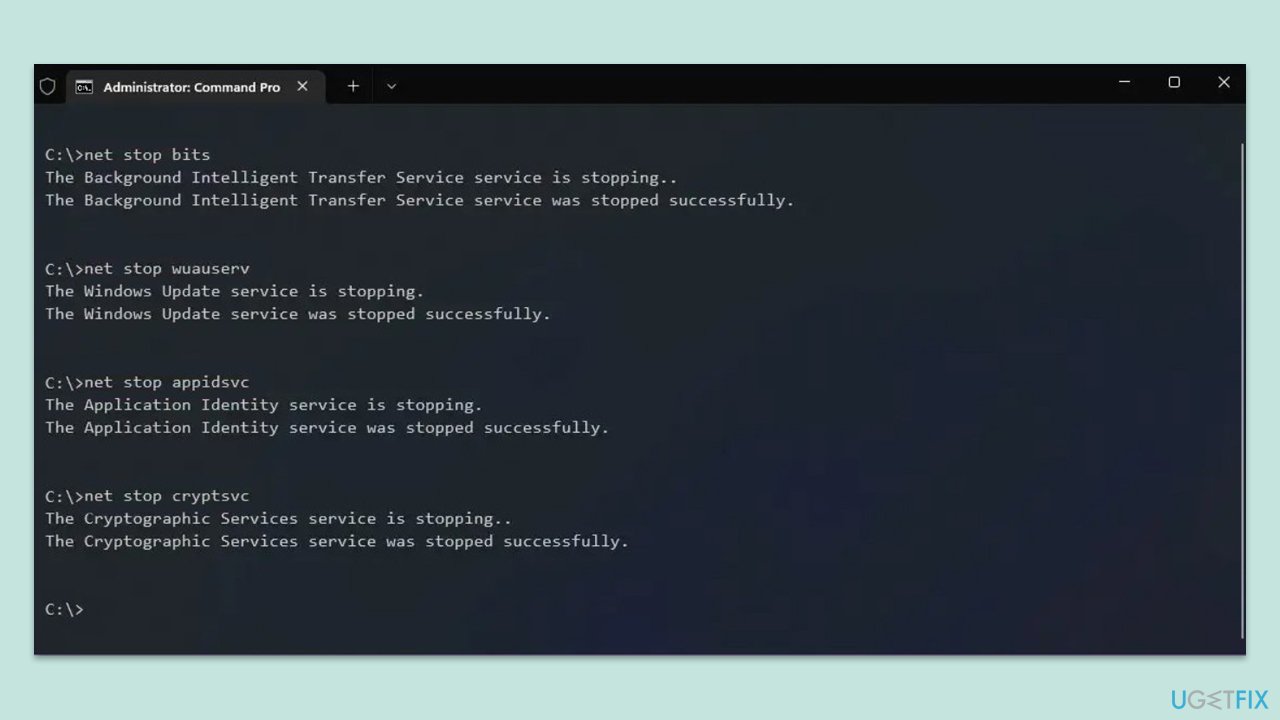
- Stop the BITS, Windows Update, and Cryptographic services by typing the following commands, and pressing Enter after each:
- net stop bits
- net stop wuauserv
- net stop appidsvc
- net stop cryptsvc
- To rename the SoftwareDistribution and Catroot2 folders (where Windows stores update files), type the following commands:
- ren %systemroot%\SoftwareDistribution SoftwareDistribution.old
- ren %systemroot%\system32\catroot2 catroot2.old
- regsvr32.exe /s atl.dll
- regsvr32.exe /s urlmon.dll
- regsvr32.exe /s mshtml.dll
- netsh winsock reset
- netsh winsock reset proxy
- Restart the services stopped earlier by typing the following commands:
- net start bits
- net start wuauserv
- net start appidsvc
- net start cryptsvc
- Close the Command Prompt and restart your computer, then try updating Windows again.
Fix 5. Check Windows Update service permissions
If the Windows Update service lacks proper permissions, it might fail to install updates, triggering this error. Adjusting its permissions can help.
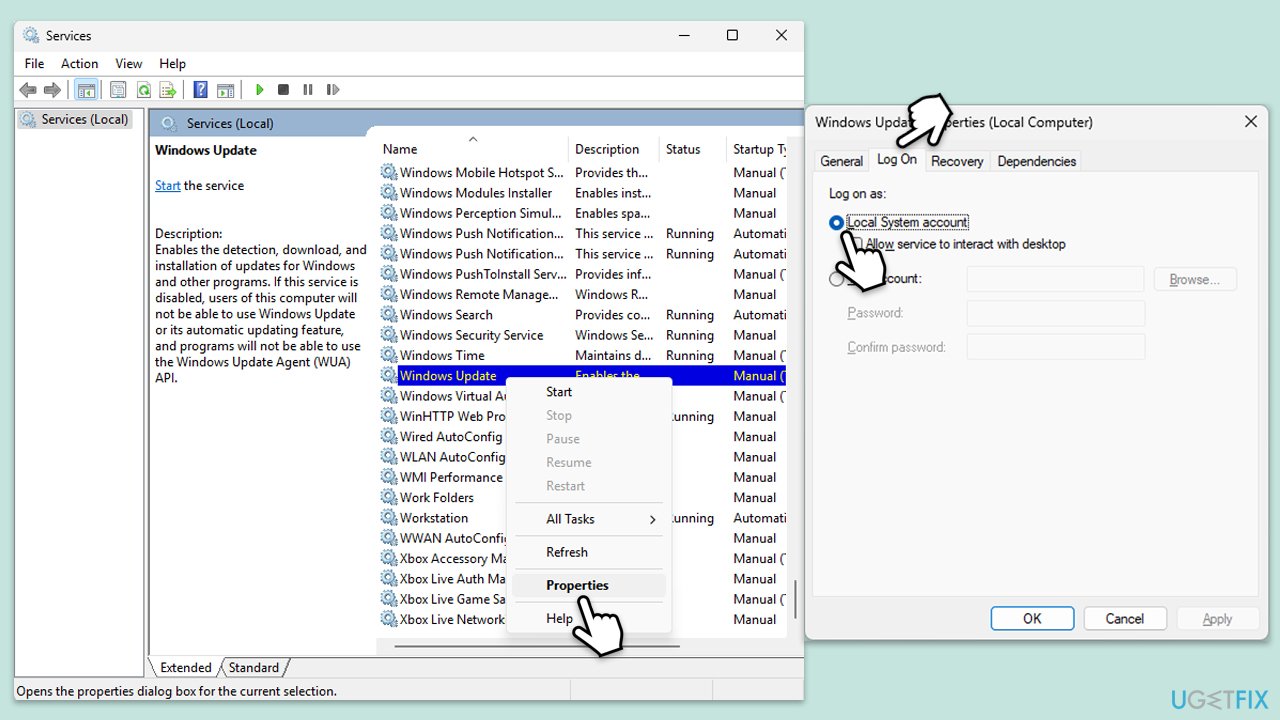
- Type Services in Windows search and press Enter.
- Scroll down to Windows Update, right-click it, and select Properties.
- Go to the Log On tab and ensure Log on as is set to Local System account.
- Click Apply, then OK, and restart your computer.
Fix 6. Manually install the update
Automatic updates can fail due to network issues or corrupted downloads, which can be bypassed by manually installing the update from Microsoft’s catalog.
- Type in Updates in Windows search and press Enter.
- Select View update history.
- Find the update that failed with the 0x80070646 error and copy its KB number.
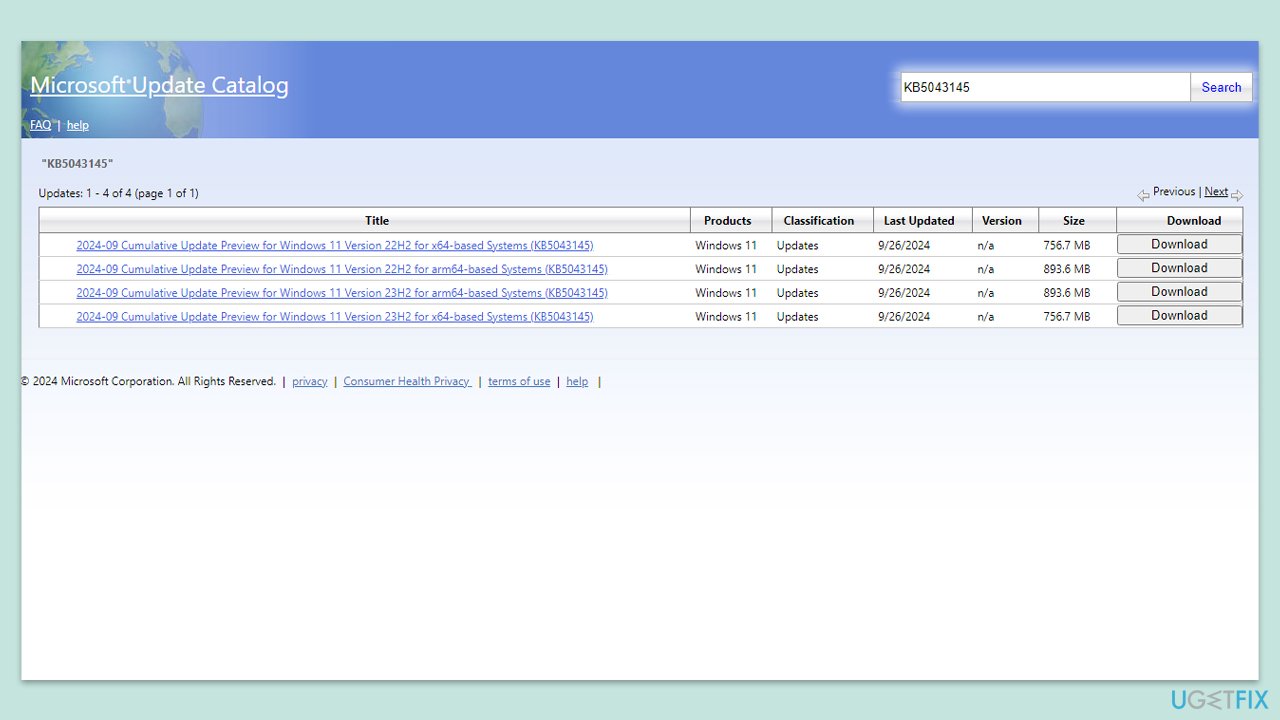
- Open your browser and go to Microsoft Update Catalog.
- Within the search bar, type in the KB number and click Search.
- Find the correct version of the update for your operating system (to check this, right-click on Start and pick System. Under Device specifications and check the System type) and click Download.
- Use on-screen guidelines to finish the installation process and restart your system.
Fix 7. Disable third-party antivirus temporarily
Third-party antivirus software can interfere with Windows Update by blocking system changes, leading to installation failures. Temporarily disabling it can help.
- Open your antivirus software.
- Navigate to the settings and temporarily disable real-time protection or shields.
- Try updating Windows again.
Fix 8. Use the Media Creation Tool
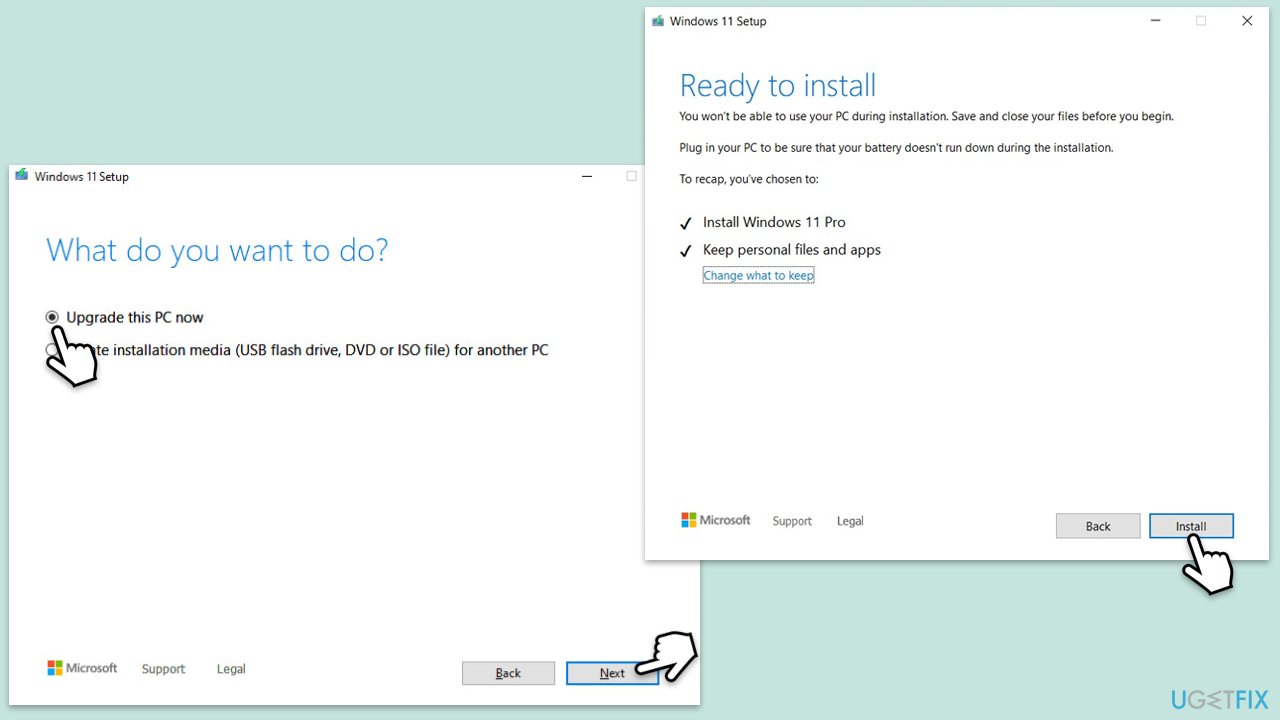
If the update error persists, deeper system issues might be at play. Using the Media Creation Tool to perform an in-place upgrade can repair Windows while keeping your files.
- Visit the official Microsoft website and download Windows 10 installation media (Windows 11 version).
- Double-click the installer, select Yes when UAC shows up, and agree to the terms.
- Select Upgrade this PC now and click Next.
- Windows will start downloading the needed files.
- Agree to the terms once again and click Next.
- Before installing, make sure that you are happy with your choices (otherwise, you can click Change what to keep option).
- Finally, click Install to begin the upgrade process.
Bottom line
To fix the Windows update error 0x80070646, you can run the Windows Update troubleshooter, reboot update components, repair system files, or manually install the update. If these steps do not resolve the issue, consider clearing disk space or reconfiguring permissions. If none of these solutions work, you may want to install a computer maintenance software to automatically fix underlying problems.
Frequently asked questions
This error typically indicates that there is an issue with the installation of a Windows update, often related to missing or corrupted files. It can occur on both Windows 10 and Windows 11 systems.
You can resolve this error by running the Windows Update Troubleshooter, ensuring that your system files are intact using the System File Checker, and checking for any pending updates. Additionally, reinstalling the affected update may help.
Yes, you can use the built-in Windows Update Troubleshooter available in Windows 11 under Settings > Update & Security > Troubleshoot. This tool can help identify and fix issues related to Windows updates.




Report an issue
What's wrong with this guide? We review every report and update or remove content.
Report received — thank you. We'll review and fix it.
You need a free account to submit a report.
Be the first to comment