How to fix
KB5037002 fails to install
on Windows
Resolve the KB5037002 installation error on Windows 11 effortlessly. Follow our expert-tested solutions to get your system running smoothly again. Fixed…

What causes How to fix KB5037002 fails to install in Windows 11?
- Insufficient system resources
- Low disk space
- Conflicts with existing software
- Corrupted system files
- Interruptions during the download process
Repairs Windows system files, removes malware, and restores a clean OS state — without reinstalling.
Hi, I can't install KB5037002 for some reason. Whenever I try, it hangs for a bit and then stops. I restarted my PC but it is still not working. Any idea how to fix this?
What is the new KB5037002 update?
KB5037002 is a Windows 11 Build 22635.3566 update, released on April 26, 2024, for all Windows Insiders. This update includes significant improvements and new features designed to enhance user experience. Among these are the ability to drag and drop files with a mouse between breadcrumbs in the File Explorer Address Bar, the introduction of widgets on the lock screen, the visibility of widgets on the taskbar, and more.
Some of you, nevertheless, might run into problems when trying to install this update. It can be frustrating if the update KB5037002 still won't install after several tries. This failure usually shows up as an error notice throughout the installation process, which may prevent you from using the additional features and enhancements that this build brings.
What can you do to fix KB5037002 failing to install issue?
KB5037002 may fail to install for a number of reasons; common causes include insufficient system resources, such as low disk space. It could also be a result of conflicts with existing software or systems settings that prevent the update from being applied correctly. Additionally, corrupted system files or interruptions during the download process can lead to incomplete or unsuccessful installations.
If you encounter issues with installing this update, there are a few avenues you can explore. Ensuring that your system meets the requirements for the update and checking for sufficient disk space could resolve the problem. Additionally, running system checks for corrupted files or attempting the installation after a system restart might help.
For a comprehensive solution to these issues, consider using a PC repair tool [d1], designed to automatically detect and fix underlying Windows problems, potentially resolving any issues with the KB5037002 installation.
Fix 1. Run Windows update troubleshooter
Windows Update Troubleshooter automatically detects and fixes problems preventing updates from installing. It checks for issues that can block network communication, stop Windows Update services, or cause corrupted download files.
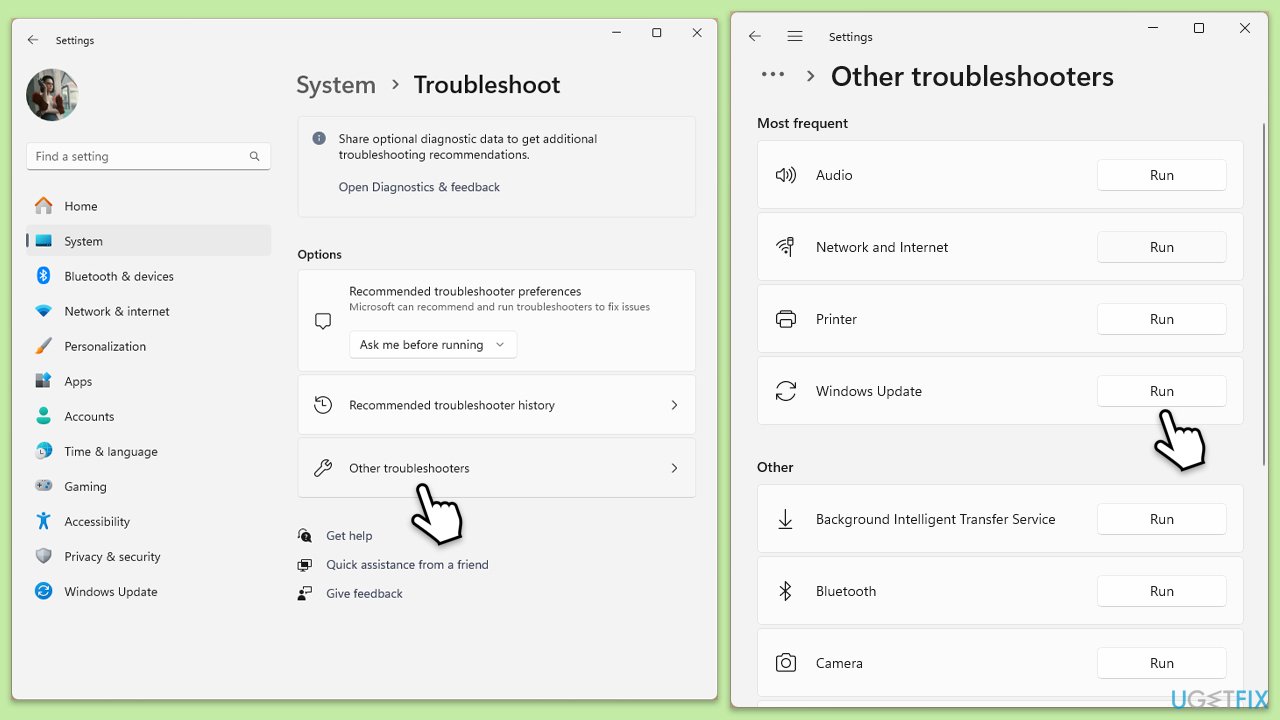
- Type troubleshoot in Windows search and press Enter or go to Start > Settings > System > Troubleshoot.
- From the list of Options, pick Other troubleshooters.
- Scroll down to locate the Windows Update and click Run.
- Wait for it to finish, then apply changes and reboot the system.
Fix 2. Remove the clutter and update files
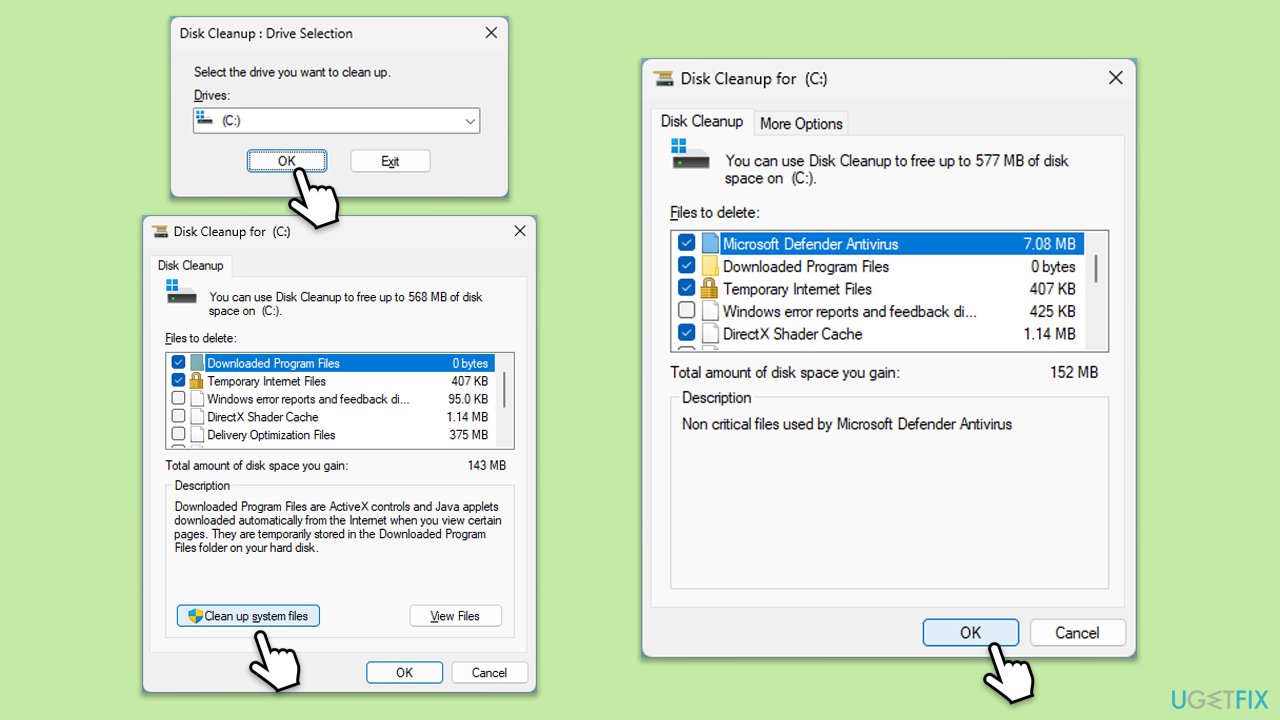
Disk Cleanup helps free up space on your hard drive by removing temporary files and system files that are no longer needed, which can help resolve issues with not having enough space for updates.
- Type Disk Cleanup in Windows search and hit Enter.
- If your Windows is installed on drive C, pick it from the list (it should be by default) and press OK.
- Click Clean up system files.
- Select your main disk again and click OK.
- Here, select the largest portions of the data used - these typically include Temporary Internet Files, Windows Update, Temporary Files, Recycle Bin, Delivery Optimization Files, and others.
- Click OK - the process should be finished shortly.
Fix 3. Ensure your drive has no errors
Check Disk can scan and fix problems with file systems and bad sectors, which can cause problems with installing updates.
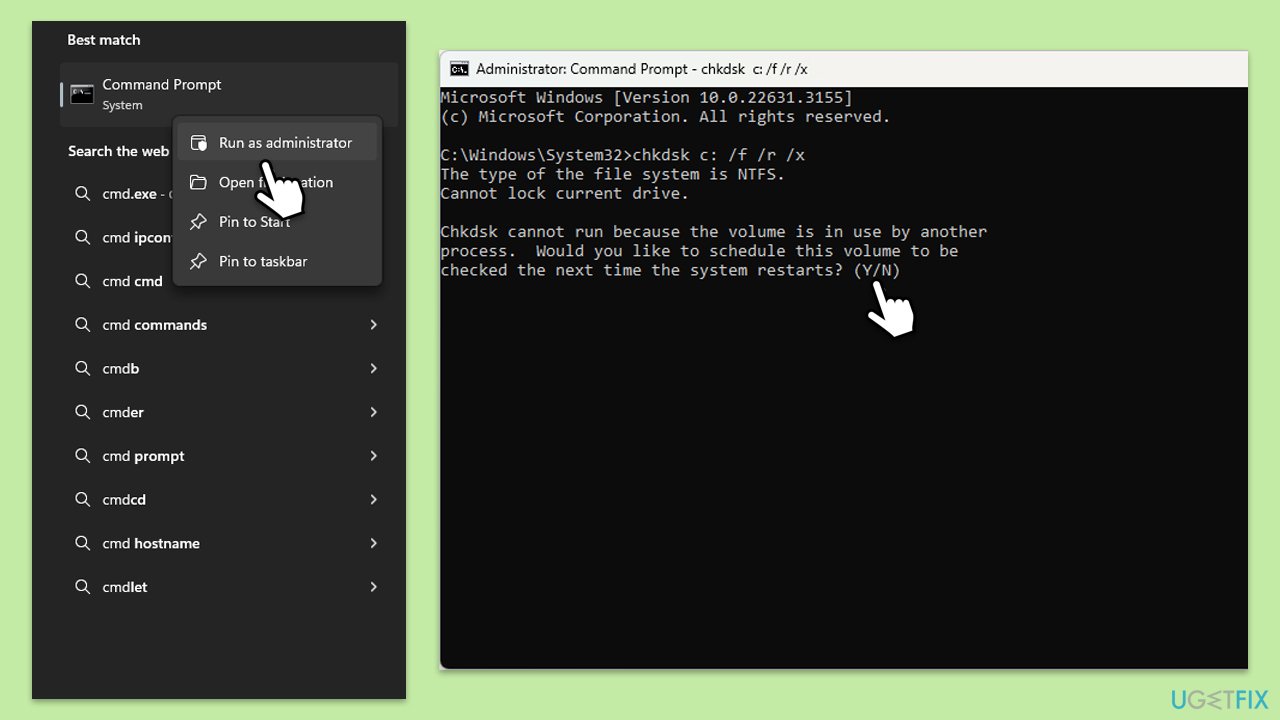
- Type in cmd in Windows search.
- Right-click on Command Prompt and select Run as administrator.
- In the User Account Control window, click Yes.
- In the new window, type in the following command and press Enter after:
chkdsk c: /f
(Note: use chkdsk c: /f /r /x command if you are using SSD as your primary partition. Also, replace c: with another drive letter if you are not using default) - If you receive an error, type in Y, close down Command Prompt, and restart your system.
- Wait till the scan is finished.
Fix 4. Check for corrupted system files
SFC and DISM scans can repair Windows system files and restore system health, which can resolve issues blocking the update.
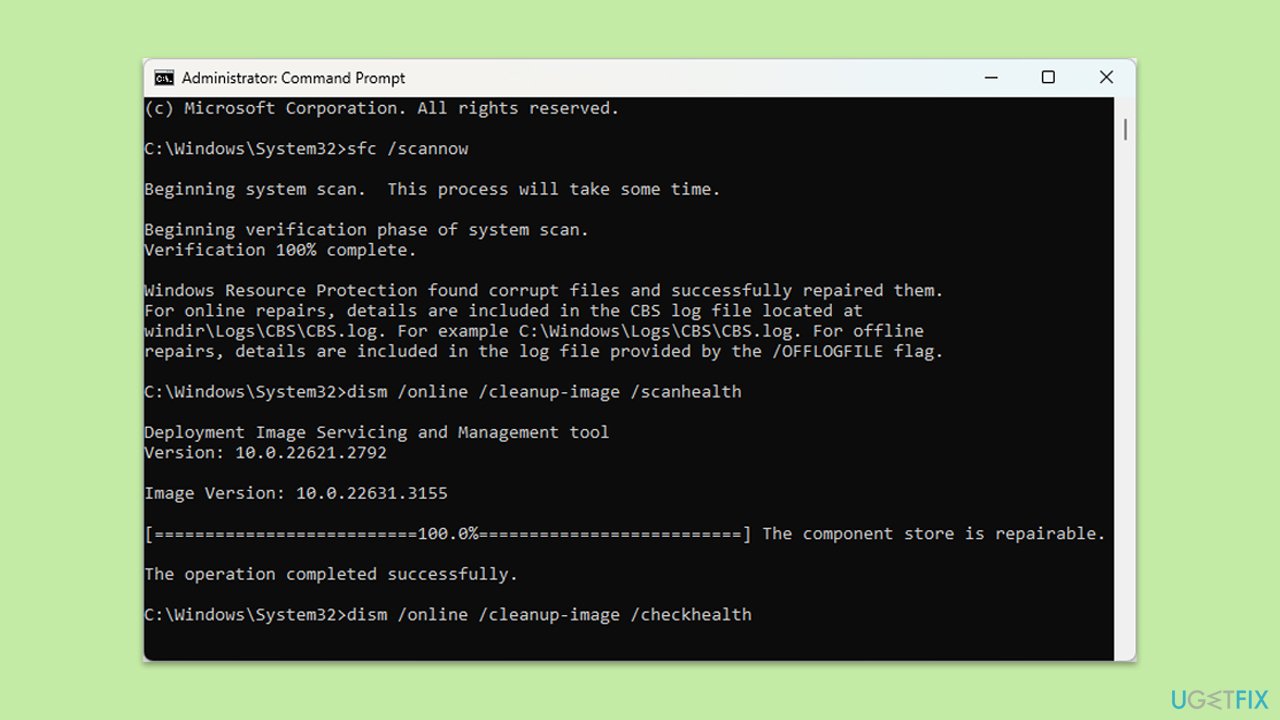
- Open Command Prompt as administrator.
- In the Command Prompt window, paste the following command and press Enter:
sfc /scannow - Wait for the scan to complete.
- Once the SFC scan is finished, run the following set of DISM commands, pressing Enter after each one:
DISM /Online /Cleanup-Image /CheckHealth
DISM /Online /Cleanup-Image /ScanHealth
DISM /Online /Cleanup-Image /RestoreHealth - After completing the DISM commands, restart your system.
Fix 5. Perform Clean Boot
Running a Clean Boot starts Windows with a minimal set of drivers and startup programs. This can help identify if background programs are interfering with the update.
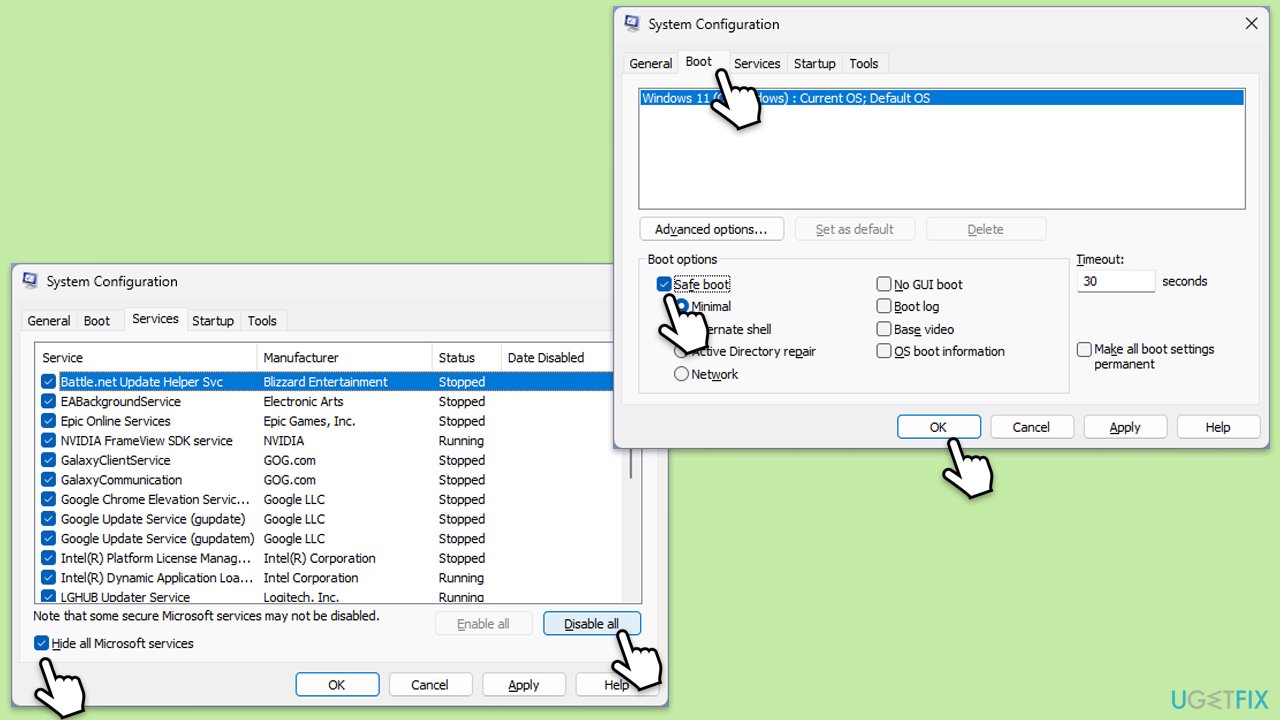
- Type msconfig in the Windows search box and press Enter.
- Pick the Services tab.
- Mark Hide all Microsoft services and select Disable all.
- Select the Startup tab and click Open Task Manager.
- In the Task Manager, right-click on each of the items and select Disable, then close the Task Manager.
- Go to the Boot tab, mark the Safe Boot option, then click Apply and OK.
- On the System Configuration window, click OK.
- Restart your computer and attempt the update.
Fix 6. Reset Windows update components
Resetting Windows Update components clears the update history and cache and restarts related services, which can resolve issues with corrupted update files.
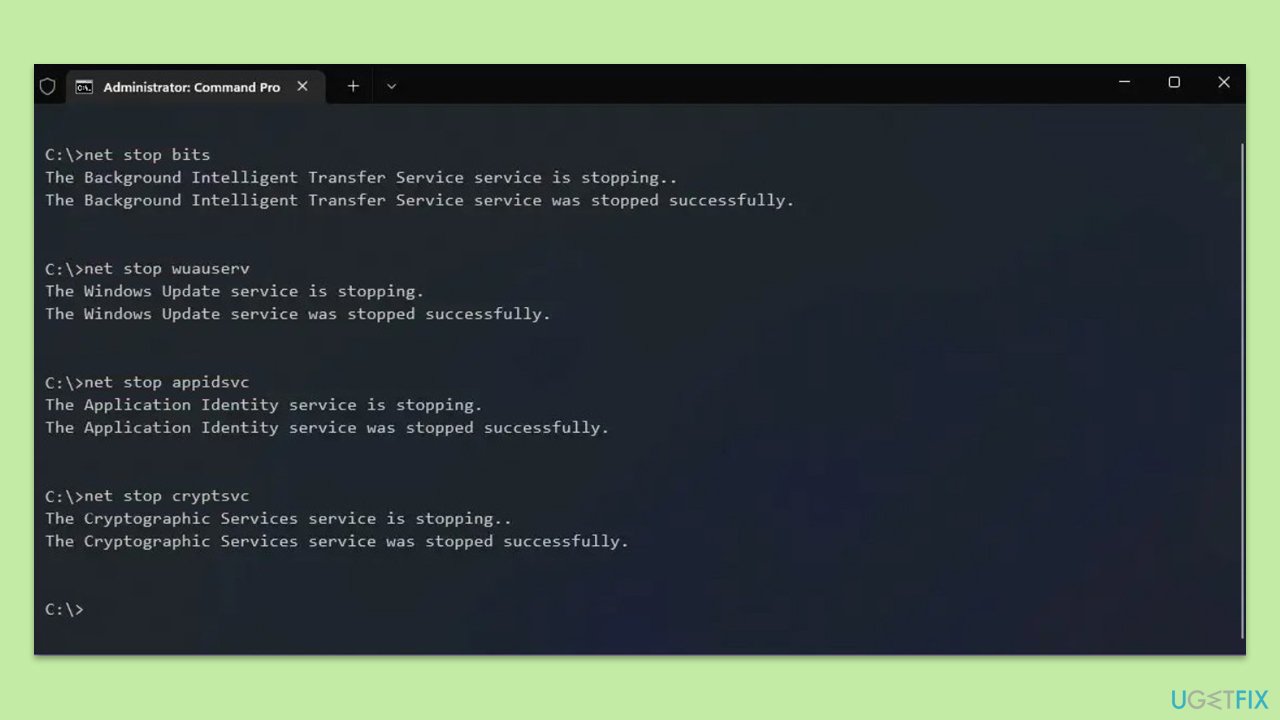
- Open Command Prompt as administrator.
- In the new window, copy and paste the following commands, pressing Enter after each to execute them:
net stop bits
net stop wuauserv
net stop appidsvc
net stop cryptsvc
Del “%ALLUSERSPROFILE%\Application Data\Microsoft\Network\Downloader\*.*”
rmdir %systemroot%\SoftwareDistribution /S /Q
rmdir %systemroot%\system32\catroot2 /S /Q
regsvr32.exe /s atl.dll
regsvr32.exe /s urlmon.dll
regsvr32.exe /s mshtml.dll
netsh winsock reset
netsh winsock reset proxy
net start bits
net start wuauserv
net start appidsvc
net start cryptsvc - Restart your system.
Bottom line
To fix the KB5037002 installation issue, you can run the Windows Update Troubleshooter, ensure your system meets the update requirements, check for sufficient disk space, and perform system checks for corrupted files. If these solutions do not resolve the problem, consider using a PC repair tool to automatically detect and fix underlying Windows issues.
Frequently asked questions
First, try restarting your PC and then attempt to install the update again. If that doesn't work, use the Windows Update Troubleshooter to identify and fix potential issues.
Yes, you can manually download the KB5037002 update from the Microsoft Update Catalog and install it on your Windows 11 system.
Some users have reported compatibility issues with specific applications after installing KB5037002, so it's advisable to check for any updates from the application developers.




Report an issue
What's wrong with this guide? We review every report and update or remove content.
Report received — thank you. We'll review and fix it.
You need a free account to submit a report.
Be the first to comment