
How to fix KB5031356 fails to install in Windows 10?
Prefer to fix it yourself? The manual steps follow.
6 methods in this guide
Hi. I ran into a problem this morning - I can't install KB5031356 in Windows because I keep getting an error. It says that I should try later. I keep retrying it without success. What else can I do to fix it?
Windows updates are essential for the smooth functioning of a computer system, serving to patch vulnerabilities, improve system stability, and provide essential features. These updates ensure that your system is protected and runs efficiently. However, some users encounter issues during the update process. Specifically, update KB5031356 has been reported to fail during the installation process on Windows 10 for certain users.
A KB number is a unique identifier assigned to each update released by Microsoft. This number is used for tracking and managing updates systematically, making it easier for both users and support technicians to identify and address specific updates and issues associated with them. Microsoft periodically ships these updates to enhance the functionality and security of its operating systems.
Update KB5031356, released on October 10, 2023, is designed for Windows 10 versions 21H2 and 22H2. It incorporates various improvements and security enhancements aimed at bolstering the system's defenses against malicious attacks and improving its overall performance. However, some Windows 10 users have experienced difficulties in installing this specific update.
The failure of KB5031356 to install could be attributed to several factors. Your system may have corrupt system files, insufficient storage space, or other underlying issues that hinder the update process. These problems might prevent the update from being installed successfully, causing your system to miss out on the crucial improvements and security enhancements that come with KB5031356.
To resolve these installation issues, you might need to perform some troubleshooting steps. Instructions will be provided below this article to guide you through resolving the update installation failure. By following these steps, you should be able to correct any issues preventing the update from installing and ensure that your system benefits from the improvements offered by KB5031356.
This tool might be especially helpful if you encounter difficulties in installing Windows updates.
Quick tips
Before diving into more detailed solutions, consider trying out these quick tips, which may help resolve the issue efficiently. Sometimes, the simplest actions can fix update installation problems:
- Restart your PC.
- Perform a full system scan for malware.
- Ensure the time and date are correct.
- Disable third-party security software temporarily.
Fix 1. Run Windows update troubleshooter
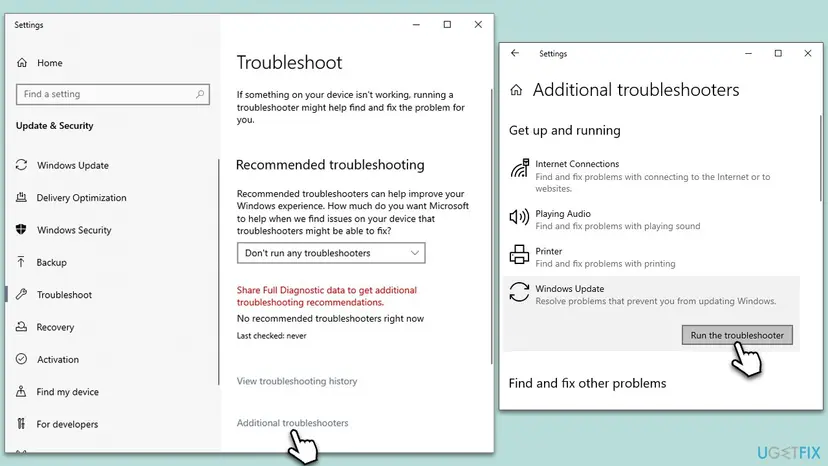
Windows has a built-in tool designed to diagnose and fix update issues automatically. The Windows Update Troubleshooter can resolve many common problems that prevent updates from installing.
- Type Troubleshoot in Windows search and press Enter.
- On the right side of the window, click Additional troubleshooters/Other troubleshooters.
- Scroll down and select Windows update.
- Click Run the troubleshooter/Run.
- Wait for the troubleshooter to finish.
- Restart your system once done.
Fix 2. Perform Disk Cleanup
Freeing up disk space can facilitate the smooth installation of updates by providing adequate storage for the new files.
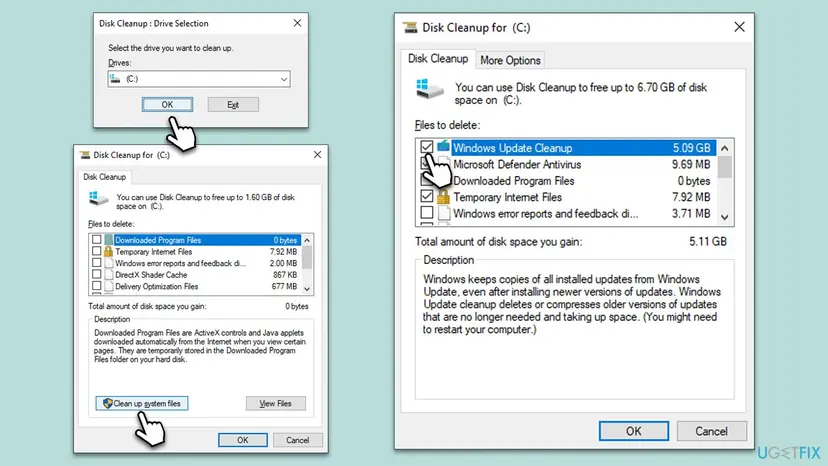
- Initiate the Windows search bar and enter Disk Cleanup, then press Enter to launch the utility.
- Pick the main drive (C: by default) and select the option for Clean up system files.
- Choose the drive once more and press OK.
- From the array of files that can be cleaned, choose those taking up the most space, for example, Temporary Internet Files, Windows Update, and Temporary Files, among others.
- Hit OK to begin the cleanup process.
Fix 3. Run SFC and DISM scans
These scans can repair corrupted system files that may be hindering the update process.
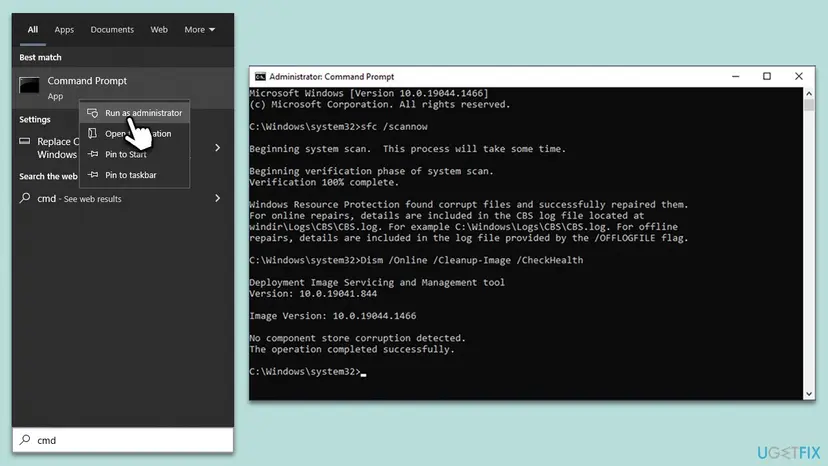
- Type cmd in Windows search.
- Right-click on the Command Prompt result and select Run as administrator.
- User Account Control will ask whether you want to allow changes - click Yes.
- Copy and paste the following commands, pressing Enter after each:
- sfc /scannow
DISM /Online /Cleanup-Image /CheckHealth
DISM /Online /Cleanup-Image /ScanHealth
DISM /Online /Cleanup-Image /RestoreHealth
(Note: if you get an error executing the last command, add /Source:C:\RepairSource\Windows /LimitAccess to it and try again.) - Restart your device.
Fix 4. Install the update manually
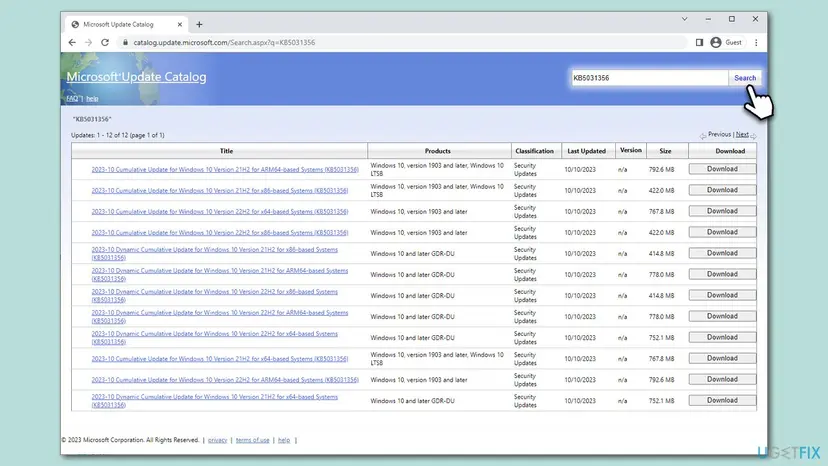
You can download and install the update directly from the Microsoft Update Catalog.
- Open your web browser and navigate to the Microsoft Update Catalog.
- In the search box, enter KB5031356 and click Search.
- Locate the correct version of the update for your operating system by checking your System type (Right-click on Start and select System. Under Windows specifications, check the Version).
- Click on Download and follow the prompts to complete the process.
- Once the update is installed, reboot your system.
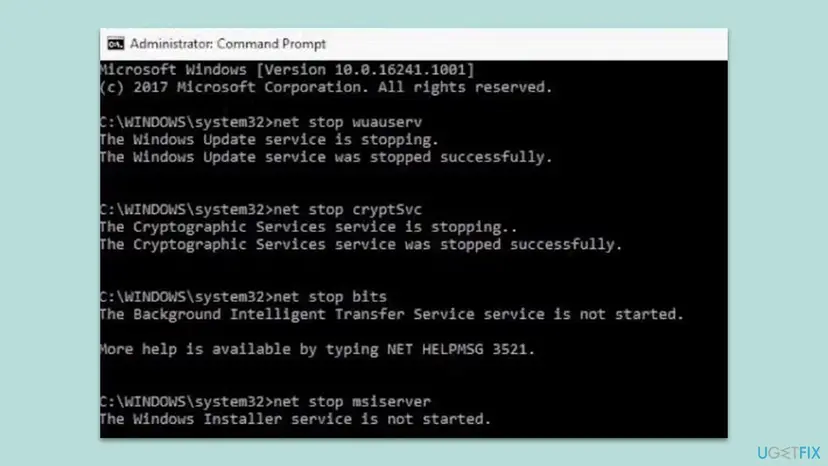
Fix 5. Reset Windows update components
This involves restarting the services that Windows Update requires to download and install updates.
- Open Command Prompt as administrator, as explained previously.
- In the new window, use the following commands, pressing Enter after each:
net stop bits
net stop wuauserv
net stop appidsvc
net stop cryptsvc
Del “%ALLUSERSPROFILE%\Application Data\Microsoft\Network\Downloader\*.*”
rmdir %systemroot%\SoftwareDistribution /S /Q
rmdir %systemroot%\system32\catroot2 /S /Q
regsvr32.exe /s atl.dll
regsvr32.exe /s urlmon.dll
regsvr32.exe /s mshtml.dll
netsh winsock reset
netsh winsock reset proxy
net start bits
net start wuauserv
net start appidsvc
net start cryptsvc - Restart your PC.
Fix 6. Use Media Creation Tool
Before beginning, ensure all non-essential devices, such as printers, are unplugged. Additionally, consider uninstalling any third-party security software and backing up your personal files for extra precaution.
- Visit the official Microsoft website and download Windows 10 installation media.
- Double-click the installer and select Yes when prompted by the User Account Control (UAC).
- Agree to the terms and click Next.
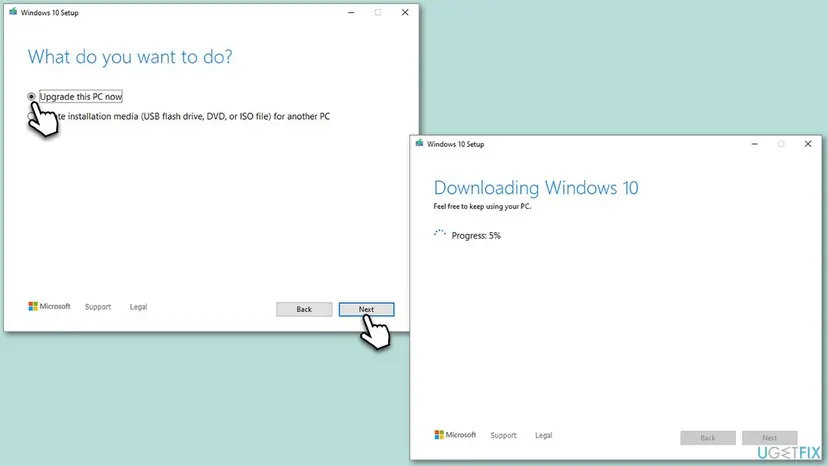
- Select Upgrade this PC now and click Next.
- Wait until Windows downloads all the necessary files.
- Restart your computer once finished.
Did this fix work?
One click, no account. It tells the next reader which guides are worth their time.
Questions and experiences: fix KB5031356 fails to install in Windows 10
Still broken, or found a fix we did not cover? Ask here: members and our editors answer. Reading is open; writing needs a free account.
…