
How to fix 0x00000006 Printer error in Windows?

Prefer to fix it yourself? The manual steps follow.
- 9methods
- 2 to 30 minutes
- Intermediate
Applies to Windows 11 and Windows 10 PCs that connect to a printer shared by another PC or a print server; Windows Server print servers and Remote Desktop servers
9 methods in this guide
- What the error means
- Causes, ranked
- Windows 11 and Windows 10
- The fixes
- 1. Restart the Print Spooler
- 2. Reach the host, add by path
- 3. Fix the saved password
- 4. Install driver as admin
- 5. Remove the old driver
- 6. Delete the cached server key
- 7. Allow the print RPC link
- 8. Add by IP address
- 9. Troubleshooter and updates
- Still there: log and host
- Undo the changes
- Keep it from coming back
- FAQ
Hello. When I try connecting the printer to my Windows PC, I get the 0x00000006 error code with the "Windows cannot connect to the printer" message. Is there a way to fix this?
Error 0x00000006 appears in the Connect to Printer box when Windows cannot open a shared or network printer, and it means that the handle to that printer is invalid. Restart the Print Spooler first, then check that your PC can reach and sign in to the computer that shares the printer. If only standard users get the error, an administrator has to install the driver.
Yes. The code is Windows error 6, "The handle is invalid": your PC could not open the printer on the other computer. Restart the Print Spooler service and empty its queue folder (Fix 1). Then open \\ComputerName in File Explorer: if the host does not open, fix the network or the saved password (Fix 2 and Fix 3). If an administrator can connect and you cannot, the driver needs administrator rights (Fix 4).
| Error | Windows cannot connect to the printer. Operation failed with error 0x00000006. The number is Windows system error 6, ERROR_INVALID_HANDLE: "The handle is invalid." |
|---|---|
| Where it appears | In the Connect to Printer box, when you add a printer shared by another PC or a print server (\\ComputerName\PrinterShareName), or when a sign-in script or Group Policy maps it. |
| Main cause | Your PC cannot open the printer on the host. Most often: a stuck Print Spooler or stale connection data on your PC, no access to the host (network, password), or a driver that only an administrator may install. |
| Fastest fix | Restart the Print Spooler service and delete the files in %WINDIR%\system32\spool\PRINTERS (Fix 1), then add the printer again by its share path (Fix 2). |
| Also written as | 0x0000006, 0x000000006, 0x000006, 0x00006, 00000006, error 6, "Connect to Printer 0x00000006", "Operation could not be completed (error 0x00000006)". |
| Affects | Windows 11 and Windows 10 clients, and Windows Server. Older reports and Microsoft articles cover Windows 7, Windows 8.1 and Windows Server 2008 R2 to 2012 R2. |
| Microsoft's status | No Microsoft article explains the code for Windows 10 or Windows 11. Two older articles name it: KB 2778831 (Remote Desktop servers on Windows Server 2008 R2) and hotfix 2973940 (IPP print servers, Windows 8 and 8.1). |
| Needs an administrator | Fix 2 and Fix 3 do not. Fix 1 and Fix 4 to Fix 9 need an administrator account for at least one step. Each fix says so in its first line. |
| Where the cause is logged | Event Viewer: Applications and Services Logs > Microsoft > Windows > PrintService, logs Admin and Operational. |
| Time to fix | 2 minutes for the spooler restart, 5 to 10 minutes for the network and password checks, up to 30 minutes for the driver, registry and policy fixes. |
Facts checked on 14 October 2026. Steps written for Windows 11 (25H2 and 26H2) and Windows 10 22H2.
What "Operation failed with error 0x00000006" means
0x00000006 is the hexadecimal way to write Windows system error 6. Microsoft's list of system error codes names it ERROR_INVALID_HANDLE and gives it one line of text: "The handle is invalid." A handle is the reference Windows hands to a program when it opens something for it. Here that something is a printer on another computer.
So the message does not describe the printer. It says that the Print Spooler on your PC asked the host for the printer and did not get a usable connection back. The full text is Windows cannot connect to the printer. Operation failed with error 0x00000006. and the box is titled Connect to Printer.
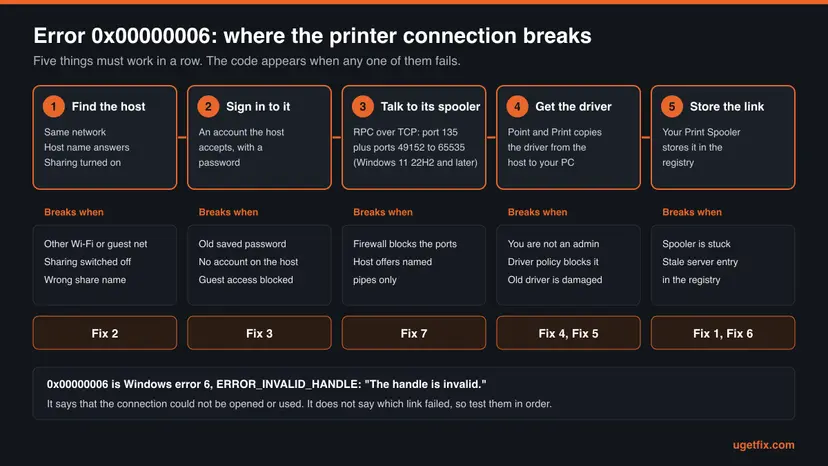
| What you see | Where | What it tells you |
|---|---|---|
| Connect to Printer: "Windows cannot connect to the printer. Operation failed with error 0x00000006" | Adding a printer that another PC or a print server shares, by double-click in File Explorer, in the Add Printer wizard or by a sign-in script | The case this page is about. One of the five links in the chart failed. |
| "Error 0x00000006" when a printer is mapped on a Remote Desktop server | Windows Server with Remote Desktop Services | Microsoft KB 2778831: the registry key Client Side Rendering Print Provider has filled with stale entries. See Fix 6. |
| Printer Properties: "Printer settings could not be saved. Operation could not be completed (error 0x00000006)" | The Advanced tab of an IPP or iPrint printer, after a change of the spool options | Micro Focus documents it for its iPrint client: those options do not apply to such printers and the message can be ignored. |
The correct form has eight digits after 0x. People also type 0x0000006, 0x000000006, 0x000006, 0x00006, 00000006 or error 6. Leading zeros do not change a number, so all of these are the same code. Error 6 is a general Windows error, though: on a games console or a blue screen the same digits mean something else.
Why Windows cannot connect to the printer: causes of 0x00000006, ranked
Microsoft gives no single cause for this code on Windows 10 and Windows 11. The ranking below comes from what the code means, from Microsoft's documents about each link of the connection and from what administrators report. It runs from the common and cheap to rule out to the rare.
| # | Cause | How to recognise it | Fix |
|---|---|---|---|
| 1 | The Print Spooler on your PC is stuck, or it holds old data about the print server | One PC or one user fails, the others connect. The printer worked on this PC before. | Fix 1, then Fix 6 |
| 2 | Your PC cannot reach the host or cannot sign in to it: another network, sharing switched off, a wrong share name, an old saved password, guest access blocked | \\ComputerName does not open in File Explorer, or it asks for a password | Fix 2, Fix 3 |
| 3 | The driver may not be installed. Since the updates of 10 August 2021, only administrators may install printer drivers through Point and Print | An administrator connects without trouble, a standard user gets the error | Fix 4 |
| 4 | A driver for this printer model is already on your PC and it is damaged or does not match the host's | Other printers on the same host connect, this model does not | Fix 5 |
| 5 | Windows 11 22H2 or later talks to the host by RPC over TCP, and a firewall blocks it or the host offers named pipes only | It started after a Windows 11 upgrade. Older PCs still connect. | Fix 7 |
| 6 | The host itself: its spooler, its driver or its share is broken | Every PC gets the error for this printer | "If the error is still there" below |
The earlier version of this guide named a different network as the typical cause. It is a real cause and Fix 2 tests it, but we found no Microsoft source that calls it the usual one.
Setting RestrictDriverInstallationToAdministrators to 0, setting RpcAuthnLevelPrivacyEnabled to 0 and enabling insecure guest logons can each make the error go away. Microsoft calls each of them not recommended or says it makes devices vulnerable. This page uses the first one only for a short test with an undo step.
Error 0x00000006 in Windows 11 and Windows 10: what changed since 2021
A shared printer that worked for years can start to fail without any change on your side. Since 2021 Microsoft has tightened network printing four times, and each change can leave an older host behind.
| Since | What changed | What it means for this error | Applies to |
|---|---|---|---|
| Updates of 10 August 2021 (KB5005652, often called the PrintNightmare change) | Installing or updating a printer driver through Point and Print needs administrator rights | A standard user cannot add a shared printer when its driver is not yet on the PC | Windows 10 and Windows 11 |
| Updates of 14 September 2021 (KB4599464) | The print RPC interface requires a higher authentication level by default | Clients need an update of 12 January 2021 or later, or printing to the server breaks | Windows 10 and Windows 11 |
| Windows 11, version 22H2 | Print traffic between computers uses RPC over TCP. RPC over named pipes is off by default. | The host must accept TCP port 135 and the ports 49152 to 65535, or you must allow named pipes | Windows 11 22H2 and later only |
| Windows 11, version 24H2 | SMB signing is required by default, which Microsoft says causes trouble with guest sign-in | A host that lets everybody in without a password may refuse the connection | Windows 11 24H2 and later |
Windows 10 22H2 has the first two changes and not the last two. Its support ended on 14 October 2025, so it gets no further fixes for the print components. The steps on this page are the same on both systems unless a step says otherwise.
Open Settings > Bluetooth & devices > Printers & scanners and look under Printer preferences for Windows protected print mode. Microsoft says that when it is on, printers that use third-party drivers are uninstalled and cannot be used. We could not confirm which error a blocked shared printer shows, so rule this out early.
How to fix error 0x00000006: nine fixes in order
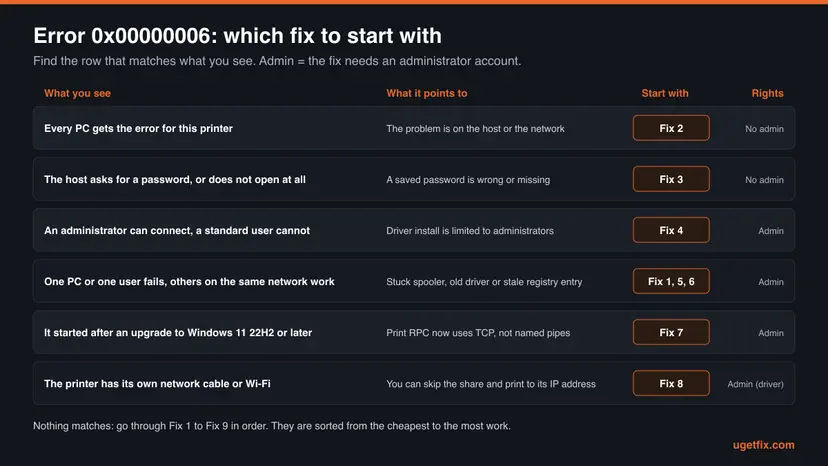
The fixes go from the cheapest to the most work. Fix 1 to Fix 3 solve the everyday cases. Fix 4 to Fix 7 repair one link of the connection each, Fix 8 avoids the shared connection altogether, and Fix 9 is the general check.
| What you see or have | Start with |
|---|---|
| The printer worked on this PC before and stopped, or one user fails while others connect | Fix 1 |
\\ComputerName does not open in File Explorer, or you are not sure of the share name | Fix 2 |
| The host asks for a user name and password, or you changed a password lately | Fix 3 |
| An administrator can add the printer, a standard user gets the error | Fix 4 |
| Other printers on the same host connect, one model does not | Fix 5 |
| A Remote Desktop server, or the error survives a spooler restart on one PC | Fix 6 |
| It started after an upgrade to Windows 11 22H2 or later, or the host is a NAS or another non-Windows device | Fix 7 |
| The printer has its own Ethernet or Wi-Fi connection | Fix 8 |
| Every PC fails for this printer | "If the error is still there": the host |
Fix 1. Restart the Print Spooler and empty its queue folder
2 minutesLow riskFor everyone, as the first step. It needs an administrator account.
Every printer connection on your PC goes through the Print Spooler service. When it holds a half-finished job or a broken connection attempt, each new attempt to open the shared printer can fail in the same way. Microsoft lists clearing and resetting the spooler as a standard step for connection problems.
The files in the queue folder are documents that wait to be printed. They are removed, so print those documents again afterwards. Your printers, drivers and settings stay.
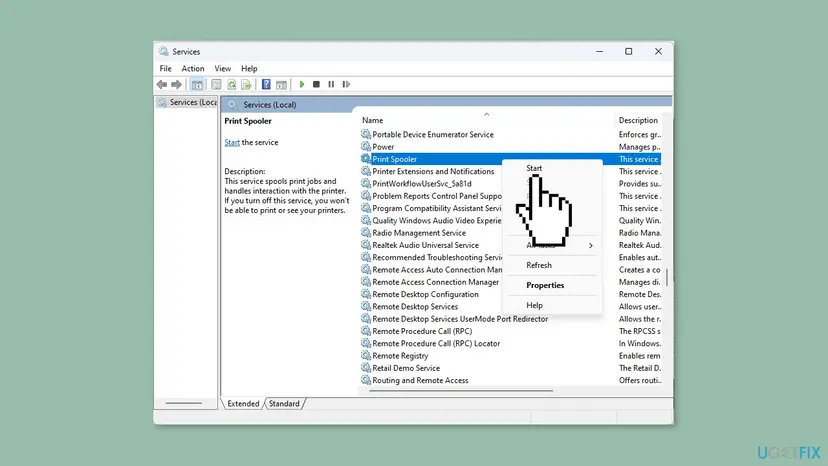
- In the search box on the taskbar, type services and select Services in the results.
- Select the Standard tab at the bottom and double-click Print Spooler.
- Select Stop, then OK. Leave the Services window open.
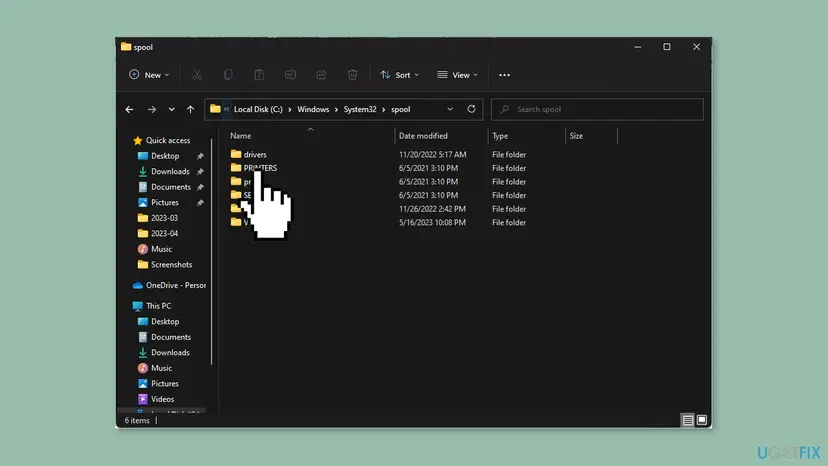
- In the search box on the taskbar, enter
%WINDIR%\system32\spool\printersand open the PRINTERS folder from the results. - Delete all files in the folder. Do not delete the folder itself.
- Go back to Services and double-click Print Spooler again.
- Select Start, choose Automatic in the Startup type box, then select OK.
- Restart the PC and add the printer again.
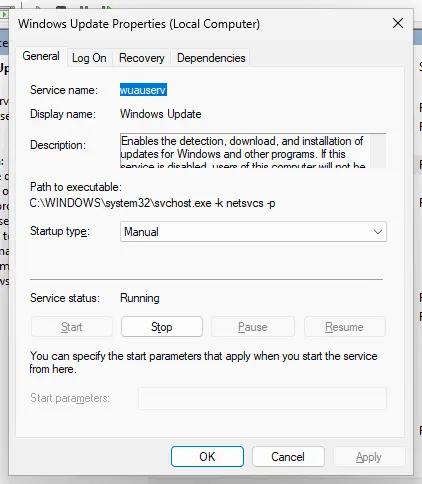
The Services window in general, with the meaning of each startup type: Check and restart Windows services
It worked if: The printer is added without the Connect to Printer error and a test page prints.
If not: If the same message comes back, test the path to the host with Fix 2.
Fix 2. Check that your PC can reach the host, then add the printer by its exact share path
5 to 10 minutesNo riskThe printer is shared by another PC, or you never typed its path. No administrator needed, except for the sharing switches.
A shared printer is an address made of two names: the computer and the share. If your PC cannot open the computer, or the share name is not the one you think, Windows has nothing to connect to. Microsoft's own guide for shared printers starts with these checks.
- On the host PC, open Settings > Bluetooth & devices > Printers & scanners, select the printer and select Printer properties.
- On the Sharing tab, make sure Share this printer is ticked and write down the Share name exactly.
- Make sure both PCs are on the same local network. With several routers, extenders or a guest Wi-Fi, they must use the same one.
- On your PC, open File Explorer, type
\\ComputerNamein the address bar and press Enter. Use the host's real name. - If the host does not open, open Settings > Network & internet > Advanced network settings > Advanced sharing settings on both PCs and turn on Network discovery and File and printer sharing.
- On your PC, open Settings > Bluetooth & devices > Printers & scanners and select Add device.
- Select Add manually. Newer builds show it as Add a new device manually, next to The printer that I want isn't listed.
- Choose Select a shared printer by name, enter
\\ComputerName\PrinterShareNameand follow the instructions.
Open Settings > Devices > Printers & scanners, select Add a printer or scanner, then The printer that I want isn't listed. Microsoft's page gives the path to the sharing switches for Windows 11 only. We could not confirm the Windows 10 one.
| Way | What to enter | Good for |
|---|---|---|
| Add Printer wizard | Select a shared printer by name, then \\ComputerName\PrinterShareName | Everyday use |
| Command Prompt or the Run box | rundll32 printui.dll,PrintUIEntry /in /n\\ComputerName\PrinterShareName | A connection for the signed-in user without the wizard |
| PowerShell | Add-Printer -ConnectionName \\ComputerName\PrinterShareName | Scripts. Microsoft notes that the command may need administrator credentials. |
If the printer is already in your list and fails, select it under Printers & scanners, select Remove, restart the PC and add it again with steps 6 to 8.
It worked if: The host opens in File Explorer, shows the printer's share, and the wizard adds the printer.
If not: If the host asks for a password or refuses you, go to Fix 3. If it opens and only the printer fails, go to Fix 4.
Fix 3. Store the right user name and password for the host in Credential Manager
5 minutesNo riskThe host asks for a password, refuses access, or its password was changed. No administrator needed.
Windows signs in to the host silently with whatever it has: your own account or a saved entry. An entry with an old password is sent again on every attempt, and the host refuses the printer before any driver is fetched. Microsoft's guide says to use the same account on both PCs or the host's user name and password.
- Type credential manager in the search box on the taskbar and open Credential Manager from the Control Panel results.
- Select Windows Credentials and look for an entry with the name of the host.
- Open Command Prompt from the Start menu. Do not run it as administrator: saved credentials belong to your own account.
- Delete the old entry with the first command below. Replace
HOSTNAMEwith the name of the host. - Add the right account with the second command. Windows asks for the password, so it never shows on screen.
- Run the third command and check that the host is in the list.
- Open
\\HOSTNAMEin File Explorer. When it opens without a prompt, add the printer as in Fix 2.
Commands, one per line
cmdkey /delete:HOSTNAME
cmdkey /add:HOSTNAME /user:username
cmdkey /listThe user name and password must belong to an account that exists on the host. If both PCs use the same Microsoft account or the same local user name and password, no saved entry is needed.
Old print boxes, some NAS devices and PCs with a password-free account let everybody in as a guest. Windows 11 24H2 requires SMB signing by default, and Microsoft says this breaks guest sign-in. Its advice is not to enable insecure guest logons but to replace or update the device. On a PC host, create a user with a password and use that account here.
It worked if: The host opens in File Explorer without asking, and the printer connects.
If not: If the host opens but the printer still gives the error, the sign-in is fine: go to Fix 4.
Fix 4. Install the printer driver with administrator rights (Point and Print)
10 minutesRead the warningAn administrator can add the printer and a standard user gets the error. Needs an administrator.
Point and Print copies the driver from the host to your PC when you connect. Since the Windows updates of 10 August 2021 this needs administrator rights by default. Microsoft made the change to address the vulnerability CVE-2021-34481, and a standard user is stopped at that step.
- Add the printer again as in Fix 2. When Windows asks for credentials or asks whether you trust the printer, enter an administrator user name and password.
- If no prompt appears, sign in to the PC with an administrator account and add the printer there once. The driver then stays on the PC.
- Sign back in as the standard user and add the printer again. No driver has to be installed now, as long as the host uses the same driver version.
- As an alternative, let an administrator install the manufacturer's current driver for the model before the user connects. Use the same driver version as the host where you can.
- If even an administrator cannot install the driver, check the policy Only use Package Point and print under Computer Configuration > Administrative Templates > Printers. Microsoft says it must be disabled in that case.
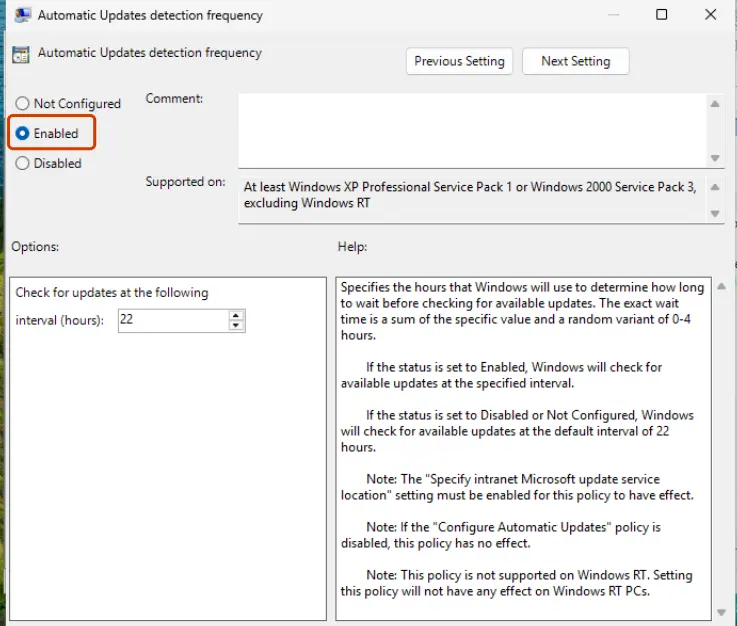
How to open the editor and apply a policy, and what to do on Windows Home: Open the Local Group Policy Editor
Microsoft lists a temporary value of 0 as a way to install drivers and warns that it makes the device vulnerable: while it is set, any user can install a printer driver from another computer. Use it only on your own network, connect the printer, and set it back at once. No restart is needed. Run the commands in Command Prompt opened as administrator.
1. Allow, only for the minutes you need
reg add "HKEY_LOCAL_MACHINE\Software\Policies\Microsoft\Windows NT\Printers\PointAndPrint" /v RestrictDriverInstallationToAdministrators /t REG_DWORD /d 0 /f2. Lock again right after the printer is connected
reg add "HKEY_LOCAL_MACHINE\Software\Policies\Microsoft\Windows NT\Printers\PointAndPrint" /v RestrictDriverInstallationToAdministrators /t REG_DWORD /d 1 /f- On a work PC this value is set by your organisation. Ask the administrator to install the driver.
- Value 1, or no value at all, is the protected default.
- Value 0 does not override the Point and Print Restrictions policy, so that policy can still refuse the connection.
It worked if: The printer is added, and from then on the standard user can print without a prompt.
If not: If an administrator gets the same error too, the driver on the PC is the suspect: go to Fix 5.
Fix 5. Remove the old driver of this printer and install it fresh
10 to 15 minutesLow riskOne printer model fails while others on the same host connect. Needs an administrator.
When a driver for the model is already on your PC, Windows compares it with the host's and tries to reuse or update it. A damaged or half-updated copy makes the connection fail before it is complete. An independent write-up of this exact error found the cause in the driver on the client PC and cured it by deleting that driver.
- Open Settings > Bluetooth & devices > Printers & scanners, select the printer if it is listed and select Remove.
- Press Win + R, type
printui /s /t2and press Enter. The print server properties of your own PC open on the Drivers tab. - Select the driver that belongs to the printer model and select Remove.
- Choose Remove driver and driver package and select OK.
- If Windows says the driver is in use, restart the Print Spooler as in Fix 1 and remove the driver right after the service starts.
- Restart the PC.
- Install the manufacturer's current driver for the model, or add the shared printer again as in Fix 2 so that the host supplies it.
The same write-up also deletes the registry value PendingFileRenameOperations. That value lists file operations Windows has scheduled, and deleting it throws them away. The restart in step 6 lets Windows finish them.
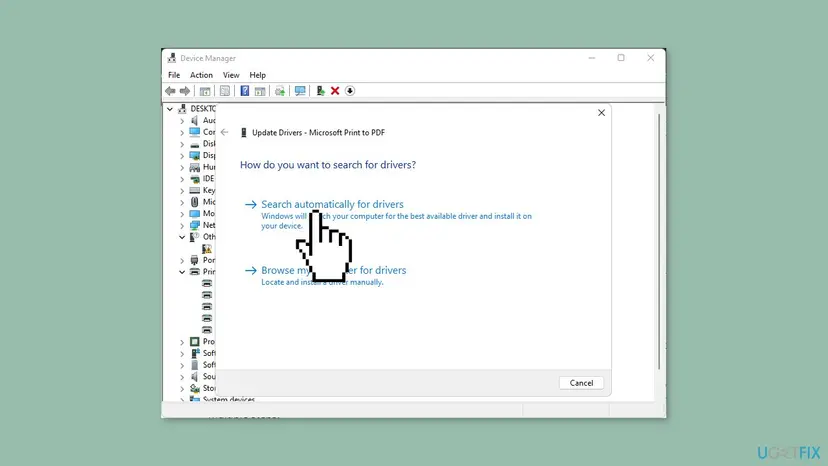
The earlier version of this guide updated the driver in Device Manager: right-click the printer, select Update driver, then Search automatically for drivers. That is still worth a try after the removal. All ways to update, roll back or reinstall a driver: Update, roll back or reinstall a driver
It worked if: The old driver is gone from the Drivers tab, and the printer connects with a fresh copy.
If not: If the driver cannot be removed or the error stays, clear the cached server entry with Fix 6.
Fix 6. Delete the cached print server entry in the registry
10 minutesRead the warningThe error survives Fix 1 and Fix 5 on one PC, or the PC is a Remote Desktop server. Needs an administrator.
Windows keeps data about every shared printer connection under the key Client Side Rendering Print Provider. Microsoft's KB 2778831 ties this key to error 0x00000006: on Remote Desktop servers old entries pile up, and the fix does not remove them, so they must be deleted by hand. Administrators report the same cure on single PCs.
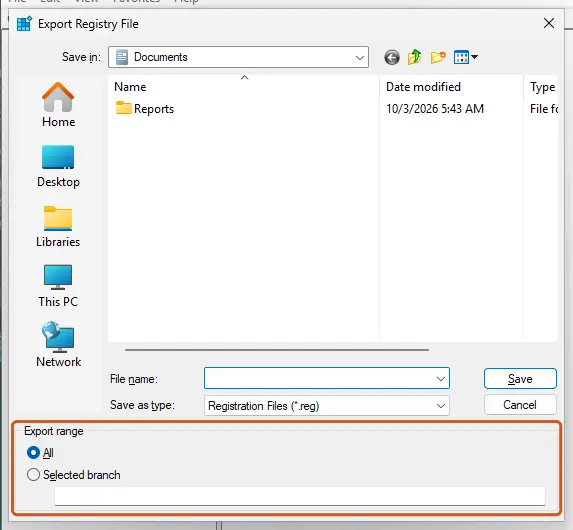
You delete saved connection data. Printers from that server may have to be added again for every user of the PC. Export the key before you touch it, so that a double-click on the saved file brings it back: Back up the registry before editing it
- Press Win + R, type
regeditand select OK. Select Yes if Windows asks for permission. - Go to the key shown below these steps.
- Select the key Client Side Rendering Print Provider, open File > Export and save it to the desktop.
- Open Servers under that key. It holds one key for each print server or host this PC has connected to.
- Right-click the key with the name of your host and select Delete.
- Close Registry Editor and restart the Print Spooler as in Fix 1, or restart the PC.
- Add the printer again as in Fix 2.
Registry key
HKEY_LOCAL_MACHINE\SOFTWARE\Microsoft\Windows NT\CurrentVersion\Print\Providers\Client Side Rendering Print Provider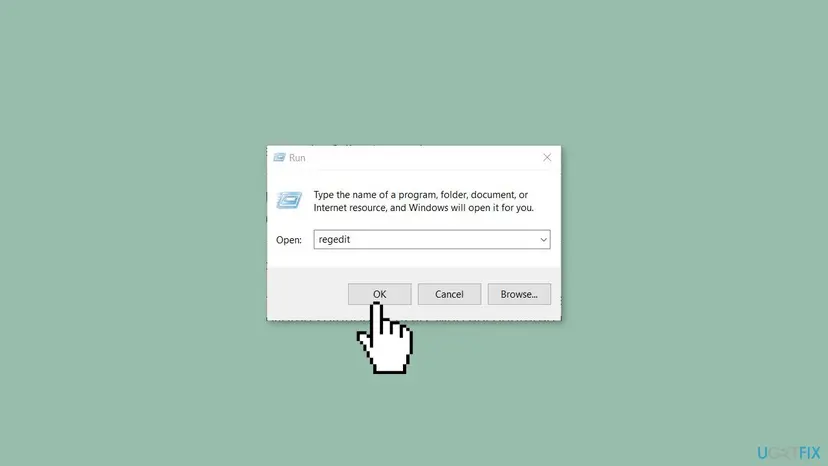
Microsoft describes entries stored for each user and printer that stay after the user has left. Deleting them is a job for the server's administrator, with a full export first. Microsoft's article covers Windows Server 2008 R2. We could not confirm from Microsoft that newer servers behave the same, although administrators report it.
It worked if: The printer is added without the Connect to Printer error.
If not: If nothing changed, import the saved file to restore the key and continue with Fix 7.
Fix 7. Windows 11 22H2 and later: let the print RPC connection through
15 to 30 minutesRead the warningWindows 11 22H2 or later, and the error began after the upgrade or the host is old. Needs an administrator on both sides.
From version 22H2, Windows 11 talks to other computers about printing by RPC over TCP. RPC over named pipes still exists but is off by default. Microsoft names blocked firewall ports as the most common problem with this change, so the host has to accept the TCP connection, or both sides have to agree on named pipes.
- On the host, turn on File and printer sharing as in step 5 of Fix 2.
- Ask whoever manages the firewall on the host and on the network to check two things: TCP port 135 is not blocked, and the ports 49152 to 65535 are open on the host.
- Restart both computers and add the printer again. If it connects, stop here: this is the setup Microsoft recommends.
- Only if the host cannot use RPC over TCP: on your PC, open the Local Group Policy Editor and go to Computer Configuration > Administrative Templates > Printers.
- Open Configure RPC connection settings, select Enabled and set the protocol to RpcOverNamedPipes.
- If the host itself runs Windows 11 22H2 or later, open Configure RPC listener settings on the host, select Enabled and allow RpcOverNamedPipesAndTcp.
- Restart both computers and add the printer again.
Microsoft says of named pipes for printing: this configuration isn't recommended. TCP is the newer and more secure method. Use named pipes to prove the cause or to keep an old host alive until it is replaced. To undo, set both policies back to Not Configured, or delete the two registry values with the last commands below.
Your PC, Windows Home or by command: use named pipes (run as administrator)
reg add "HKEY_LOCAL_MACHINE\SOFTWARE\Policies\Microsoft\Windows NT\Printers\RPC" /v RpcUseNamedPipeProtocol /t REG_DWORD /d 1 /fThe host, if it runs Windows 11 22H2 or later: listen on named pipes and TCP
reg add "HKEY_LOCAL_MACHINE\SOFTWARE\Policies\Microsoft\Windows NT\Printers\RPC" /v RpcProtocols /t REG_DWORD /d 0x7 /fUndo: remove the values again
reg delete "HKEY_LOCAL_MACHINE\SOFTWARE\Policies\Microsoft\Windows NT\Printers\RPC" /v RpcUseNamedPipeProtocol /f
reg delete "HKEY_LOCAL_MACHINE\SOFTWARE\Policies\Microsoft\Windows NT\Printers\RPC" /v RpcProtocols /f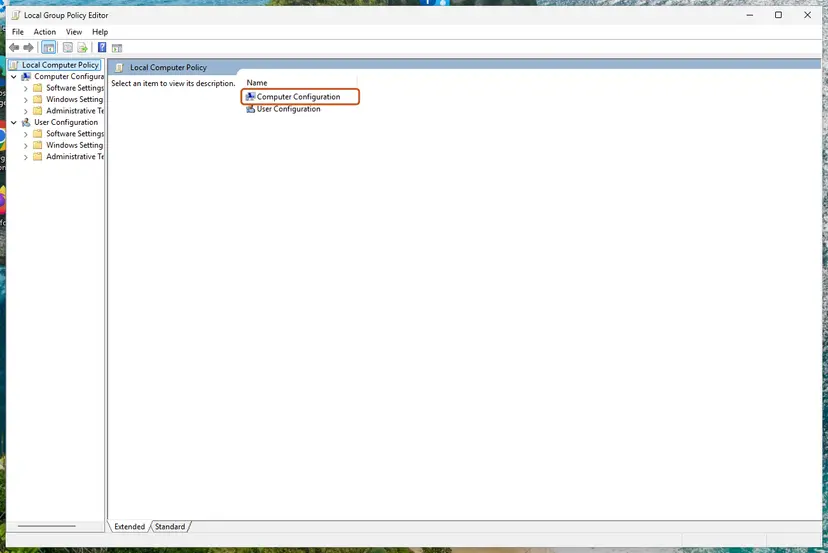
- Microsoft adds that named pipes may also need
RpcAuthnLevelPrivacyEnabledset to 0 on the host and guest access in SMB. Both lower security further. If the test only works with them, replace the host. - Where the port range cannot be opened, the policy Configure RPC over TCP port ties the print connection to one port that you choose.
- Opening the editor and applying a policy: Open the Local Group Policy Editor
It worked if: The printer connects from the Windows 11 PC, and older PCs keep working as before.
If not: If the printer has its own network connection, leave the share and use Fix 8. If not, see "If the error is still there".
Fix 8. Skip the share: add the printer by its own IP address
10 to 15 minutesLow riskThe printer has its own cable or Wi-Fi connection to the network. The driver usually needs an administrator.
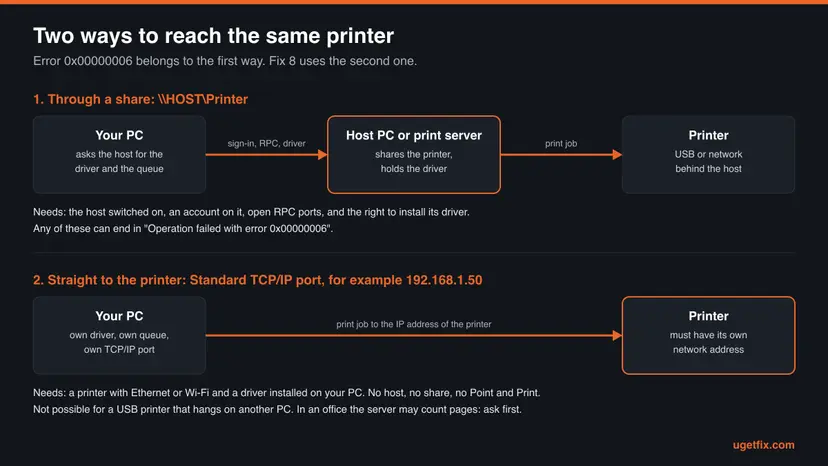
The error belongs to the connection between your PC and the host. A printer with its own network address can be reached without any host: your PC gets its own driver, its own queue and a Standard TCP/IP port. Sign-in, RPC and Point and Print are then not involved at all.
- Find the printer's IP address on its control panel or on its network configuration page. The printer's manual says where.
- Open Settings > Bluetooth & devices > Printers & scanners, select Add device, then Add manually.
- Choose the option that adds a printer by its IP address or host name, enter the address and select Next.
- When Windows asks for the driver, select Windows Update to load the list, or Have Disk if you downloaded the manufacturer's driver. Pick the manufacturer and the model.
- Type a name for the printer and select Next.
- Select Do not share this printer, then Next.
- Select Print a test page, then Finish.
We could not confirm the exact wording of the option in step 3 on today's Windows 11 builds from a Microsoft page, so it is described and not quoted. The same result by PowerShell, opened as administrator, with your printer's address and the driver name exactly as the Drivers tab of Fix 5 shows it:
PowerShell: a TCP/IP port and a printer on it
Add-PrinterPort -Name "IP_192.168.1.50" -PrinterHostAddress "192.168.1.50"
Add-Printer -Name "Office printer" -DriverName "Name of the installed driver" -PortName "IP_192.168.1.50"- At work, ask first. A print server often counts pages or holds jobs. Printing around it may be against the rules.
- The address must stay the same. If the router gives the printer a new address, the port points nowhere.
- If this route fails too, suspect the driver on your PC. The write-up used for Fix 5 got error 0x00000002 here and solved both errors by deleting the driver.
It worked if: The test page prints, and the printer works even when the old host is switched off.
If not: If the driver cannot be installed, return to Fix 5. If the printer does not answer at its address, check its network settings.
Fix 9. Run the printer troubleshooter and bring both computers up to date
10 to 30 minutesNo riskNothing above helped. The troubleshooter runs for any user, updates need an administrator.
Microsoft says its printer troubleshooter runs diagnostics and attempts to fix most printer problems on its own. Updates matter here in a specific way: Microsoft states that a print server with the updates of 14 September 2021 or later refuses clients that lack the updates of 12 January 2021 or later.
- Open the Get Help app from the Start menu.
- In its search bar, enter printer troubleshooter and follow the questions.
- On your PC, open Settings > Windows Update and install everything that is offered.
- Do the same on the host. Microsoft recommends the latest cumulative update on both clients and servers.
- Restart both computers and add the printer again.
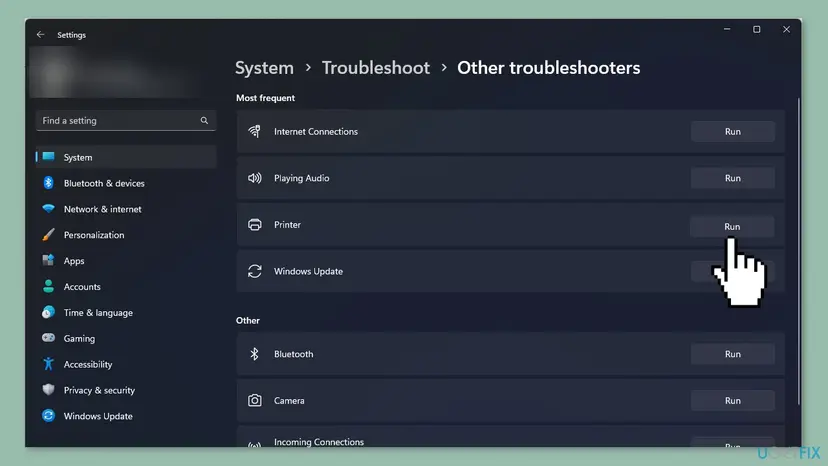
If a driver from Windows Update does not install, the update can be fetched by hand: Install an update from the Microsoft Update Catalog
It worked if: The troubleshooter reports a repair, or the printer connects after the updates.
If not: Collect the facts listed under "If the error is still there" and pass them to the administrator of the host.
If the error is still there: read the log and test the host
The message box hides the reason. The print service writes more in its own event logs, and four quick tests tell you on which side the fault is.
- Type event viewer in the search box on the taskbar and open Event Viewer.
- Open Applications and Services Logs > Microsoft > Windows > PrintService.
- Select Admin and look for errors at the time of your last attempt.
- Right-click Operational and select Enable Log, then try to add the printer once more and read the new entries.
| Test | Result | What it means |
|---|---|---|
| Add the same printer on another PC | It fails there too | The host or the printer's share is broken. Work on the host. |
| Add another printer from the same host | It connects | The driver of the first model is the cause: Fix 5 |
| Add the printer with an administrator account on your PC | It connects | Driver installation rights: Fix 4 |
Open \\ComputerName in File Explorer | It does not open or asks for a password | Network or sign-in: Fix 2 and Fix 3 |
When every PC fails, repair the host: restart its Print Spooler as in Fix 1, switch the printer off for 30 seconds and on again, and remove and add the printer on the host itself. One user on Microsoft's Q&A site reports a Windows Server 2019 host that logged PrintService event 808 after its files UNIDRV.DLL, UNIDRVUI.DLL and UNIRES.DLL had changed. Restoring them from a backup ended the error there.
- What to send to the administrator or to support: the exact message, the time, the name and Windows version of your PC, the host name and share name, whether an administrator can connect, and the PrintService events.
- If the Print Spooler stops or crashes at every attempt, check the Windows system files: Run DISM and SFC to repair Windows system files
- It is not ink, paper or a cable to your PC. The error appears before any page is sent. A broken printer shows other messages, on the host.
How to undo every change made on this page
Fix 1, Fix 2, Fix 3 and Fix 9 leave nothing to undo. Put back what did not help in the other fixes, and always put back the two settings that lower security.
| Change | Made in | How to undo it |
|---|---|---|
RestrictDriverInstallationToAdministrators set to 0 | Fix 4 | Run the second command of Fix 4 so that the value is 1 again. No restart is needed. |
| Policy Only use Package Point and print changed | Fix 4 | Set it back to the state you wrote down before |
| Printer driver removed | Fix 5 | Install the manufacturer's driver, or connect to the shared printer again |
| Key under Client Side Rendering Print Provider deleted | Fix 6 | Double-click the exported .reg file and restart the Print Spooler |
RpcUseNamedPipeProtocol or RpcProtocols set, or the two RPC policies enabled | Fix 7 | Set the policies to Not Configured, or run the undo commands of Fix 7, then restart |
| Printer added by IP address | Fix 8 | Select it under Printers & scanners and select Remove |
Open Registry Editor and look at the two keys named in Fix 4 and Fix 7. RestrictDriverInstallationToAdministrators must be 1 or absent. RpcUseNamedPipeProtocol must be absent, unless you decided to keep named pipes for an old host.
How to keep error 0x00000006 from coming back
- Use an account with a password on the host, and save it on every PC that prints.
- Keep the same printer driver version on the host and on the PCs. Microsoft recommends this against repeated driver prompts.
- Install Windows updates on the host and on the PCs, not on one side only.
- Let an administrator install the printer driver on each PC before standard users connect.
- At home, connect to a network printer directly by its address. No host is needed then.
- Do not leave
RestrictDriverInstallationToAdministratorsat 0 after a test. - Do not set
RpcAuthnLevelPrivacyEnabledto 0 and do not enable insecure guest logons to make a printer work. - Do not switch off the firewall on the host or on your PC. Open the two things printing needs instead.
- Do not delete files in
spool\driversby hand. Remove drivers on the Drivers tab, as in Fix 5.
A host that only works with named pipes, guest access or an unprotected driver setting is at the end of its life as a print server. Plan to replace it, and treat the workaround as temporary.
- After a password change on the host, update the saved entry at once (Fix 3).
- On Remote Desktop servers, an administrator should watch the size of the Client Side Rendering Print Provider key.
Frequently asked questions
What does error 0x00000006 mean?
It is Windows system error 6, ERROR_INVALID_HANDLE, and Microsoft's text for it is "The handle is invalid." In the printer message it means that your PC asked another computer for a shared printer and did not get a usable connection. The code does not say why: the host cannot be found, the sign-in fails, the print RPC connection is blocked, the driver cannot be installed, or your Print Spooler holds broken data.
Why can an administrator connect to the printer while a standard user gets 0x00000006?
Because adding a shared printer usually installs its driver, and since the Windows updates of 10 August 2021 only administrators may install printer drivers through Point and Print. Microsoft made this the default to address the vulnerability CVE-2021-34481. The clean answer is that an administrator installs the driver once. After that the standard user connects without a driver installation. Fix 4 has the steps.
Is it safe to set RestrictDriverInstallationToAdministrators to 0?
Not as a lasting setting. Microsoft writes that a value of 0 makes devices vulnerable and that no combination of other protections equals the default value of 1. With 0, any user of the PC can install a printer driver from another computer, the weakness that the 2021 Print Spooler updates, known as the PrintNightmare fixes, were meant to close. Microsoft itself lists a temporary 0 as one way to install drivers. If you use it, do so on your own network, connect the printer and set the value back to 1 in the same sitting.
Why did my shared printer stop working after the upgrade to Windows 11?
Most likely because of how Windows 11 talks to the host. From version 22H2 it uses RPC over TCP for printing and no longer uses named pipes by default. A firewall that blocks TCP port 135 or the ports 49152 to 65535, or a host that offers named pipes only, then breaks the connection. Version 24H2 also requires SMB signing, which hits hosts that allow guest access without a password. Fix 7 and Fix 3 cover both cases.
Should I turn off the firewall or the antivirus to fix 0x00000006?
No. The earlier version of this guide switched off Microsoft Defender Firewall, and we have removed that advice. A firewall does matter for this error, but in a narrow way: the host must accept file and printer sharing, and with Windows 11 22H2 or later the print RPC ports. Turn on File and printer sharing and open those ports. That solves the same problem and leaves the PC protected.
Can I delete the whole Client Side Rendering Print Provider key?
Administrators in forums report that they do, after a backup. We describe the smaller step: delete only the key of your print server under Servers. It removes the stale data that matters and leaves the connections to other servers alone. Either way, export the key first and expect that printers from the deleted server have to be added again for each user of the PC. Fix 6 has the path and the steps.
Does error 0x00000006 also appear on Windows 7, Windows 8.1 and Windows Server?
Yes. The code is older than Windows 10. Microsoft documents it for Windows 8, Windows 8.1 and Windows Server 2012 when connecting to an IPP print server, fixed by hotfix 2973940. It also documents it for Remote Desktop servers on Windows Server 2008 R2, where a registry key grows too large (KB 2778831). Reports from Windows 7 point to a damaged driver on the client. Fix 5 and Fix 6 are the ones that carry over to these old systems.
What can I do about 0x00000006 without an administrator password?
Two fixes are yours. Check that the host opens in File Explorer and add the printer by its exact share path (Fix 2), and replace a wrong saved password (Fix 3). If the error stays, write down the exact message, the time, the host and share name and whether a colleague's PC connects. Give that to the administrator: the spooler, the driver, the registry key and the RPC settings all need administrator rights.
Sources
- Microsoft Learn: System Error Codes (0-499), ERROR_INVALID_HANDLE (learn.microsoft.com)
- Microsoft Support: Fix shared printer connection problems in Windows (support.microsoft.com)
- Microsoft Support: Fix printer connection and printing problems in Windows (support.microsoft.com)
Did this fix work?
One click, no account. It tells the next reader which guides are worth their time.
Questions and experiences: fix 0x00000006 Printer error in Windows
Still broken, or found a fix we did not cover? Ask here: members and our editors answer. Reading is open; writing needs a free account.
…