
How to fix Windows update error 0x8024402D?

Prefer to fix it yourself? The manual steps follow.
- 6methods
- 5 minutes to a day (most of it waiting)
- Easy to medium
Applies to Windows 11 and Windows 10, home PCs and PCs that get updates from a WSUS server
6 methods in this guide
How can I fix Windows update error 0x8024402D? I can't install the latest updates because of it. Could you provide some tips, please?
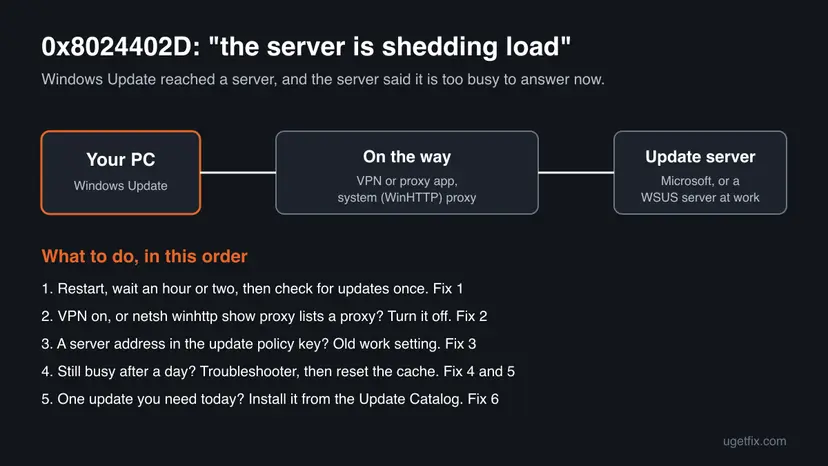
Error 0x8024402D means that Windows Update reached an update server and the server said it is shedding load: too busy to answer right now. It is a connection answer, not a damaged update. Restart, wait an hour or two and check once more, then look for a VPN, a proxy or an old company update server.
0x8024402D is the code Windows uses when the update server is too busy and turns the request away (WU_E_PT_LOAD_SHEDDING). Restart the PC, wait an hour or two, and select Check for updates once (Fix 1). If it keeps coming back, disconnect a VPN and reset a proxy you never set (Fix 2), then check whether the PC still points to an old company update server (Fix 3).
| Error | 0x8024402D, named WU_E_PT_LOAD_SHEDDING in the Windows SDK header of update error codes. The message text: "The server is shedding load." |
|---|---|
| Where it appears | Settings > Windows Update while Windows checks for or downloads updates. On Windows 10 inside the message "There were some problems installing updates, but we'll try again later." Also in WindowsUpdate.log and in update scripts. |
| Main cause | The update server, Microsoft's or a WSUS server at work, is overloaded and refuses new requests for a while. |
| Fastest fix | Restart, wait an hour or two, then check for updates once (Fix 1). |
| Also written as | 8024402D, 0x8024402d, (0x8024402d), error 0x8024402D. Often mistyped as 0x8024002D, which is a different code. |
| Affects | Any Windows 11 or Windows 10 PC. It returns again and again mostly on PCs behind a proxy or VPN, or on PCs set to a WSUS server. |
| Microsoft's status | Not a known bug of one update. Microsoft's public list of Windows Update error codes does not include 0x8024402D; the name and meaning come from the Windows SDK header. |
| Close relatives | 0x8024402C means the proxy or server name cannot be resolved. 0x8024402B is an HTTP failure with no specific code. |
| Time to fix | 5 minutes of work for Fix 1 and Fix 2, plus the wait. About 15 minutes for the policy check and the cache reset. |
Facts checked on 15 October 2026. Steps written for Windows 11 (25H2 and 26H2) and Windows 10 22H2.
What Windows update error 0x8024402D means
The code 0x8024402D belongs to the networking part of the Windows Update client: every code that starts with 0x802440 describes what happened between your PC and the update server. The Windows SDK header that defines these codes names this one WU_E_PT_LOAD_SHEDDING, and its text is "The server is shedding load."
Load shedding means that a server under heavy traffic drops some new requests so it can keep serving the ones it already has. Your PC asked, the server said "not now", and Windows Update shows the code. Nothing on your PC is broken by it, and the update file is not damaged.
| What you see | Where | What it tells you |
|---|---|---|
| There were some problems installing updates, but we'll try again later. If you keep seeing this and want to search the web or contact support for information, this may help: (0x8024402D) | Settings > Update & Security > Windows Update on Windows 10 | The check or the download was turned away by a busy server. |
| 0x8024402D next to an update or under the Check for updates button | Settings > Windows Update on Windows 11 | The same answer, shown in the Windows 11 layout. |
| 0x8024402D in the lines of WindowsUpdate.log | The log you create with Get-WindowsUpdateLog | The lines around it name the server that was busy. |
Some people search for 0x8024002D by mistake. That code, WU_E_SOURCE_ABSENT, means a full file update could not be installed because it needed the source files. It has other causes, so check the digits on your screen before you follow this page.
Why Windows update error 0x8024402D appears
Why does this happen? Because a server on the way said it is too busy. A busy Microsoft server is a passing problem, so the code matters only when it keeps coming back. Then the request is usually going to the wrong server, or through something that is overloaded. The rows below run from the most likely cause to the least likely.
| Cause | How often | How to tell | Fix |
|---|---|---|---|
| The update server is busy for a while, for example on the day a big update comes out. | Most often | The error appears once or for a few hours, then the next check works. | Fix 1 |
| A VPN, a proxy app or a proxy left in the system settings sends update traffic through a server that is overloaded. | Often when it keeps coming back | A VPN is on, or netsh winhttp show proxy names a proxy server. | Fix 2 |
| The PC is set to get updates from a WSUS server at work or school that is overloaded, or that the old owner no longer runs. | Sometimes | The update policy key in the registry holds a server address. | Fix 3 |
| A stuck update session keeps repeating the refused request. | Sometimes | No proxy, no policy, and the error is there every day. | Fix 4, Fix 5 |
| You need one update now and cannot wait for the server. | Any time | The same update fails while other checks work. | Fix 6 |
Disk space, damaged system files and a third party antivirus, which many pages list for this code, do not make a server answer that it is busy. They cause other update errors, so they are not methods on this page.
How to fix Windows update error 0x8024402D
Fix 1 is a short wait, and it is enough for most readers. Fix 2 and Fix 3 are for an error that keeps coming back: they make sure the request goes straight to Microsoft. Fixes 4 and 5 clear a stuck update session. Fix 6 gets one update past the busy server by hand.
| What you see or have | Start with |
|---|---|
| The error appeared today for the first time. | Fix 1 |
| A VPN, a proxy app or a web filter is installed, or the error comes back every day. | Fix 2 |
| A used or former work laptop, or Settings says some settings are managed by your organization. | Fix 3 |
| Direct connection, no policy, error still there after a day. | Fix 4, then Fix 5 |
| One update keeps failing and you need it now. | Fix 6 |
| A PC managed by your company or school. | Your IT team (see "If the error is still there") |
Fix 1. Restart, wait and check for updates again once
5 minutes plus 1 to 2 hours of waitingNo riskEveryone, first. Above all when the error appeared for the first time or on the day a large update came out.
Load shedding is the server protecting itself for a while. A restart closes the refused session, and a later check reaches the server when it accepts requests again. Pressing the button many times in a row only adds requests.
- Save your work and restart the PC with Start > Power > Restart, not with Shut down.
- Leave the PC on and connected for an hour or two. Windows Update also retries on its own.
- Open Settings > Windows Update. On Windows 10 open Settings > Update & Security > Windows Update.
- Select Check for updates once and wait until the check ends.
- If the same code comes back, try once more the next day before you go on.
If the error is gone on another network, for example your phone's hotspot, but stays at home, the busy server is on your side of the connection: a router filter, a proxy or a VPN. Go to Fix 2.
It worked if: The check finishes, the updates download, and the code does not appear again.
If not: If the code comes back on the next day too, the request is going somewhere else than Microsoft. Check the VPN and proxy in Fix 2.
Fix 2. Turn off the VPN and reset the system proxy with netsh winhttp
5 minutesLow riskThe error comes back every day, or a VPN, a proxy app or a web filter is on the PC now or was before.
Windows Update connects through the system connection (WinHTTP), and its proxy is set apart from the one you see in Settings. A busy VPN server or a proxy left by an old program can turn every update request away, while the browser seems fine.
- Disconnect your VPN and close any proxy, ad blocking or parental filter app that routes your traffic.
- Open Settings > Network & internet > Proxy and, under Manual proxy setup, turn off Use a proxy server if you did not set it on purpose. On Windows 10 the path is Settings > Network & Internet > Proxy.
- Press Win + S, type
cmd, right-click Command Prompt and select Run as administrator. - Type
netsh winhttp show proxyand press Enter. - If the answer is Direct access (no proxy server), the system proxy is not the cause. Restart and go to Fix 3.
- If it names a proxy server you do not use on purpose, type
netsh winhttp reset proxyand press Enter. - Restart the PC and select Check for updates in Settings > Windows Update.
netsh winhttp show proxy
netsh winhttp reset proxyIf your network really needs a proxy and the browser works through it, use netsh winhttp import proxy source=ie instead of the reset. If a proxy appears that no program you know could have set, scan the PC too: How to scan for malware with Microsoft Defender
It worked if: netsh winhttp show proxy says Direct access (no proxy server), and the update check finishes without the code.
If not: Check whether the PC is pointed at a company update server, Fix 3.
Fix 3. Check whether the PC is set to a WSUS server and remove an old policy
10 minutesRead the warningA used or former work or school PC, or a PC where a tool once changed the update settings.
A PC set to a WSUS server asks only that server for updates. If that server is overloaded or was shut down after you left the company, every check can end with 0x8024402D, and waiting does not help.
- Open Command Prompt as administrator, as in Fix 2.
- Type
reg query "HKLM\SOFTWARE\Policies\Microsoft\Windows\WindowsUpdate" /sand press Enter. - If Windows says it was unable to find the key, there is no such policy. Go to Fix 4.
- If the output shows an
http://orhttps://address, often with port 8530 or 8531, the PC is set to use a WSUS server. - On a PC that a company or school still manages, stop here and send that address and the error code to your IT team.
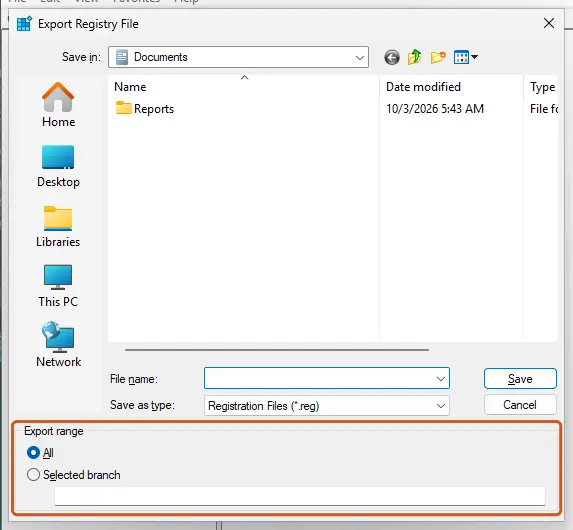
- On your own PC with a leftover setting, back up the key first: Back up the registry before editing it.
- Then type
reg delete "HKLM\SOFTWARE\Policies\Microsoft\Windows\WindowsUpdate" /fand press Enter. - Restart the PC and select Check for updates.
Deleting the key removes every Windows Update policy on the PC, also pause or deferral rules someone set on purpose. Windows then gets updates from Microsoft directly. Export the key first, so you can double-click the saved .reg file to bring it back.
It worked if: The reg query command no longer finds the key, and Windows Update checks Microsoft's servers without the error.
If not: Run the Windows Update troubleshooter, Fix 4.
Fix 4. Run the Windows Update troubleshooter
5 minutesNo riskThere is no proxy and no policy, and the error is still there after a day.
The troubleshooter restarts the update services and drops a stuck session, so the next check opens a fresh connection instead of repeating the request the server turned away.
- Open Troubleshoot settings. Select Start > Settings > System > Troubleshoot.
- Open the list of troubleshooters. Select Other troubleshooters.
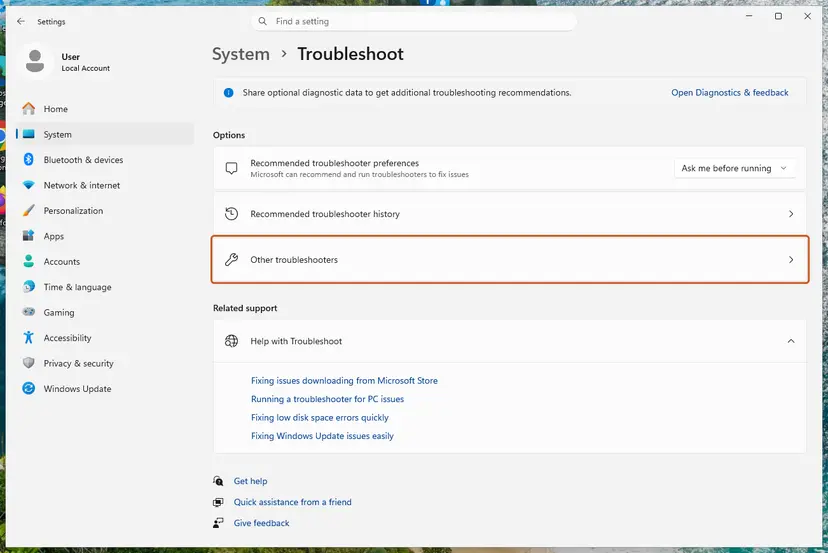
Settings, System, Troubleshoot: select Other troubleshooters. Screenshot: Windows 11 26H2. - Run the Windows Update troubleshooter. Under Most frequent, select Run next to Windows Update. The Get Help app opens and starts the checks.
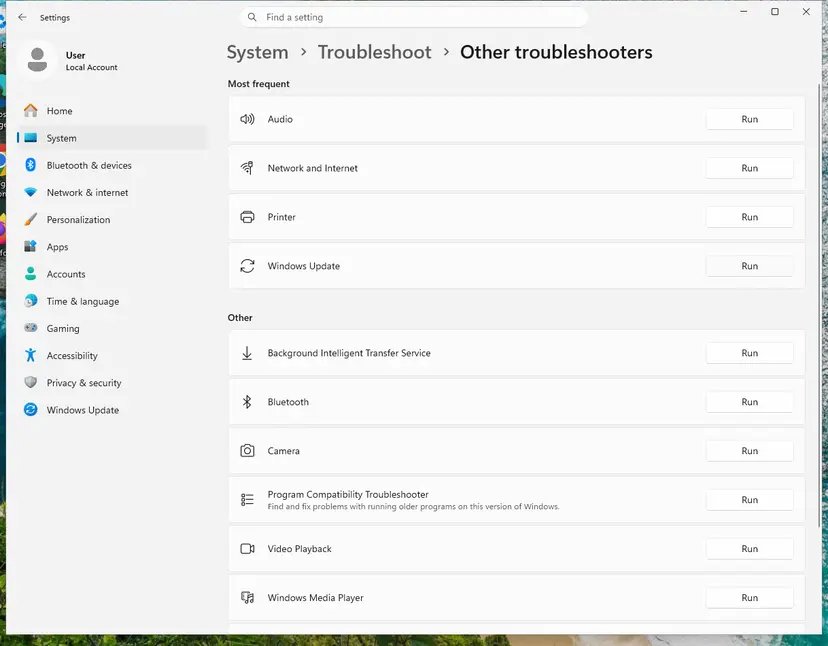
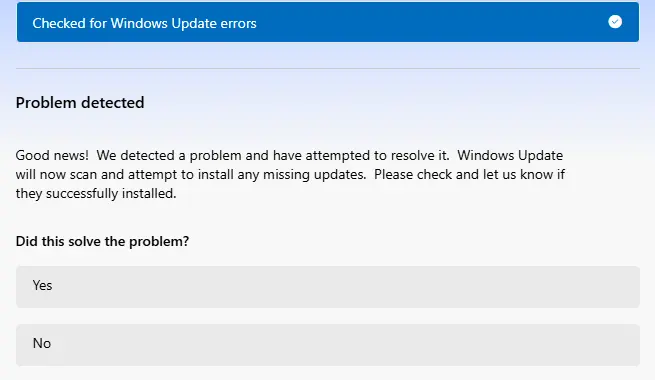
Windows Update is in the Most frequent group; select Run on its row. Screenshot: Windows 11 26H2. - Read the result. Wait until Get Help finishes. If it found and fixed a problem, it says so and asks whether this solved the problem. Answer the question so it can offer the next step.
Get Help reports what it found and asks if the problem is solved. Screenshot: Windows 11 26H2. - Restart the PC. Restart when the troubleshooter finishes, even if it does not ask you to.
- Check for updates again. Select Start > Settings > Windows Update > Check for updates, and install the updates it finds.
These steps were written for Windows 11 (screenshots: 26H2). The full page with the other versions and what each result means: Run the Windows Update troubleshooter
It worked if: The troubleshooter reports a problem as fixed, and the next update check runs without 0x8024402D.
If not: Reset the update components by hand, Fix 5.
Fix 5. Reset the Windows Update components
10 minutesLow riskThe troubleshooter found nothing, and you have a direct connection without a proxy.
Renaming the SoftwareDistribution and catroot2 folders clears the list of half finished downloads, so Windows Update starts a new session with the server instead of retrying the old one.
- Open Command Prompt as administrator. Type cmd in the search box, right-click Command Prompt and select Run as administrator. Select Yes when Windows asks for permission.
- Stop the update services. Type the commands below and press Enter after each one. If Windows says that other services depend on Cryptographic Services, it stops them too. A message that a service is not started is fine.
net stop wuauserv net stop bits net stop cryptsvc - Delete the download queue files. This clears the list of downloads that the Background Intelligent Transfer Service keeps. If Windows says it cannot find the files, continue.
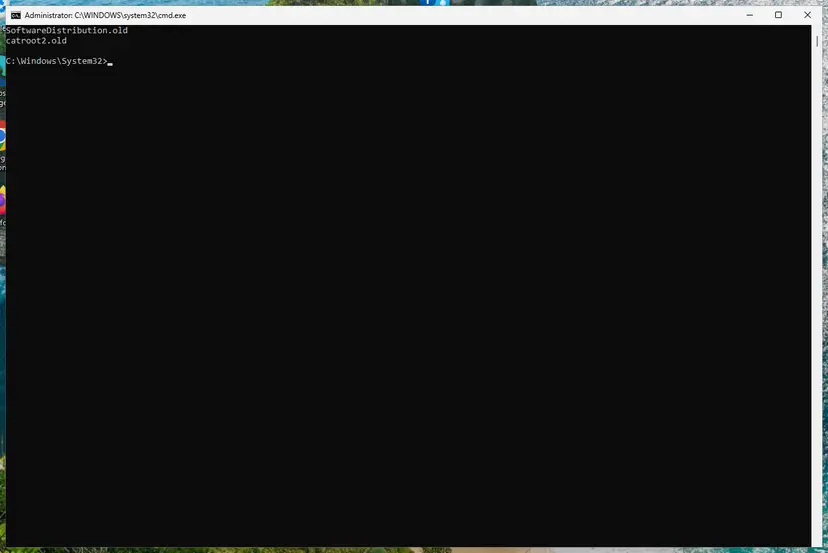
del "%ALLUSERSPROFILE%\Application Data\Microsoft\Network\Downloader\qmgr*.dat" - Rename the update cache folders. Renaming keeps a copy in case you need it; Windows creates new, empty folders when the services start again. If you get Access is denied, a service is still running: repeat the previous step.
ren %systemroot%\SoftwareDistribution SoftwareDistribution.old ren %systemroot%\System32\catroot2 catroot2.old - Start the services again. Type the commands below and press Enter after each one. The requested service has already been started is fine: Windows started it on its own.
net start cryptsvc net start bits net start wuauserv - Restart and check for updates. Restart the PC. Then select Start > Settings > Windows Update > Check for updates. The first check can take longer than usual because everything is downloaded again.
These steps were written for Windows 11 and Windows 10 (the steps are the same). The full page with the other versions and what each result means: Reset Windows Update components
It worked if: Windows Update shows no pending downloads at first, then finds and downloads the updates again.
If not: Install the one update you need by hand, Fix 6.
Fix 6. Install the update by hand from the Microsoft Update Catalog
10 minutesLow riskOne update keeps failing and you need it now, or you are on a network you cannot change.
The catalog download comes through your browser from Microsoft's download servers, not through the Windows Update check that is being turned away. The update then installs from the file.
- Check your Windows version. Press Windows key + R, type winver and press Enter. Note the version (for example 25H2) and the OS build.
- Find the KB number. Open Settings > Windows Update. A failed or pending update is listed with its KB number; earlier ones are under Update history.
- Check the processor type. Open Settings > System > About and look at System type: an x64-based PC needs the x64 file, an ARM-based PC (for example Snapdragon) needs the arm64 file.
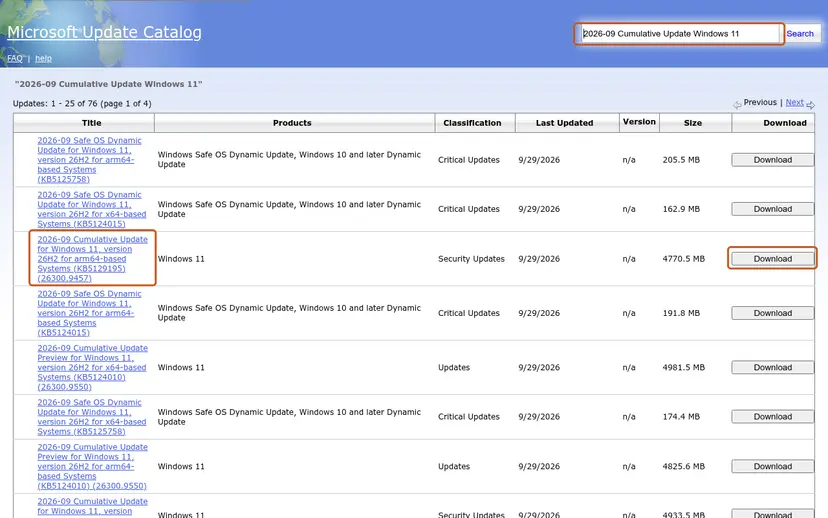
- Search the catalog. Open the Microsoft Update Catalog at catalog.update.microsoft.com in your browser, type the KB number (for example KB5124010) in the search box and press Enter.
- Pick the right row. Find the row whose title names your Windows version and your processor type (x64-based or arm64-based) and select Download on that row.
- Download every file listed. A window lists one or more .msu links. Download all of them into one empty folder, for example C:\packages. On Windows 11 24H2 and later the list can include earlier checkpoint updates that the new one needs.
- Install a single file. If there is only one file, double-click it and confirm the installation in the Windows Update Standalone Installer.
These steps were written for Windows 11 24H2 and later; Windows 10 22H2. The full page with the other versions and what each result means: Install an update from the Microsoft Update Catalog
It worked if: The installer finishes, and the update is listed under Settings > Windows Update > Update history.
If not: Windows Update itself is still turned away. Read "If the error is still there" below.
If the error 0x8024402D is still there
When the fixes did not help, the busy answer comes from a server you do not control. The update log tells you which one it is.
- Open PowerShell as administrator, type
Get-WindowsUpdateLogand press Enter. It writes WindowsUpdate.log to your desktop. - Open the file and search for
8024402D. The lines around it name the server address Windows Update tried to reach. - A Microsoft address means the busy answer came from Microsoft or from a proxy on the way. A company address with port 8530 or 8531 means a WSUS server.
| Situation | What to do |
|---|---|
| Work or school PC with a WSUS server | Give IT the code, the time and the server address from the log. The server is turning clients away, and only its administrator can give it more room or spread the checks out. |
| Home PC, Microsoft address, error for more than two days | Update on another network once, for example a phone hotspot. If it works there, your router or provider's filter is in the way. |
| Home PC, direct connection, nothing found anywhere | Reinstall Windows over itself and keep your files and apps: Reinstall Windows without losing files |
How to keep error 0x8024402D from coming back
- Let Windows Update retry on its own when you see the code once. One check every few hours is enough.
- Disconnect the VPN before you check for updates, or let Windows Update bypass it if your VPN app has that option.
- After you uninstall a VPN or proxy program, run
netsh winhttp show proxyand reset a proxy it left behind. - On a used laptop from a company, check the update policy key on the first day.
- Do not press Check for updates again and again. A busy server only gets more requests.
- Do not turn off the antivirus or the firewall to get an update through. They do not make a server say it is busy.
- Do not remove update policies from a PC your employer or school still manages.
If a security suite with its own web filter or proxy is installed, pausing its protection for one check shows whether its proxy is the busy part. Turn it back on right after: Turn off Microsoft Defender protection for a moment
Frequently asked questions
What does error code 0x8024402D mean?
It means the update server is too busy and turned your PC's request away. The Windows SDK header of update codes names it WU_E_PT_LOAD_SHEDDING, with the text "The server is shedding load". Load shedding is what a server does under heavy traffic: it refuses some new requests so the rest still work. The update and your Windows files are fine. Wait an hour or two and check once more, and look at the VPN, proxy and update policy only if the code keeps coming back.
What does "There were some problems installing updates, but we'll try again later" mean with 0x8024402D?
It is the general Windows 10 message for an update that did not finish, and the code in brackets says why. With (0x8024402D) the reason is a busy server, not a damaged file and not a lack of disk space. Windows retries on its own, so a one time error often goes away without any action. If you see the message every day, the request goes to a server that is always busy or gone, and Fix 2 and Fix 3 on this page find it.
Why do I get 0x8024402D on update day only?
On the second Tuesday of each month and when a large feature update comes out, millions of PCs ask for the same files at once. A server under that load can turn some requests away, and your PC gets 0x8024402D. This is the most harmless form of the error. Restart, wait a few hours and check once. The update is not lost: Windows offers it again on the next check.
Is 0x8024402D the same as 0x8024002D?
No. The two codes differ by one digit and mean different things. The code 0x8024402D is the busy server code from the networking part of Windows Update. The code 0x8024002D, which Microsoft names WU_E_SOURCE_ABSENT, means a full file update could not be installed because it needed the source files. That one points to missing or damaged installation files, not to the network. Read the digits on your screen again. If yours is 0x8024002D, the fixes on this page do not cover it.
Can a VPN cause Windows update error 0x8024402D?
It can make it come back. A VPN sends Windows Update traffic through its own servers, and a crowded VPN server or a proxy it sets can be the part that turns the request away. Disconnect the VPN, restart and check for updates. Some VPN apps also leave a system proxy behind after they close, so run netsh winhttp show proxy as in Fix 2 if the error stays without the VPN.
Should I turn off my antivirus or firewall to fix 0x8024402D?
No. An antivirus does not make a server answer that it is busy, so turning it off for good does not fix this code and leaves the PC open. The only exception is a security suite with its own web filter or proxy. Pause its protection for one update check to test it, and turn it back on right after. If the check works while it is paused, look in the suite for a setting that lets Windows Update through.
Does freeing disk space or running SFC fix 0x8024402D?
Not for this code. Many pages suggest Disk Cleanup and the SFC and DISM scans, but low space and damaged system files cause other update errors, not a busy answer from a server. They do no harm, and they are worth running when Windows Update shows other codes too. For 0x8024402D, start with the wait in Fix 1 and the connection checks in Fix 2 and Fix 3.
Does the Media Creation Tool fix 0x8024402D?
It can get Windows past the error, because it downloads the full system in its own way and reinstalls Windows over itself. It does not remove the cause. If a proxy or an old WSUS policy is the reason, the next monthly update fails again with the same code. Use the fixes on this page first. If you still need a full repair, reinstall Windows and keep your files, which uses the same installation files.
Error aa raha hai 0x8024402D: what should I do?
This page is about that exact code, in English. In short: the code means the update server is busy. Restart the PC, wait an hour or two and select Check for updates once. If the code returns every day, turn off the VPN, reset the proxy with netsh winhttp reset proxy, and check the update policy key as in Fix 3. Your files and the update are not damaged.
Does Windows 10 still get the updates that fail with 0x8024402D?
Windows 10 left support on 14 October 2025. Windows 10 22H2 still gets security updates only through Extended Security Updates, and Microsoft Defender still gets its definition updates. The fixes on this page work the same on Windows 10 and Windows 11, because the cause is the server or the connection, not the Windows version. If your PC can run Windows 11, moving to it is the long term answer.
Sources
- Microsoft Learn: Windows Update error code list by component (learn.microsoft.com)
- Windows SDK header wuerror.h (mingw-w64 copy): WU_E_PT_LOAD_SHEDDING 0x8024402D (git.medv.io)
Did this fix work?
One click, no account. It tells the next reader which guides are worth their time.
Questions and experiences: fix Windows update error 0x8024402D
Still broken, or found a fix we did not cover? Ask here: members and our editors answer. Reading is open; writing needs a free account.
…