
How to fix secur32.dll error in Windows?

Prefer to fix it yourself? The manual steps follow.
- 7methods
- 20 minutes to 2 hours
- Easy to medium
Applies to Windows 11 and Windows 10: the Bad Image window naming C:\Windows\system32\secur32.dll, from explorer.exe or other programs, at sign-in or when an app starts
7 methods in this guide
Hello. When I try to launch certain apps in Windows, I get the "Windows system32 secur32.dll is either not designed to run on Windows or contains an error" message. What should I do?
secur32.dll is a Windows file that programs use to sign in and authenticate securely. A Bad Image window saying it "is either not designed to run on Windows or it contains an error" means Windows found the file but could not load it. Repair Windows files with DISM and SFC first; never download the DLL.
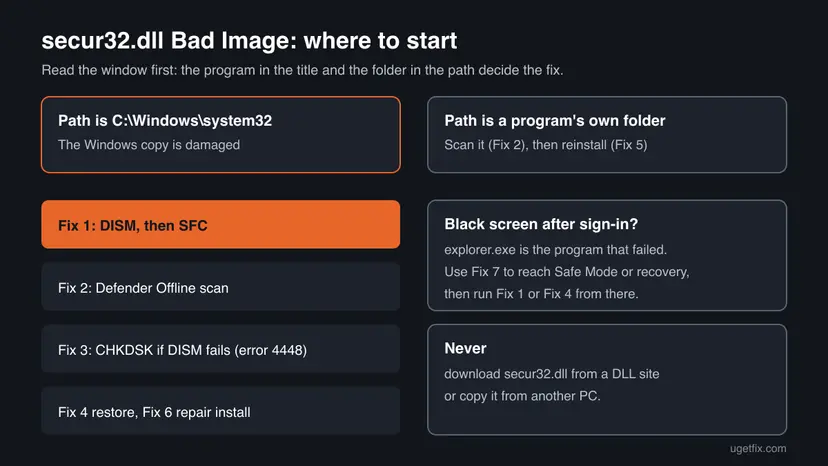
secur32.dll is a protected Windows file, so the error almost always means the Windows copy is damaged. Run DISM and then SFC as administrator (Fix 1) and restart. If DISM fails, check the disk (Fix 3), then do a repair install that keeps your files (Fix 6). If the screen stays black after sign-in, start in Safe Mode first (Fix 7). Never download secur32.dll from a DLL site.
| Error | "C:\Windows\system32\secur32.dll is either not designed to run on Windows or it contains an error", in a window titled "<program> - Bad Image". |
|---|---|
| Where it appears | Right after you type your password (explorer.exe, often followed by a black screen), or when you open certain apps, sometimes several at once. |
| Main cause | A damaged Windows copy of secur32.dll or of the component store that SFC repairs it from. Less often malware, a failing disk or a program that ships its own copy. |
| Fastest fix | DISM /RestoreHealth, then sfc /scannow, then restart (Fix 1). |
| Also written as | secur32.dll error, secur32.dll is missing, secur32.dll corrupted, secur32 dll Bad Image, "Windows system32 secur32.dll is either not designed to run on Windows". |
| What the file is | The Windows library behind the Security Support Provider Interface (SSPI). Microsoft lists Secur32.dll as the DLL for SSPI functions such as AcquireCredentialsHandle. |
| Affects | Any Windows version: users reported it on Windows 7 and on Windows 10 22H2. Windows 10 left support on 14 October 2025. |
| Vendor status | Not a known bug of one update. A Microsoft Q&A volunteer moderator answered a 2024 case, where SFC and DISM failed, with a repair install. |
| Time to fix | 20 to 30 minutes for DISM and SFC. 1 to 2 hours for a disk check or a repair install. |
Facts checked on 15 October 2026. Steps written for Windows 11 (25H2 and 26H2) and Windows 10 22H2.
What secur32.dll is and why so many programs need it
secur32.dll belongs to Windows, not to any app. Microsoft's developer documentation names Secur32.dll as the DLL, and Secur32.lib as the library, for the Security Support Provider Interface (SSPI). Programs call it to get a handle to your sign-in credentials and to set up secure, authenticated connections.
- File
secur32.dll, the Security Support Provider Interface library- Location
C:\Windows\System32(the path in the Bad Image window)- Example functions
AcquireCredentialsHandle, used withInitializeSecurityContextandAcceptSecurityContext- Minimum Windows for these functions
- Windows Vista and Windows Server 2008, per Microsoft's requirements table
- Who loads it
- File Explorer (explorer.exe), browsers, mail and network programs, and many apps that sign in or connect securely
Because so much of Windows signs in through it, a damaged secur32.dll rarely breaks only one app. That is why readers see the window from several programs at once, or from explorer.exe right after typing the password.
The right copy depends on your exact Windows build and comes only from Windows itself. A single file from a download site or from another PC may be the wrong version, may be unsigned, and may carry malware. DISM and SFC put back the correct copy for free.
What the secur32.dll error means
The window is a Windows Bad Image message. It means a program asked Windows to load secur32.dll, Windows found the file, but its content was damaged or not what the loader expects. The text reads like this, as a reader quoted it on Microsoft Q&A:
The Bad Image window (title: explorer.exe - Bad Image)
C:\Windows\system32\secur32.dll
is either not designed to run on Windows or it contains an error.
Try installing the program again using the original installation media
or contact your system administrator or the software vendor for support.
Ignore the advice to install "the program" again. The program in the title only tried to load the file; the damaged file belongs to Windows. Two details in the window decide where you start:
| What the window shows | What it means | Start with |
|---|---|---|
Path C:\Windows\system32\secur32.dll, any program in the title | The Windows copy of the file is damaged. | Fix 1 |
| Title explorer.exe - Bad Image and a black screen after sign-in | File Explorer, the desktop itself, cannot start. | Fix 7, then Fix 1 |
| Several apps show the same window at startup | A shared system file is damaged, often with the component store. | Fix 1, then Fix 3 |
Path inside a program's folder, such as C:\Program Files\... | That program ships or picked up its own copy. | Fix 2, then Fix 5 |
| "secur32.dll is missing" or "was not found" | The file is gone, not damaged. Same repair. | Fix 1 |
- The status code. Bad Image windows can end with an Error status code. We could not confirm which code the secur32.dll window shows. Our OneDrive Bad Image guide explains what each code means.
- A sister case. The same message for another Windows file is covered in our dxcore.dll guide. The logic is the same: repair Windows, do not replace single files by hand.
What causes the secur32.dll error, from most to least common
Most often the Windows copy of secur32.dll is damaged, for example after a crash or a power cut during an update. Less often the component store that SFC repairs from is damaged too, or malware has changed the file. Rarely the disk itself is failing.
| Cause | How often | How to tell | Fix |
|---|---|---|---|
| The Windows copy of secur32.dll is damaged. | Most often | Path in System32; SFC reports that it repaired files. | Fix 1 |
| The component store is damaged too, so SFC cannot repair. | Often | SFC says it "was unable to fix some of them"; DISM stops with an error. | Fix 3, Fix 6 |
| Malware changed or replaced the file. | Sometimes | A Microsoft volunteer named the trojan Bladabindi as one that can damage secur32.dll; other odd behavior. | Fix 2 |
| A recent driver, app or update changed system files. | Sometimes | The window started on a known day. | Fix 4 |
| A program carries its own secur32.dll copy. | Rarely | The path in the window is not System32. | Fix 5 |
| The disk is failing. | Rarely | DISM reports file corruption, files break again after repairs. | Fix 3 |
- DISM error 4448. One reader on Microsoft Q&A got secur32.dll Bad Image windows from many apps on Windows 10 22H2. SFC could not fix everything, and DISM stopped at 56.3 % with "Error: 4448 The WOF driver encountered a corruption in the compressed file's Resource Table". The moderator's answer was a repair install.
- Re-registering the DLL. Some pages suggest
regsvr32 secur32.dll. Registering a DLL does not change its content, so it cannot repair a damaged file. That method is not on this page.
How to fix the secur32.dll error in Windows
Fix 1 helps most readers. Fix 2 to Fix 6 follow in order of how often they help and how little they cost. If you only get a black screen after sign-in, start with Fix 7 to reach a working desktop or the recovery screen, then come back to Fix 1.
| What you see or what your PC has | Start with |
|---|---|
Bad Image window naming C:\Windows\system32\secur32.dll when you open apps | Fix 1 |
| Black screen after sign-in, window titled explorer.exe - Bad Image | Fix 7, then Fix 1 |
| SFC says it was unable to fix some files, or DISM stops with an error such as 4448 | Fix 3, then Fix 6 |
| Other odd behavior too: pop-ups, changed browser, disabled security | Fix 2 |
| The window started right after a driver, app or Windows update | Fix 4 |
| The path in the window is a program's own folder | Fix 5 |
Fix 1. Repair secur32.dll with DISM and SFC
20 to 30 minutesNo riskThe Bad Image window names C:\Windows\system32\secur32.dll, or says the file is missing. This is the first fix for almost everyone.
secur32.dll is a protected Windows file. DISM first repairs the component store Windows keeps its files in, and SFC then replaces a damaged secur32.dll from that store with the right version for your build.
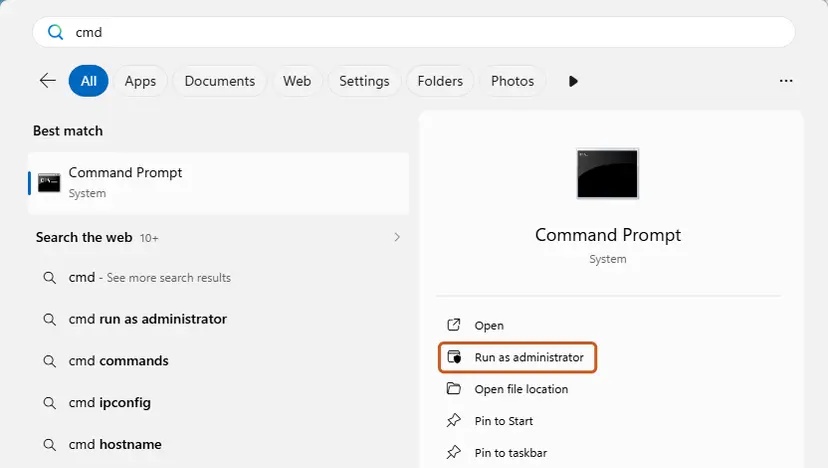
- Open an elevated command window. Right-click Start and select Terminal (Admin), or type cmd in the search box, right-click Command Prompt and select Run as administrator. Select Yes when Windows asks for permission.
Search for cmd and choose Run as administrator. Screenshot: Windows 11 26H2. - Run DISM first. Type the command below and press Enter. DISM downloads clean copies of damaged components from Windows Update, so it can take several minutes. Wait until it says The operation completed successfully.
DISM.exe /Online /Cleanup-Image /RestoreHealth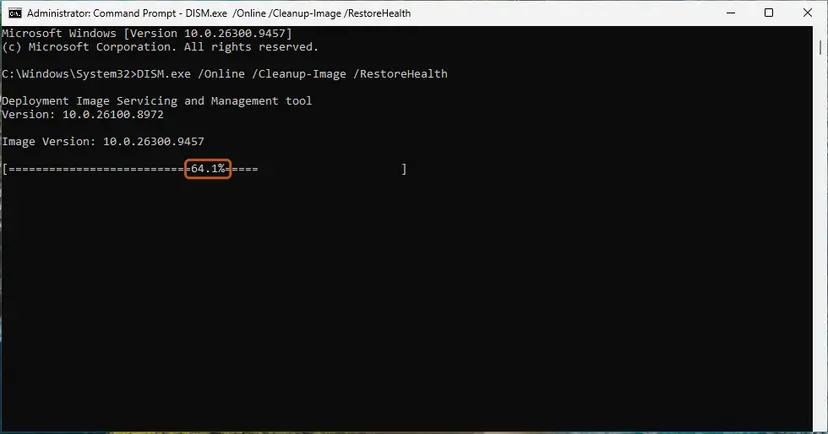
DISM /RestoreHealth running. Screenshot: Windows 11 26H2. - Run System File Checker. In the same window, type the command below and press Enter. Do not close the window until the verification reaches 100%.
sfc /scannow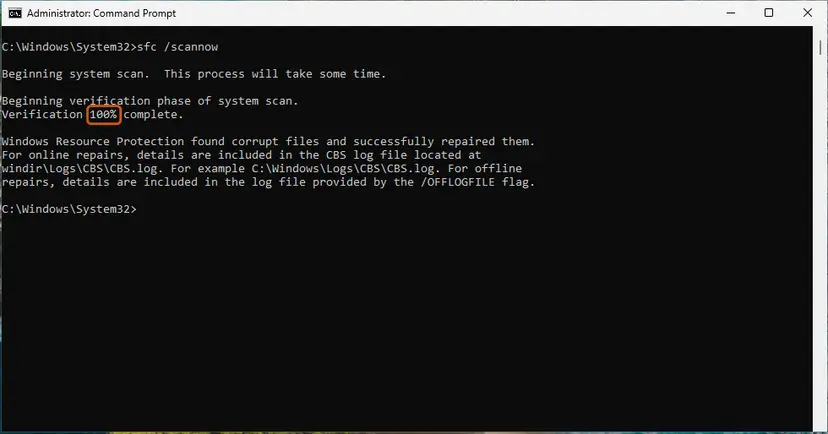
sfc /scannow at 100%. Screenshot: Windows 11 26H2. - Read the result and restart. Compare the last message with the table below this guide, then restart the PC so that repaired files are loaded.
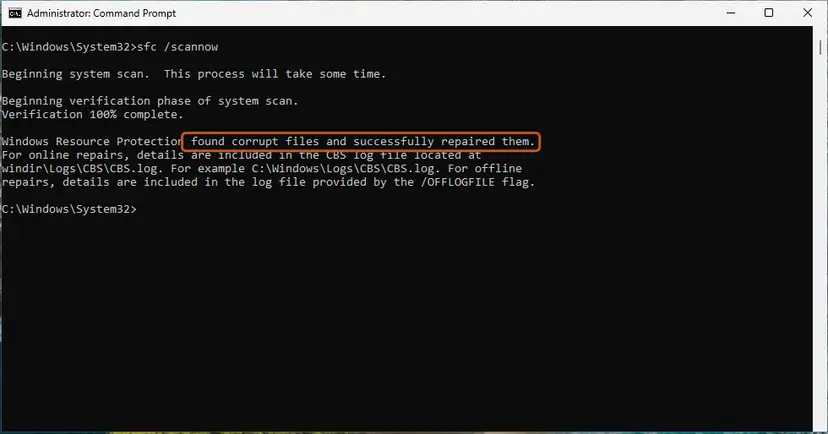
The result line tells you what SFC did. Screenshot: Windows 11 26H2.
These steps were written for Windows 11 24H2 and 25H2. The full page with the other versions and what each result means: Run DISM and SFC to repair Windows system files
Run DISM /RestoreHealth first, then sfc /scannow, then restart. SFC alone can fail when the store is damaged too, which is what happened in the Microsoft Q&A case.
It worked if: SFC reports that it found no integrity violations or that it repaired corrupt files, and apps open without the Bad Image window after a restart.
If not: If SFC says it was unable to fix some files, or DISM stops with an error, go to Fix 3. If you see signs of malware, run Fix 2 first.
Fix 2. Scan for malware with Microsoft Defender Offline
15 to 60 minutesLow riskThe file breaks again after Fix 1, the path is not System32, or the PC also shows pop-ups, a changed browser or disabled security.
A Microsoft Community volunteer noted that secur32.dll can be damaged by malware, naming the trojan Bladabindi. The offline scan restarts the PC and scans before Windows loads, so malware that hides while Windows runs cannot interfere.
- Open Windows Security. Select Start, type Windows Security and open the app.
- Open Virus & threat protection. Select Virus & threat protection. Under Current threats you see when the last scan ran, how long it took and how many files it checked.
- Run a quick scan. Select Quick scan. If Windows Security thinks a deeper scan is needed, it tells you when the quick scan is done.
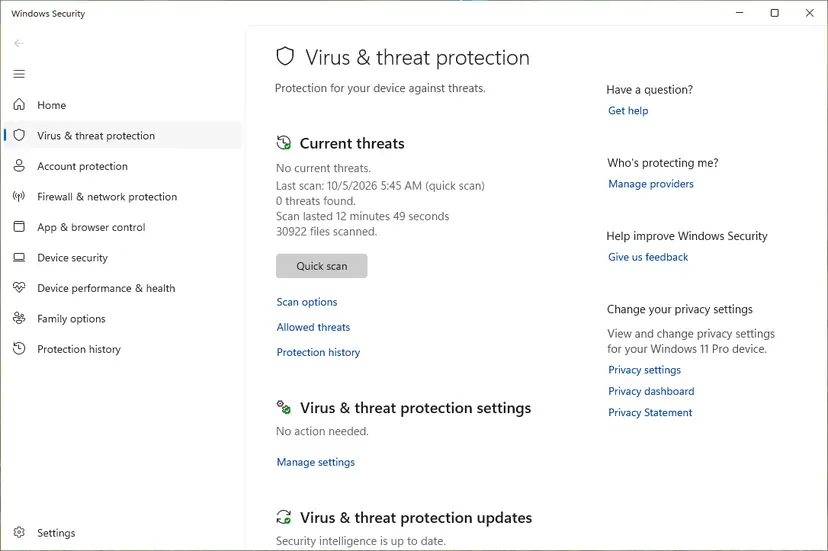
Quick scan and Scan options sit under Current threats. Screenshot: Windows 11 26H2. - Open Scan options. If the quick scan finds nothing and you still suspect an infection, select Scan options under Current threats.
- Run a full scan. Select Full scan and start it. It checks every file and program on the device, so it takes much longer than a quick scan. Leave the PC on until it ends.
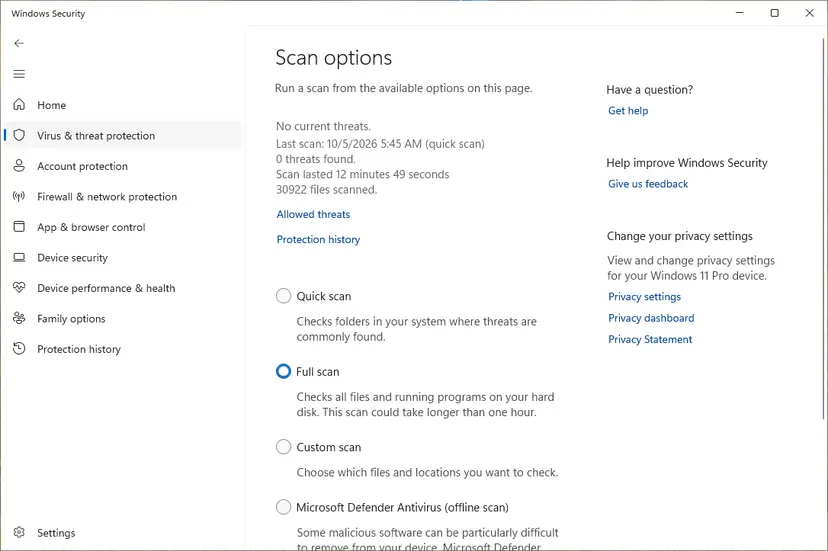
Scan options: Quick scan, Full scan, Custom scan and the offline scan. Screenshot: Windows 11 26H2. - Or scan one folder. To check only a download or a USB drive, select Custom scan in Scan options and choose the folder. You can also right-click a file or folder in File Explorer and select Scan with Microsoft Defender. On Windows 11 you may have to select Show more options first.
- Read Protection history. Go back to the first page of Windows Security and select Protection history. Select a card to expand it and see the details.
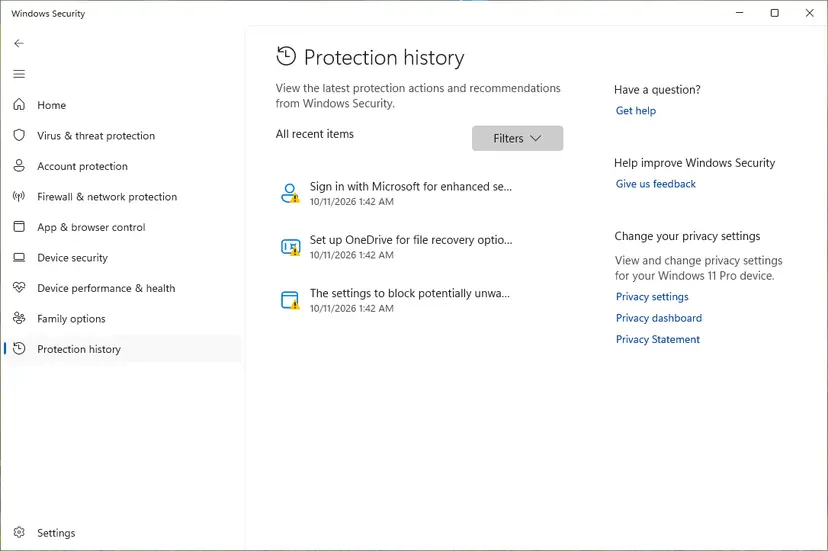
Protection history lists what Defender found and did. Screenshot: Windows 11 26H2.
These steps were written for Windows 11 25H2 and 26H2, Windows 10 22H2. The full page with the other versions and what each result means: How to scan for malware with Microsoft Defender
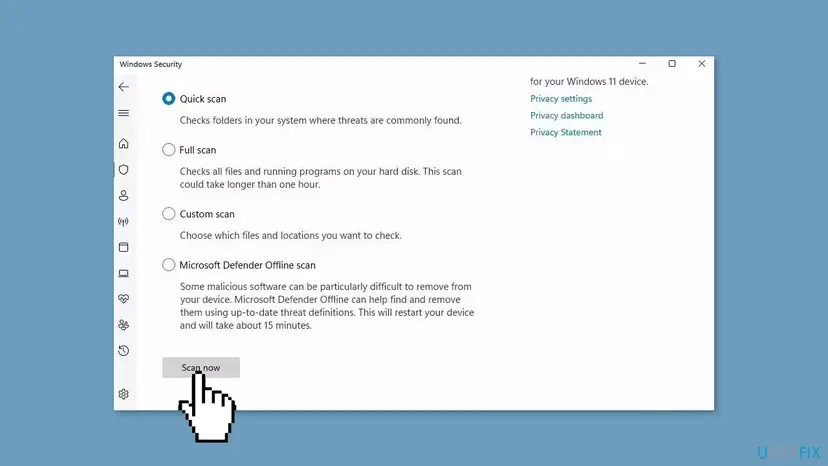
Save your work first: the offline scan restarts the PC. After it finds and removes something, run Fix 1 again, because removing malware does not put back a damaged system file.
It worked if: Windows Security reports no current threats, or lists what it removed under Protection history.
If not: If nothing is found and Fix 1 still cannot repair the file, check the disk with Fix 3.
Fix 3. Check the disk with CHKDSK when DISM or SFC cannot repair
30 minutes to 2 hoursLow riskSFC says it was unable to fix some files, DISM stops with an error such as 4448, or files break again after a repair.
DISM error 4448 says a compressed Windows file has a damaged resource table. Bad sectors or file system errors can cause that, and SFC cannot fix a file that the disk keeps damaging. CHKDSK repairs the file system first.
- Open Command Prompt as administrator. Type cmd in the search box on the taskbar, right-click Command Prompt and select Run as administrator. Select Yes when Windows asks for permission.
- Scan the drive without changing anything. Type the command below and press Enter. Replace C: with another drive letter to check that drive. This scan only reports; it does not fix anything.
chkdsk C: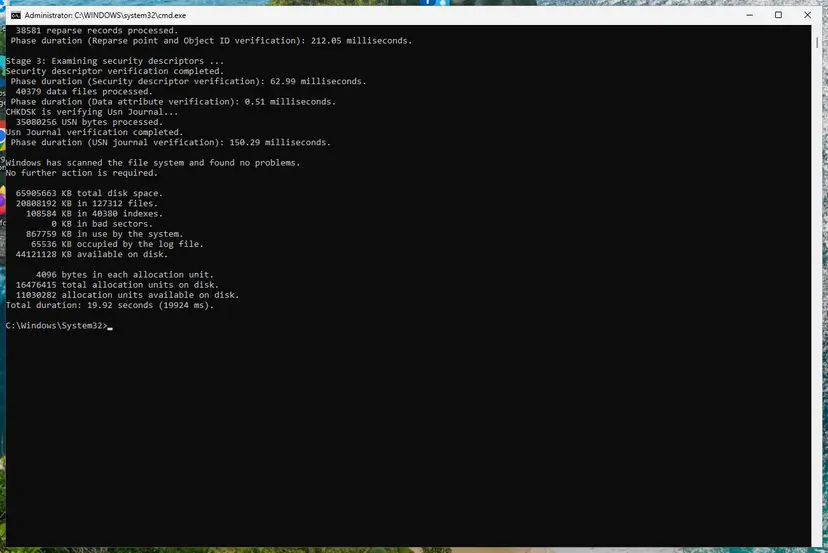
A clean result: no problems found and 0 KB in bad sectors. Screenshot: Windows 11 26H2. - If errors were found, run the repair. Run chkdsk with /f to fix file system errors. On the Windows drive (C:) chkdsk cannot lock the drive while Windows is running, so it offers to check it at the next restart.
chkdsk C: /f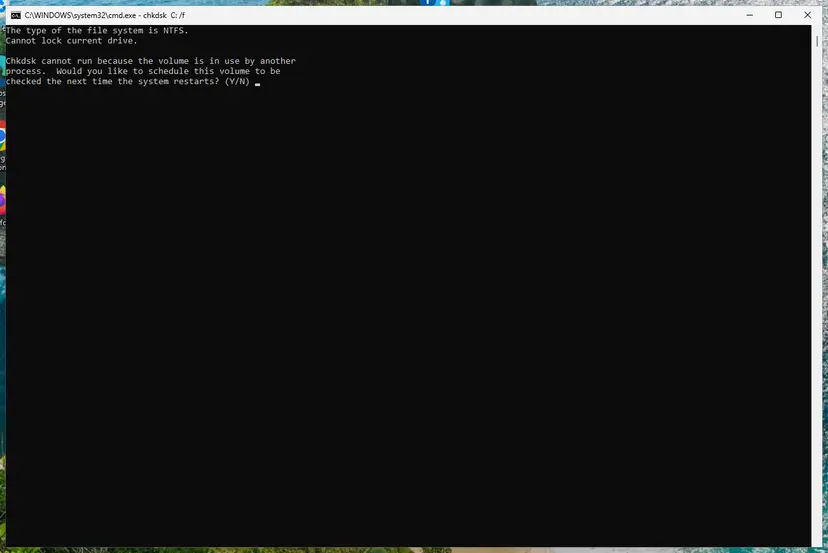
On the system drive chkdsk /f asks to run at the next restart. Screenshot: Windows 11 26H2. - Schedule the check and restart. Type Y and press Enter, then restart the PC. chkdsk runs before Windows starts. Do not turn the PC off while it runs.
- Read the result after the restart. The report of a check made at startup is not shown on the desktop. Open PowerShell and run the command below to see it, or open Event Viewer (eventvwr.msc) > Windows Logs > Application and filter by the sources Chkdsk and Wininit.
Get-WinEvent -FilterHashtable @{LogName='Application'} | Where-Object { $_.ProviderName -match 'wininit' } | Select-Object -First 1 | Format-List TimeCreated, Message
These steps were written for Windows 11 and Windows 10 (the steps are the same). The full page with the other versions and what each result means: Check a disk for errors (chkdsk)
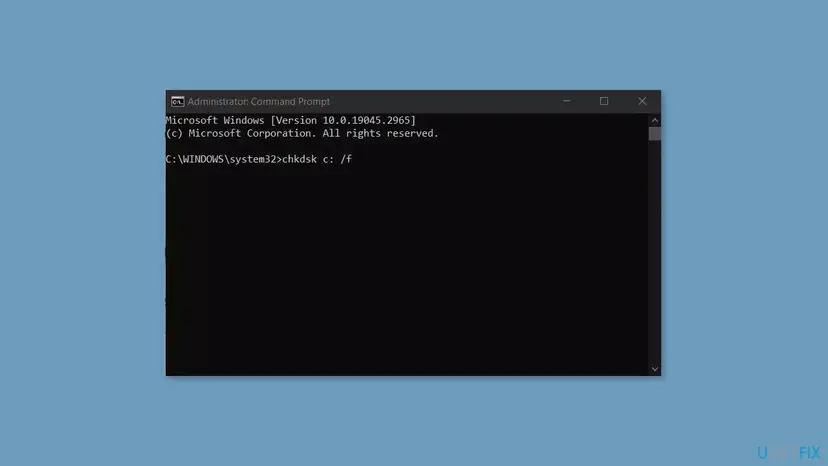
When CHKDSK has finished, run Fix 1 again. If DISM now completes, SFC can usually repair secur32.dll.
It worked if: CHKDSK reports that it found no problems or that it fixed them, and DISM then runs to 100 %.
If not: If DISM still fails, go to Fix 6. If CHKDSK reports bad sectors, back up your files now and read "When it is hardware" below.
Fix 4. Undo a recent change with System Restore
20 to 40 minutesLow riskThe window started right after a driver, app or Windows update, and a restore point from before exists.
System Restore puts back system files, drivers and settings from a restore point. If a change left a damaged secur32.dll behind, the copy from the restore point predates it.
- Open System Restore. Press Windows+R, type the command below and press Enter. You can also open Control Panel > Recovery > Open System Restore. If a first page opens, select Next.
rstrui.exe - Choose a restore point. Select a restore point from a time before the problem started. The Description often names the event, such as a driver or app install. If the one you need is missing, select Show more restore points (shown only when there are more).
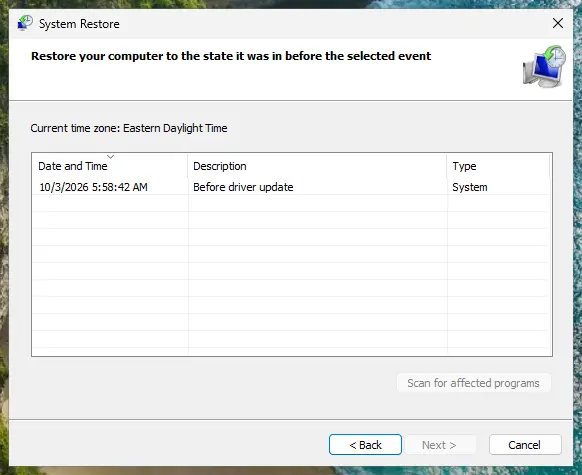
Pick a restore point from before the problem started. Screenshot: Windows 11 26H2. - See what will change. Select Scan for affected programs. The upper list shows programs and drivers that will be removed; the lower list shows those that might come back and may need to be reinstalled. Select Close.
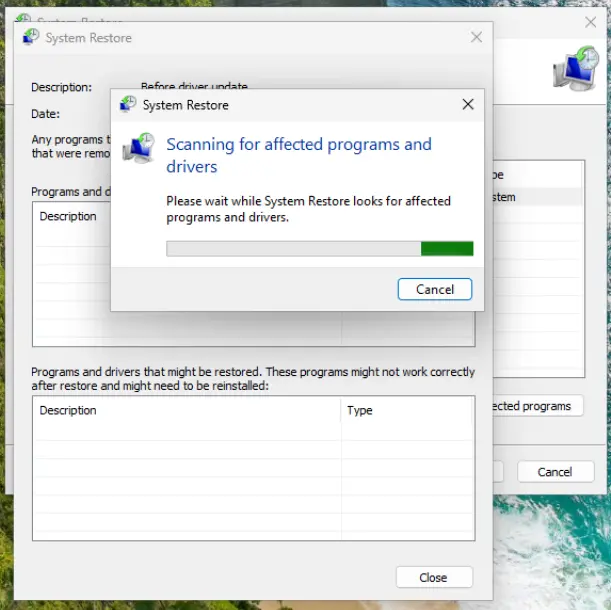
The scan lists programs and drivers the restore removes or brings back. Screenshot: Windows 11 26H2. - Start the restore. Select Next, check the summary and select Finish. Windows restarts and applies the restore point. Do not turn the PC off.
- Check the result. After sign-in Windows reports whether the restore succeeded. Check whether the problem is gone.
These steps were written for Windows 11 and Windows 10 (the steps are the same). The full page with the other versions and what each result means: Undo recent changes with System Restore
Your documents and photos stay. Programs and drivers installed after the restore point are removed, so check them first with Scan for affected programs. If the desktop does not load, start System Restore from the recovery screen in Fix 7.
It worked if: Windows reports that the restore completed, and the next sign-in shows no Bad Image window.
If not: If there is no restore point, or the window returns, repair Windows in place with Fix 6.
Fix 5. Reinstall the program that keeps its own secur32.dll copy
15 to 30 minutesLow riskThe path in the window is not C:\Windows\system32 but a program's own folder, and only that program shows the error.
A program that loads a secur32.dll from its own folder gets that copy instead of the Windows one. Reinstalling the current version from its maker replaces or removes the bad copy.
- Note the full path and the program name in the window title, then select OK.
- Scan that folder with Fix 2 first if you did not put the file there.
- Uninstall the program from Settings > Apps > Installed apps (Windows 11) or Settings > Apps > Apps & features (Windows 10).
- Restart the PC.
- Install the current version from the maker's own website and open it.
Step by step, with screenshots: Uninstall a program or app in Windows. Do not delete or replace secur32.dll in C:\Windows\System32 by hand; that copy belongs to Windows.
It worked if: The program opens without the Bad Image window.
If not: If the reinstalled program shows the window with the System32 path, the Windows copy is the problem: go back to Fix 1.
Fix 6. Reinstall Windows and keep your files and apps
1 to 2 hoursRead the warningSFC cannot repair secur32.dll, DISM fails even after CHKDSK, or the window survives every fix above.
A repair install replaces every Windows file, secur32.dll and the component store included, with a fresh copy of your version. This is what the Microsoft Q&A moderator advised for the DISM error 4448 case.
A repair install keeps files and apps when you choose to keep them, but a power cut or a wrong choice can cost data. Copy your documents to an external drive or the cloud first: Back up your files (Windows Backup, File History, Time Machine)
- Open Recovery in Settings. Open Settings > System > Recovery. Next to Fix problems using Windows Update, select Reinstall now. This keeps your apps, files and settings.
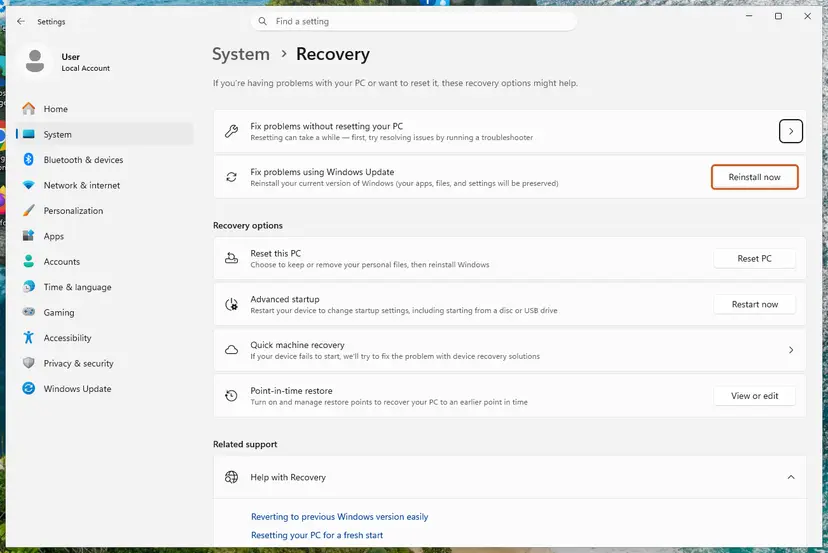
Fix problems using Windows Update reinstalls the current version and keeps apps, files and settings. Screenshot: Windows 11 26H2. - Start the reinstall. Choose whether the PC may restart on its own 15 minutes after the installation, then select OK.
- Wait and restart. Windows Update downloads and installs a repair copy of your current Windows version. Keep the PC plugged in and online, and restart it when asked.
- If that did not help: Reset PC. Back in Settings > System > Recovery, next to Reset this PC, select Reset PC. This keeps your personal files but removes installed apps and settings.
- Choose Keep my files. Select Keep my files. Do not select Remove everything.
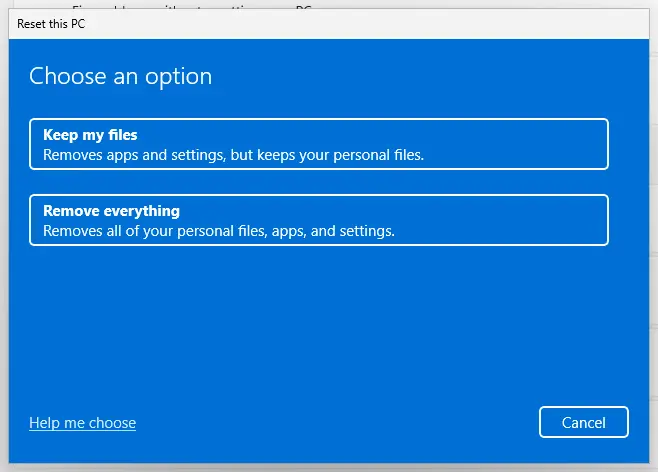
Keep my files removes apps and settings but keeps personal files. Screenshot: Windows 11 26H2. - Choose where Windows comes from. Select Cloud download to download a fresh copy of Windows, or Local reinstall to use the files already on the PC (faster, but may not include the latest updates).
- Reset. Review the summary and select Reset. The PC restarts several times.
These steps were written for Windows 11 22H2 and later. The full page with the other versions and what each result means: Reinstall Windows without losing files
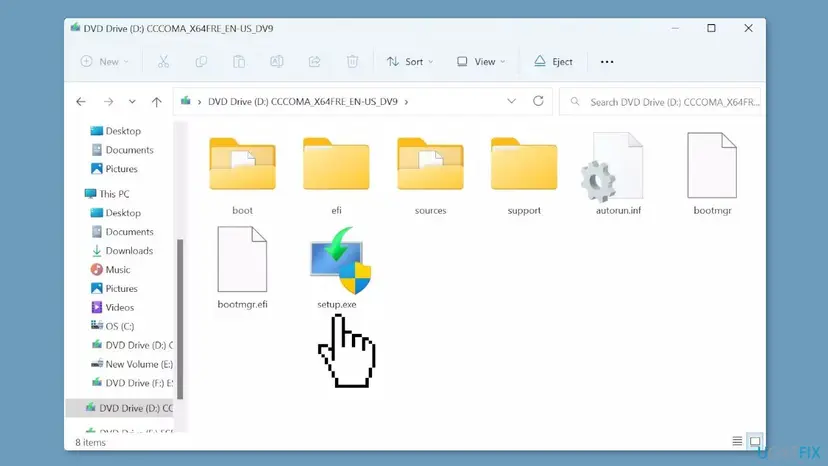
Use an ISO of the same Windows edition, language and version you have. The moderator warned that if the keep options are greyed out, the ISO is wrong: cancel the setup instead of continuing.
It worked if: Windows starts after several restarts, your files and apps are still there, and no Bad Image window shows.
If not: If the window comes back even after a repair install, collect the details in "If the secur32.dll error is still there" below.
Fix 7. Reach Safe Mode or the recovery screen when the desktop does not load
10 to 30 minutesLow riskAfter you type your password you get only a black screen and the explorer.exe - Bad Image window.
explorer.exe draws the desktop and taskbar. When it cannot load secur32.dll, there is no desktop to run repairs from. Safe Mode or the Windows recovery environment gives you a way to run Fix 1 or Fix 4.
- Try Safe Mode first: Start Windows or a Mac in Safe Mode
- If Safe Mode shows a desktop, run Fix 1 from there.
- If Safe Mode shows the same black screen, as one Windows 7 reader reported, open the recovery screen instead.
- On the recovery screen, choose Troubleshoot > Advanced options > System Restore (Fix 4).
- If no restore point exists, try Startup Repair from the same menu: Run Startup Repair
A repair install (Fix 6) must start from inside a running Windows. Booting from the installation disc offers only a clean install, which is what stopped the Windows 7 reader. Get a desktop back first, even in Safe Mode.
It worked if: You reach a desktop in Safe Mode, or System Restore completes from the recovery screen.
If not: If neither Safe Mode nor System Restore works, back up your files from the recovery screen or another PC and plan a reinstall, as described below.
If the secur32.dll error is still there
Stop changing things and collect what support needs. Three facts decide the next step: the exact window text, the program in the title and what SFC and DISM reported.
- Photograph the window with the title, the path and any Error status code visible.
- Run
winverand note the version and OS build. - Open
C:\Windows\Logs\CBS\CBS.logand look for lines that mentionsecur32.dll: they say whether SFC replaced the file or could not. - Open
C:\Windows\Logs\DISM\dism.logand note the last error code, such as 4448. - Ask on Microsoft Q&A with the photo, the build and the log lines.
- When it is hardware. If CHKDSK finds bad sectors, or files break again after a repair install, the disk or memory is likely failing. Back up first, then test the memory with How to test your RAM with Windows Memory Diagnostic and plan to replace the disk.
- Last resort. When even a repair install fails, a clean install of Windows is the remaining software fix. It removes apps and settings, so back up your files first.
How to keep the secur32.dll error from coming back
- Never replace system files by hand. A DLL from a download site is the shortest road to the next Bad Image window.
- Shut down properly. A power cut or a forced shutdown during an update is one way system files get damaged.
- Keep restore points on. They make Fix 4 possible after a bad driver or update.
- Keep Microsoft Defender or another real-time scanner on. Malware is one of the causes of a damaged secur32.dll.
- Watch the disk. If CHKDSK finds errors more than once, back up and replace the drive before Windows files break again.
If you run Windows 10, plan the move to Windows 11 or an extended security option: Windows 10 left support on 14 October 2025 and no longer gets regular fixes.
Frequently asked questions
What is secur32.dll?
secur32.dll is a Windows system file in C:\Windows\System32. Microsoft's documentation lists it as the DLL for the Security Support Provider Interface (SSPI), the set of functions programs use to get sign-in credentials and set up authenticated, secure connections. AcquireCredentialsHandle is one of them. File Explorer and many apps load it, which is why one damaged copy can break several programs at once. It is part of Windows, not of any app that names it in an error window.
Is secur32.dll a virus?
No. The genuine secur32.dll is a signed Windows file in C:\Windows\System32. Malware can damage or replace it, though: a Microsoft Community volunteer named the trojan Bladabindi as one that can corrupt it. If the window names a secur32.dll outside System32, such as in Downloads, Temp or an app folder, or the PC behaves oddly, run a Microsoft Defender Offline scan (Fix 2), then repair Windows files with Fix 1.
Is it safe to download secur32.dll from a DLL website?
No. secur32.dll is a Windows file, so the right copy depends on your exact Windows build and comes only from Windows itself. A file from a download site, or one copied from another PC, can be the wrong version, unsigned or infected. It can also hide the real problem, a damaged component store or a failing disk. Run DISM and SFC (Fix 1) instead; they put back the correct copy for free.
Why do I get a black screen with the secur32.dll error after typing my password?
The window then comes from explorer.exe, the program that draws the desktop and taskbar. When it cannot load secur32.dll, Windows signs you in but has no desktop to show. Start in Safe Mode and run DISM and SFC from there. If Safe Mode shows the same black screen, use System Restore or Startup Repair from the recovery screen (Fix 7).
What if SFC says it was unable to fix some files?
Then the component store SFC repairs from is damaged too. Run DISM /Online /Cleanup-Image /RestoreHealth and then SFC again. If DISM also fails, as in one Microsoft Q&A case with error 4448, check the disk with CHKDSK (Fix 3) and try once more. If it still fails, a repair install (Fix 6) replaces the component store and keeps your files and apps.
What does DISM error 4448 mean with the secur32.dll error?
DISM reports it as "The WOF driver encountered a corruption in the compressed file's Resource Table". In plain words, a compressed Windows file that DISM needs is damaged, so DISM cannot rebuild the store. A reader on Windows 10 22H2 saw it together with secur32.dll Bad Image windows from many apps. The Microsoft Q&A moderator advised a repair install, which keeps apps, settings and files by default. Check the disk first (Fix 3).
Does regsvr32 fix secur32.dll?
No. Registering a DLL with regsvr32 only adds registry entries for programs that look it up that way. It does not change the content of a damaged file, and the Bad Image window is about content. For a damaged or missing secur32.dll, run DISM and SFC (Fix 1). If they cannot repair it, check the disk and then do a repair install.
Will reinstalling the app that shows the error fix secur32.dll?
Usually not. The window suggests installing the program again, but secur32.dll in C:\Windows\system32 belongs to Windows, so reinstalling an app does not touch it. A reinstall helps only when the path in the window points to the program's own folder (Fix 5). When several programs show the same window, the Windows copy is damaged and Fix 1 is the answer.
What is secur32 (что это)?
"Что это" is Russian for "what is it". secur32 is the Windows Security Support Provider Interface library, secur32.dll, which programs use to sign in and connect securely. It is a genuine Windows file in C:\Windows\System32 and should not be deleted or replaced by hand. If Windows shows an error about it, repair Windows files with DISM and SFC as described in Fix 1 of this page.
Sources
- Microsoft Learn: AcquireCredentialsHandle function (sspi.h), requirements table listing Secur32.dll and Secur32.lib (learn.microsoft.com)
- Microsoft Q&A: Bad Image secur32.dll is either not designed to run on Windows (SFC and DISM error 4448, moderator advises a repair install) (learn.microsoft.com)
- Microsoft Q&A: Help! Please Secur32.dll error (explorer.exe Bad Image and black screen after sign-in, user reports) (learn.microsoft.com)
Did this fix work?
One click, no account. It tells the next reader which guides are worth their time.
Questions and experiences: fix secur32.dll error in Windows
Still broken, or found a fix we did not cover? Ask here: members and our editors answer. Reading is open; writing needs a free account.
…