How to fix
Enable and Disable Fast Startup Mode
on Windows
Easily enable or disable Fast Startup Mode on Windows 10 to boost your boot speed. Effortless steps included for a seamless experience. Expert-tested.

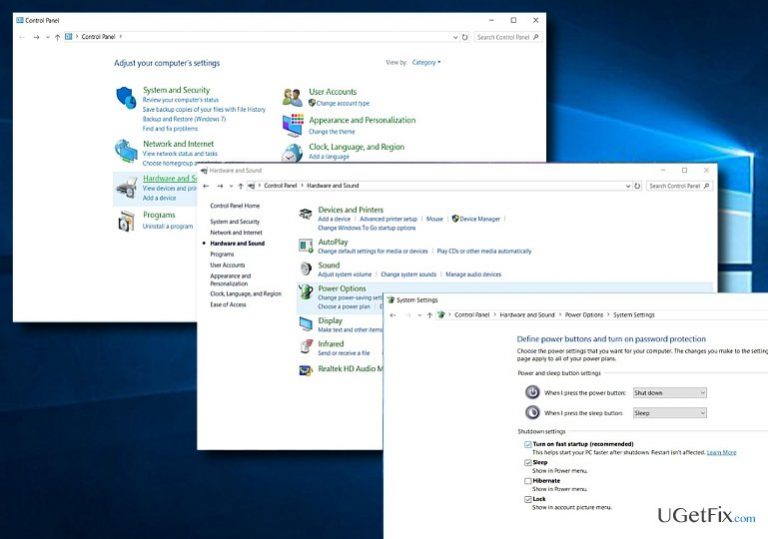
What causes How to Enable and Disable Fast Startup Mode on Windows 10?
- Problems resuming from sleep mode
- Incompatibility with encrypted disk images
- Interference with system updates
- Increased virus activity risk
Repairs Windows system files, removes malware, and restores a clean OS state — without reinstalling.
Does this mode really reduce the time of Windows startup? How can I enable it?
Fast Startup function, also called as Hybrid Boot or Hybrid Shutdown, was introduced already on Windows 8 OS. It allows users to shorten the time of startup. In other words, this feature compresses the entire startup process into one specific hiberfil.sys file. With the help of this command, it reduces system initialization procedure. The latter needs to fully load drivers and services to allow the user to use all system features. In the case of Fast Startup or Hybrid Boot, the file is read which results in faster drivers initialization processes. In overall, if your computer requires several minutes to load, when Fast Startup is enabled, the process takes up to one or two minutes. In short, Fast Startup reloads Windows core drivers and previously save system state faster. It refreshes system files ad RAM. However, there are also drawbacks to this function. In some devices, this function may cause problems resuming the computer from the sleep mode. Certainly, it may be the result of several coinciding factors. Secondly, this function may not fully compatible with encrypted disk images. Especially, it applies users who use password encrypting programs. Mounting encrypted drivers before rebooting the system may result in automatic remounting after the restart. Thirdly, this function may interfere with performing system updates thoroughly. This feature is crucial taking into account not only the efficiency of the system but virus activity as well. Thus, you should weigh pros and cons before enabling this feature. Here, we present a few options how to enable/disable Fast Startup:
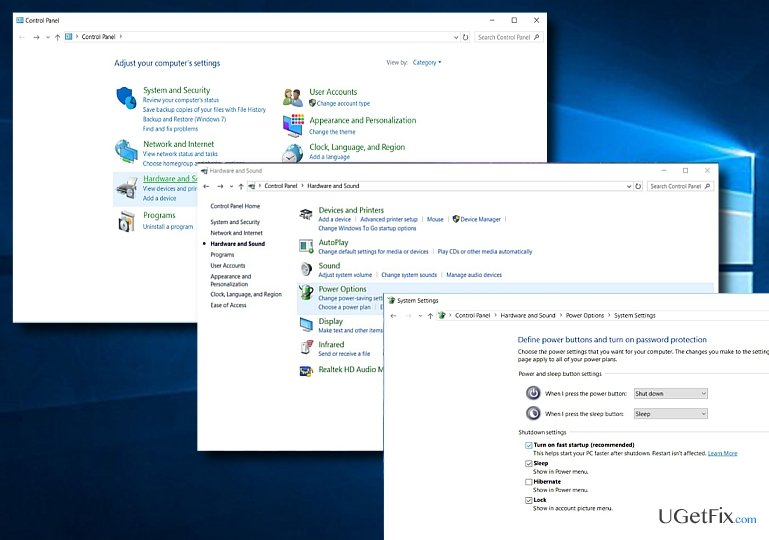
Option 1. Turn on or off Fast Startup using Control Panel
- Click Start button and type Hardware and Sound.
- Choose Power Options.
- Select Choose what the power buttons do.
- Choose Change settings that are currently unavailable.
- Check whether Turn on fast startup button is pre-checked. You can disable this function the same way by removing the checkmark. After doing that, tick Save Changes.
Option 2. Enable the function with Command Prompt
This option is applicable for those users who do not see this function y default.
- Click Windows+R. In the prompt window, type cmd. You can also run this program otherwise. Click Start button and type Command Prompt. Right-click on it and choose Run s administrator.
- Once the program launches type in powercfg /hibernate on.
- Then repeat the steps described in the first mode.
Rarely, some types of malware might meddle with the hibernation mode, so users might notice odd error messages preventing them from changing boot settings. In that case, you may need to run [d1].
Bottom line
To enable or disable Fast Startup, you can use the Control Panel or Command Prompt. If you experience issues after enabling it, consider disabling the feature or troubleshooting further. If none of these solutions work, consult additional resources or seek professional assistance.
Frequently asked questions
To enable Fast Startup Mode on Windows 10, go to Control Panel, select Power Options, click on 'Choose what the power buttons do,' and then check 'Turn on fast startup' under 'Shutdown settings.' Remember to save your changes.
If Fast Startup is causing problems on Windows 10, you can disable it by following the same steps to Power Options and unchecking 'Turn on fast startup' in the Shutdown settings.
Yes, you can use Fast Startup on Windows 11 by navigating to Settings, then System, followed by Power & battery, and accessing the Additional power settings to enable it in the same way as Windows 10.




Report an issue
What's wrong with this guide? We review every report and update or remove content.
Report received — thank you. We'll review and fix it.
You need a free account to submit a report.
Be the first to comment