How to recover
The encrypted files by Thor ransomware virus
from Windows
Recover your encrypted files from the Thor ransomware virus on Windows 10 or Windows 11. Expert-tested solutions for fast recovery with zero traces left.

What leads to How to recover the encrypted files by Thor ransomware virus?
- Infection by Thor ransomware
- Files encrypted with .thor extension
- Use of specific encryption algorithm
- Successful infiltration techniques
- Updates with new file extensions
Repairs Windows system files, removes malware, and restores a clean OS state — without reinstalling.
I got infected with this Thor ransomware a few days ago. I finally managed to get rid of it but my files are still inaccessible, and they all have .thor extensions. What would you suggest for recovery of the files?
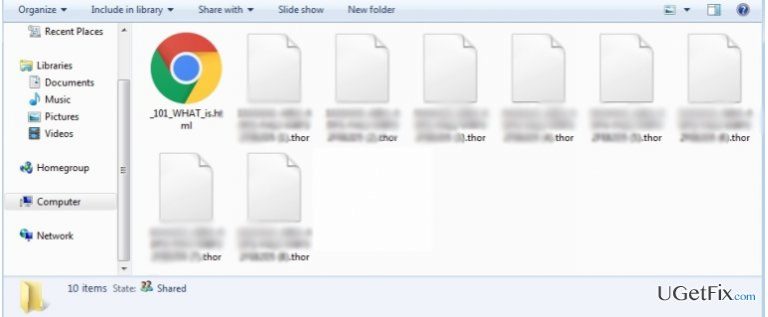
The files bearing .thor extension are the primary sign that your computer is infected with Thor ransomware. This is the new version of Locky virus, a well-known computer threat, capable of corrupting thousands of devices and access personal files. Later on, it encrypts the files using a specific algorithm. As a result, users only see their documents in the locked form. Due to elaborate structure and successful infiltration techniques, the threat has maintained its dominating position for a couple of months already. The updates of the virus often come in the form of newly appended extensions. The original version of the ransomware included .locky, a couple of months .odin file extension version was launched, and now Thor ransomware came into daylight.
One of the key strengths of this threat is that it is able to encode more than 400 extensions. Even if they are placed in C or D local disk, they might not escape the menace of this threat. The _WHAT_IS.txt and _WHAT_IS.bmp files instruct victims to access Tor browser to remit the payment. If you did not follow the story of Locky evolution, you might have missed the fact that it managed to collect millions of dollars revenue from its victims. Though Thor only asks for 0,50 BTC which equals to 330 USD, it is unwise to expect the retrieval of the files even after transferring the money. Instead, use one of the options to decrypt the data until virus researchers come up with the free decrypter.
Option 1. Opting for Data Recovery Pro
This tool is designed to recover the files after a system crash. However, it might come in handy recovering the files affected by Thor as well.
- Download [rev id=”Data Recovery Pro”] and run the setup file.
- Follow the instructions of the wizard.
- Scan the system with it so that the app could locate the corrupted files.
- Choose the detected files and click Recover button.
Option 2. What is Windows Previous Versions feature and how beneficial is it?
This utility is practical only when System Restore function is activated. However, this method takes up more time as you have to go through each of the files separately.
- Locate the affected file right-click on it.
- Choose Properties and go to Previous Versions tab.
- Find the available copies of the file in Folder versions. Opt for the preferred version and click Restore.
Option 3. The usefulness of ShadowExplorer
This tool is another alternative to restore your files. Users, who have been infected with .odin file virus reported that the application helped them recover some of their files. While the original private key is the most suitable solution to data retrieval, the latter tool still provides many chances to recover a significant portion of valuable data. The main versions of Locky are not reported for deleting shadow volume copies which are automatically created by the system, however, keep in mind that there might always be an exception with Thor virus. In any case, try recovering the files by running ShadowExplorer.
- Download and run the program.
- Launch it and select the folder you want to retrieve the files from.
- Click on it and choose Export.
Bottom line
To recover files affected by Thor ransomware, you can use tools like Data Recovery Pro, which is designed to recover files after a system crash. It may also help in retrieving files affected by this ransomware. If these options do not work, wait for virus researchers to develop a free decrypter.
Frequently asked questions
Immediately isolate the infected device from the network to prevent further encryption, then assess whether you have backups available on an external drive or cloud service for recovery.
While traditional file recovery software may not work on encrypted files, you can try using specialized decryption tools if available, but success is not guaranteed.
In some cases, security researchers may release decryption tools, so keep an eye on cybersecurity forums or websites, but there's no sure way to recover files without a backup.




Report an issue
What's wrong with this guide? We review every report and update or remove content.
Report received — thank you. We'll review and fix it.
You need a free account to submit a report.
Be the first to comment