How to fix
Windows activation fails after hardware change
on Windows
Resolve Windows 10 or 11 activation issues after hardware changes effortlessly. Trust our expert-tested solutions for quick fixes and peace of mind.

![[Fix] Windows activation fails after hardware change](https://ugetfix.com/wp-content/uploads/articles/askit/fix-windows-activation-fails-after-hardware-change_en-768x432.jpg)
What causes [Fix] Windows activation fails after hardware change?
- OEM license tied to the motherboard
- Previous edition of Windows does not match
- Hardware changes influence Windows license
- Using a Windows license without proper authorization
Repairs Windows system files, removes malware, and restores a clean OS state — without reinstalling.
Recently, I installed a new motherboard on my computer but have been unable to activate Windows ever since. When running through troubleshooting steps, it displays the previous edition of Windows that I had before - both are labeled as 10 Pro - however, an alert claims that these do not match. I can't recall the original key, so I am at a loss for what to do next.
Windows licensing refers to the legal agreement between Microsoft and the user of the Windows operating system. The license dictates how the software can be used and distributed and typically comes in the form of a product key or digital license. Users typically acquire it along with a purchased laptop or a desktop computer, which is the most convenient option.
However, there are several types of Windows licenses available, including:
- OEM (Original Equipment Manufacturer) licenses, which are typically bundled with new computers and can only be used on that specific computer.
- Retail licenses can be purchased separately and can be transferred to a different computer.
- Volume licensing is intended for businesses and organizations that need to license multiple copies of Windows.
- Subscription-based licensing, such as Windows as a Service, allows users to pay for Windows monthly or annually and receive updates and support during that time.
It is important to note that using a Windows license without proper authorization, such as using a cracked or pirated key, is illegal and can lead to software malfunctions and security vulnerabilities.
Hardware change is a common practice among desktop users - it gets outdated, and new, better specifications become available. Unfortunately, these changes can sometimes influence the Windows license, and many users said their operating systems suddenly stopped being genuine after, which can be extremely frustrating
In most cases, Windows activation fails after hardware change because most regular users utilize an OEM license, which becomes unavailable, mainly because it is permanently tied to the motherboard. In case of other hardware changes, issues with license activation lie elsewhere.
Below we provide several steps that should help you aid after Windows activation fails after a hardware change. Before moving on to manual steps, we recommend checking the system with [d1] PC repair tool, which can check whether these issues are not related to corrupted system components or similar issues.
1. Check if you have OEM or FPP license
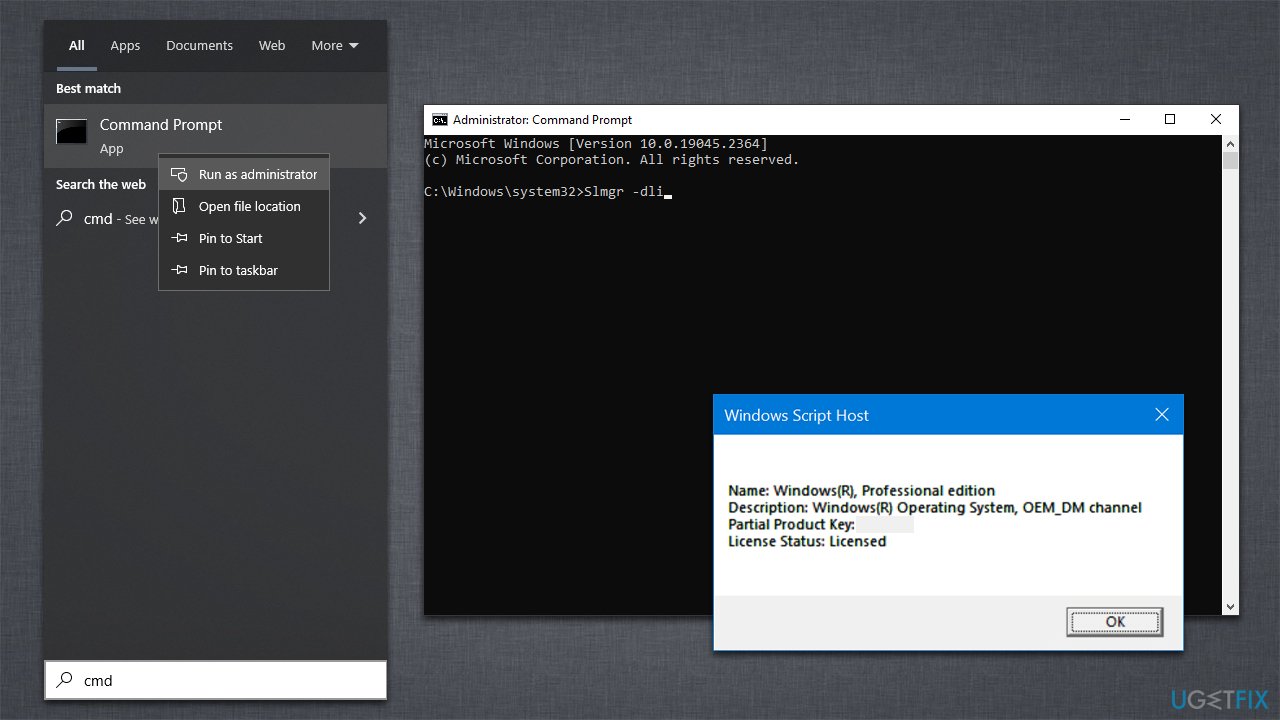
As mentioned, if you have an OEM license, it is tied to the motherboard. In case you changed the motherboard, and you were using OEM, you would have to purchase a new Windows license. Here's how to check:
- Type cmd in Windows search.
- Right-click on Command Prompt and pick Run as administrator.
- When User Account Control shows up, click Yes.
- Copy and paste the following command, pressing Enter after:
Slmgr –dli - This should bring up a pop-up window with all the necessary licensing information.
- Check the Description section.
2. Use the license key
When a Windows key is available to you, you should proceed with the following steps to activate it:
- Open Command Prompt as administrator as explained above.
- In the Command Prompt window, copy and paste the following command and press Enter:
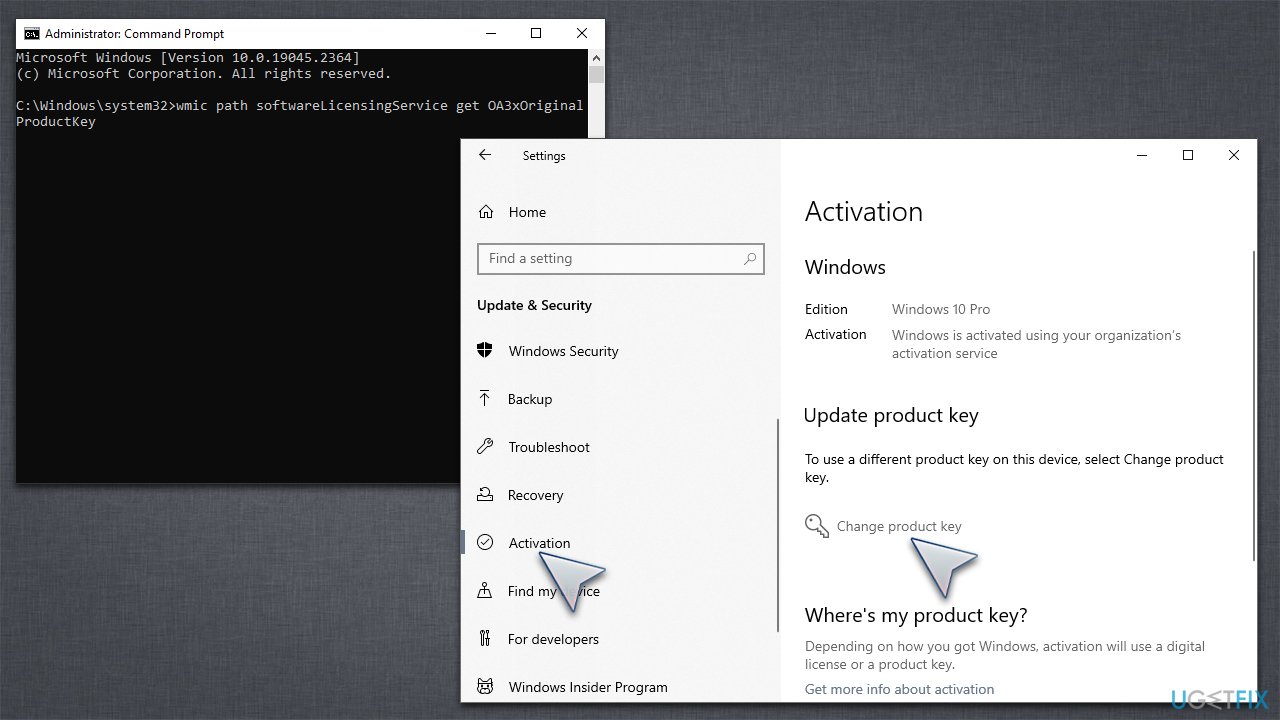
wmic path softwareLicensingService get OA3xOriginalProductKey - This should show you the product key, so copy it, then close down Command Prompt.
- Next, right-click on Start and pick Settings.
- Go to Update & Security > Activation.
- Under Update product key, select Change product key.
- Enter the product key and click Next.
3. Try activating via Command Prompt
While the solution described before should be sufficient to activate Windows, it does not work for everyone. In such a case, try activating via Command Prompt:
- Open Command Prompt as administrator.
- In the new window, copy and paste the following, replacing "License key" with your personal key:
slmgr /ipk License Key
slmgr /ato - Press Enter.
- Restart your PC.
If you are using a digital license but aren't sure what it is, proceed with the following commands in Command Prompt instead:
- slmgr /xpr
- Press Enter.
4. Run the troubleshooter
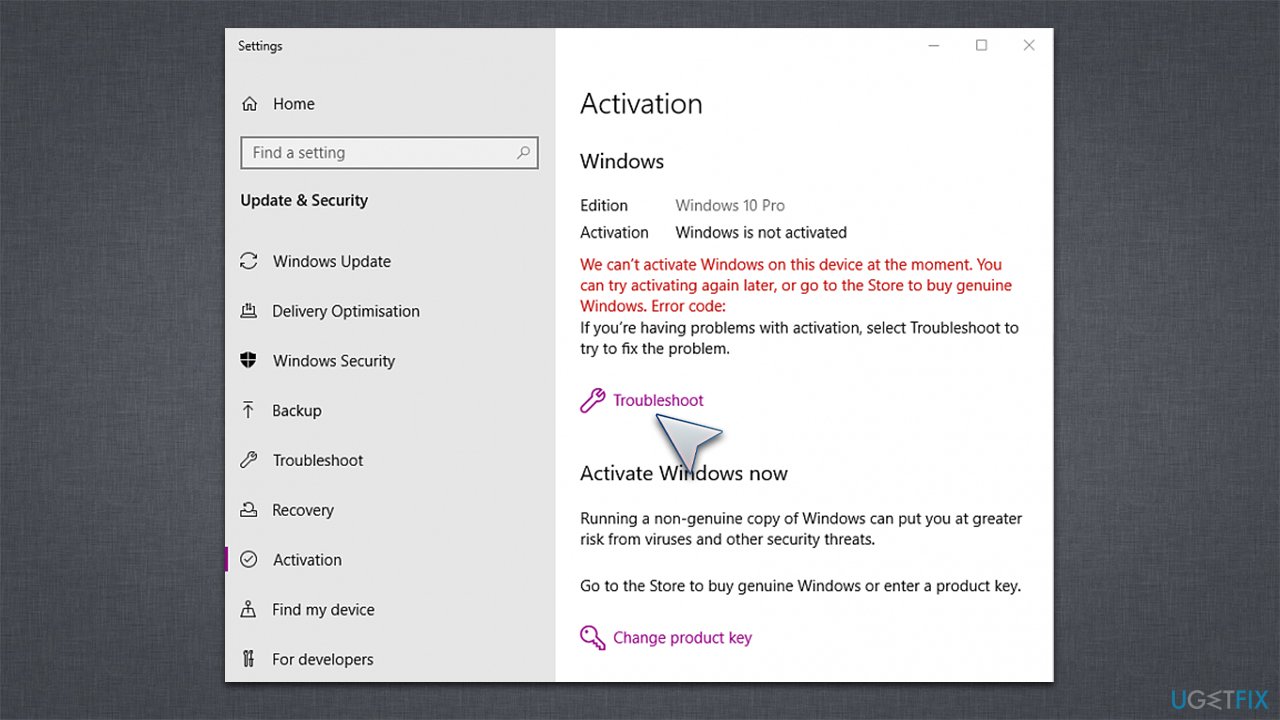
- Right-click on Start and select Settings.
- Go to Update & Security section.
- On the left side of the window, pick Activation.
- On the right side, you should see the error message, and below it - Troubleshoot.
- Select Troubleshoot, then select I changed hardware on this device recently, and click Next.
- Enter your Microsoft Account details.
- From all the devices your account is linked to, select the computer you are using, mark the This is the device I’m using right now option, and click Activate.
Bottom line
To fix Windows activation issues after a hardware change, users can try reactivating Windows using a digital license or product key, check for any mismatches in the Windows edition, or contact Microsoft support for assistance. If none of these steps work, consider reverting the hardware changes or purchasing a new license.
Frequently asked questions
You can try reactivating Windows by going to Settings > Update & Security > Activation and clicking on 'Troubleshoot'. If that doesn't work, you may need to contact Microsoft support to assist with the hardware change verification.
Go to Settings > System > About and look for the 'Product key and activation' section to see if your Windows 11 is activated. If it shows as not activated, you may need to follow the troubleshooting steps.
Yes, you can use the same product key if your Windows 10 or Windows 11 license is linked to your Microsoft account; however, you may need to reactivate it through the activation settings.



Report an issue
What's wrong with this guide? We review every report and update or remove content.
Report received — thank you. We'll review and fix it.
You need a free account to submit a report.
Be the first to comment