How to fix
Keyboard writing in all caps
on Windows
Resolve your keyboard writing in all caps on Windows 10 or 11 effortlessly. Enjoy expert-tested solutions that restore typing functionality in minutes.


What causes How to fix keyboard writing in all caps in Windows?
- Software glitch
- Incorrect settings in language or keyboard layout
- Sticky Keys feature enabled
- Filter Keys feature enabled
- Malware interference
Repairs Windows system files, removes malware, and restores a clean OS state — without reinstalling.
I have a bizarre problem with my keyboard - it types in all Caps when Caps Lock is off, and vice versa. I am not sure how of why this happened, but I'd like to have this resolved. I'm using Windows.
Writing on a keyboard has many nuances and features, and one of the most notable of these is the Caps Lock key. Located on the left side of your keyboard, it’s a toggle key that switches the input of typed letters between uppercase (when activated) and lowercase (when deactivated). This key proves to be essential for various tasks, such as writing headlines, acronyms, or emphasizing certain words. It's a handy feature when the need for typing in all capitals arises.
However, despite the usefulness of the Caps Lock key, some Windows users encounter a peculiar problem. Their keyboards start typing in all caps even though the Caps Lock is off. As a result, they find themselves trapped, typing in capital letters only. This issue can be particularly frustrating, especially when it impedes communication or creates formatting errors in documents.
In some other unusual scenarios, users have reported only being able to type in lowercase letters when the Caps Lock is on - a clear departure from its designed functionality. But why does this happen?
This irregularity could stem from various issues. It might be a simple software glitch, which can often be solved by rebooting the computer or updating the keyboard drivers. Alternatively, it could be due to incorrect settings in the language or keyboard layout, an accessibility feature like Sticky or Filter Keys being inadvertently enabled, or even malware interfering with normal keyboard operations.
A detailed step-by-step guide to troubleshooting and resolving these problems is available below. It will walk you through several procedures, including checking your keyboard settings, updating your drivers, and examining potential issues with accessibility settings.
Despite this, it's always a good idea to consider an all-encompassing approach when dealing with such problems. For instance, running a scan with the [d1] PC repair tool can potentially rectify any underlying Windows issues that might be causing your keyboard to type in all caps. This software scans, detects, and rectifies system irregularities, contributing to an overall healthier computer environment.
Fix 1. Restart your computer
Often, a simple system restart can fix many software glitches by resetting the current state of the software.
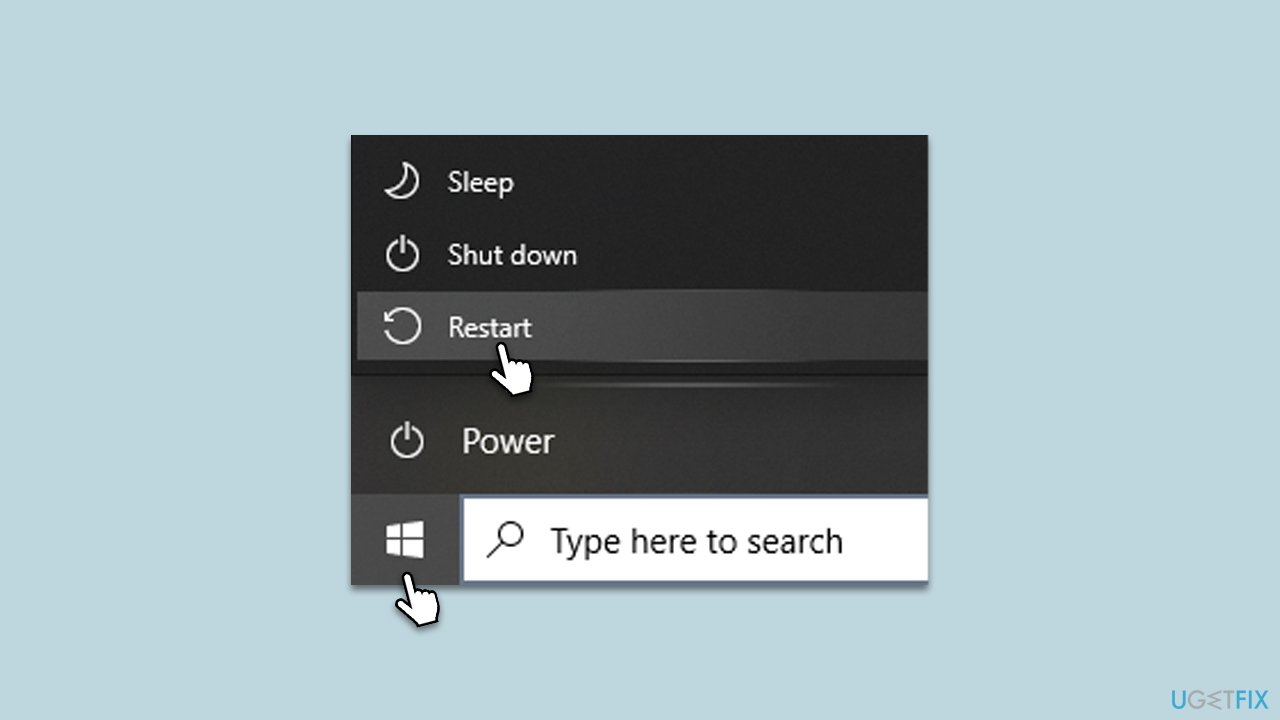
- Save any open files and close all programs.
- Click on the Windows icon in the lower-left corner of the screen.
- Click on the Power icon, then select "Restart."
- Wait for your computer to shut down and restart.
Fix 2. Check your keyboard
Sometimes, the Caps Lock key can physically get stuck or become unresponsive. Checking the key can help rule out any hardware issues.
- Check if the Caps Lock key is physically stuck. If it is, gently remove and reinsert it.
- Test the Caps Lock key to see if it's responsive when pressed.
- If possible, try using a different keyboard to see if the problem persists.
Fix 3. Update keyboard drivers
Outdated or corrupt keyboard drivers can cause functionality issues. Updating them can solve the problem.
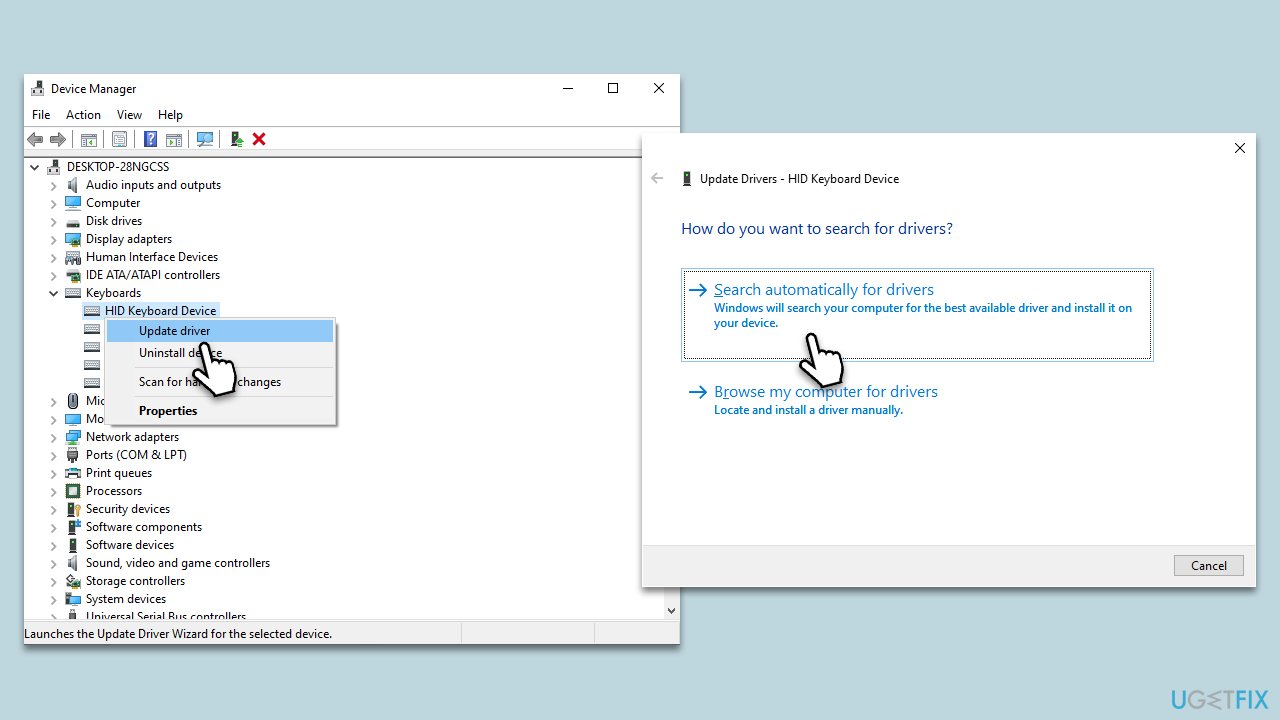
- Open Device Manager by typing it into the Windows search bar.
- Expand the "Keyboards" section.
- Right-click on your keyboard and select "Update driver."
- Follow the prompts and reboot your computer once completed.
Fix 4. Check language settings
Incorrect language settings can cause typing issues. Verifying and adjusting these settings can fix the problem.
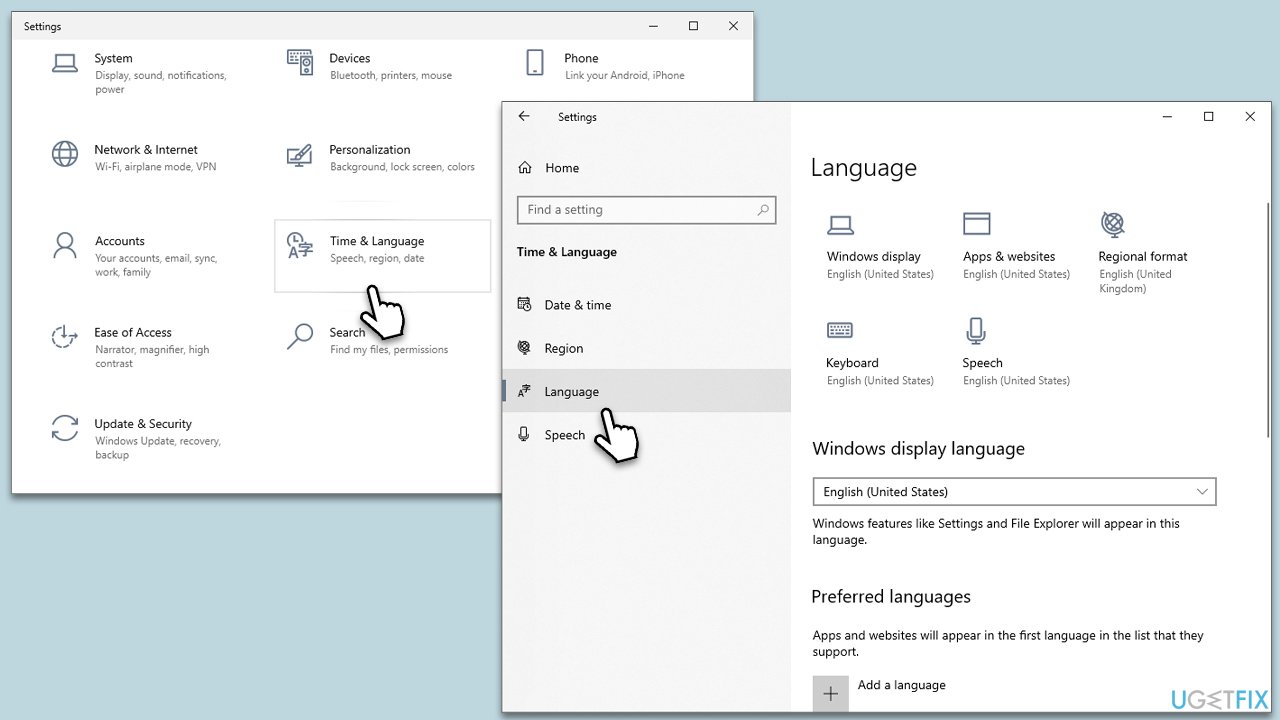
- Open Settings by pressing the Windows key + I.
- Click on "Time & Language," then "Language."
- Check if the correct language is set. If not, add your preferred language.
- Check your keyboard layout under the same language settings. If incorrect, select your preferred layout.
Fix 5. Check your text formatting [Microsoft Word]
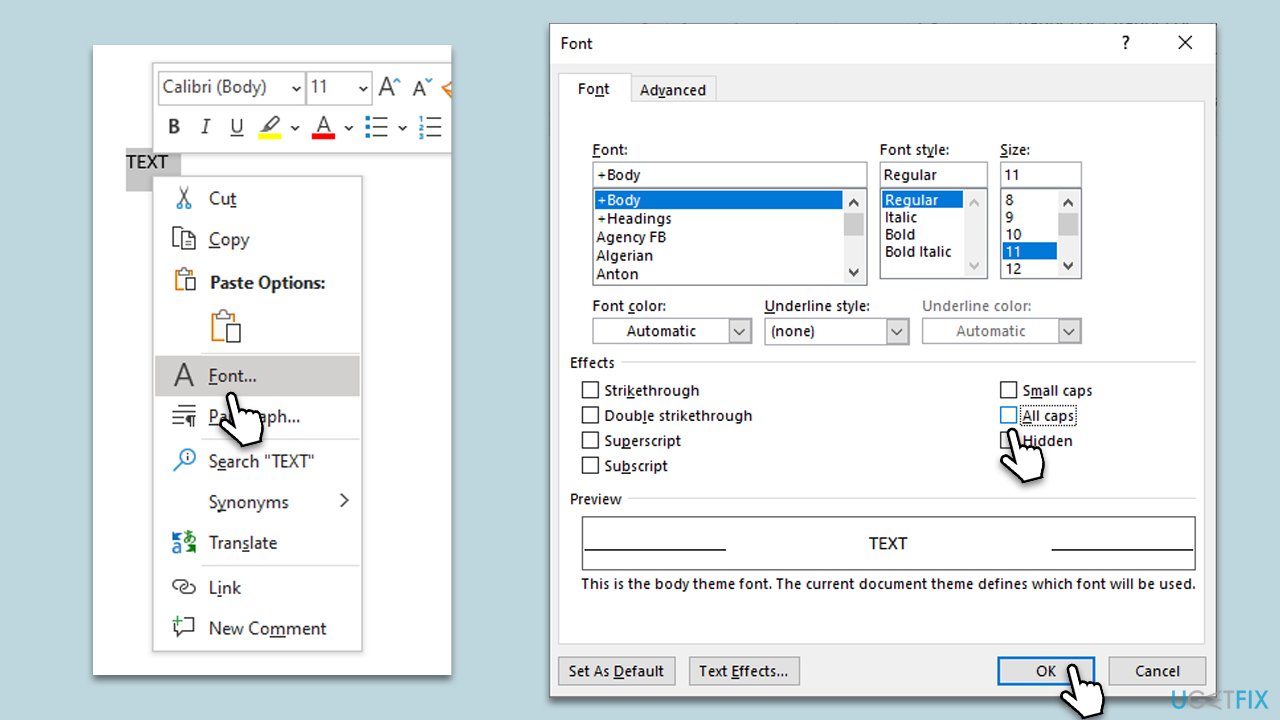
Some users said that they have issues with all-caps in Microsoft Word only. If that's the case, you should disable the All caps option as follows:
- Highlight the text that's appearing in all caps.
- Right-click on the highlighted text and select "Font."
- In the Font dialog box, look for the "All Caps" checkbox under the "Effects" section.
- If the box is checked, uncheck it and click "OK."
- The highlighted text should now revert to its original case.
You should also check your Styles setting (which can result in keyboard typing in all caps as well) as follows:
- Highlight the text that's appearing in all caps.
- Navigate to the "Home" tab in the Ribbon, and locate the "Styles" group.
- Click on the arrow in the bottom right corner of the "Styles" group to open the Styles pane.
- In the Styles pane, hover over the applied style to the highlighted text, right-click, and select "Modify" from the dropdown menu.
- In the "Modify Style" dialog box, click on "Format" and then select "Font."
- In the Font dialog box, ensure that the "All Caps" checkbox under the "Effects" section is unchecked, then click "OK" twice.
- The text should now revert to its original case.
Bottom line
To resolve the issue of the keyboard typing in all caps when Caps Lock is off, you can reboot your computer, update your keyboard drivers, and check your accessibility settings. If these steps do not work, consider running a scan with a PC repair tool to identify any underlying problems.
Frequently asked questions
Your keyboard may be stuck in Caps Lock mode, or there could be a malfunction with the keyboard settings. Check if the Caps Lock key is activated or try toggling it off.
To resolve this issue, ensure that the 'Sticky Keys' feature is turned off in the Accessibility settings, as it can cause unintended typing behavior.
If the problem persists, try updating your keyboard driver or testing with another keyboard to determine if the issue is hardware-related.




Report an issue
What's wrong with this guide? We review every report and update or remove content.
Report received — thank you. We'll review and fix it.
You need a free account to submit a report.
Be the first to comment