How to fix
MSVCR100.dll missing on not found error
on Windows
Fix the MSVCR100.dll missing error in Windows 10 or 11 quickly and easily. Expert-tested solutions ensure your system runs smoothly again, fixed in minu…

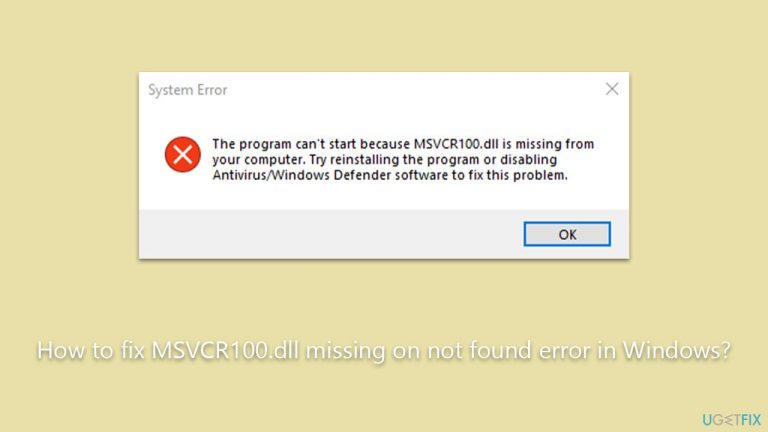
What causes How to fix MSVCR100.dll missing on not found error in Windows?
- Accidental deletion of the MSVCR100.dll file
- Corruption of the MSVCR100.dll file
- Incorrect installation of the MSVCR100.dll file
- Compatibility issues with specific applications requiring a different version of the file
Repairs Windows system files, removes malware, and restores a clean OS state — without reinstalling.
I was trying to launch a game I've recently installed, only to get an error message which claims that MSVCR100.dll is missing. How do I fix this?
Many Windows users may encounter an error message stating that the MSVCR100.dll file is missing or not found. This error typically appears when trying to launch a game, an application, or a certain part of the operating system that requires this DLL file to function properly. When the system is unable to locate the required file or fails to access it due to it being corrupt, this error is triggered, disrupting the normal operation of your software or game.
MSVCR100.dll is an integral component of the Microsoft Visual C++ library, an assembly of pre-written code that software developers can call upon to simplify their coding tasks. "MSVCR" stands for Microsoft Visual C Runtime, while "100" corresponds to the version number, specifically the 2010 version of Visual C++. This DLL file is needed to execute programs written with this particular version of Visual C++.
The cause of the MSVCR100.dll missing or not found error can be multifaceted. The file may have been accidentally deleted, become corrupted, or might not have been installed correctly in the first place. Additionally, some applications may require a specific version of the file, which could lead to compatibility issues if the right version isn't available on your system.
If you're experiencing this error, it's important not to download the DLL file from a website other than Microsoft's, as this can pose a security risk. Instead, the error can typically be resolved by reinstalling the Microsoft Visual C++ Redistributable package, which includes the necessary DLL files.
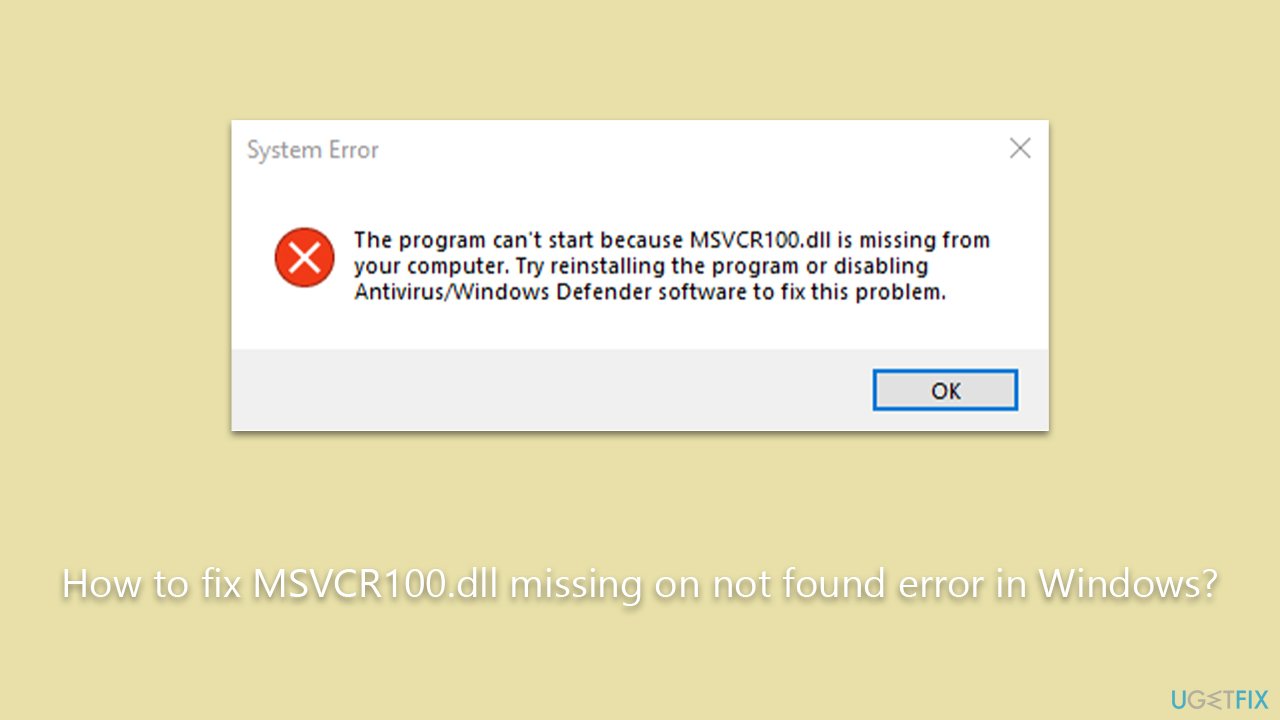
Details on how to correctly solve this issue are outlined below. Following these instructions should help restore the normal function of your software or game, thus resolving the error. Please remember that, as with any system-level operation, caution should be exercised to prevent any potential damage to your system. Thus, we advise running an automatic PC repair tool [d1] instead.
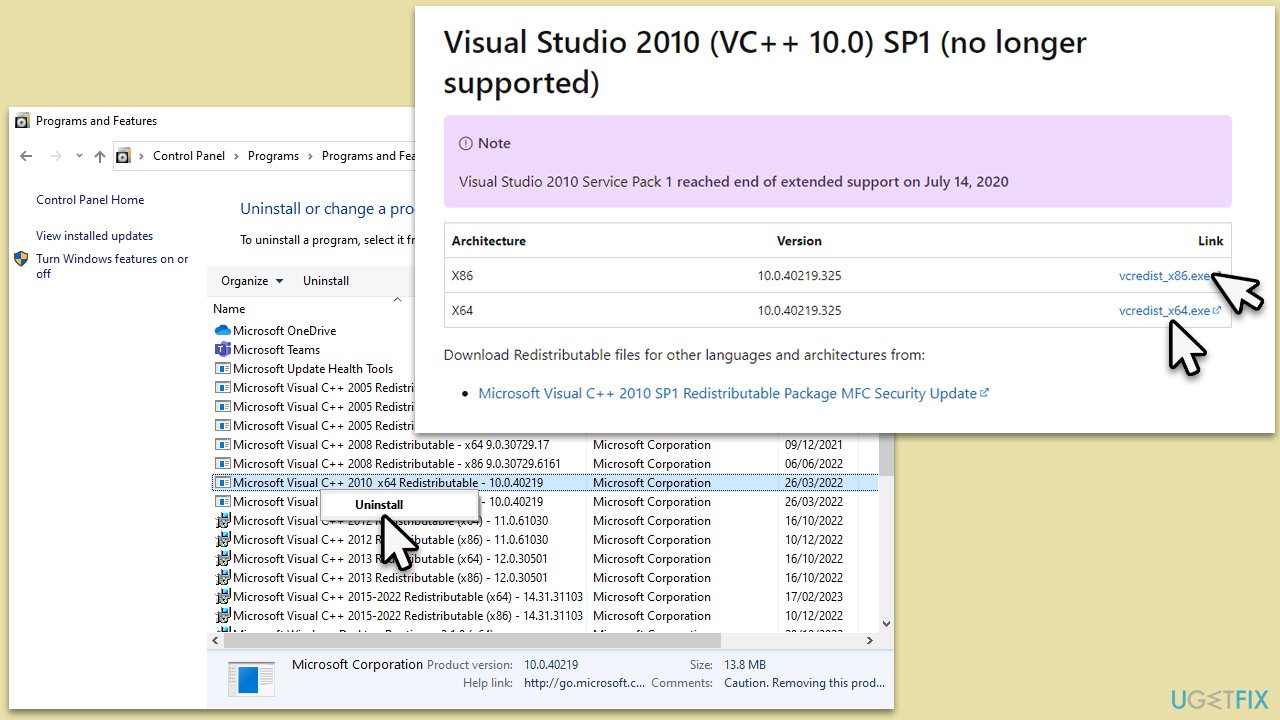
Fix 1. Reinstall the Microsoft Visual C++ Redistributable
If the MSVCR100.dll file is missing or corrupted, reinstalling the Microsoft Visual C++ Redistributable can help, as this package includes the required DLL files.
- Type Control Panel in Windows search and press Enter.
- Go to Programs > Uninstall a program.
- Find the Visual C++ 2010 version and uninstall it.
- Open your browser and go to the Microsoft Visual C++ download page.
- Select the correct package for your system (x64 for 64-bit systems and x86 for 32-bit systems).
- Download and install the package.
- Restart your computer to complete the installation.
Fix 2. Run SFC and DISM
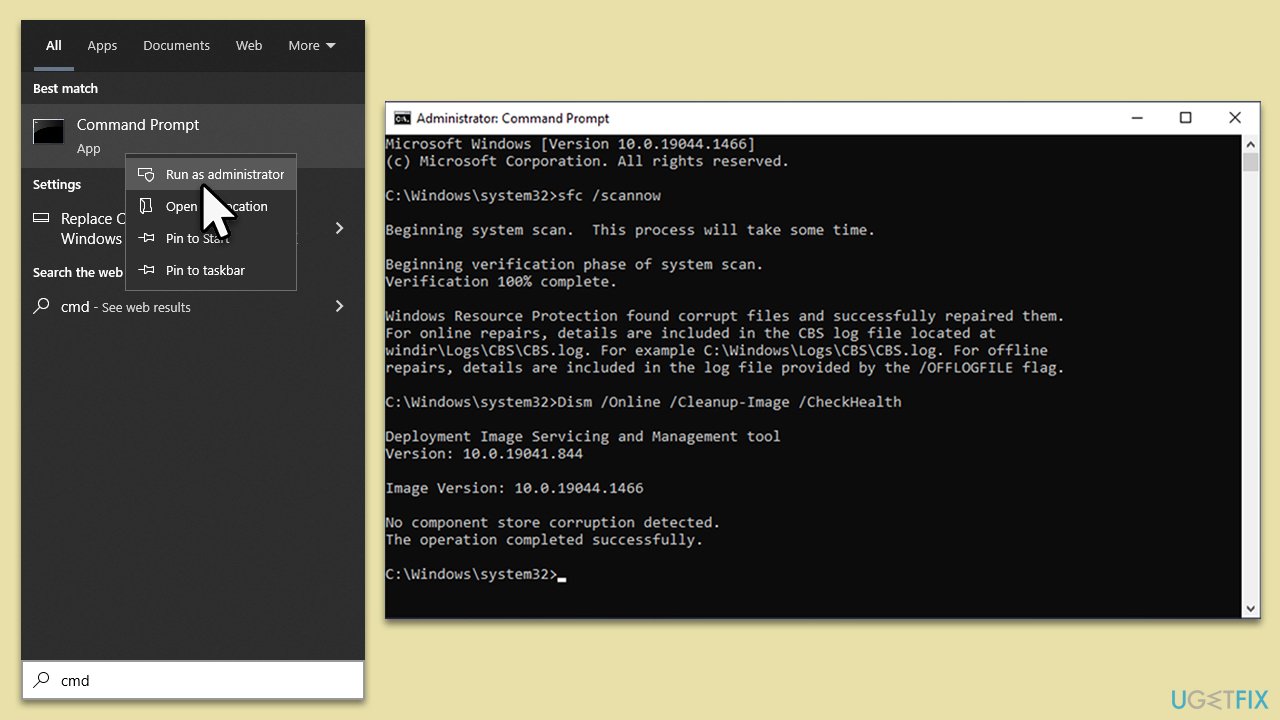
A System File Checker scan can detect and repair corrupted or missing system files. If any Windows image files are damaged, DISM may be able to repair them.
- Type cmd in Windows search.
- Right-click on Command Prompt and pick Run as administrator.
- When User Account Control shows up, click Yes.
- Use the following command lines, pressing Enter after each:
sfc /scannow - The System File Checker will now scan your system for any corrupted or missing files and try to repair them.
- After the scan is done, copy the following commands and press Enter:
DISM /Online /Cleanup-Image /CheckHealth
DISM /Online /Cleanup-Image /ScanHealth
DISM /Online /Cleanup-Image /RestoreHealth - Once the process completes, restart your computer.
Fix 3. Update your system
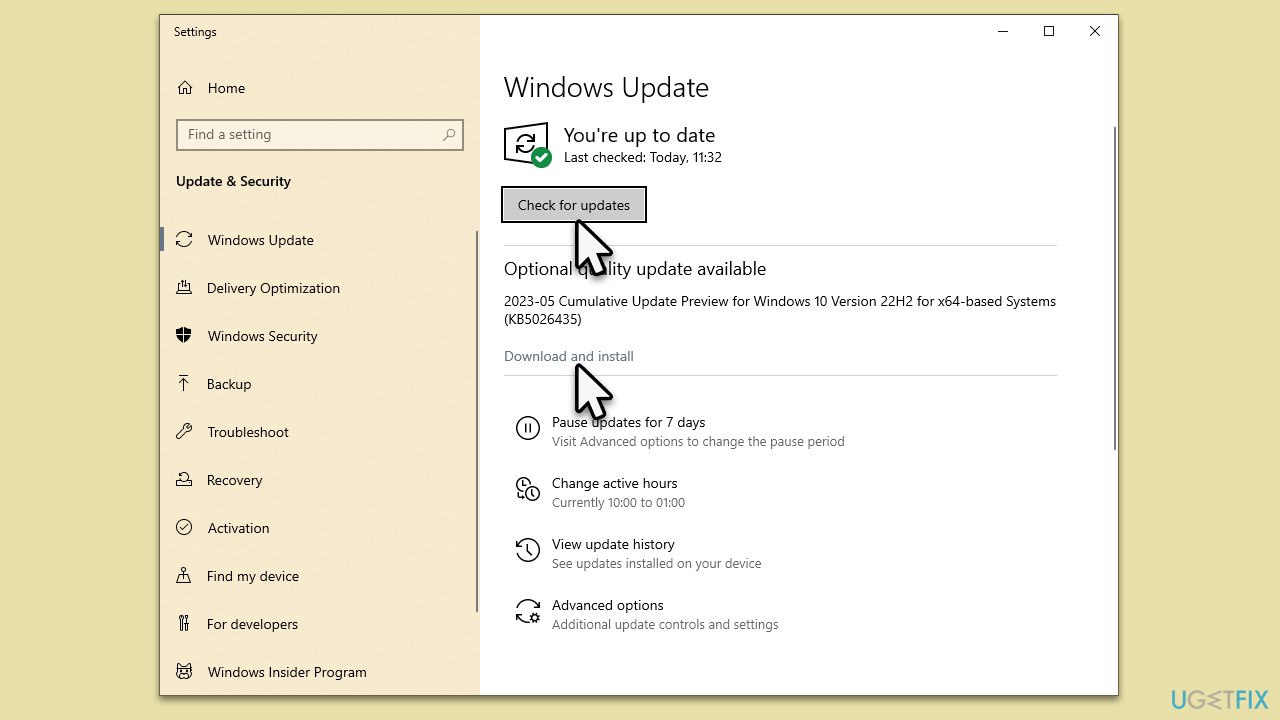
Updating your Windows operating system may resolve this issue, as updates often include bug fixes and improvements.
- Type Updates in Windows search and hit Enter.
- Click on Check for Updates.
- If updates are available, install them (don't forget optional updates).
- Restart your computer.
Fix 4. Reinstall the software
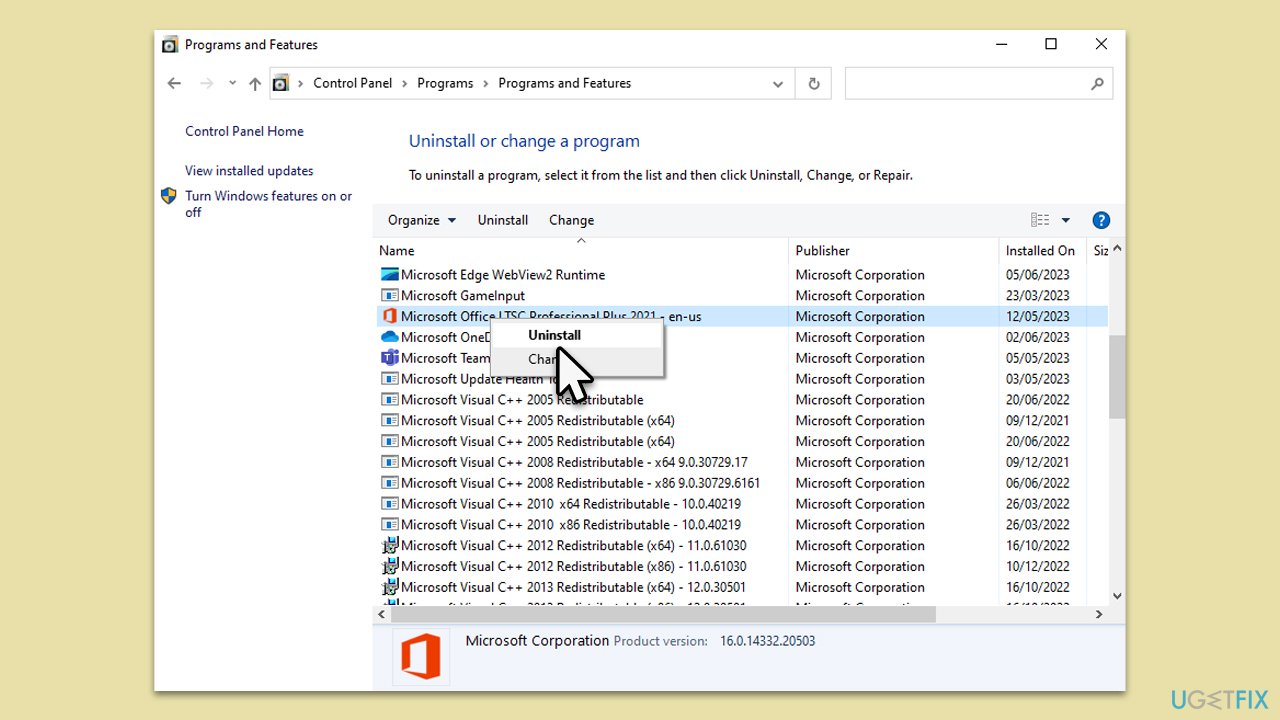
Reinstalling the software that is giving the error message can also fix the problem, as this process should also reinstall the required DLL file.
- Type Control Panel in Windows search and press Enter.
- Go to Programs > Uninstall a program.
- Find the associated app, right-click, and select Uninstall.
- Restart your computer.
- Download the latest version of the software from the official website and install it.
- Restart your computer once again.
Fix 5. Run a virus scan
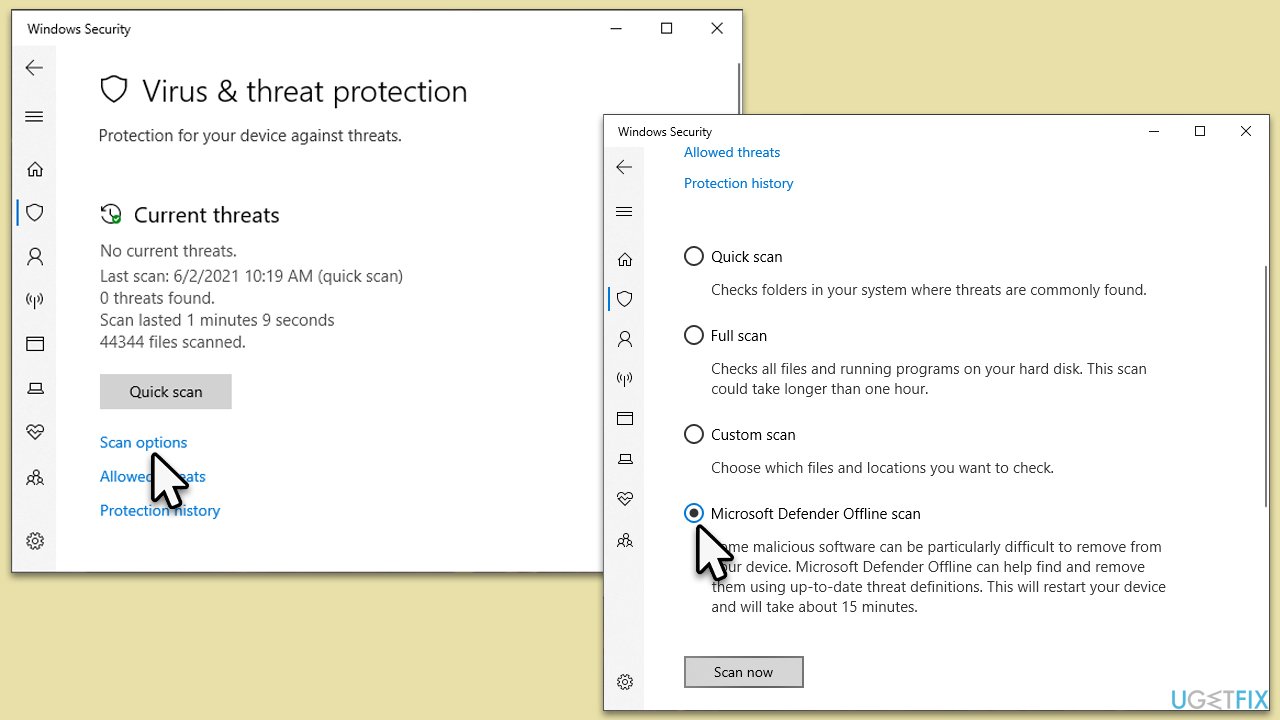
Some viruses and malware can cause DLL errors by damaging or deleting these files. Running a virus scan can help identify and remove any harmful software. You can employ Microsoft Safety Scanner or use the native Windows Defender:
- Type Windows Security in the Windows search bar and hit Enter.
- Select Virus & threat protection.
- Pick Scan options.
- Choose Microsoft Defender Offline scan and click Scan now.
- Your computer will immediately reboot and begin a deep scan.
Fix 6. Use System Restore
If the error has started appearing recently, you may use Windows System Restore to return your system files and programs to a time when everything was working fine.
- Type in Create a Restore point in Windows search and hit Enter.
- Go to the System Protection tab and pick System restore.
- Click Next.
- Click Show more restore points (if available).
- Pick the time before the problem occurred and click Next.
- Follow the prompts to finish the process.
Fix 7. Perform a clean installation of Windows
This is a last-resort solution. If nothing else works and the MSVCR100.dll error persists, you might consider a clean installation of Windows. Please note that this method will delete all data on your system drive, so make sure to back up any important files before proceeding.
Create Windows ISO
- Download Windows 11 Installation media from the official Microsoft website. [Windows 10 version]
- Double-click the MediaCreationTool.exe file to launch it.
- When UAC shows up, click Yes.
- Accept license terms.
- Select Language and Edition (make sure it matches the one you have currently installed) or simply mark the Use the recommended options for this PC and click Next).
- Select the ISO file and click Next.
- Pick the location for your ISO file and wait till all the needed files are downloaded, then click Finish.
Reinstall Windows
- With the USB connected, access BIOS (typically by pressing F2, F8, F12, Del, or another key several times) and go to the Boot menu.
- Here, select the Boot priority option and set it to USB.
- Restart the computer.
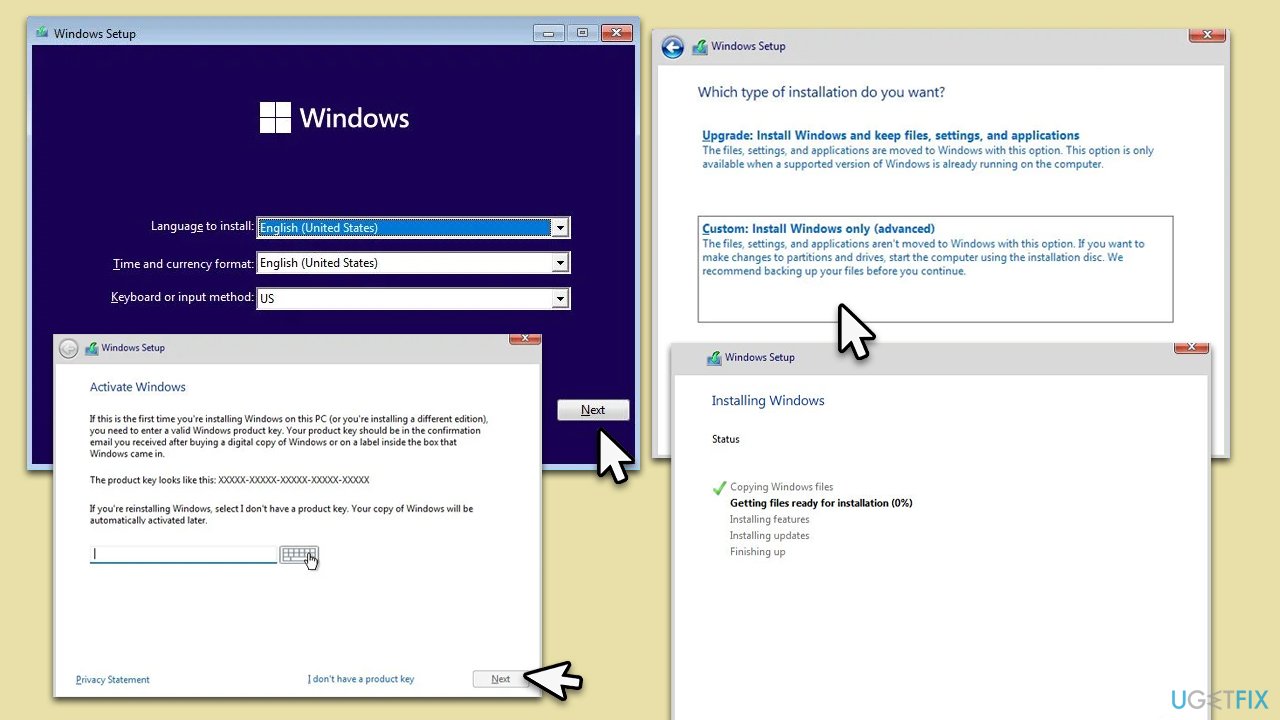
- When the system boots, you should see the Install now option - click it.
- Pick all the preferences and click Next.
- Skip Windows activation for now - select I don't have a product key.
- Select the correct operating system version.
- Pick an option to remove everything and follow the prompts to finish the process.
Bottom line
To fix the MSVCR100.dll missing error, you can reinstall the Microsoft Visual C++ Redistributable package, which includes the necessary DLL files. It is important not to download the DLL from unofficial sources due to security risks. If these solutions do not work, consider using an automatic PC repair tool.
Frequently asked questions
MSVCR100.dll is a Microsoft C Runtime Library file required by many applications to run properly on Windows 10 and Windows 11. If this file is missing, it can cause programs to fail to launch or function correctly.
To fix the MSVCR100.dll error, download the Microsoft Visual C++ 2010 Redistributable Package from the official Microsoft website and install it on your Windows 10 or Windows 11 system.
If reinstalling does not work, try running the System File Checker tool by executing 'sfc /scannow' in the Command Prompt to repair any corrupted system files on your Windows 10 or Windows 11.




Report an issue
What's wrong with this guide? We review every report and update or remove content.
Report received — thank you. We'll review and fix it.
You need a free account to submit a report.
Be the first to comment