How to fix
OBS Studio not recording audio
on Windows
Resolve OBS Studio audio recording issues on Windows 10 or 11 with our expert-tested solutions. Get back to capturing perfect sound in minutes!

What causes How to fix OBS Studio not recording audio in Windows?
- Incorrect audio device settings
- Out-of-date audio drivers
- Microphone access permissions
- OBS Studio settings misconfiguration
- Underlying Windows operating system malfunctions
Repairs Windows system files, removes malware, and restores a clean OS state — without reinstalling.
Hello. I tried to make a recording with OBS Studio but it is not recording audio. I am using it on my Windows PC. Any suggestions about solutions to this issue would be appreciated.
OBS Studio (Open Broadcasting Software) is a free and open-source video recording and live-streaming application. Its features, such as customizable and versatile sources, advanced audio/video mixing, and efficient encoding capabilities, make it popular among gamers, content creators, and streamers.
The problem of OBS Studio not recording audio in Windows is a common one. This can be a frustrating issue because audio is an important aspect of recording and streaming. The recording or stream becomes incomplete and of poor quality without audio.
This problem can be caused by a number of factors, including incorrect audio device settings, out-of-date audio drivers,[ref en-1] microphone access permissions, and others. Updating audio drivers, granting microphone access permissions, adjusting audio settings in OBS Studio, and reinstalling OBS Studio are all possible solutions to this problem.
OBS Studio is a must-have application for content creators and streamers. However, the issue of OBS Studio not recording audio can have a significant impact on work and the audience's experience. It is recommended that you try out the possible solutions to this problem in order to ensure a smooth recording and streaming experience.
In this guide, you will find 9 steps that should help you fix OBS Studio not recording audio in Windows. However, if you suspect you may have underlying Windows operating system malfunctions that could be causing this, you can use a repair tool like [d1] that can fix most system errors, BSODs,[ref en-2] corrupted files, and registry[ref en-3] issues. Otherwise, follow the step-by-step instructions below.
Solution 1. Restart the app
Try restarting OBS Studio before proceeding to advanced troubleshooting. To do this, use Task Manager to close all OBS Studio processes, then restart the program and check if the audio recording works. If it still doesn't, move on to further fixes.
Solution 2. Launch OBS Studio as an Administrator
- Right-click the OBS Studio icon
- Choose Properties from the context menu
- In the Properties window, go to the Compatibility tab
- Check Run this program as an administrator option
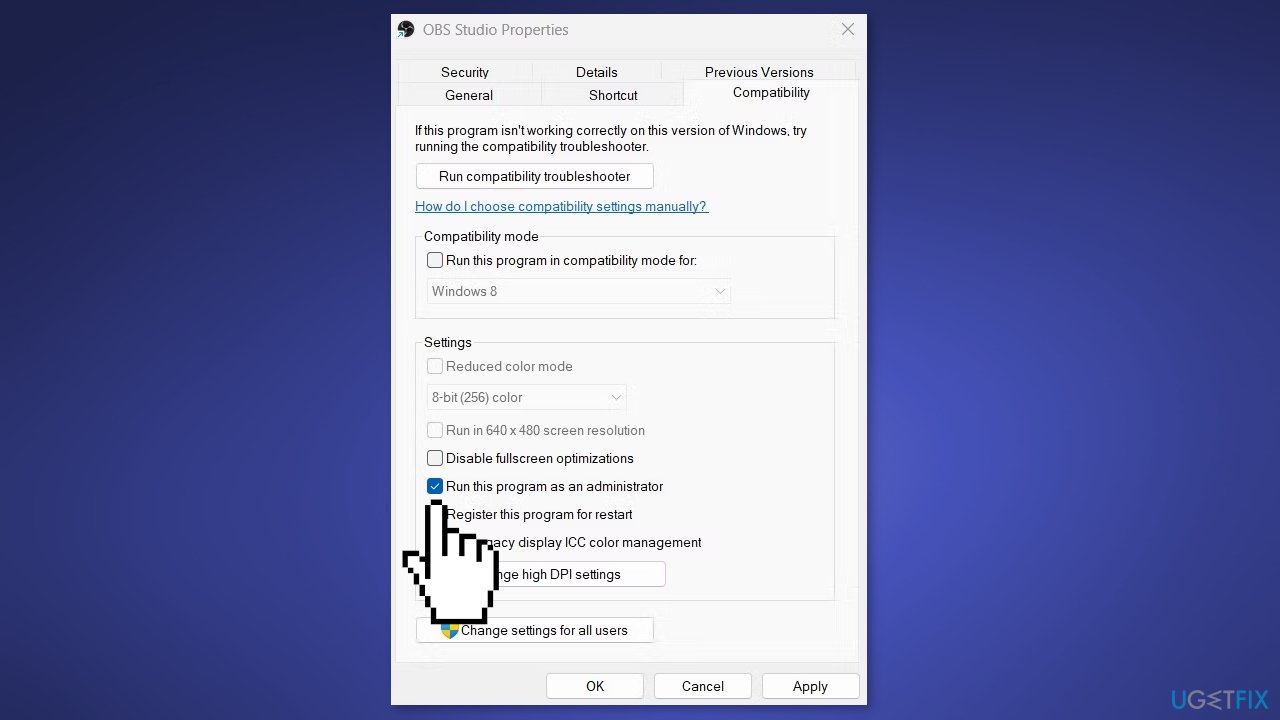
- Click Apply
- Click OK to save the changes
Solution 3. Adjust Volume in Windows Settings
- Open the Settings app
- Choose System from the left sidebar
- Select Sound from the right pane
- Under the Advanced section, choose the Volume Mixer option
- Under the Apps section, unmute OBS Studio if muted
- Adjust the slider
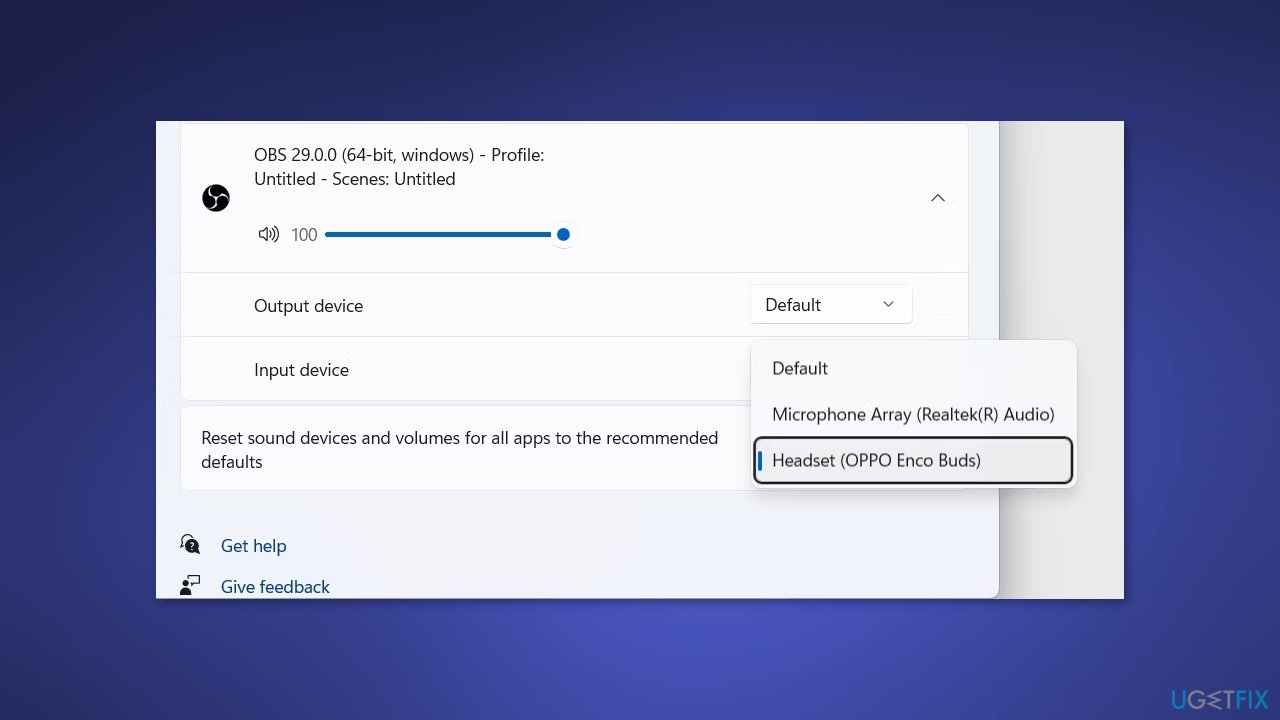
- Click the drop-down icon next to OBS Studio
- Choose the correct input device
- Restart OBS Studio
- Check if the problem persists
Solution 4. Choose the Right Recording Device
- Open the Settings app
- Go to System > Sound
- Under Advanced section, choose More sound settings
- Switch to the Recording tab
- Right-click on the correct recording device
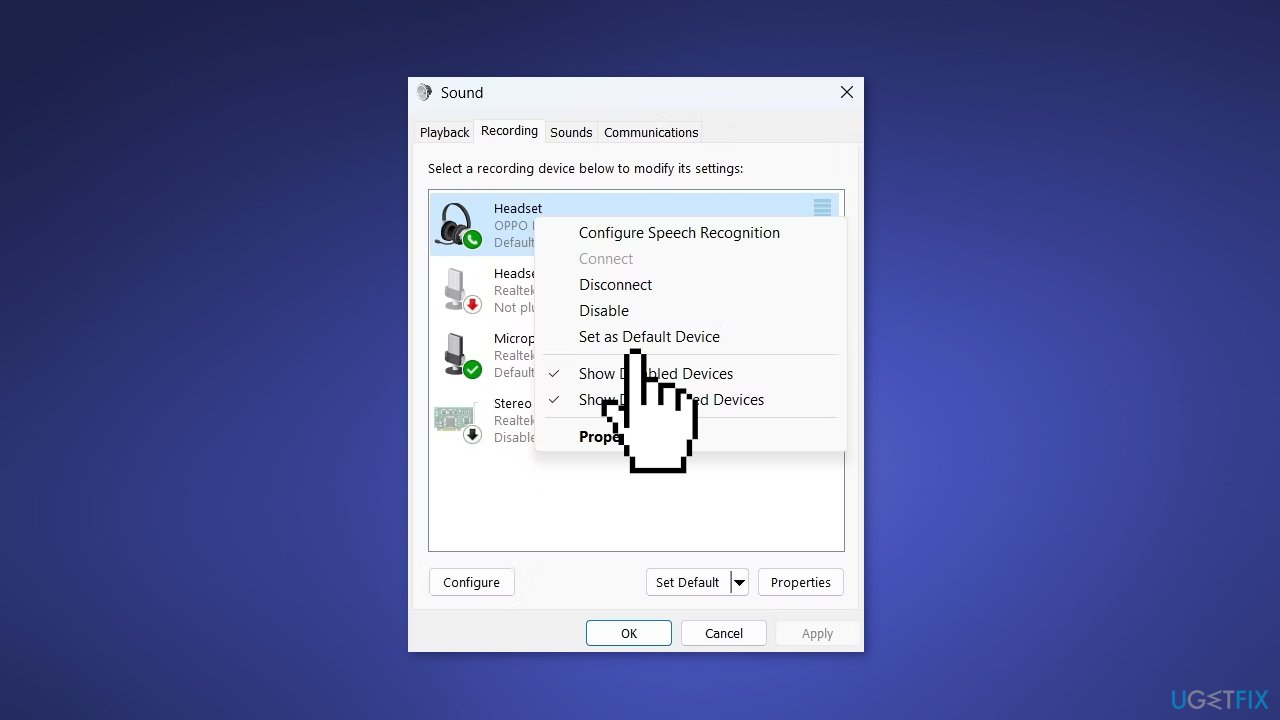
- Choose Set as Default Device from context menu
- Click Apply
- Click OK
Solution 5. Allow OBS Studio to Access your Microphone
- Open the Settings app
- Choose Privacy & Security from the left sidebar
- Under the App Permission section, select Microphone
- Enable the toggle next to the Microphone access option
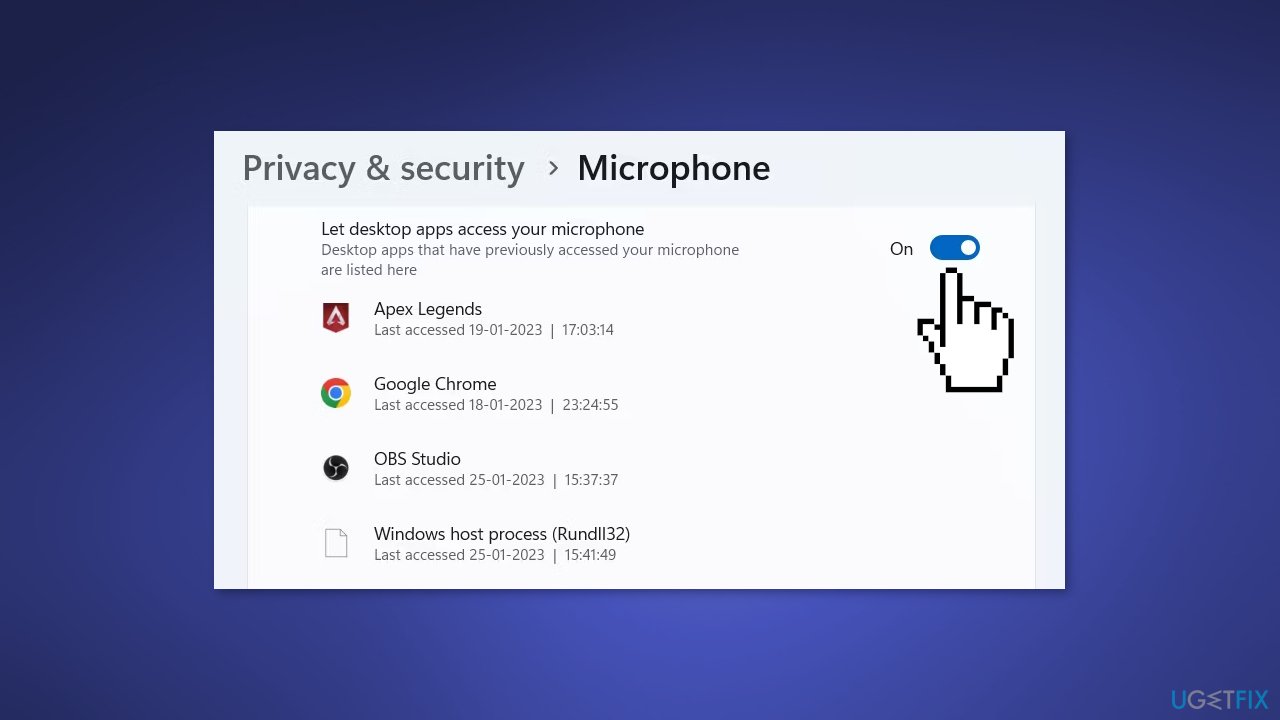
- Enable the toggle next to Let desktop apps access your microphone
Solution 6. Update Audio Driver
- Press the Windows key + X and choose Device Manager from the list
- Double-click Sound, video, and game controllers section to expand it
- Right-click on the default recording device
- Select Update Driver from context menu
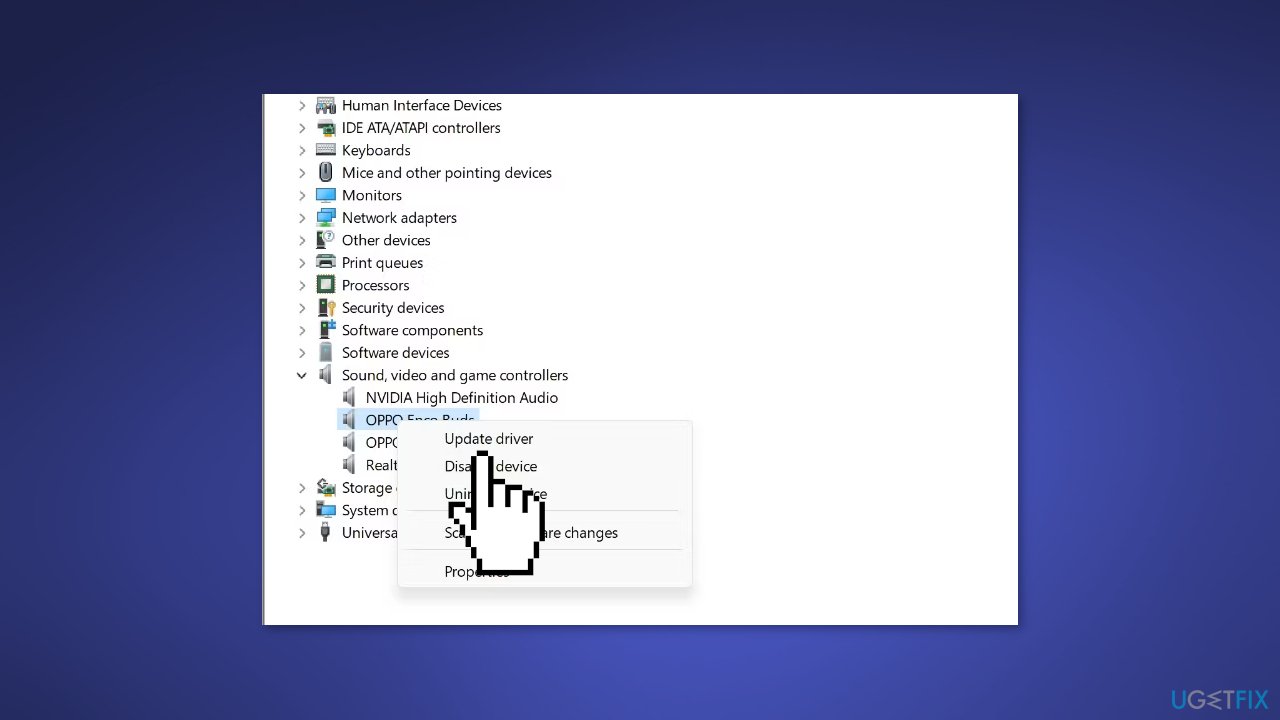
- Choose Search automatically for drivers option in the window that appears
Solution 7. Change OBS Studio Settings
- Launch OBS Studio
- Choose File from the top-left corner
- Choose Settings from the context menu
- In the Settings window, select Audio from the left sidebar
- Under the Global Audio Devices section click the drop-down icon next to Desktop Audio and Desktop Audio 2
- Choose Default in both options
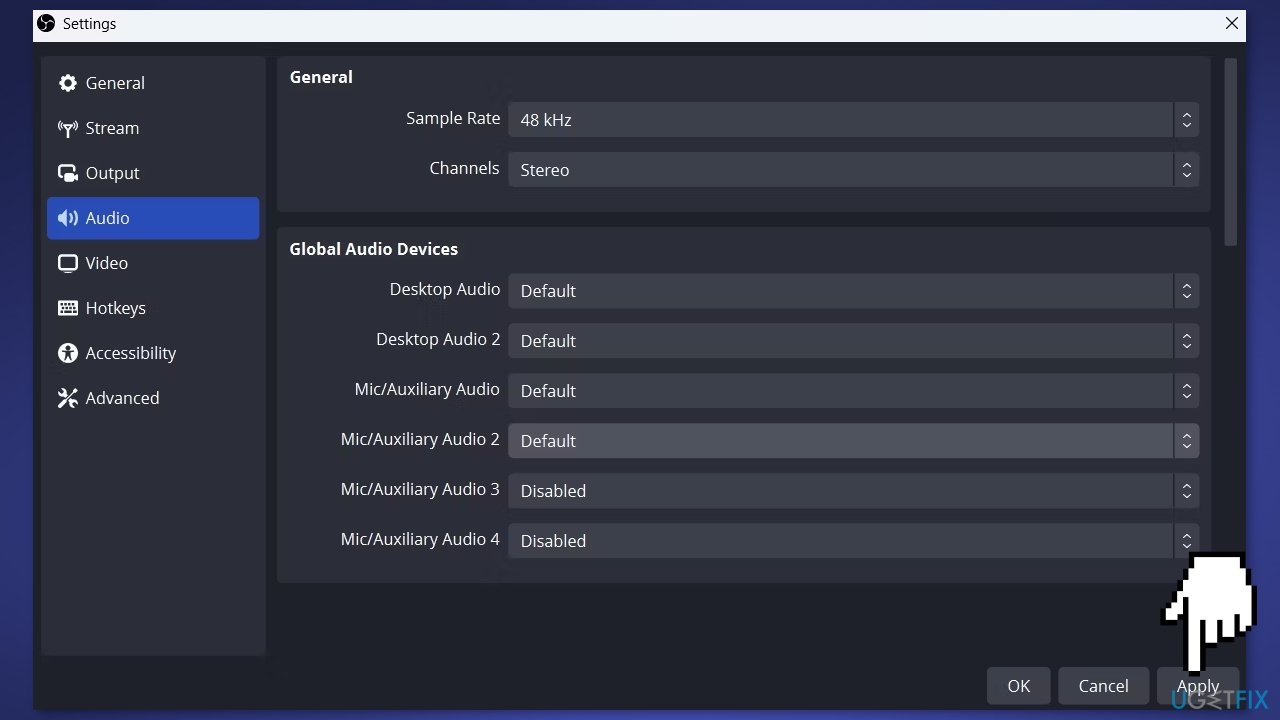
- Click the drop-down icon next to Mic/Auxiliary Audio and Mic/Auxiliary Audio 2
- Choose Default in both options
- Choose Apply
- Choose OK to save changes
Solution 8. Modify Audio Mixer Settings
- Open OBS Studio
- Under the Audio Mixer section adjust the Mic/Aux slider to -2.1dB
- Click the three dots next to Mic/Aux
- Choose Properties
- Click the drop-down icon next to Device
- Select your default recording device
- Click OK
- Click the three dots next to Mic/Aux again
- Choose Advanced Audio Properties
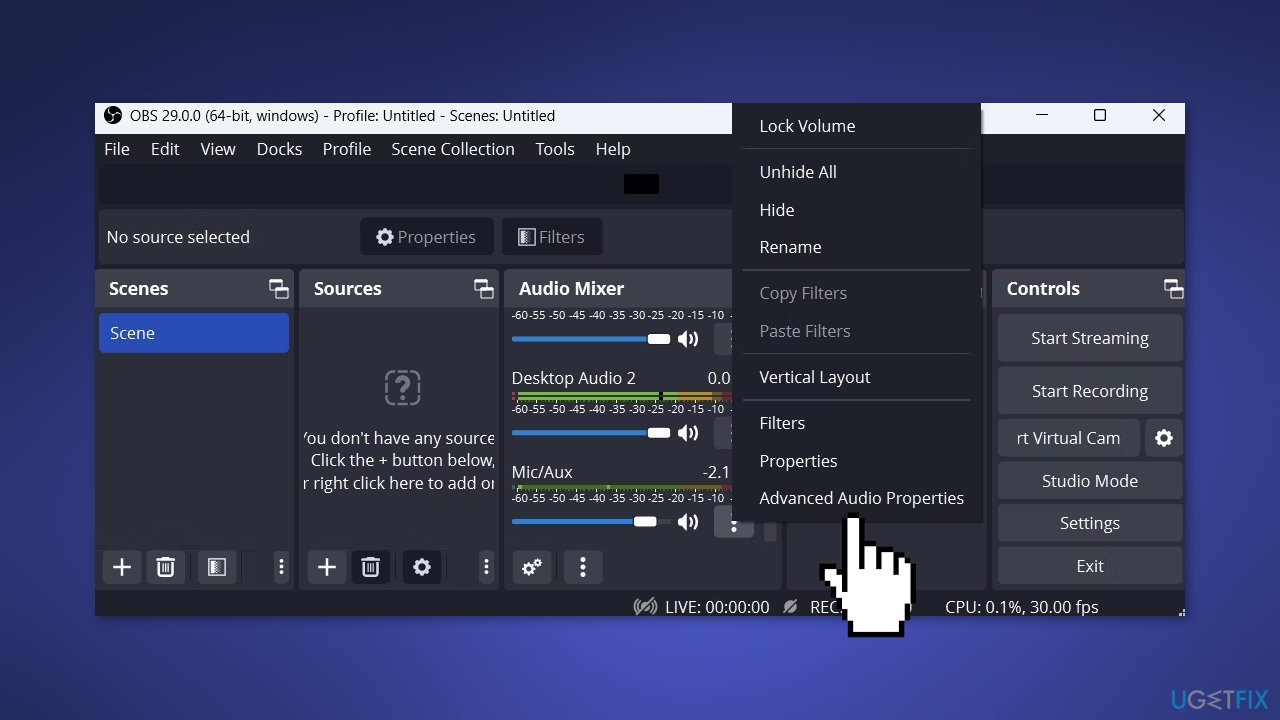
- Under the Audio Monitoring tab choose Monitor and Output for Desktop Audio
- Choose Monitor Only (mute output) for Mic/Aux
Solution 9. Reinstall the app
If you are still facing the issue, the OBS Studio installation file may be causing the problem. At this point, the only thing left to try is reinstalling the OBS Studio application.
- Go to Control Panel > Programs > Programs and Features, select OBS Studio, and choose Uninstall
- Download the latest version of OBS Studio from the official website
- Double-click the downloaded installation file, follow the prompts and complete the installation process
- Launch OBS Studio and check if the issue has been resolved
Bottom line
To fix the issue of OBS Studio not recording audio in Windows, you can try several solutions such as restarting the app, launching OBS Studio as an administrator, updating audio drivers, and adjusting audio settings. If these steps do not resolve the problem, consider using a repair tool to address potential underlying system errors.
Frequently asked questions
Ensure that the correct audio input device is selected in OBS Studio settings and that the audio mixer levels are not muted. Additionally, check your Windows 10 sound settings to confirm that the right device is set as the default.
In Windows 11, go to Settings > System > Sound and verify that the audio device used by OBS is enabled. Also, check the OBS audio settings to ensure the proper audio sources are added and configured.
Try adjusting the audio bitrate settings in OBS Studio and ensure there are no conflicting audio drivers in Windows. Updating your audio drivers through Device Manager in Windows 10 or 11 may also resolve distortion issues.




Report an issue
What's wrong with this guide? We review every report and update or remove content.
Report received — thank you. We'll review and fix it.
You need a free account to submit a report.
Be the first to comment