How to fix
Windows Update Error 0x8024001f
on Windows
Resolve Windows Update Error 0x8024001f effortlessly. Follow our expert-tested solutions for Windows 10 and 11 to get updates running smoothly. Fixed in…

What causes How to Fix Windows Update Error 0x8024001f?
- Internet connection problems
- Overloaded Windows Update service
- Corrupted update components
- Malware infection
- Disabled Windows Update components
Repairs Windows system files, removes malware, and restores a clean OS state — without reinstalling.
Can someone help me to fix Error Code 0x8024001f? It shows up each time when I try to install Windows Updates. As far as I know, there are some important security updates pending, so I’m afraid to leave some security vulnerabilities. Please help.
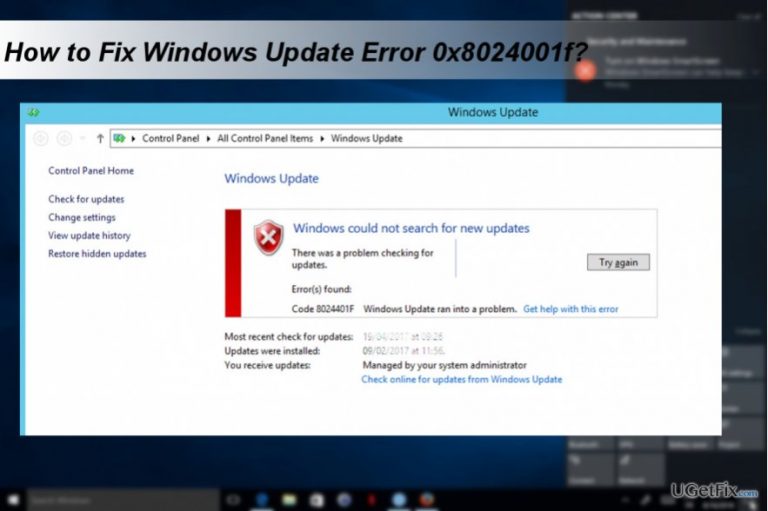
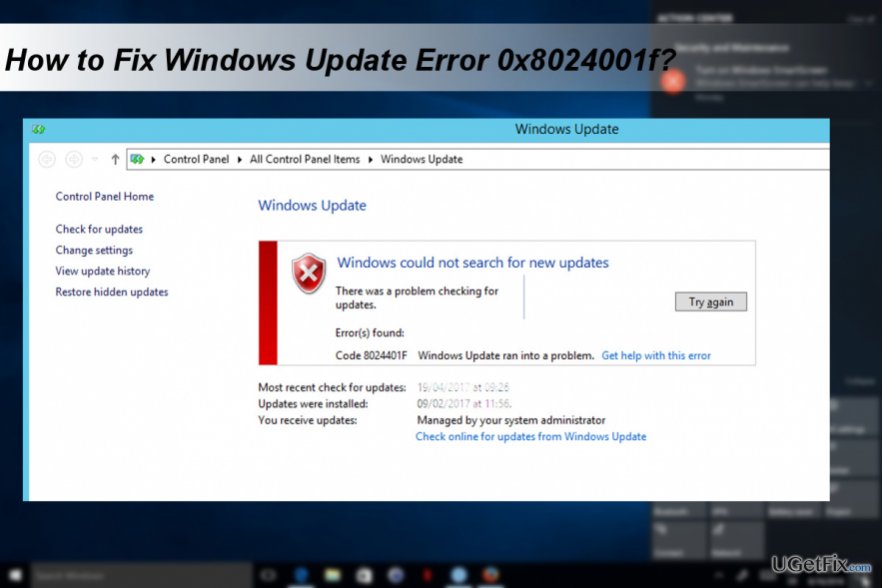
Error Code 0x8024001f is a Windows Update service error, which, in particular, shows up in Windows 10 operating system. Unfortunately, there is not much information about it except that it is sometimes called a Windows Update_8024001F and that its culprit is usually related to the Internet connection. The 8024001F error may show up on Windows Update window when the PC owner attempts to scan, download or install Windows updates. The process is being executed for several minutes, but then crashes and fails with the following error message: "There were some problems installing updates, but we’ll try again later. If you keep seeing this and want to search the web or contact support for information, this may help – (0x8024001f)."
Although experts claim that the 0x8024001f error is usually triggered by Internet connection problems, analyzing people’s reports we have detected a couple of other reasons - overloaded Windows Update service, corrupted update components, malware infection or disabled Windows Update components. While it’s not clear why this bug occurs, we would strongly recommend you to run a diagnostic tool and check what issues it reports. Windows Update Troubleshooter is the tool that should check for issues and fix them automatically. If, however, the automatic solution did not help, you should check the system for malware, try to install the needed update manually or reset Windows Update components. If you are not a tech-savvy Windows 10 user, we will provide the instructions on how to fix Windows Update Error 0x8024001f down below.
Troubleshoot the system
- Navigate to the official Windows website and download Windows Update Troubleshooter. Draw your attention to the version of troubleshooter. It has to fit with the version of your OS.
- When the Troubleshooter is downloaded, navigate to its location and launch the wu.diagcab file.
- Follow the on-screen instructions to troubleshoot the system.
Remove malware to fix 0x8024001f error
In general, Windows Update errors are often triggered by malware. When the malicious application gets installed into the system, it may corrupt some Windows registry keys/settings or install additional files. Consequently, malware may interrupt Windows Update process and deliver the 0x8024001f error. Therefore, we would strongly recommend scanning the system with [d1] or another powerful anti-malware.
Download the update manually
- Find out the number of the Windows Update that fails to install. For this purpose, open Update History.
- Then open the official Microsoft Update Catalog and find the update. To accelerate the search, type the number of KB update in the search field and press Enter.
- Download the update and install it.
Reset Windows Update Components
Windows Update components may stop due to various reasons. Luckily, it's not too difficult to reset the components. Although you don't have to be an IT technician to perform this task, be very careful and perform all steps in a right order. You can find the instructions on this page.
Bottom line
To fix Windows Update Error 0x8024001f, you should run the Windows Update Troubleshooter, check your system for malware, and try to install the needed update manually. If these solutions do not resolve the issue, consider resetting the Windows Update components.
Frequently asked questions
To fix this error, start by running the Windows Update Troubleshooter in Settings under Update & Security. If the issue persists, consider resetting the Windows Update components using the Command Prompt.
Yes, Windows 11 can encounter this error; try clearing the Software Distribution folder and then rerun the Windows Update. Additionally, ensure that your system is fully updated with the latest patches from Microsoft.
While modifying the registry can sometimes help, it's crucial to back it up first. You can check for any corrupt entries related to Windows Update services and delete them, but proceed with caution.




Report an issue
What's wrong with this guide? We review every report and update or remove content.
Report received — thank you. We'll review and fix it.
You need a free account to submit a report.
Be the first to comment