How to fix
Pause Windows updates
on Windows
Easily pause Windows 10 or 11 updates to optimize your system's performance. Expert-tested tips ensure a seamless experience, fixed in minutes!

Why does How to pause Windows updates occur?
- Windows updates are set to install automatically by default
- Users may want to avoid potential problems after installing updates
- Some users prefer to wait for feedback on updates from others
- Users may want to prevent compatibility issues with third-party software or hardware
Repairs Windows system files, removes malware, and restores a clean OS state — without reinstalling.
Hello. I am going on vacation for an extended period of time, and I want my Windows updates to be paused so that my PC wouldn't randomly restart or shut down.
Windows 10 updates are essential components of the operating system that are designed to improve its functionality, security, and performance. These updates are delivered by Microsoft regularly and can be installed automatically or manually. Updates typically fix bugs, patch security vulnerabilities, and provide new features and improvements.
Microsoft delivers updates in several ways, including through the Windows Update feature, the Windows Server Update Services, and the Microsoft Update Catalog. Windows Update is the most common way for users to receive updates automatically. By default, Windows is set to automatically install updates, but some users may want to pause or disable updates for various reasons.
Pausing updates can be beneficial for some users who want to avoid potential problems that may arise after installing an update. For instance, some users may prefer to wait for other users to install updates first and report any issues before updating their system. Other users may want to pause updates to avoid any potential compatibility issues with third-party software or hardware.
There are two ways to pause Windows updates. One way is to use the Settings app, which allows users to temporarily pause updates for up to 35 days. This option is useful for users who want to delay updates until they have more time to troubleshoot any potential issues that may arise.

Another way to pause updates is to disable them entirely, which is not recommended for most users. Disabling updates may leave a system vulnerable to security threats, and it may cause compatibility issues with other software or hardware components. We do provide detailed instructions on how to pause Windows updates in several ways below.
Method 1. Change Windows settings
One of the easiest ways to prevent Windows from installing updates is by tweaking settings. Here's what you need to do:
- Click on Start and pick Settings.
- Go to Updates & Security.
- On the right side of the window, you will see various Windows update settings.
- In Windows 11, check the More options section: you can select the number of weeks (up to 5) to pause the updates for from the drop-down menu.
- In Windows 10, click Advanced options and find the Pause updates section. From the drop-down menu, select the date you want Windows to pause updates. Note that you can pick the Pause updates for 7 days option in the main menu.
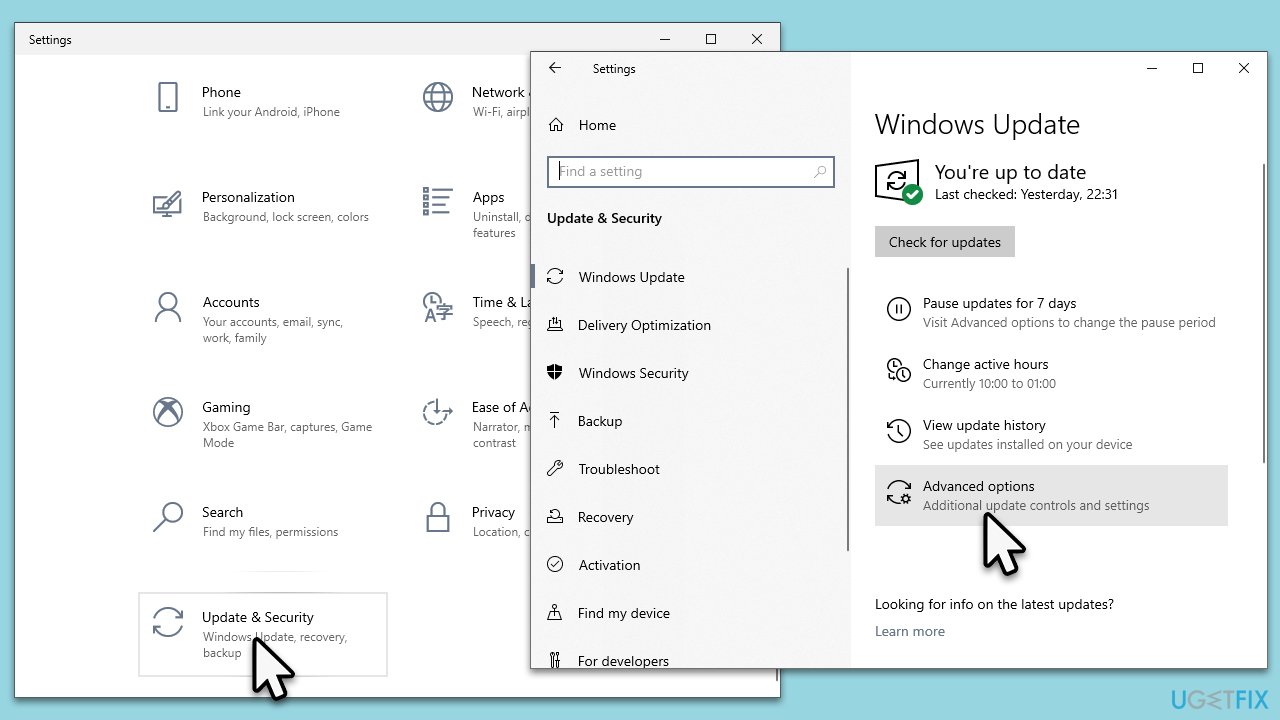

Updates will resume as soon as the date you've selected in these settings arrives. It is noteworthy that you won't be able to postpone the update installation any further at this point unless you install pending updates. Therefore, this method is not viable for everyone.
Method 2. Prevent PC restart
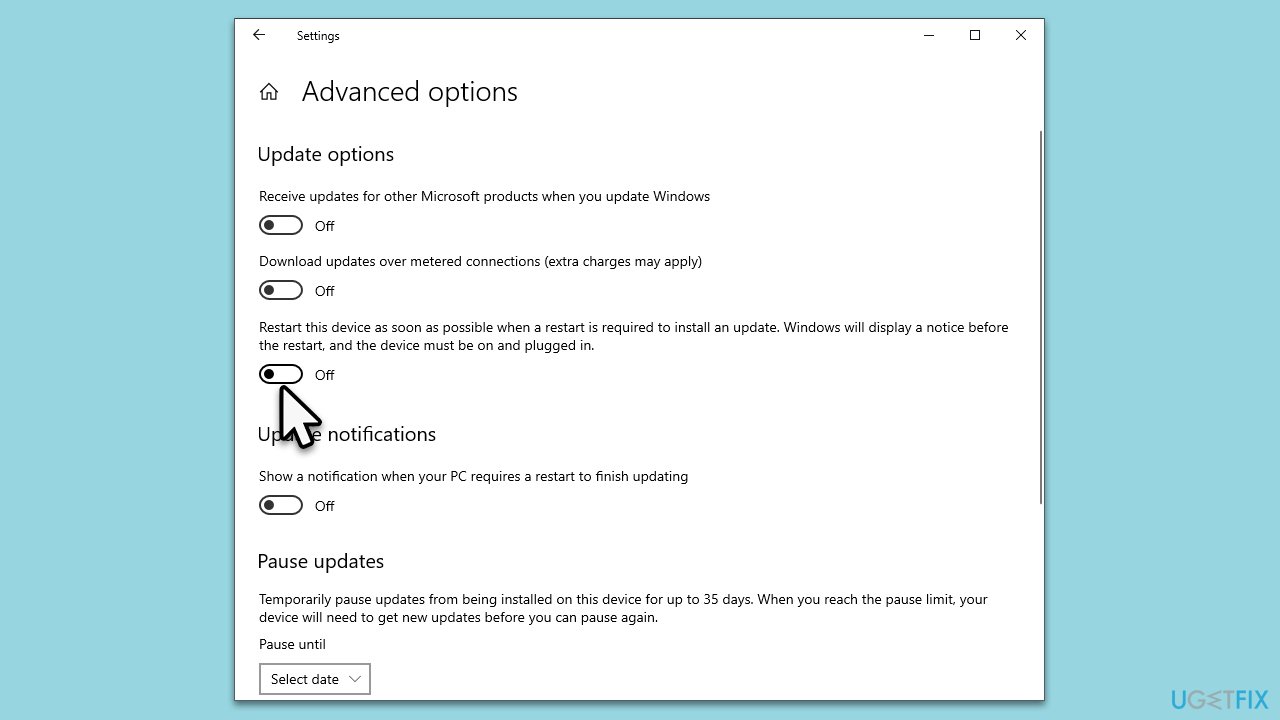
First of all, make sure you have the setting as follows:
- Go to Start > Update & Security > Windows update.
- Click Advanced options.
- Here, make sure that the option "Restart this device as soon as possible when a restart is required to install an update. Windows will display a notice before the restart, and the device must be on and plugged in" is toggled off.
- Note that you can also tweak various other settings here, such as showing Windows update notifications or downloading over metered connections, etc.
Select active hours
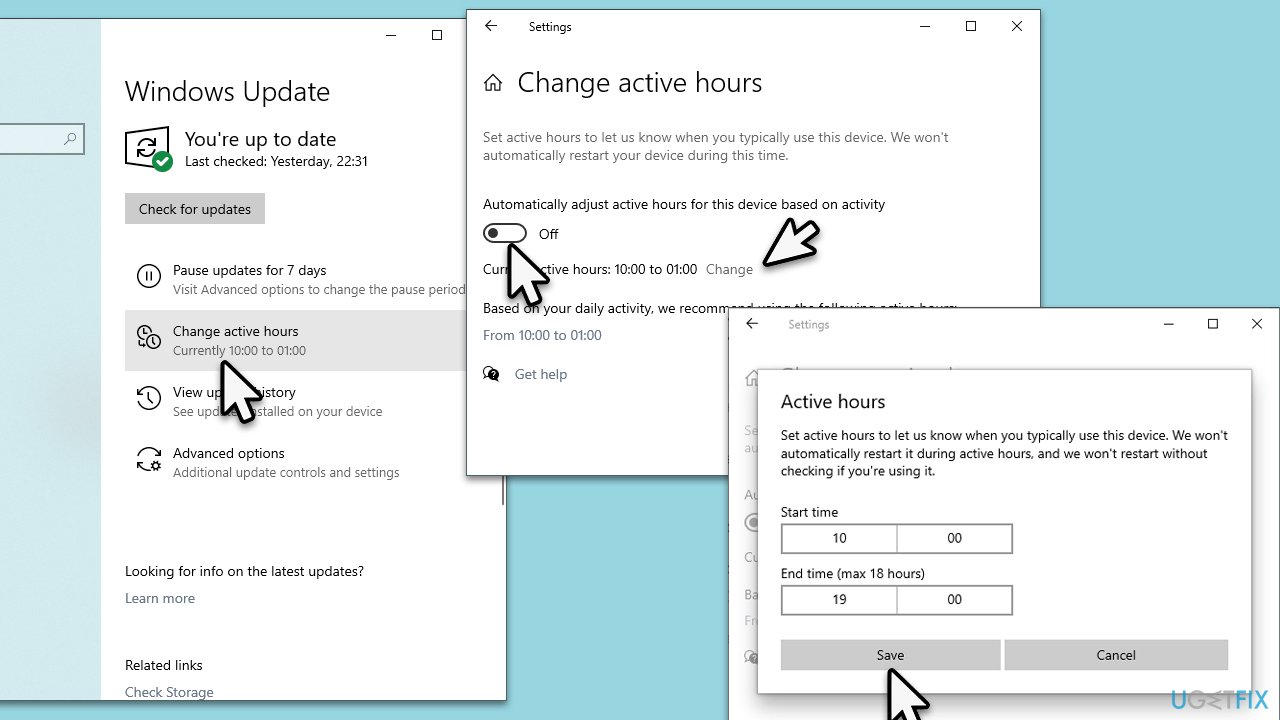
During active hours, Windows will not be restarted.
- Go to Windows update again.
- Click Change active hours.
- Toggle on the "Automatically adjust active hours for this device based on activity" option if you want Windows to automatically.
- Alternatively, you can toggle the option off and select Change to set active hours manually.
- Note that the end time can't exceed 18 hours from the start time.
Use Local Policy Editor
- Type gpedit.msc in Windows search and press Enter.
- Go to Computer Configuration > Administrative Templates > Windows Components > Windows Update.
- Double-click the No auto-restart with automatic installations of scheduled updates option.
- Select Enabled and click OK.

Method 3. Disable Windows updates
While disabling Windows updates is not recommended, users should have the freedom to do so if they choose to. Disabling Windows updates is possible by adjusting Windows service settings.
- Type Services in Windows search and hit Enter.
- When the Services window pops up, scroll down to find the Windows Update service.
- Double-click the Windows Update service to open Properties.
- Under Startup type, click on the drop-down menu and select Disabled.
- Click Stop, Apply, and OK.
- Restart your system.
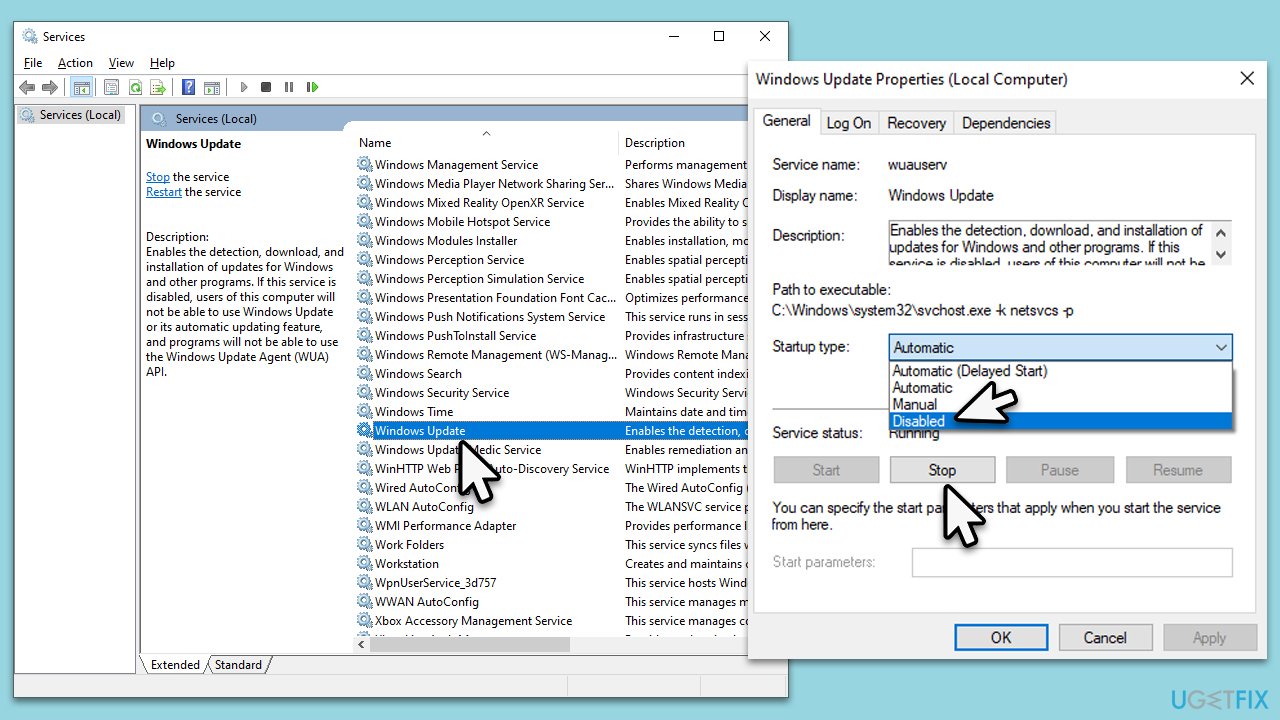
To resume Windows updates, you can set the startup type back to Automatic.
Bottom line
To pause Windows updates, you can use the Settings app to temporarily pause updates for up to 35 days or disable updates entirely, though the latter is not recommended. If these methods do not work, consider checking for additional troubleshooting options or consulting support resources.
Frequently asked questions
To pause updates on Windows 10, go to Settings > Update & Security > Windows Update, then click on 'Pause updates for 7 days.' You can extend this period in the advanced options.
Yes, in Windows 11, you can pause updates by navigating to Settings > Windows Update and selecting 'Pause updates' to stop them for a specified duration.
Pausing updates can leave your device vulnerable as it won't receive important security patches, so it's recommended to resume updates as soon as possible.




Report an issue
What's wrong with this guide? We review every report and update or remove content.
Report received — thank you. We'll review and fix it.
You need a free account to submit a report.
Be the first to comment