How to remove
“Your McAfee Subscription Has Expired” Pop-Up
from Windows
Eliminate the annoying "Your McAfee Subscription Has Expired" pop-up on Windows 10 or 11 with our expert-tested guide. Fixed in minutes!

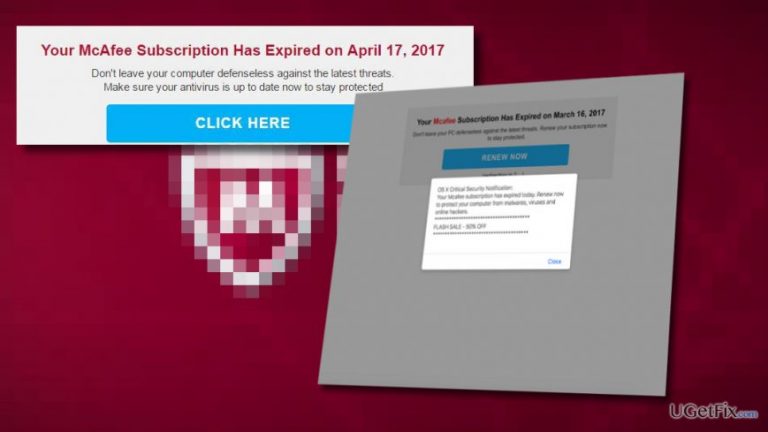
How does How to Remove “Your McAfee Subscription Has Expired” Pop-Up end up on your PC?
- Adware infiltration during third-party software installation
- Installation of potentially unwanted programs (PUPs)
- Bundled freeware containing ad-supported programs
- Lack of monitoring during software installation
- Unawareness of adware delivering the scam pop-up
Repairs Windows system files, removes malware, and restores a clean OS state — without reinstalling.
Hello. I’ve opened Google Chrome just like I do every day, but I found a strange pop-up saying “Your McAfee Subscription Has Expired.” The strangest thing is that I did not even know that I have McAfee installed, but it appears that I do have such a program. Those pop-ups usually freeze web browser, so, indeed, they are annoying. What should I do?
“Your McAfee Subscription Has Expired” is a scam which pops up during regular browsing sessions on most popular browsers, including Google Chrome, Internet Explorer, Mozilla Firefox, and others. Victims are encouraged to purchase the fake license key for this security software. Unfortunately, this is merely a tech support scam[ref en-1] which is used to swindle money from novice PC users.
Usually, alerts similar to Your McAfee Subscription Has Expired pop-up are delivered by an adware. This potentially unwanted program (PUP)[ref en-2] might infiltrate your system if you install third-party software without closely monitoring the process.
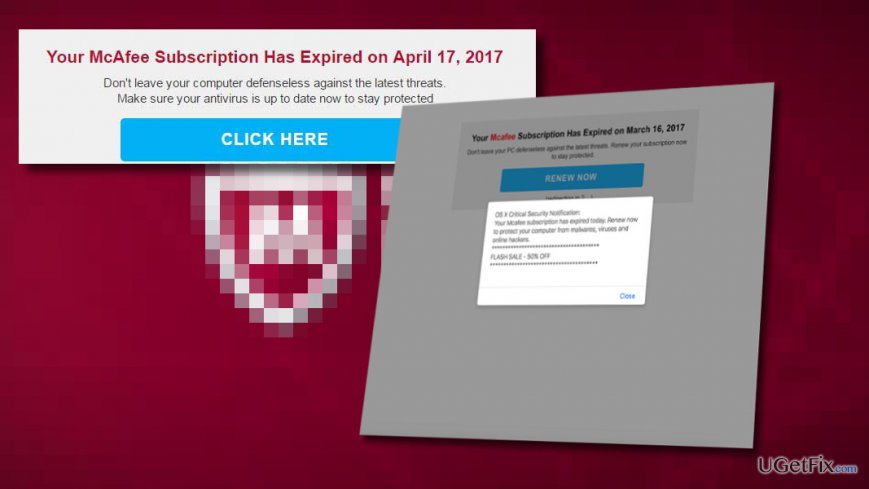
Your McAfee Subscription Has Expired scam displays the following message on the affected browsers[ref en-3]:
Your McAfee Subscription Has Expired on XXX.
Don't leave your computer defenseless against the latest threats.
Make sure your antivirus is up to date now to stay protected.
PUPs, including ad-supported program and browser hijackers, are distributed bundled with freeware. Likewise, it is important to track the installation of free software attentively. This popular marketing tactic is legitimate, yet unfair from the standpoint of computer users as they are not aware of the adware which delivers Your McAfee Subscription Has Expired scam pop-up.
Nevertheless, Your McAfee Subscription Has Expired is a fake McAfee alert which should be uninstalled immediately, unless you don’t mind constant scam pop-ups and browser’s freezes. For that, you must get rid of the adware program which generates these fraudulent notifications.
Note that Your McAfee Subscription Has Expired alert is not dangerous itself. However, scammers use it to earn easy money by deceiving people in a way they would purchase a new license of McAfee product. If the PC user gets tricked by the message given below, he or she buys the license and the scammers that own the rogue Your McAfee Subscription Has Expired pop-up will earn a commission fee.
Unfortunately, there fake Your McAfee Subscription Has Expired pop-up is not related to the well-known computer security company. The criminals are disguising under the name of this antivirus tool to swindle money and sell counterfeit software. Thus, if you should trust the alerts coming only from verified McAfee sites.
You can learn how to remove McAfee Subscription Has Expired from the instructions presented below. Note that there are multiple methods and steps which should be followed to successfully eliminate the potentially unwanted program (PUP) displaying the fraudulent message.
Explaining how to remove McAfee Subscription Has Expired pop-up
The adware program which delivers a scam pop-up might have extra components hidden on your system. Likewise, it is important to scan your computer with [d1] to remove Your McAfee Subscription Has Expired and other adware-related elements before you start the manual elimination procedure.
Step 1. Close the affected browser with McAfee Subscription Has Expired scam
Usually, Your McAfee Subscription Has Expired scam freezes the web browser, so to close it you should do the following:
- Click Ctrl + Shift + ESC to open Task Manager.

Open task manager - Find the process of your web browser, click on it, and select End Task.
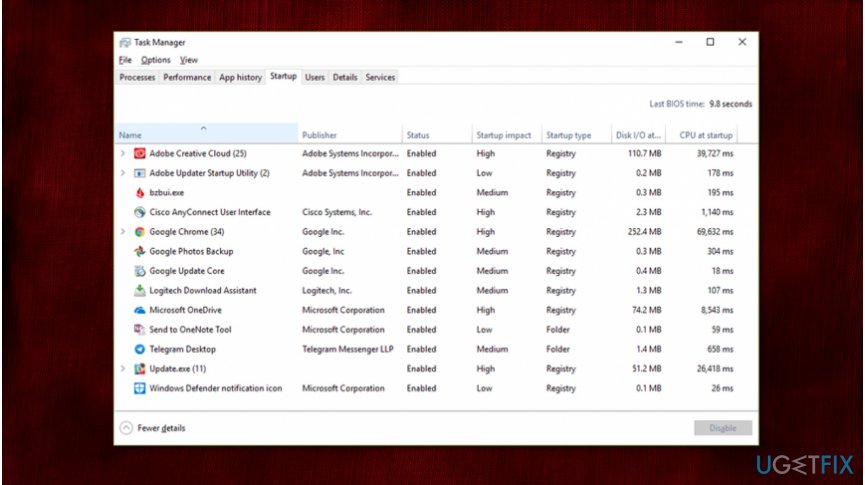
Disable suspicious tasks - Then relaunch your web browser again, but DO NOT restore the last session.
Step 2. Uninstall the adware showing fake McAfee alert
You can only remove Your McAfee Subscription Has Expired scam by uninstalling the adware which is delivering it. For that, perform the following steps:
- Open Control Panel and select Programs and Features.
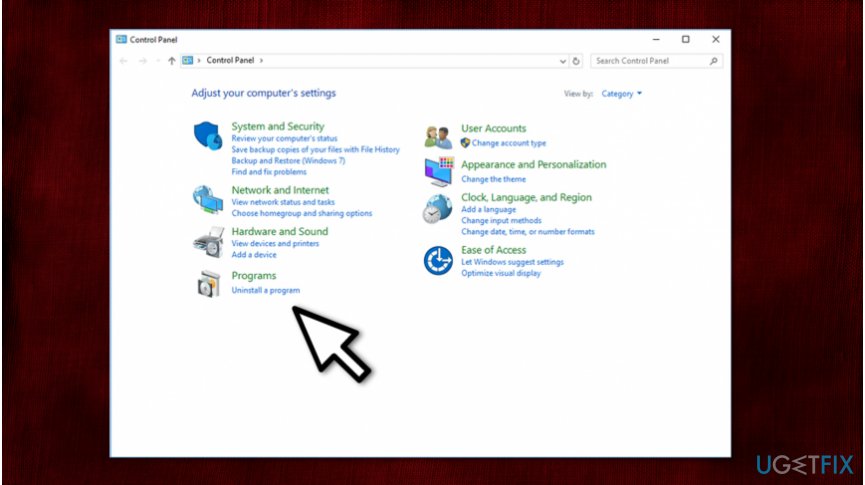
Open control panel - Find the recently installed or unknown programs and uninstall them.
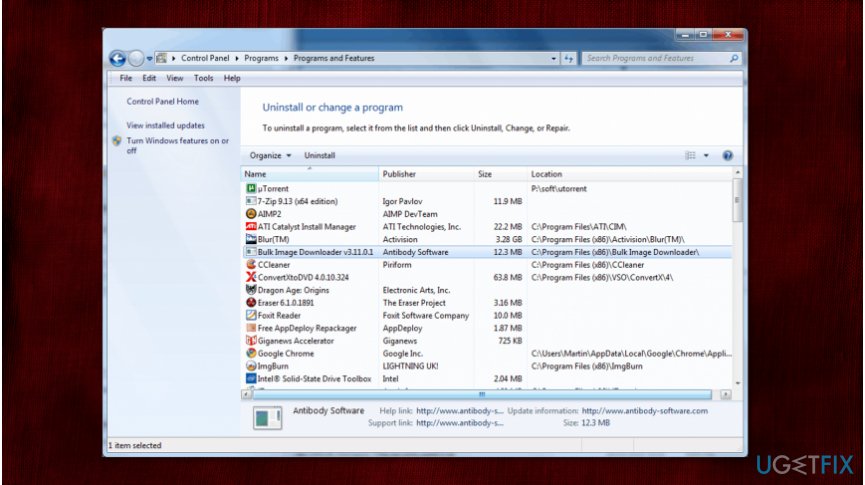
Delete suspicious programs - Click OK to save the changes and close Control Panel.
- After that, reopen your web browser and reset its settings to default.
Your McAfee Subscription Has Expired on Mac OS might appear as well. It would be launched from apple.com-url.online HTML and displayed in the same manner as for Windows users. In this case, you should close your web browser immediately, scan the system with [rev id=”MacKeeper”] or another malware removal tool, and then reset web browser’s settings.
Bottom line
To remove the 'Your McAfee Subscription Has Expired' pop-up, you should uninstall the adware program responsible for the notifications and ensure your antivirus software is up to date. If these fixes do not resolve the issue, consider seeking professional tech support.
Frequently asked questions
To stop the pop-up, uninstall McAfee using the Control Panel by navigating to Programs and Features, selecting McAfee, and clicking Uninstall. After removal, consider using a dedicated uninstaller tool to ensure all remnants are deleted.
If the pop-up continues, check for any remaining McAfee files or services in Task Manager and remove them manually. Additionally, run a malware scan to ensure no leftover components are causing the issue.
To prevent future pop-ups, either avoid installing McAfee products or opt for a different antivirus solution that suits your needs better. Always ensure you remove all associated files and settings when switching antivirus programs.




Report an issue
What's wrong with this guide? We review every report and update or remove content.
Report received — thank you. We'll review and fix it.
You need a free account to submit a report.
Be the first to comment