How to fix
Bad_pool_caller error
on Windows
Resolve the Bad_pool_caller error on Windows 10 swiftly with expert tips and proven methods. Get your system running smoothly again—fixed in minutes!

What causes How to fix Bad_pool_caller error on Windows 10?
- Corrupt drivers
- Outdated drivers
- Overclocking
- Memory component corruption
- Hardware malfunctions
Repairs Windows system files, removes malware, and restores a clean OS state — without reinstalling.
I have been getting BAD_POOL_CALLER BSoD error on Windows 10. Immediately, the PC restarted and I did not think anything of it, since it recovered. Sadly, after using my PC as normal, the error returned. Is there anything that can be done in order to fix this?
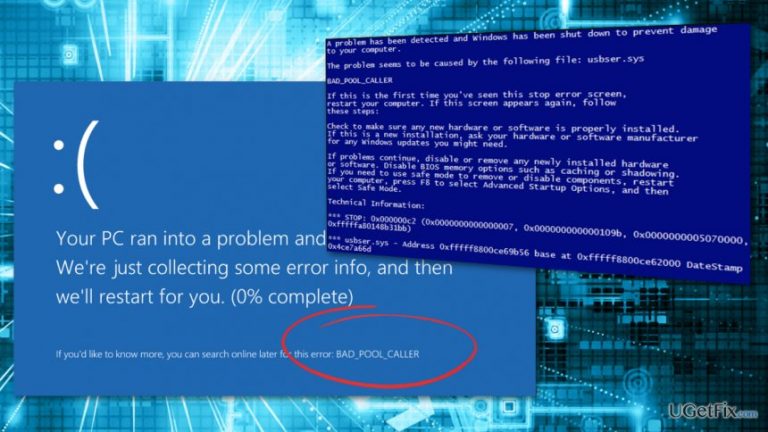
Bad_pool_caller is a BSoD (Blue Screen of Death)[ref en-2] error that may show up on Windows 10 or some earlier Windows versions. It has a bug check value of 0x000000C2 and is usually triggered by corrupt or outdated drivers, as well as overclocking (speeding up a computer’s hardware components to run faster than predetermined by default).
Users have been reporting this issue since 2014, and the technology forums are full of different suggestions to fix BAD_POOL_CALLER for good. In this article, we will also give a few suggestions proven effective by the users in order to help get rid of this recurring error quicker.
While the initial interruption by the BSOD can be very intrusive, it can cause data loss, so it can be particularly damaging to the computer owner. Most Blue Screen errors are recovered from immediately after computer restart. Problems start when the same error recurs - it means that something is definitely wrong. Unfortunately, the standard BSOD error message does not provide much information for the users to go on.
"Pool" is a technical term used to refer to the memory on which the computer drivers[ref en-3] operate. So, BAD_POOL_CALLER may occur when the driver fails to access some of the memory components or these components exist but turn out to be corrupted. This error suggests that certain hardware components may not work properly and urges the user to attend to this issue in order to prevent these malfunctions.
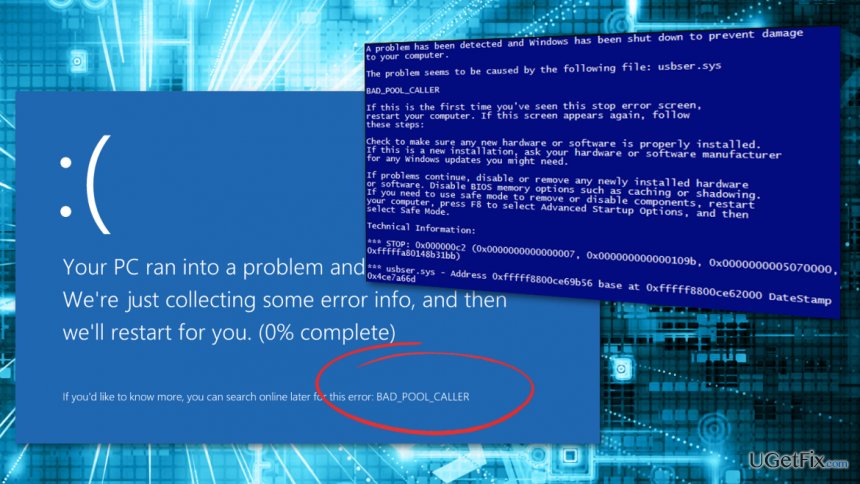
To fix BAD POOL CALLER on your computer, check all the methods we provide below. Keep in mind that a solution that works for one person will not work for another one due to different configurations of their systems. Because of this, you might have to try several steps below to find what works for you.
Method 1. Run an automatic repair tool
As already mentioned, reasons for a BSOD to occur (especially when it shows up repeatedly) can be many. Thus, it might take quite a while to determine what is causing the problem; performing the steps to fix the error can also be lengthy. Therefore, if you want a tool that would do the job for you, we highly recommend [d1] repair.
This unique repair application is capable of finding the root cause of the Blue Screen error and fix the underlying issue automatically. Besides, the app is also capable of fixing missing DLLs,[ref en-1] registry errors, and much more.
Method 2. Update Windows
- Type in Updates in Windows search and press Enter
- On the right side of the window, click Check for updates
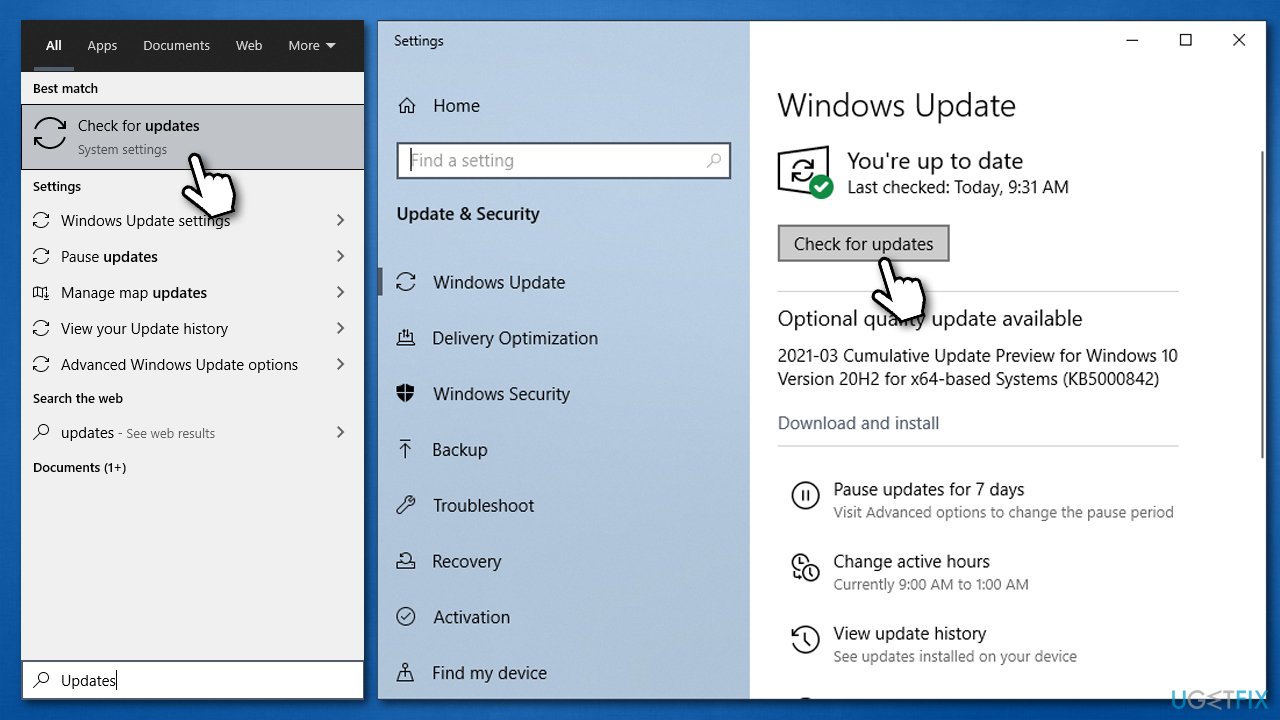
How to fix bad pool caller bsod in windows update - Wait till Windows downloads and installs updates
- Once the installation is finished, restart your PC.
Method 3. Check your memory
Memory corruption might be the cause of BSOD errors. Check you memory with Windows Memory Diagnostic tool:
- Type Memory in Windows search and hit Enter
- Here, select Restart now and check for problems (recommended)
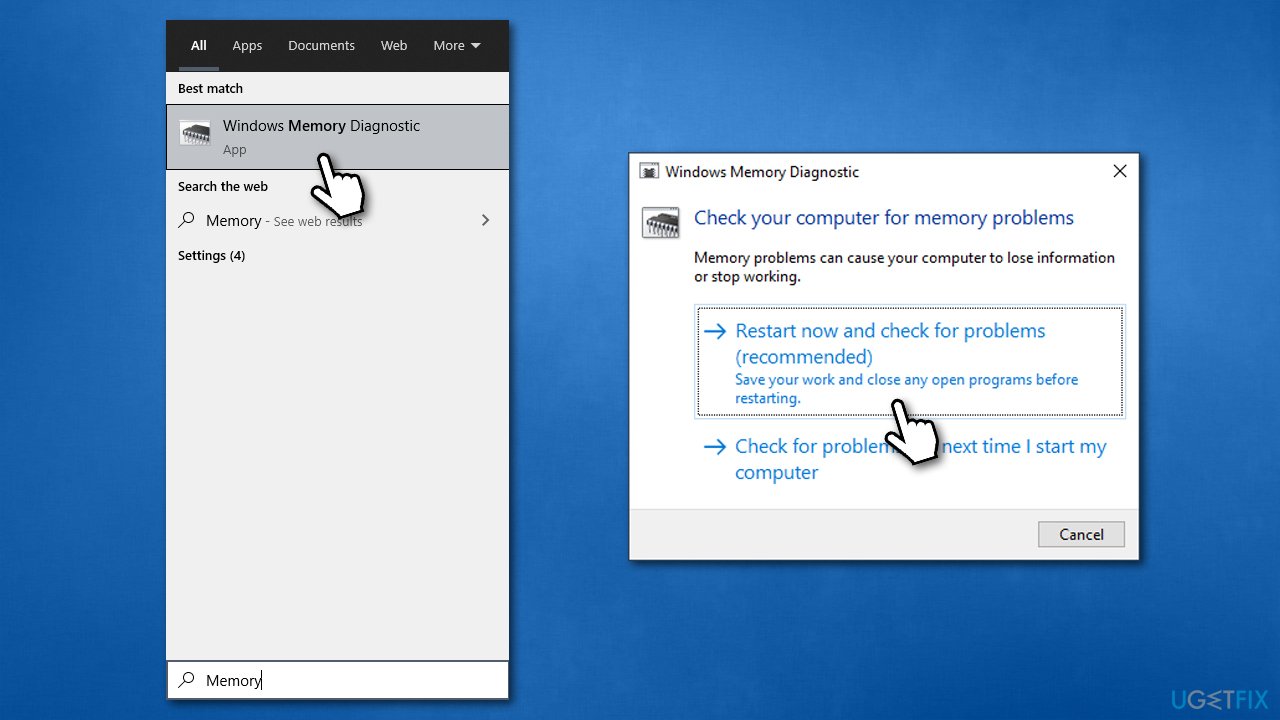
How to fix bad pool caller bsod in windows run memory diagnostic - Upon clicking this option, your computer will immediately restart
- Once it boots back up, be patient while the check is taking place.
Method 4. Run Check Disk command in Command Prompt
- Type cmd in Windows search
- Right-click on Command Prompt search result and pick Run as administrator
- Here, copy and paste the following command (note that the default drive for Windows is C, although it can differ if you swapped it for something else):
chkdsk C: /f /r /x
- Press Enter, and the check should start running
- If you receive an error stating that the volume is used by another process, type Y and press Enter
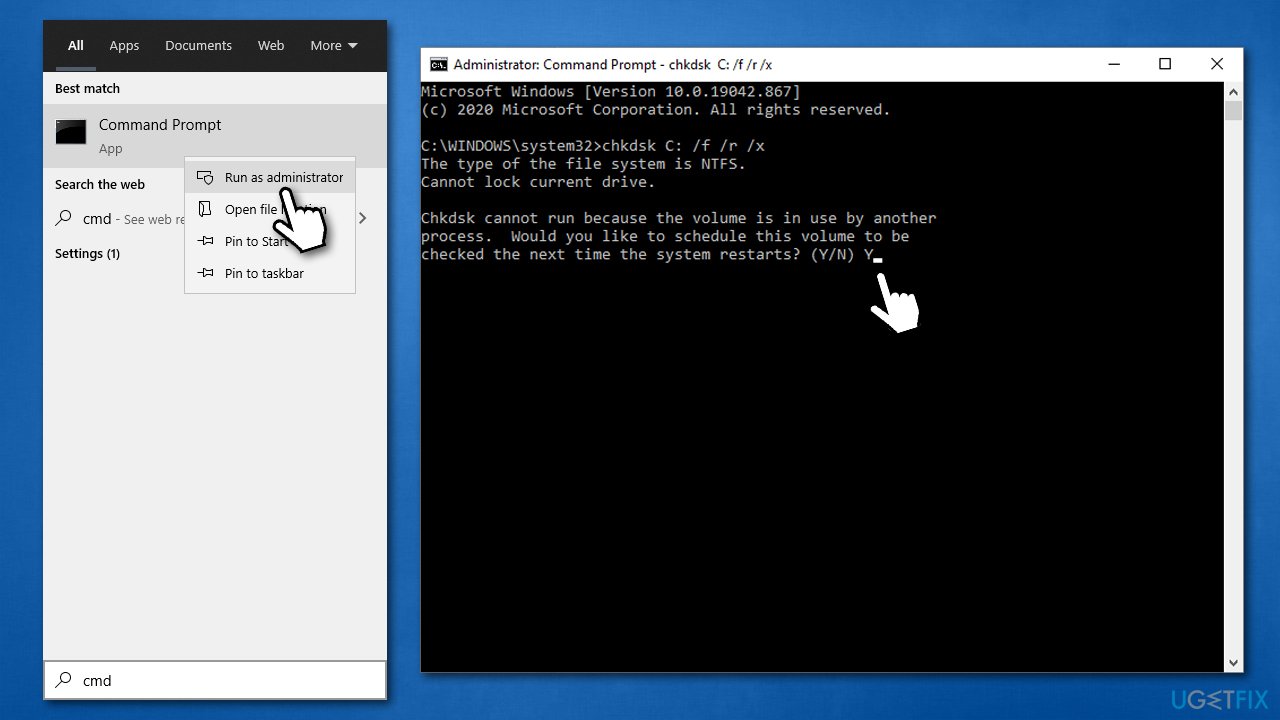
How to fix bad pool caller bsod in windows run check disk - Restart your machine to begin the check.
Method 5. Update your drivers
Since the main cause for the BAD_POOL_CALLER is the drivers, you should update them.
- Right-click on Start and select Device Manager
- Expand one of the sections, e.g., Display adapters
- Right-click on the device and select Update driver
- Select Search automatically for drivers
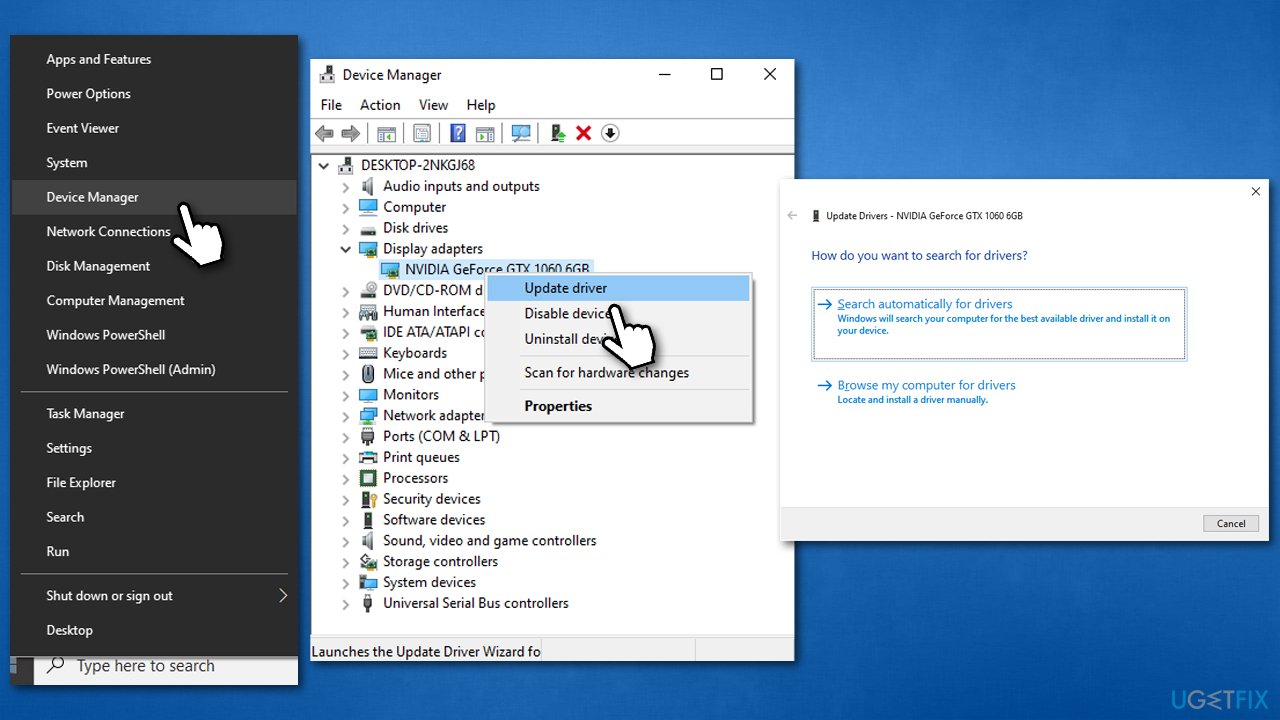
How to fix bad pool caller bsod in windows update drivers - Once updated, do the same for all third-party drivers.
As evident, updating everything on the computer can be particularly exhausting. Besides, the Device manager is not the best tool to do so, as Windows often fails to find the most recent drivers available for your hardware. Thus, you can either download all the drivers from the official website of your device manufacturer (which would take even longer) or employ an automatic tool [rev id="DriverFix"] instead.
Method 6. Reset overclocked drivers
- Launch your PC in BIOS (constantly press F2, F8, Del, Esc, or another button when your PC is booting up - refer to the website of your motherboard manufacturer)
- Then, navigate to the Hardware Monitor > Advanced CPU settings and reset the driver setting to default [Auto]
- Save the changes and reboot your device.
Bottom line
To fix the BAD_POOL_CALLER error, users can try updating or reinstalling drivers, checking for hardware issues, and avoiding overclocking. If these methods do not resolve the issue, it may be necessary to explore additional troubleshooting steps or seek professional assistance.
Frequently asked questions
The Bad_pool_caller error is typically caused by faulty drivers, corrupted system files, or issues with hardware components. Identifying and updating problematic drivers can often resolve the issue.
You can troubleshoot the Bad_pool_caller error by booting into Safe Mode and uninstalling recent updates or drivers that may have caused the error. Running the Windows Memory Diagnostic tool can also help check for hardware issues.
Yes, you can fix the Bad_pool_caller error without reinstalling Windows 10 by performing a system restore or using the System File Checker tool to repair corrupted files. These methods often resolve the error effectively.




Report an issue
What's wrong with this guide? We review every report and update or remove content.
Report received — thank you. We'll review and fix it.
You need a free account to submit a report.
Be the first to comment