How to fix
DRIVER_IRQL_NOT_LESS_OR_EQUAL (Netwtw04.sys) BSOD
on Windows
Resolve the DRIVER_IRQL_NOT_LESS_OR_EQUAL (Netwtw04.sys) BSOD on Windows 10/11 with expert-tested solutions that fix issues in minutes.

What causes How to Fix DRIVER_IRQL_NOT_LESS_OR_EQUAL (Netwtw04.sys) BSOD on Windows?
- Outdated Intel Wireless Adapter driver
- Corrupted Intel Wireless Adapter driver
- Conflict between two anti-virus programs
- Software conflict due to disabled anti-virus programs
- Issues during Windows boot or app launches
Repairs Windows system files, removes malware, and restores a clean OS state — without reinstalling.
I’m using a Dell laptop, which I have bought several months ago. Sadly, it has many problems already, so I’m afraid of its condition in the near future. The laptop not only frequently fails to play any sounds, but also displays a BSOD Driver_IRQL_NOT_LESS_OR_EQUAL (Netwtw04.sys). The error shows up under various occasions, but most frequently when I attempt to launch apps. I’m not a tech savvy person, so I don’t even imagine what should I do. Please provide me some fixes or I will have to return my PC to the manufacturer…
DRIVER_IRQL_NOT_LESS_OR_EQUAL is one of the Windows stop codes circulating on the Internet for a long time. Each case of this error is individual, which is why the file name provided next to the error differs. In this article, we will be addressing the Driver_IRQL_NOT_LESS_OR_EQUAL (Netwtw04.sys) error, which occurs on Windows 10 PCs most frequently. Nevertheless, mfewfpk.sys, ndis.sys, Epfwwfp.sys, netio.sys, kbdclass.sys, storahci.sys BSOD[ref en-1] can also be encountered under more or less similar circumstances.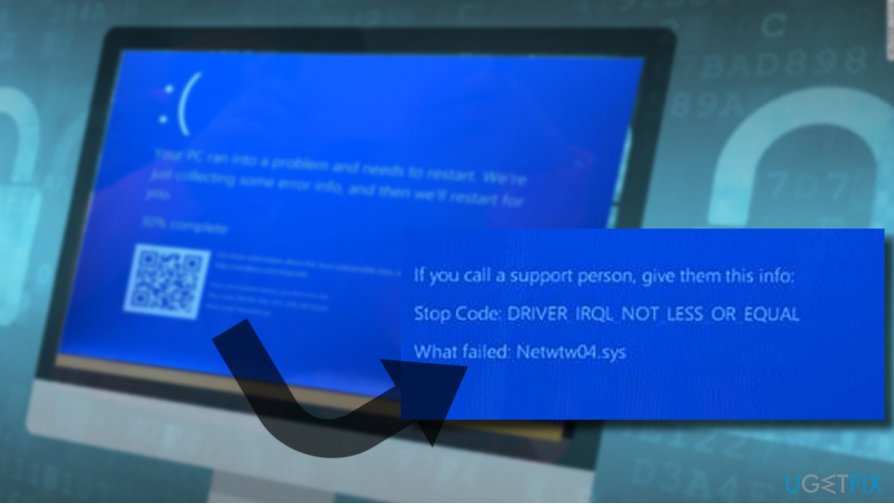
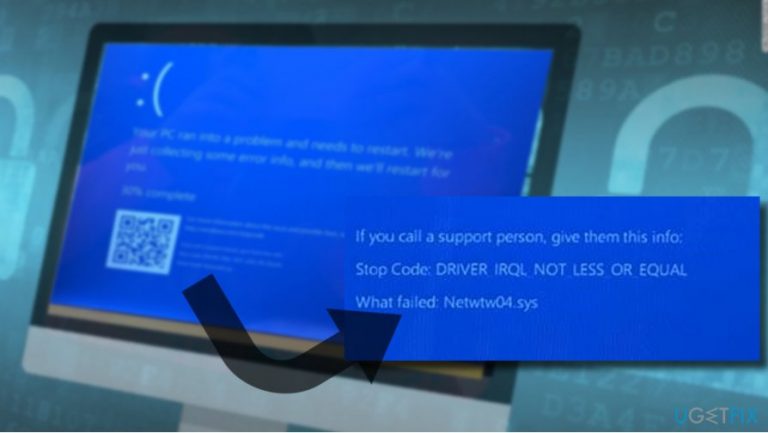
The Netwtw04.sys BSOD shows up under various conditions, for example, on Windows boot, while trying to launch apps or installing updates. The full Driver_IRQL_NOT_LESS_OR_EQUAL (Netwtw04.sys) BSOD says:
Your PC ran into a problem and needs to restart. We’re just collecting some error info, and then we’ll restart for you. (30% complete).
For more info about this issue and possible fixes, visit http://windows.com/stopcode
If you call a support person, give them this info:
Stop Code: DRIVER_IRQL_NOT_LESS_OR_EQUAL
What failed: Netwtw04.sys
As stated in the message, system’s reboot may be enough to fix the BSOD, but no one reported this "fix" to be working. According to the latest reports, the culprit of the DRIVER_IRQL_NOT_LESS_OR_EQUAL (Netwtw04.sys) is the outdated or corrupted Intel Wireless Adapter driver.[ref en-2]
Additionally, it's advisable to check if the system does not contain two confronting anti-virus programs. Even though one of them may be disabled, certain files may be triggering software conflict resulting in the Netwtw04.sys error.
Update Network Adapter Drivers
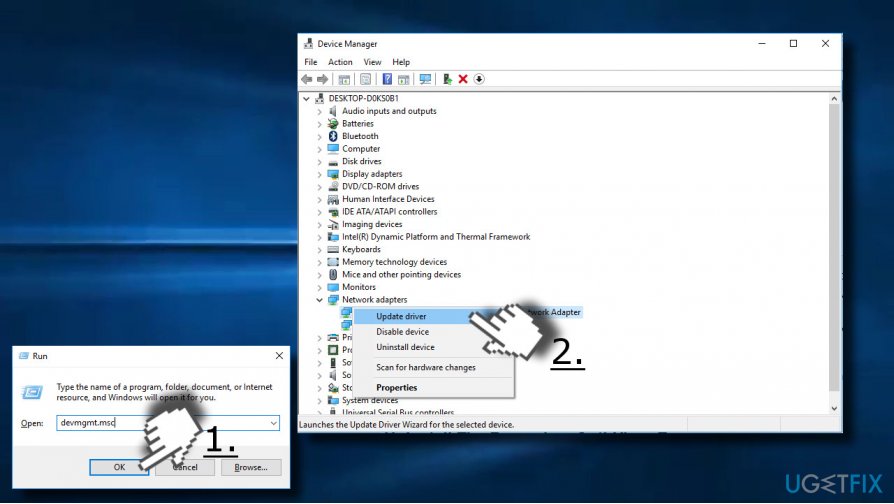
- Click on Windows key + R, type devmgmt.msc, and press Enter.
- Alternatively you can right-click on Windows key and select Device Manager.
- When the Device Manager opens, expand Network adapters section.
- Right-click on your Network Adapter (Intel Network Adapter is most frequently affected) and select Update Driver Software.
If updating the driver did not fix DRIVER_IRQL_NOT_LESS_OR_EQUAL (Netwtw04.sys) error, try to uninstall it completely and then reinstall it manually. For this purpose, repeat the same steps as provided above, except that instead of Update Driver Software select Uninstall.
Then, while on the Device Manager, click on the Action tab and select Scan for Hardware Changes. The system should automatically detect the missing driver, but if for some reason the driver is not detected, navigate to the manufacturer's website and download it manually. Select the latest version and make sure that it's compatible with your OS.
NOTE: several people reported that the issue just started happening a few days after updating some system drivers. In this case, try reverting back the old driver versions.
Uninstall The Secondary Anti-Virus Program
If you are running two different security tools on your PC, we would recommend removing the one that is currently disabled. It's files may be triggering software conflict, which is why some system drivers and other functions cannot function properly. You can uninstall it automatically using software like [rev id="Perfect Uninstaller"] or manually via Apps & Features.
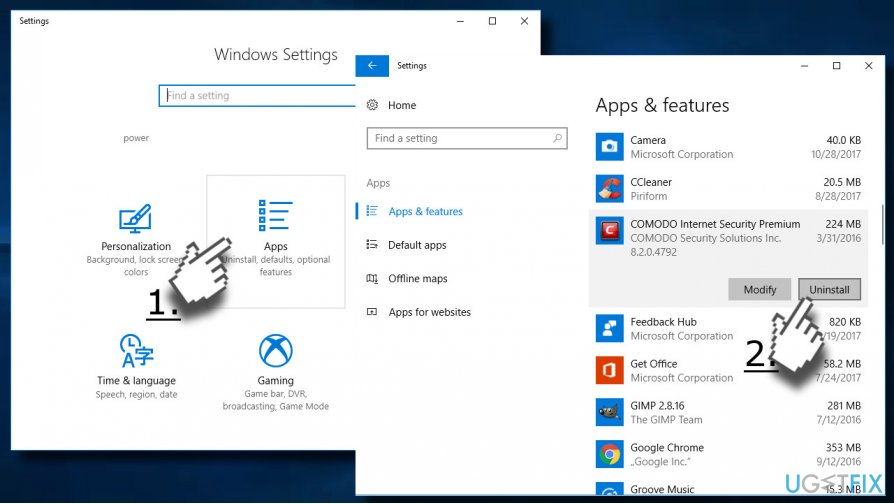
- Press Windows key + I and select Apps.
- Find the antivirus entry on the Apps & Features section.
- Click on it and select Uninstall.
Check the System for Corrupted Files
Stop Codes like Netwtw04.sys may be caused by corrupted system files, outdated Windows registry[ref en-3] entries or even missing files. Problems related to system's files often occur after malware infection or important system's changes. Thus, if neither driver update nor removal of additional antivirus helped to solve the problem, try running a scan with [d1] optimization utility.
Bottom line
To fix the DRIVER_IRQL_NOT_LESS_OR_EQUAL (Netwtw04.sys) error, it is recommended to update the Network Adapter drivers and check for conflicts between anti-virus programs. If these solutions do not resolve the issue, consider returning the PC to the manufacturer.
Frequently asked questions
This error indicates a problem with the network driver, specifically related to the Intel wireless driver, which can cause your system to crash. It typically occurs when the driver attempts to access a memory address that it shouldn't.
You can update the driver by going to Device Manager, expanding the Network adapters section, right-clicking on your Intel wireless adapter, and selecting 'Update driver.' Alternatively, you can download the latest driver directly from the Intel website.
If updating the driver does not resolve the issue, try uninstalling the driver from Device Manager and then rebooting your system to allow Windows to reinstall it automatically. You can also consider rolling back to a previous driver version if the issue started after a recent update.




Report an issue
What's wrong with this guide? We review every report and update or remove content.
Report received — thank you. We'll review and fix it.
You need a free account to submit a report.
Be the first to comment