How to fix
High CPU Usage by Service Host
on Windows
Resolve high CPU usage caused by Service Host on Windows 10 V1709 quickly and effectively. Expert-tested solutions to optimize performance!


What causes How to Fix High CPU Usage by Service Host on Windows 10 V1709?
- Stuck download process of Windows Update
- Failure of Internet Connection Sharing (ICS) service
- Failure of Base Filtering (BFE) service
- Continuous restarting of ICS process
Repairs Windows system files, removes malware, and restores a clean OS state — without reinstalling.
After the installation of Windows 10 Fall Creators Update, two processes, Service Host: Local network and Service Host: Internet Connection Sharing, triggers high CPU usage, which sometimes jumps to 50 or more percent. The PC gets really sluggish. Could you please tell me what could I do?
For the past couple of weeks, Microsoft forum is full of users’ reports about Windows 10 Fall Creators Update bugs. Sadly, there is a multitude of problems, one of which is related to high CPU usage by Service Host processes (Service Host Local Service and Service Host Internet Connection Sharing).
According to new Windows 10 V1709 users, these two processes use more than 30% of CPU, and, therefore, diminish the performance of the system. While the culprit of the problem may differ on each case, usually the Service Host high CPU is triggered by the stuck download process of Windows Update.
However, the problem can also root from the failure of other Windows services, for example, Internet Connection Sharing (ICS) or Base Filtering (BFE) Service. Therefore, a temporary solution for high CPU usage by Service Host would be to disable the services indicated above.

If that did not help to fix the problem at least temporarily, try the methods provided down below:
Method 1. Disable ICS or Base Filtering (BFE) Service
Internet Connection Sharing (ICS) (SharedAccess) is one of the default services in Windows 10. It is responsible for the provision of network address translation, addressing, name resolution and/or intrusion prevention services for a home or small office network.
The ICS is dependent on other Windows processes, including BFE. If the latter can’t start for some reason, ICS process keeps waiting, failing, and restarting continuously resulting in the high CPU usage by Service Host. Thus, try to stop ICS and BFE processes:
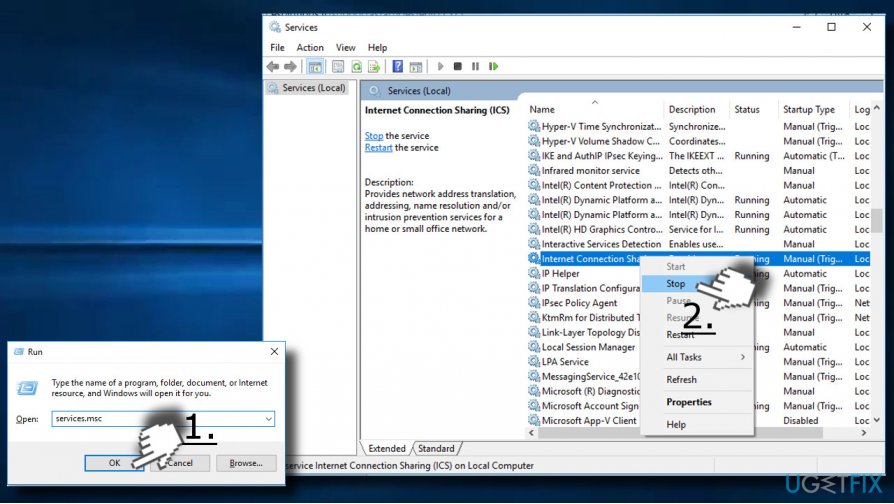
- Press Windows key + R, type services.msc, and press Enter.
- First of all, find the Internet Connection Sharing (ICS) service, right-click on it, and select Stop. Few people reported that right after stopping it, they received a BSOD screen, which triggered a reboot. Nevertheless, after system’s reboot, the high CPU usage by Service Host has been fixed.
- If that did not help, stop the BFE service and check if the problem was resolved.
NOTE: this fix is temporary because the BFE and ICS services typically automatically. Thus, you can apply this method until Microsoft releases the patch.
Method 2. Use Command Prompt
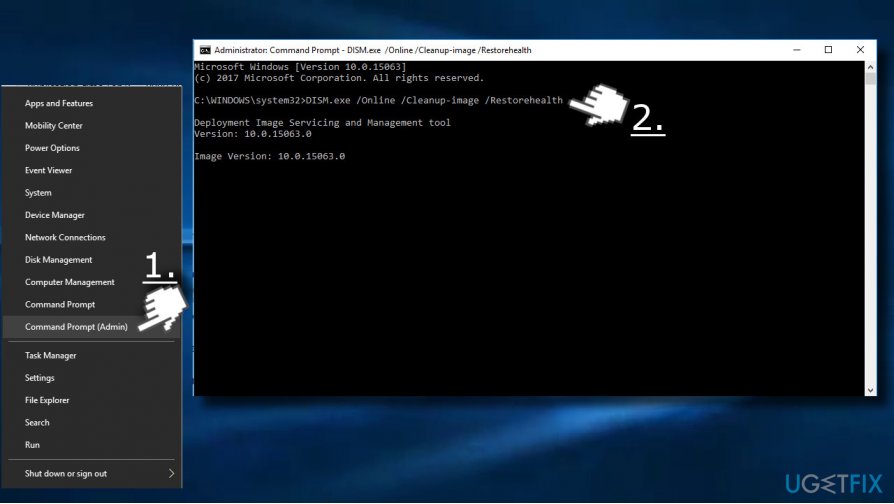
- Right-click on Windows key and select Command Prompt (Admin).
- Click Yes on the UAC window and paste the following commands into the Command Prompt window:
DISM.exe /Online /Cleanup-image /Restorehealth
DISM.exe /Online /Cleanup-Image /RestoreHealth /Source:C:RepairSourceWindows /LimitAccess
sfc /scannow
IMPORTANT: C:RepairSourceWindows stands for the location of your repair source.
- Close Command Prompt and check if the problem has been resolved.
Method 3. Reset your network
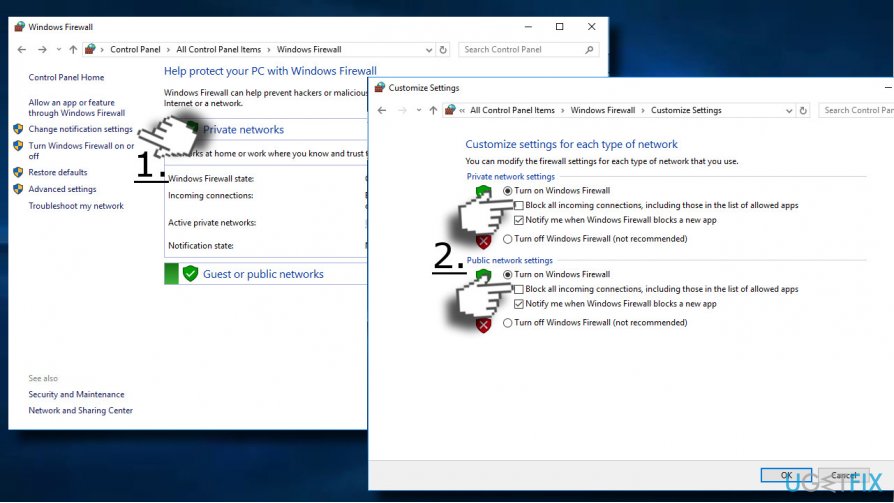
- Open Control Panel and find Windows Firewall entry on the All Control Panel Items list.
- Click the Change notifications settings link on the left pane and mark the Block all incoming connections including those in the list of allowed apps check box.
- Then press Windows key + I and open Update & Security.
- Select Troubleshoot on the left pane and open Internet Connections/ Incoming connections.
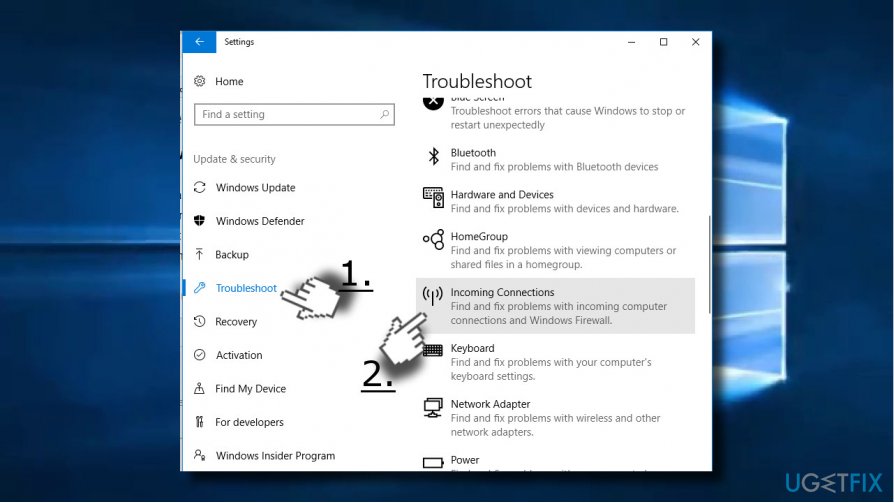
- Click the Run troubleshooter button.
- Now click on Settings and open Network and Internet.
- Click Network Reset button.
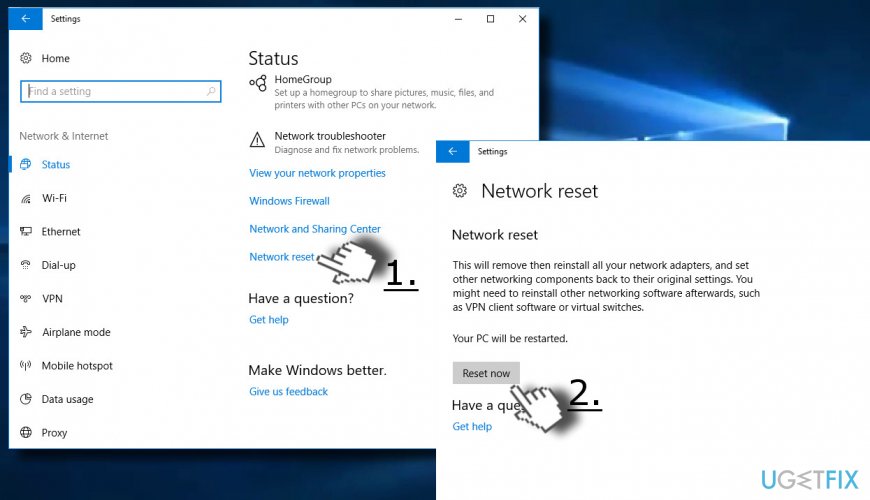
- Then restart your PC twice and reset everything back.
Bottom line
To fix high CPU usage by Service Host, you can disable the Internet Connection Sharing (ICS) and Base Filtering (BFE) services. If these methods do not resolve the issue, consider exploring additional troubleshooting steps or seeking further assistance.
Frequently asked questions
High CPU usage by Service Host can be caused by various background services running inefficiently, particularly related to Windows updates or network services.
You can use the Task Manager to expand the Service Host process and see which services are consuming high CPU resources, allowing you to pinpoint the issue.
You can try disabling unnecessary services, updating your system, or performing a clean boot to minimize background processes that may contribute to high CPU usage.




Report an issue
What's wrong with this guide? We review every report and update or remove content.
Report received — thank you. We'll review and fix it.
You need a free account to submit a report.
Be the first to comment