How to fix
NMI_HARDWARE_FAILURE
on Windows
Resolve NMI_HARDWARE_FAILURE in Windows 10 effortlessly. Follow our expert-tested tips to get your system running smoothly again, fixed in minutes!

What causes How to fix NMI_HARDWARE_FAILURE in Windows 10?
- Hardware issues
- Incompatibility with virtualization support
- Driver conflicts
- Corrupted system files
- Outdated Windows version
Repairs Windows system files, removes malware, and restores a clean OS state — without reinstalling.
Hello. I wanted to enable virtualization support on my Windows computer and that caused an NMI_HARDWARE_FAILURE immediately. Are there any solutions to this problem?
Windows bugs, crashes, and errors can cause a lot of trouble for everyday users. Sometimes they are hard to understand and identify. Users are left wondering what is wrong with their system and how to fix the sudden crashes. The NMI_HARDWARE_FAILURE error is quite rare, but one of the reasons behind its appearance may be hardware.
Some users report that they tried to enable virtualization support in their BIOS when the error appeared. Virtualization is a hardware feature found in all AMD & Intel CPUs[ref en-1] that allows a single processor to act as if it was multiple individual CPUs. This allows an operating system to more effectively & efficiently utilize the CPU power in the computer so that it runs faster.
It may well be that the system is not able to support virtualization, so NMI_HARDWARE_FAILURE appeared. In this guide, we will present you with 7 methods that could fix this issue but keep in mind that there could be serious damage, and you might need to replace some hardware in your machine.
Troubleshooting such Windows issues manually could be difficult, as there is no particular cause. We recommend using a repair tool like [d1] that can fix various system errors, like BSoDs,[ref en-2] corrupted files, registry[ref en-3] issues, and optimize the machine for better performance. Otherwise, if you are ready to begin the process, proceed further.
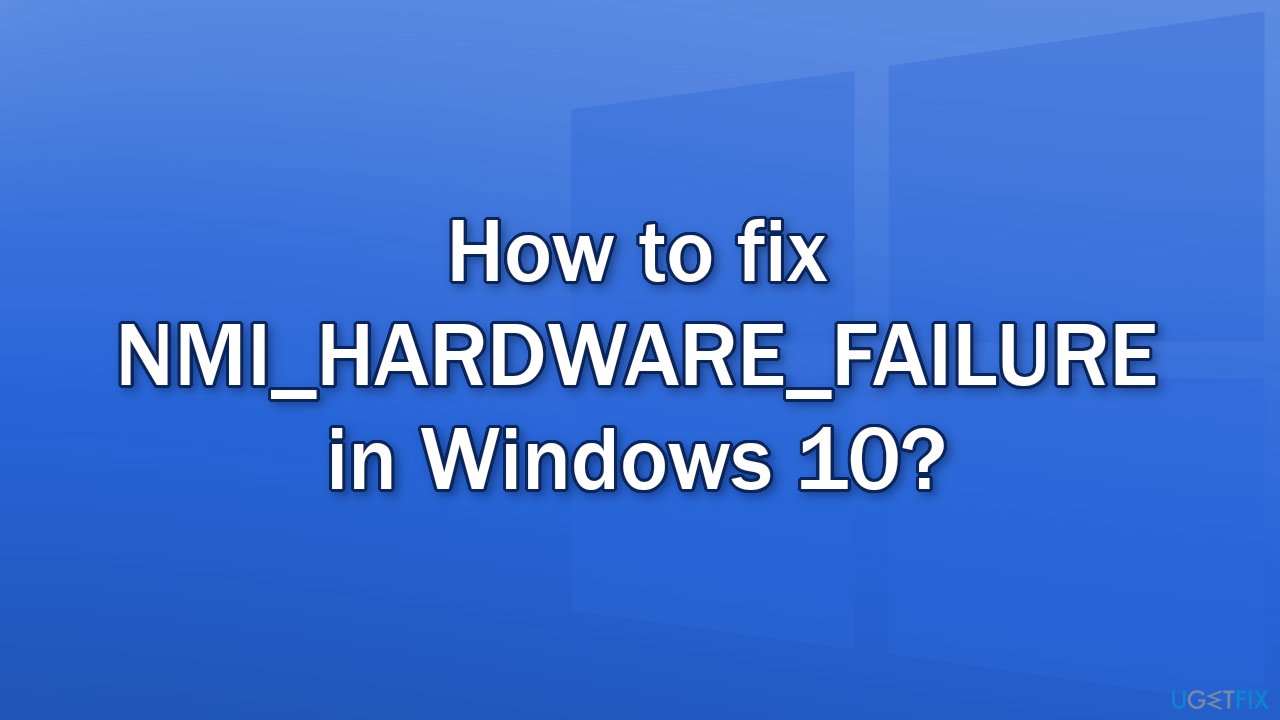
Method 1. Run the BSOD Troubleshooter
- Open the Settings and go to the Update & Security section
- Select Troubleshoot from the menu on the left
- Select BSOD from the right pane and click Run the troubleshooter
- Follow the instructions on the screen
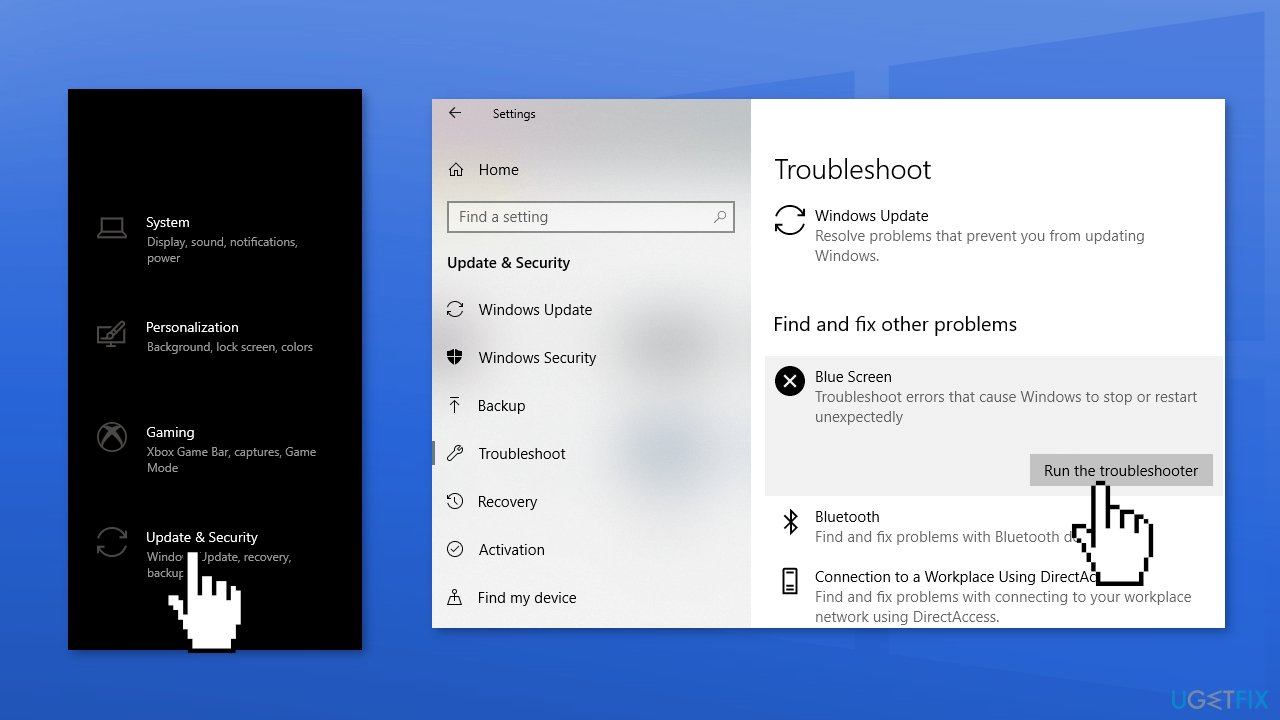
Method 2. Install Available Updates
- Click Settings from your start menu and click Update & Security
- Choose Windows Upgrade from the left panel and click the Check for updates button, and then your computer will check for, download, and install any updates found
Method 3. Update Drivers
Downloading drivers via the Windows update feature can help you avoid driver conflicts. However, it usually takes time before the manufacturers cooperate with Microsoft and implement the newest drivers there. If you would like to automatically receive the latest drivers as quickly as possible, you should employ an automatic driver updater such as [rev id= "DriverFix"]. Otherwise, follow the steps below:
- Right-click on Start and pick Device Manager
- Expand one of the sections, for example, Network adapters
- Right-click on your network adapter and select Update driver
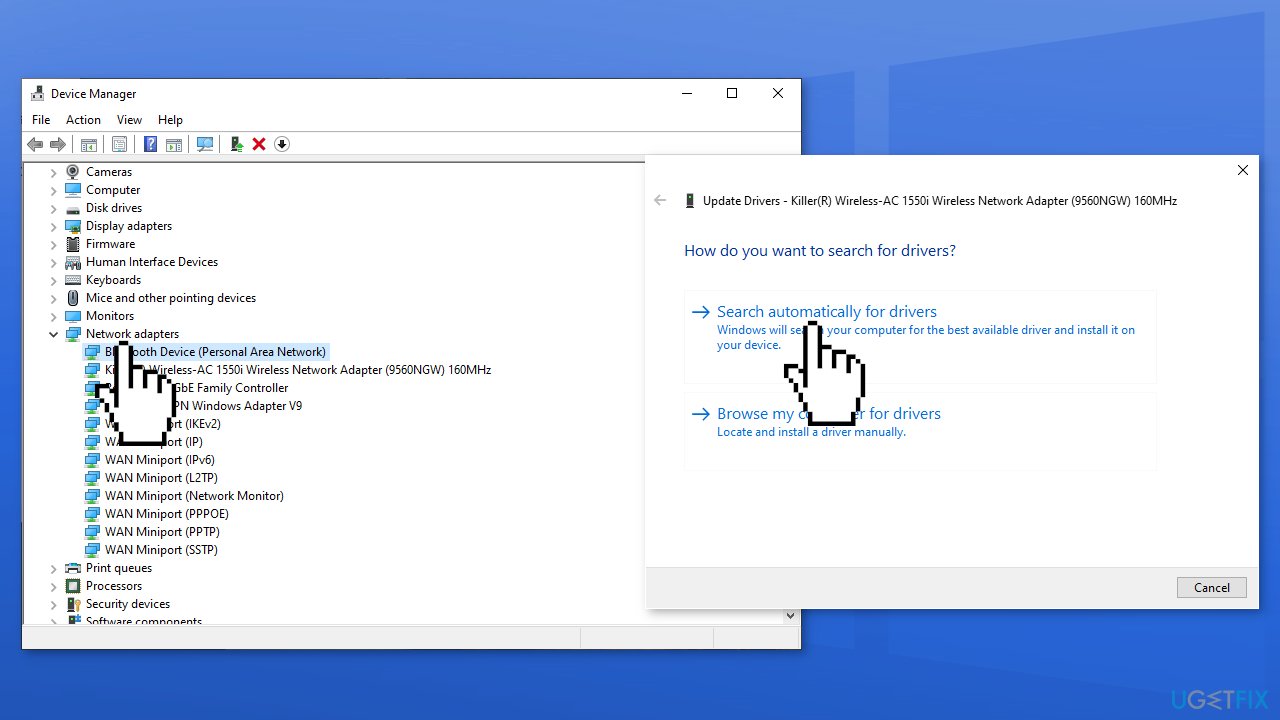
- Pick Search automatically for drivers
- Wait till the drivers are found and installed on your system
- Restart your PC.
Method 4. Run SFC and DISM
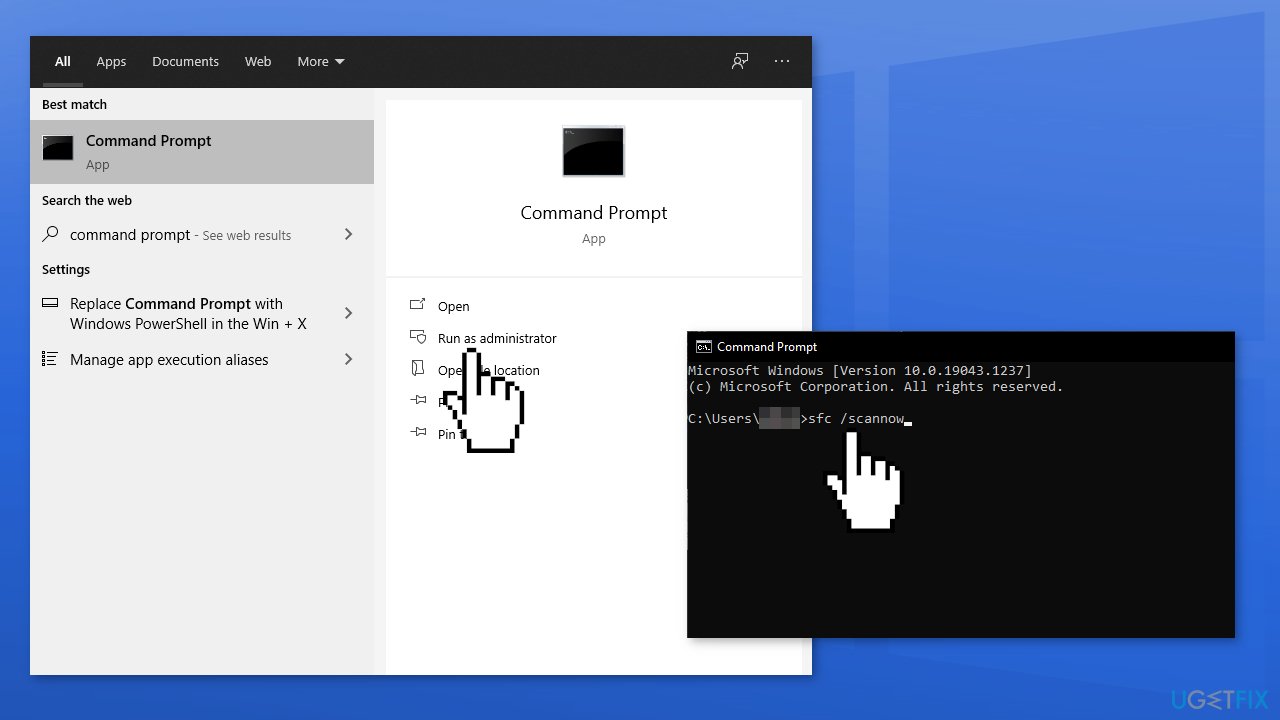
In order to address corrupted system files, you should use an elevated Command Prompt and run an SFC scan.
- Type cmd in Windows search bar, right-click on Command Prompt and select Run as administrator
- When User Account Control shows up, click Yes
- Type in the following command, and press Enter:
sfc /scannow
- Reboot your system
- If SFC returned an error, then use the following command lines, pressing Enter after each:
DISM /Online /Cleanup-Image /CheckHealth
DISM /Online /Cleanup-Image /ScanHealth
DISM /Online /Cleanup-Image /RestoreHealth
Method 5. Check Disk
- Enter the Advanced Startup (Restart your computer while holding the Shift key).
- Choose Troubleshoot, then choose Advanced Options
- Select Command Prompt
- When it appears, enter the following lines and press Enter:
bootrec.exe /rebuildbcd
bootrec.exe /fixmbr
bootrec.exe /fixboot
chkdsk /r c:
chkdsk /r d:
- Restart your computer
Method 6. Run bcdedit
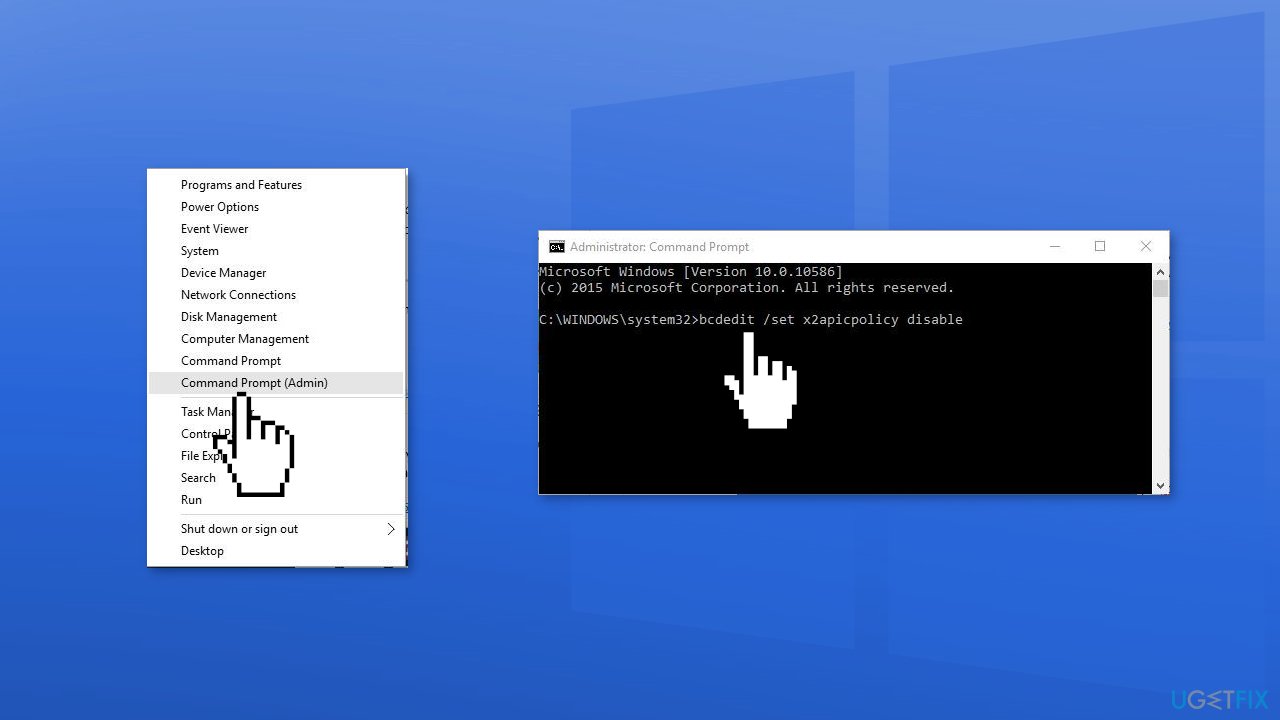
- Press Windows Key + X to open Power User Menu
- Select Command Prompt (Admin)
- Once the Command Prompt opens, insert the line below and then press Enter:
bcdedit /set x2apicpolicy disable
Method 7. Disable Early Launch Anti-Malware Protection
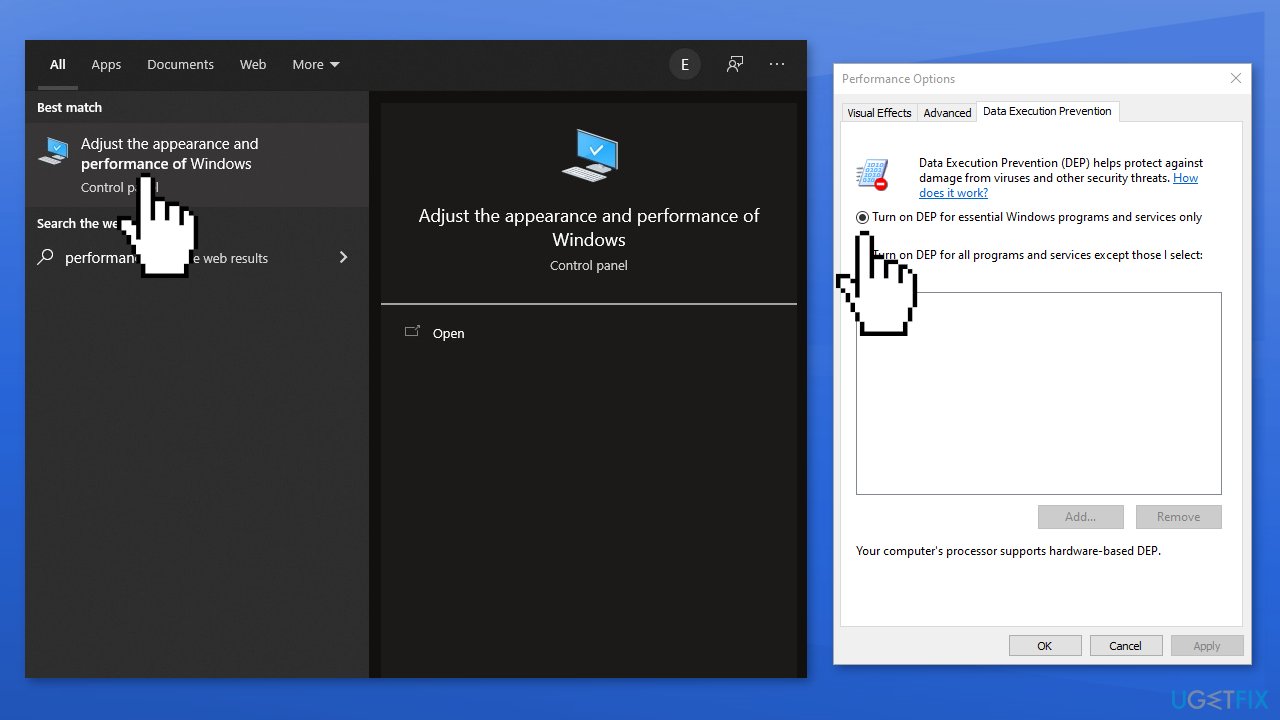
- Press Windows Key + S and enter performance
- Select Adjust the appearance and performance of Windows
- Go to Data Execution Prevention tab and select Turn on DEP for essential Windows programs and services only
- Click Apply and OK to save changes
- Press and hold the Shift key and click the Restart button
- Select Troubleshoot, then Advanced options, click Startup Settings, and then the Restart button
- Select Disable early launch anti-malware protection by pressing 8 or F8 on your keyboard
Bottom line
To address the NMI_HARDWARE_FAILURE error, you can run the BSOD troubleshooter, install available updates, and update your drivers. If these methods do not resolve the issue, consider using a repair tool or replacing hardware components.
Frequently asked questions
The NMI_HARDWARE_FAILURE error is typically caused by hardware issues such as faulty RAM, overheating components, or incompatible drivers in Windows 10.
To troubleshoot this error, you can start by checking your hardware connections, running Windows Memory Diagnostic, and updating your drivers to ensure compatibility with Windows 10.
Yes, you can often resolve the NMI_HARDWARE_FAILURE error by replacing faulty hardware components or performing system checks, without the need to reinstall Windows 10.




Report an issue
What's wrong with this guide? We review every report and update or remove content.
Report received — thank you. We'll review and fix it.
You need a free account to submit a report.
Be the first to comment