How to fix
NVIDIA Container high CPU usage
on Windows
Resolve NVIDIA Container high CPU usage issues on Windows 10 and 11 effortlessly. Expert-tested solutions guarantee smooth performance. Fixed in minutes!


What causes How to fix NVIDIA Container high CPU usage on Windows?
- Malfunctioning drivers
- Outdated drivers
- GeForce Experience causing issues
- Overlays in GeForce Experience
- Temporary high usage during updates
Repairs Windows system files, removes malware, and restores a clean OS state — without reinstalling.
Hello, I have noticed that my Windows is working extremely slowly, and fans are spinning fast, especially when I launch a game. So I checked the Task Manager to see what was going on and noticed that NVIDIA Container is stuck in a permanent state of high CPU usage. Any help would be appreciated.
Every person who purchases and Nvidia graphics card requires software for it to run correctly. While the most important part is the driver,[ref en-1] there are also plenty of additional services and processes that are employed by other programs related to GPU performance. This is why you might find many related entries running in the Task Manager.
Under normal circumstances, none of these processes should be taking a large portion of the computer's processing power unless it is temporary for a particular activity, e.g., automatic updates. However, many users complained that they had spotted NVIDIA Container (NvContainer.exe) using way too much CPU than it is supposed to.[ref en-2] Naturally, such behavior can cause a lot of inconvenience to people, as it might slow down the machine or interrupt the operation of other processes.
NVIDIA Container is an important process related to GPU drivers - it helps other related tasks to run without interruptions. When some of these components malfunction due to one reason or another, the CPU usage of the process might increase, in some cases, drastically.
There could be plenty of causes for this problem, as it all depends on a particular computer and its configuration. Likely, NVIDIA Container high CPU usage is caused by malfunctioning drivers. Installing an older version or updating them could help you solve the issue.
Also, many people said that GeForce Experience could be the culprit. While uninstalling the program could be one of the issues, disabling overlays the app employs might also help. Below you will find several methods that should help you fix NVIDIA Container high CPU usage issue, although before you proceed, we strongly recommend you perform a scan with the [d1] repair tool to ensure that no underlying Windows issues are causing processes to malfunction.
Method 1. Update your drivers
If you have outdated Nvidia drivers, they might be corrupted. If the problem started abruptly without any prior system changes, we recommend you update them.
- Right-click on Start and pick Device Manager
- Expand Display adapters section
- Right-click on your GPU and select Update driver
- Select Search automatically for drivers
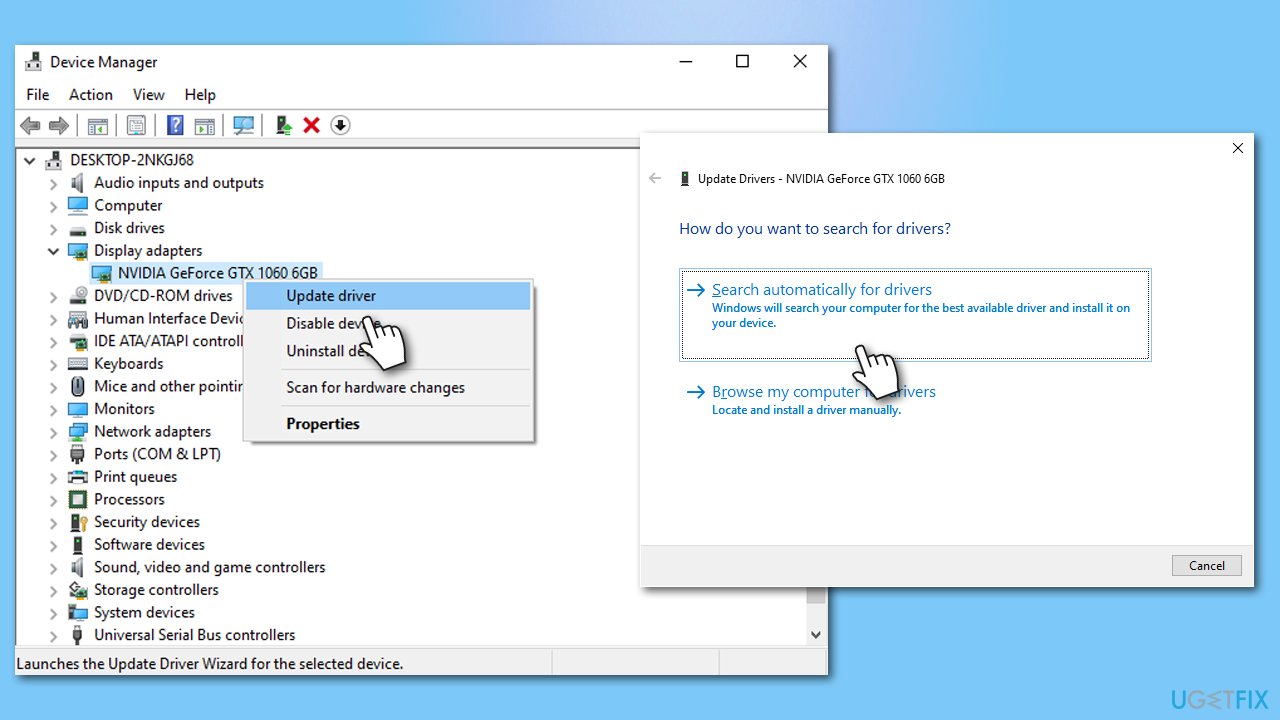
How to fix nvidia container high cpu usage on windows update driver - Restart your PC once finished.
It is important to note that updating drivers in such a way is not optimal, as the Device Manager often fails to find the newest software, especially when it comes to GPU drivers. We recommend using [rev id="DriverFix"] instead, it can be used to backup drivers and update them as required - all with just a click of a button.
Method 2. Install an older version of Nvidia drivers
This method could work for those who spotted the issue after installing the newest Nvidia drivers on their system. In some cases, they might not be fully compatible with particular system configurations or might not be properly tested before release. Thus, temporarily going back to the previous version can be useful.
First of all, you should uninstall the currently installed driver from your system. There is a more thorough way to thoroughly uninstall this software, although the following steps should suffice:
- Open Device Manager once again, expand Display adapters
- Right-click on your GPU and pick Uninstall device
- Tick the Delete the driver software for this device checkbox
- Click Uninstall
- Visit the official Nvidia download website
- Go to the older driver section
- Enter the required information - product type, series, operating system (!) - and click Search
- You will find the list of drivers for your GPU
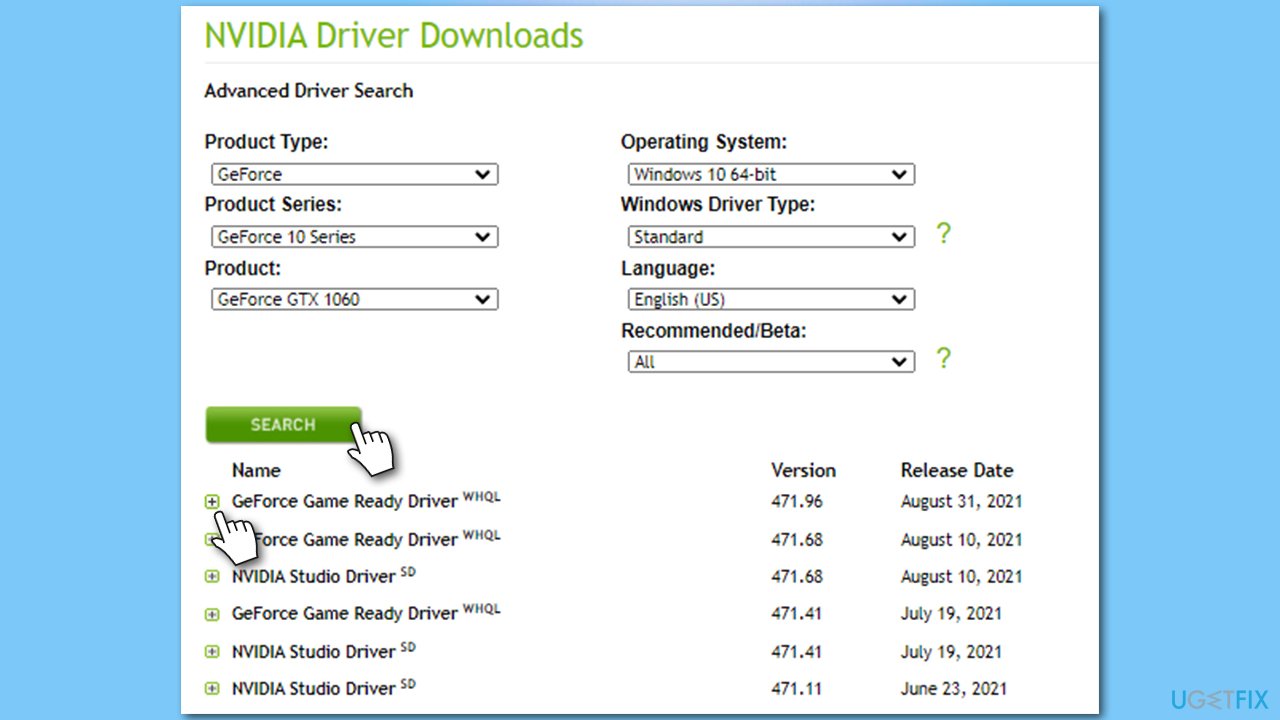
How to fix nvidia container high cpu usage on windows use older driver version - Choose the older version of the driver (should be at the top of the list), download, and install
- Reboot your PC.
Method 3. Disable GeForce overlay
- Type GeForce Experience in Windows search and press Enter
- Click on Settings
- Toggle In-game overlay option to Off

How to fix nvidia container high cpu usage on windows disable geforce overlay - Close the window and see that that helped your issue.
Note: you can also try to uninstall GeForce Experience if this step does not help
Method 4. Restart related services
- Type Services in Windows search and hit Enter
- In the new window, scroll down to NVIDIA Display Container LS
- Right-click on the entry and select Restart
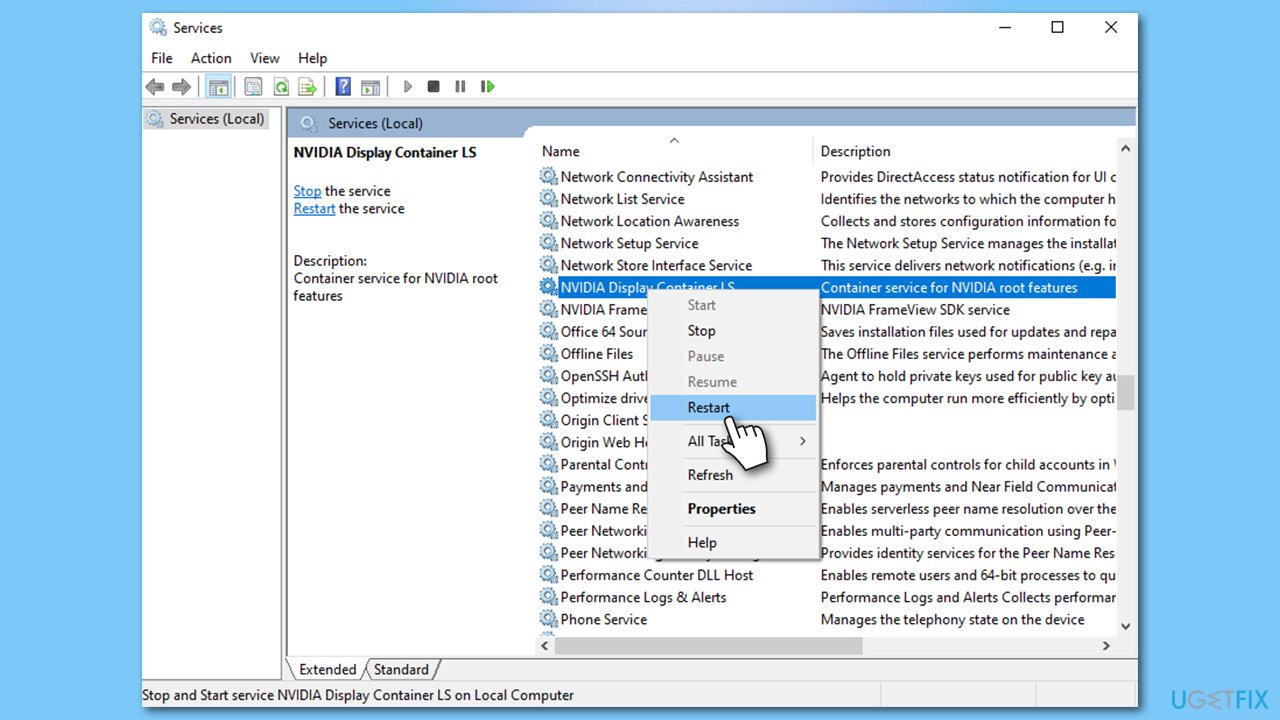
How to fix nvidia container high cpu usage on windows restart services - Do the same for any other Nvidia services present on the list.
Method 5. Disable Nvidia tasks via Task Scheduler
There are plenty of scheduled tasks set up by Nvidia software to gather certain technical information, report bugs,[ref en-3] and perform similar activities on your PC. In other words, you won't hurt your personal gaming experience if you disable these scheduled tasks - this might help you fix the Nvidia Container high CPU usage, though.
- Type Task Scheduler in Windows search and press Enter
- Click on Task Scheduler Library on the left
- On the right side, check if you have tasks which name starts with "Nv"
- If such entries exist, click on them once and select Disable on the right side of the window.
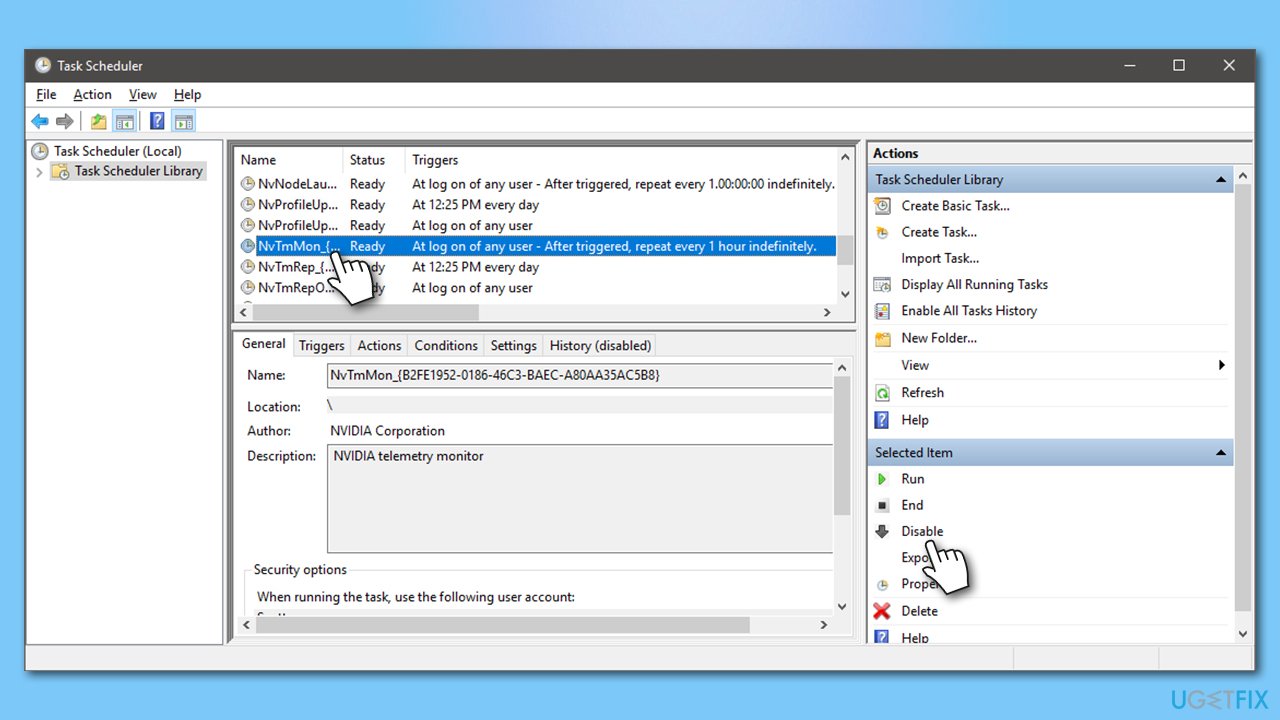
How to fix nvidia container high cpu usage on windows disable scheduled tasks
Bottom line
To fix the NVIDIA Container high CPU usage issue, you can try updating or reinstalling your graphics drivers, disabling overlays in GeForce Experience, or uninstalling the program altogether. If these methods do not resolve the problem, it is advisable to perform a scan with a repair tool to check for underlying Windows issues.
Frequently asked questions
High CPU usage by NVIDIA Container can be caused by outdated drivers, unnecessary background processes, or specific software that interacts with the NVIDIA GPU.
You can reduce CPU usage by updating your NVIDIA drivers, disabling unnecessary startup applications, or adjusting NVIDIA settings in the Control Panel.
Disabling NVIDIA Container may reduce CPU usage, but it can also limit the functionality of certain NVIDIA features; it's recommended to resolve the high usage issue instead.




Report an issue
What's wrong with this guide? We review every report and update or remove content.
Report received — thank you. We'll review and fix it.
You need a free account to submit a report.
Be the first to comment