How to fix
“These files might be harmful to your computer” Windows Security alert
on Windows
Resolve the "These files might be harmful" alert on Windows 10 and 11 effortlessly. Follow our expert-tested tips to fix it in minutes.

What causes How to fix “These files might be harmful to your computer” Windows Security alert?
- Windows Security detects a potential threat in a file or application
- The file is from an unknown source
- Windows Security does not recognize the file format
- Operating system malfunctions
- False positives from Windows Security
Repairs Windows system files, removes malware, and restores a clean OS state — without reinstalling.
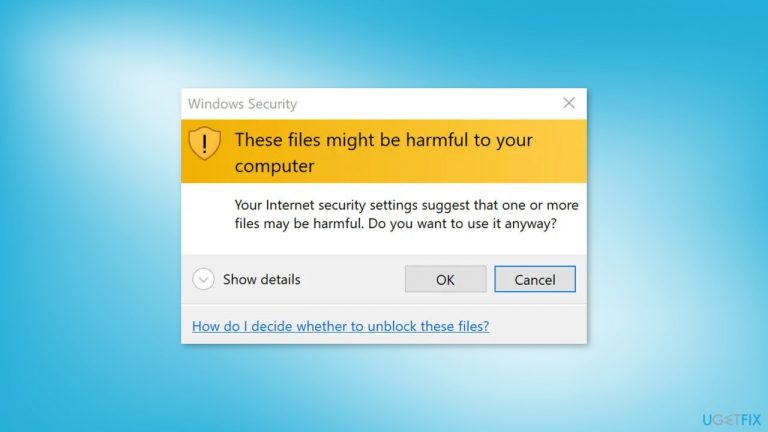
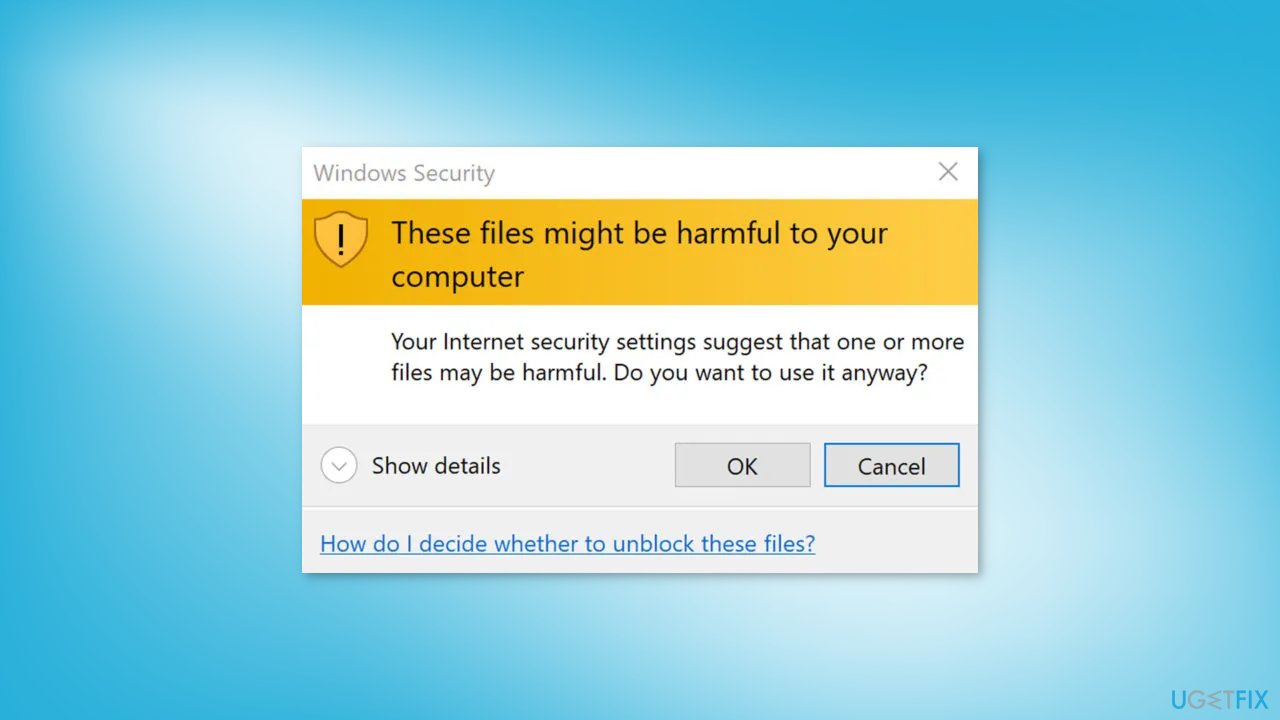
Hello. I was trying to transfer some files from my USB to my Windows laptop but I keep getting the "These files might be harmful to your computer" Windows Security alert. How do I disable it?
The Windows Security alert "These files may be harmful to your computer" appears when Windows Security detects a potential threat in a file or application that a user is attempting to download or access. This warning is intended to keep users from downloading or opening malicious files that may harm their computers.
This warning can appear in a variety of scenarios, such as when downloading files from the internet, accessing files from an external device, or moving files between drives. This warning can have an effect on users by preventing them from accessing the files they require, causing frustration and delays.
It's important to note that Windows Security can sometimes produce false positives and flag files as a potential threat even if they are safe. This can occur if the file is from an unknown source, or if Windows Security does not recognize the file format. Before implementing any solution, it's recommended to perform a thorough assessment of the file in question and ensure that it is safe to use.
In this guide, you will find 4 steps that should help you fix "These files might be harmful to your computer" Windows Security alert. Keep in mind, that you may be seeing this warning because of operating system malfunctions. In that case, you can try using a maintenance tool like [d1] that can fix most system errors, BSODs,[ref en-1] corrupted files, registry[ref en-2] issues, or clear cookies and cache.[ref en-3] Otherwise, follow the step-by-step instructions below.
Method 1. Add Your IP Address to the Intranet Zone
To resolve this security alert when accessing files from your local network PCs or NAS, add the IP address or DNS names of the devices to the Local intranet zone.
- Press the Windows key + R to open the Run dialog
- Type control and click OK to open Control Panel
- In Control Panel, navigate to Network and Internet
- Click on Internet Options
- Open the Security tab in the Internet Properties dialog
- Select the Local intranet option
- Click on the Sites button
- Click on the Advanced button in the new window
- In the Add this website to the zone field, add your mapped IP address
- For example, if your NAS device is mapped to your local PC with IP address 198.168.1.71, add this IP address in the field and click Add
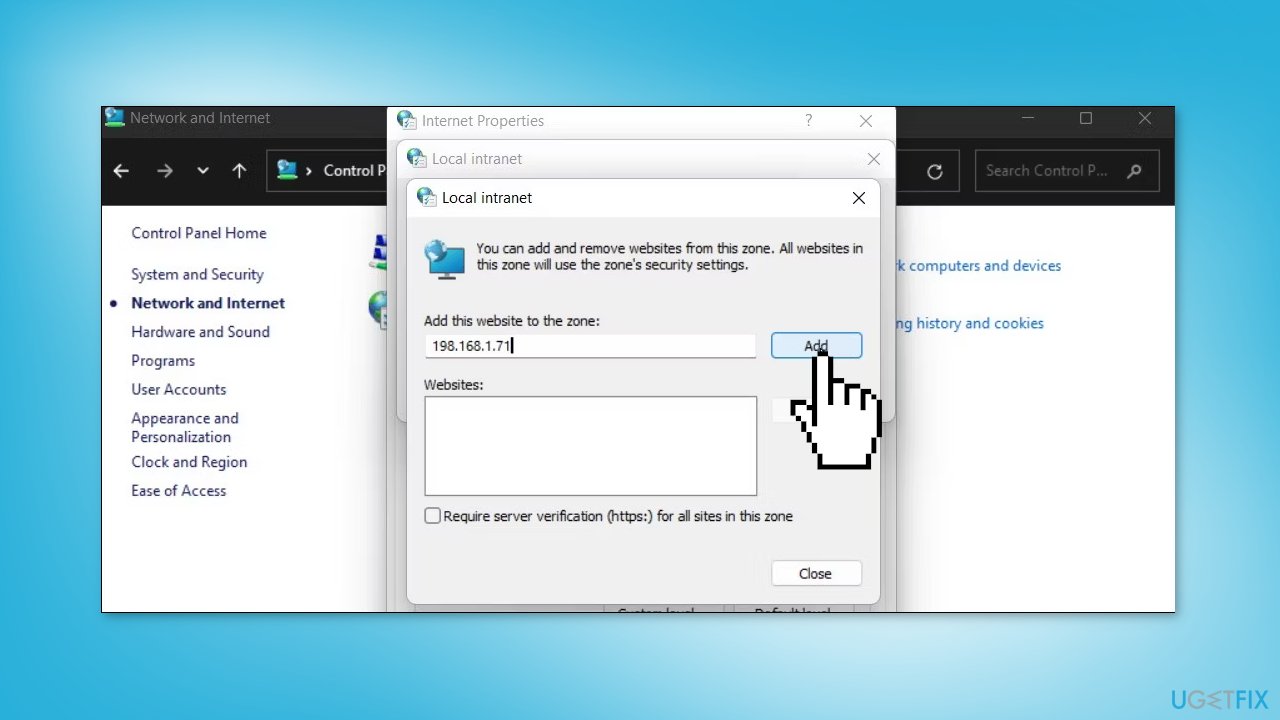
- Click Close and OK to save the changes
Method 2. Uninstall Internet Explorer
To resolve the security warning when moving files within the same drive, you may need to uninstall Internet Explorer. Follow these steps for Windows 10 or an older OS:
- Press the Windows key and type powershell
- Right-click on PowerShell and select Run as administrator
- In the PowerShell window, type the following command and press Enter:
Disable-WindowsOptionalFeature -FeatureName Internet-Explorer-Optional-amd64 –Online
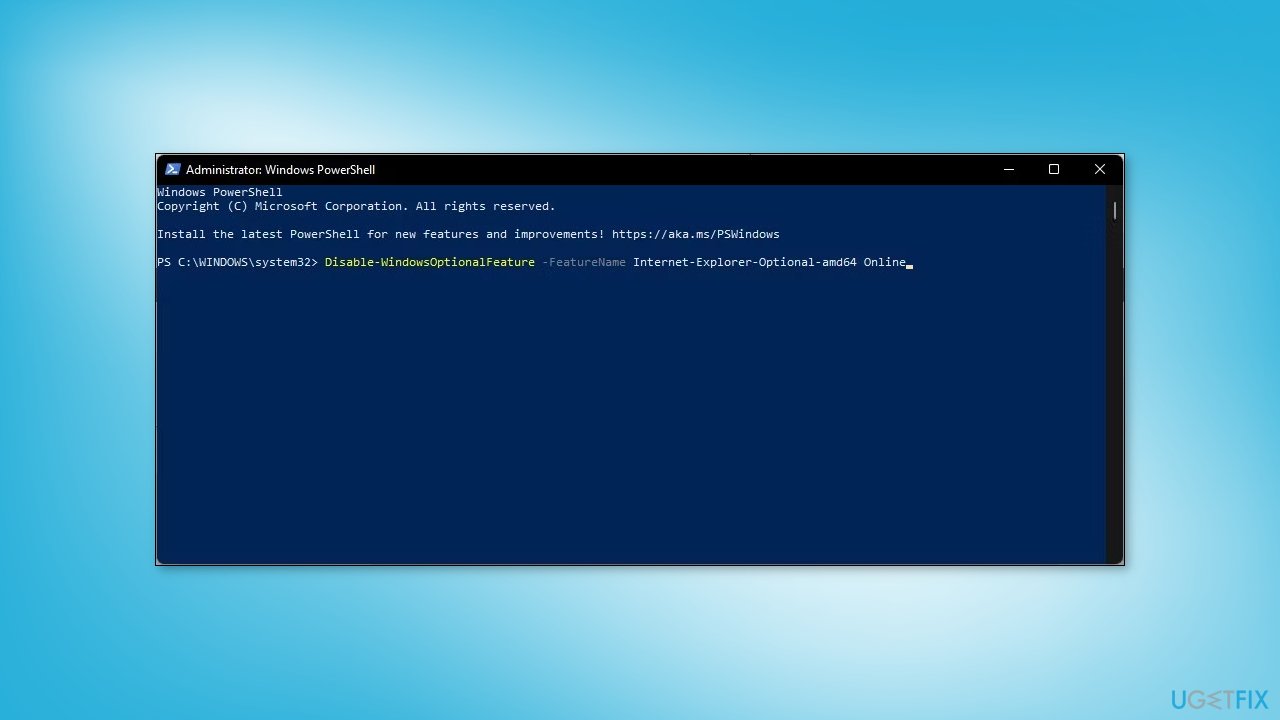
- Type Y to confirm the action
Method 3. Modify User Account Control Settings
- Press the Windows key + R to open the Run dialog box
- Type control and click OK to open the Control Panel
- In the Control Panel, click on Security and Maintenance
- Click on the Change User Account Control Settings option in the left pane
- In the new window, drag the slider down to the third level
- Click OK to save the changes
- Try to move the files and check if the Windows security warning still appears
- If it does, open the UAC settings and move the slider to the last level (Never notify)
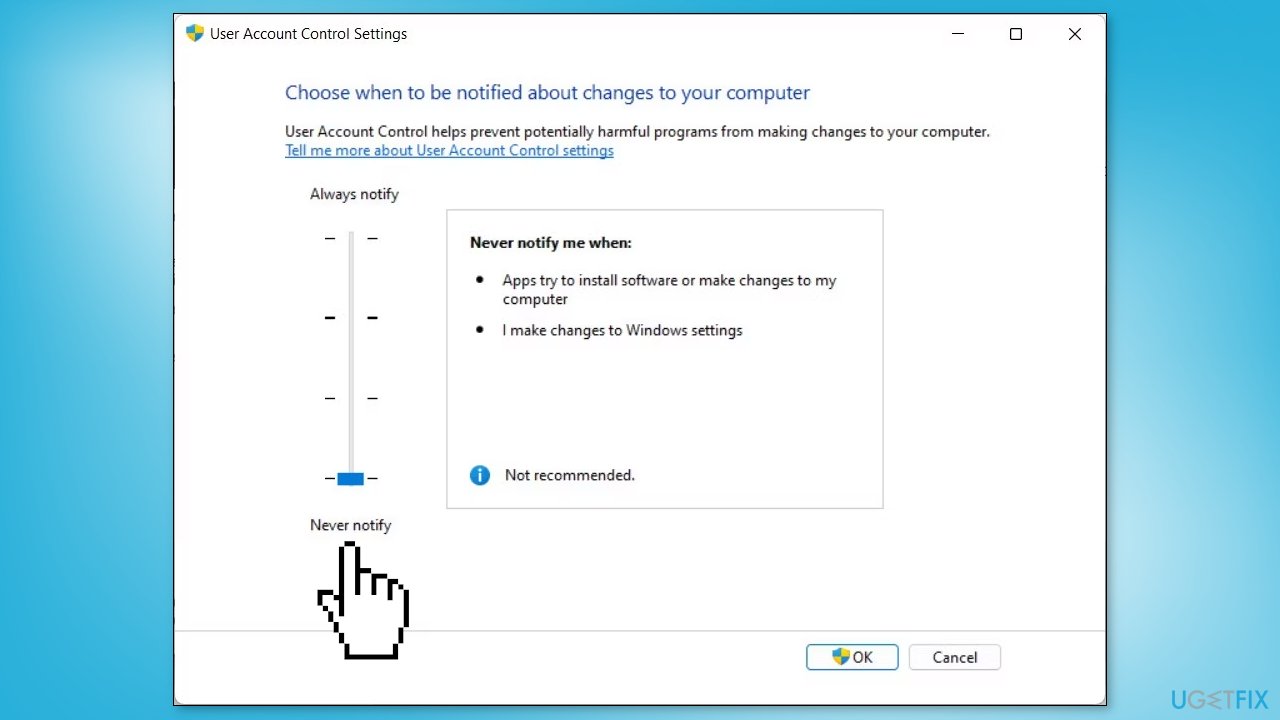
- After successfully moving the files, set the slider back to the second level (Notify me only when an app tries to make changes to my computer (default))
Note: Leaving the UAC settings disabled can make your system vulnerable to viruses and other threats.
Method 4. Reset Windows
If none of the previous solutions resolve the issue or if Internet Explorer is not installed, consider resetting Windows. Keep in mind that this is a time-consuming process, as the Windows reset will remove all your apps and require reinstallation.
- Open the Start Menu and click on Settings
- Press on Update & security
- Click on Recovery in the left pane
- In the right pane, click on Reset PC next to Reset this PC
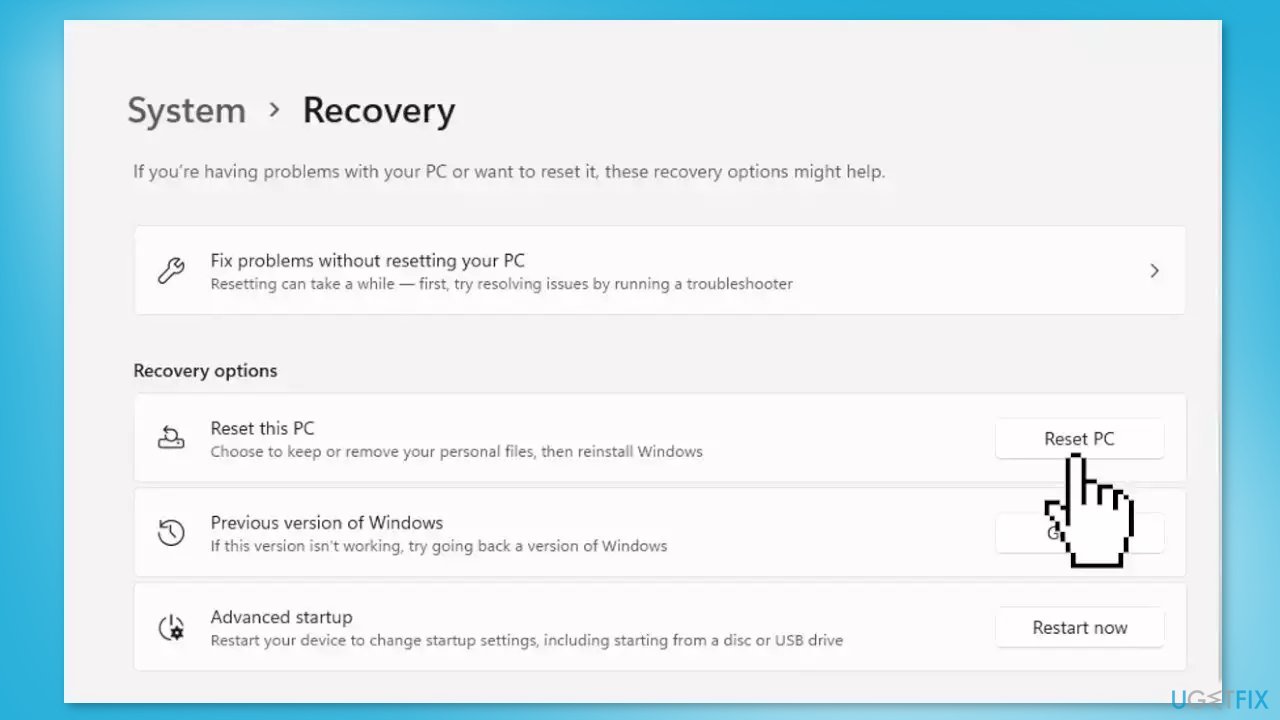
- Click on either Keep my files (if you want the computer to be reset without losing any of the user data stored on it) or Remove everything (if you want the computer to be reset and any and all user data stored on it to be deleted
- If presented with a warning, simply click on Next
- When prompted to do so, click on Reset
Bottom line
To fix the "These files might be harmful to your computer" Windows Security alert, you can add your IP address to the Intranet zone or use a maintenance tool to resolve system errors. If these solutions do not work, ensure the file is safe and consider further troubleshooting.
Frequently asked questions
This alert appears when Windows Security detects potential threats in files you are attempting to download or open. It is a precautionary measure to keep your system safe from harmful software.
You can disable the alert by adjusting the settings in Windows Security under 'Virus & threat protection,' but be cautious as this may expose your system to risks.
If you trust the file, you can choose to proceed by clicking 'More info' and then selecting 'Run anyway' to bypass the warning.




Report an issue
What's wrong with this guide? We review every report and update or remove content.
Report received — thank you. We'll review and fix it.
You need a free account to submit a report.
Be the first to comment