How to fix
Microsoft Edge slow? Here’s a fix
on Windows
Is Microsoft Edge sluggish on your Windows 10 or Windows 11 device? Discover simple fixes to speed it up and enhance your browsing experience, expert-te…


What causes Microsoft Edge slow? Here’s a fix?
- Corrupted system files
- Incorrect settings
- Overinflated temp files
- Automatic proxy server detection enabled
- Recent updates causing slowness
Repairs Windows system files, removes malware, and restores a clean OS state — without reinstalling.
Hello. I have an issue with the slow Microsoft Edge 2021 - the Chromium version of the browser. I previously heard that it had been improved a lot from my friends, so I decided to try it. It was all good initially, but later, I noticed the slow loading speeds and poor performance after a recent update. I do like the esthetics and the app's functions in general, so I'd prefer to keep on using it. Is there anything that could be done to fix it?
The new Chromium-based Edge was released by Microsoft in early 2020 and is now being used instead of the old Edge. To be precise, Microsoft even launched updates that would forcibly install[ref en-2] this version of the browser on users' computers (hence some wanted to uninstall it after this bold move).
However, Microsoft Edge was met with general positivity from both internet users and professional outlets,[ref en-1] describing it as one of the best alternatives for the ever-so-popular Google Chrome. With the help of Chrome extension and accounts integration, users can now use a browser that is more privacy-focused and surprisingly fast, considering how slow Internet Explorer or even the previous version of Edge was.
Despite this, the latter statement is not true for everybody, as many users said that MS Edge is slow. In some cases, the problem was sometimes prevalent from the very installation of the web browser. In contrast, others said that the slowness and unresponsiveness began only after applying the latest updates (mainly, v.88).
If your MS Edge is slow after one of the recent updates, you should turn off automatic proxy[ref en-3] server detection since this option became a default one. Below we will provide instructions on how to perform this fix step-by-step. However, that does not mean that it will help you, as there could be many other reasons for this otherwise great browser to be slow.
In some cases, the slow Microsoft Edge can be a direct result of corrupted system files, incorrect settings, overinflated temp files, or other reasons. Therefore, below you will find many solutions, but only one of a few of them might work for you.
Before you proceed, we highly recommend you try scanning your device with a repair utility [d1] - it could find the underlying Windows issue and repair it automatically, without you having to troubleshoot problems yourself. Besides, the app can also keep your privacy secure and delete various web browser cookies and other tracers that accumulate over time.
Solution 1. Turn off automatic proxy server detection
As already mentioned, new updates turned this option on by default, so you should disable it manually:
- Right-click on Start and select Settings
- Go to Network & Internet
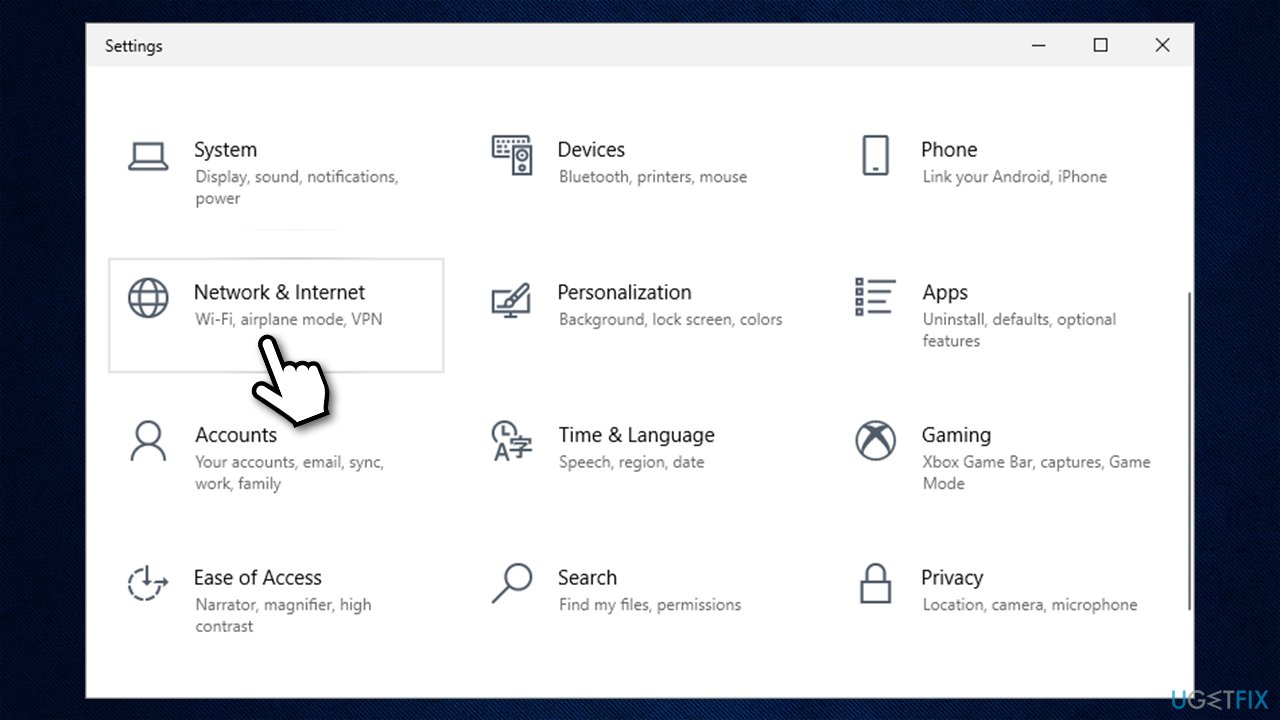
How to fix slow microsoft edge go to network and internet - Select Proxy option on the left
- Click on the switch under Automatically detect settings once to turn it off.
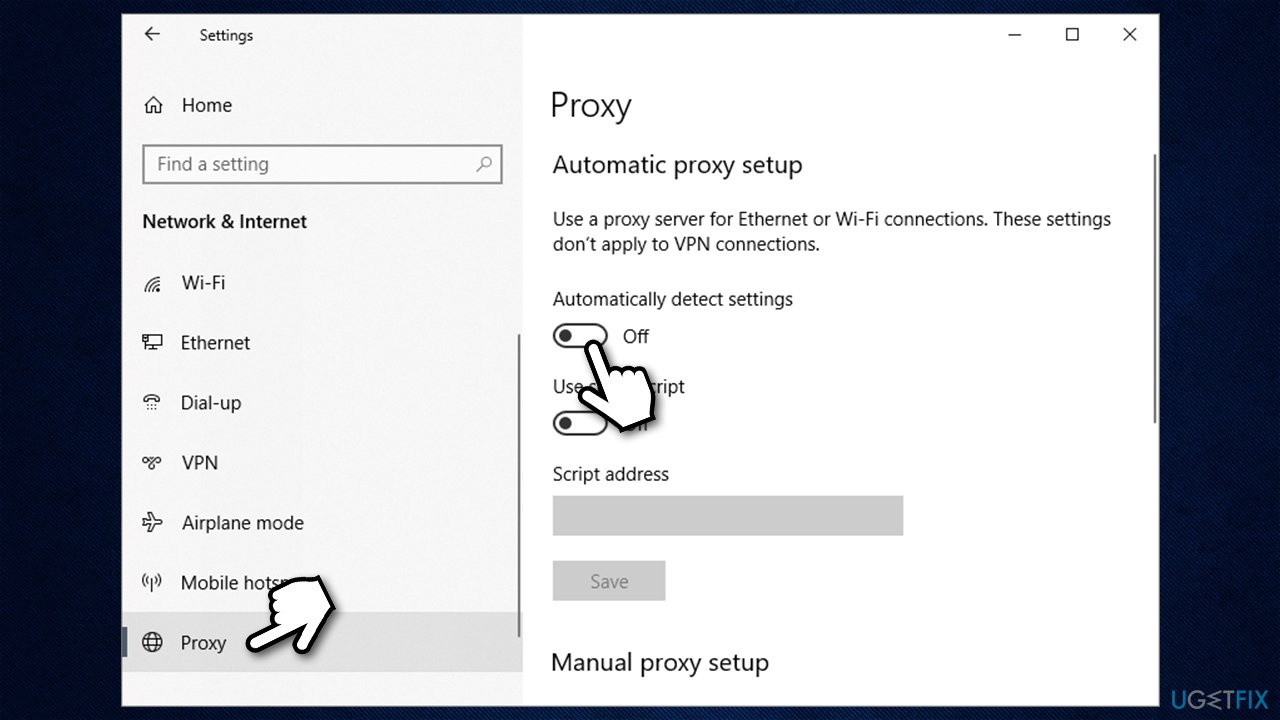
How to fix slow microsoft edge turn off automatic proxy detection
Solution 2. Disable DNS over HTTPS
- Go to Edge Settings
- Select Privacy, search, and services
- Scroll down on the right side until you reach Security section
- Disable the option Use secure DNS to specify how to lookup the network address for websites.
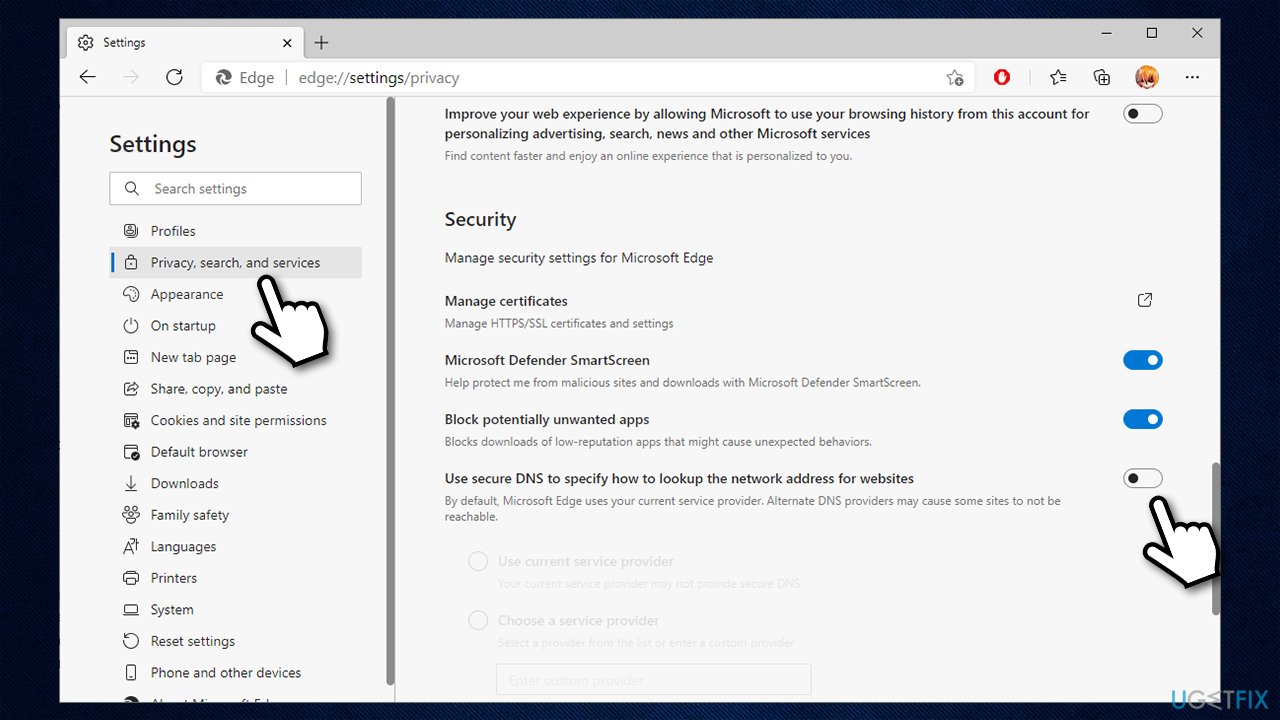
How to fix slow microsoft edge disable dns over htpps
Solution 3. Clear browser cookies and other web data
It is generally recommended to sweep up your browser from time to time, although this could also help users who struggle with the slow Microsoft Edge. If you want to do it automatically, opt for [d1] or similar optimization software. Otherwise, proceed with the following:
- Open Edge and click on Three vertical dots at the top-right corner of the window
- Select Settings
- From the Settings menu, pick Privacy, search, and services
- Scroll down until you reach the Clear browsing data section
- Click Choose what to clear
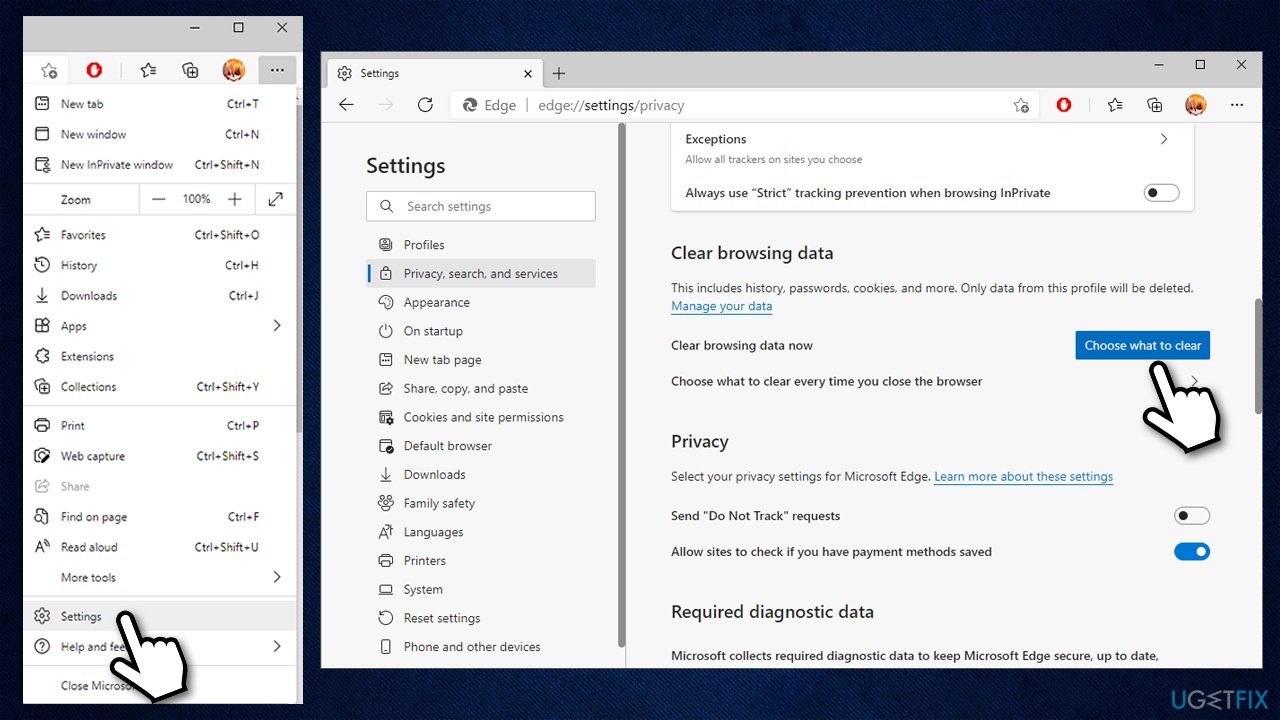
How to fix slow microsoft edge clear cookies and site data - Make sure that the Time range is set to All time
- Tick all the boxes and select Clear now.
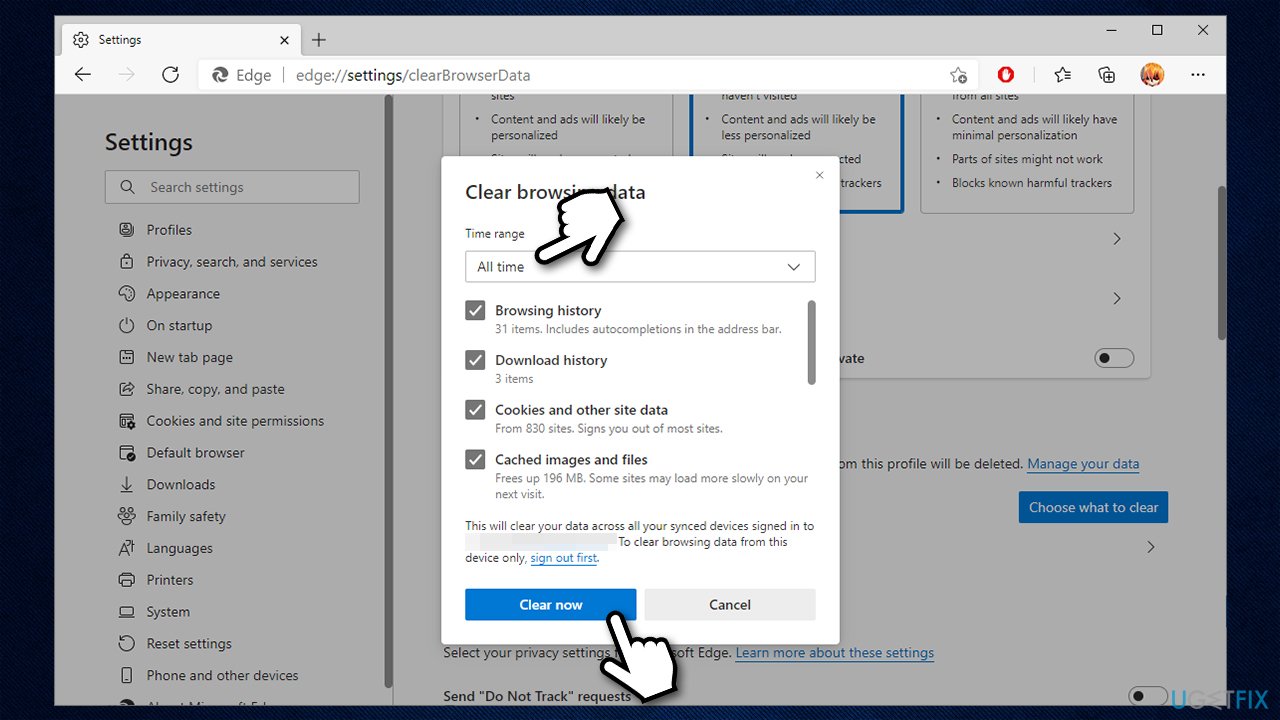
How to fix slow microsoft edge clear cookies and site data2
Solution 4. Delete useless extensions
If you have too many browser extensions installed, they might be causing slow Edge loading speeds. Thus, you should uninstall apps that might be causing this:
- Open Edge and click on three vertical dots > Extensions
- In here, you will find a list of all the installed extensions
- Click Remove next to the ones you want to delete.
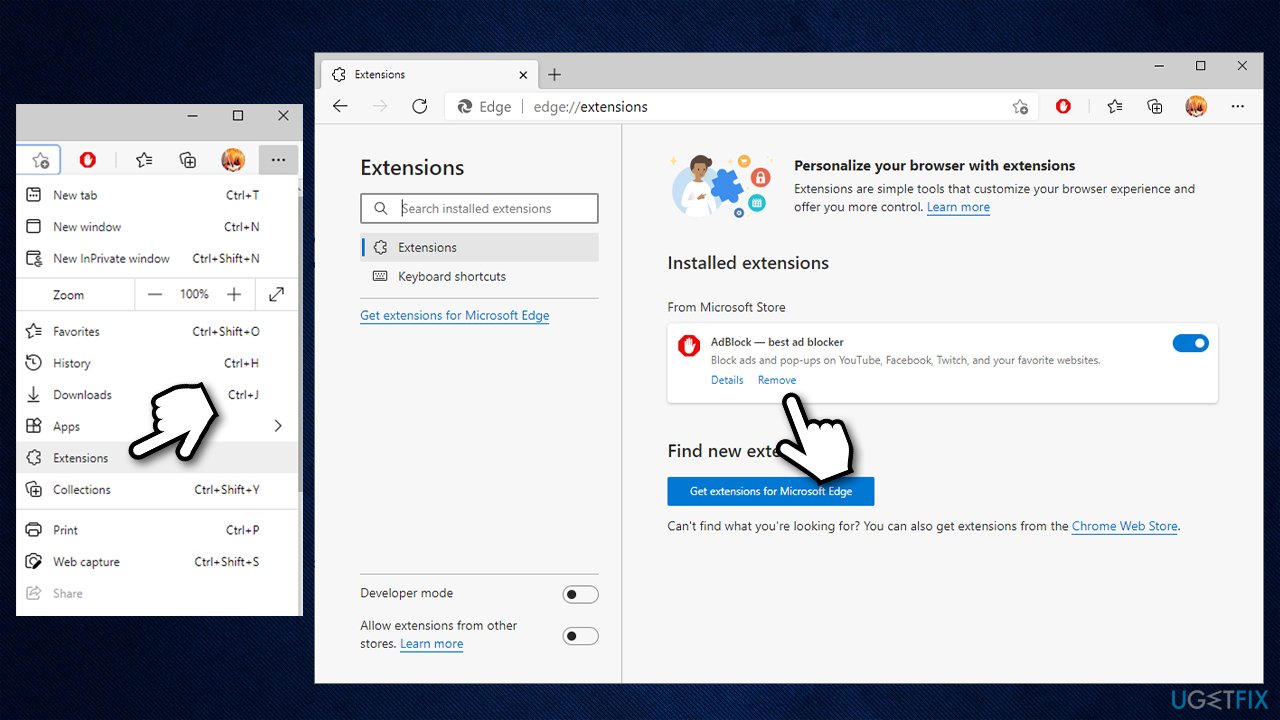
How to fix slow microsoft edge remove extensions
Solution 5. Check system files with SFC scan
In some cases, the slow MS Edge problem might be related to corrupted system files. To check, you will have to run System File Checker via Command Prompt:
- Type cmd in Windows search
- Right-click on the Command Prompt search result and pick Run as administrator
- Once the new window opens, paste in the following command, pressing Enter after:
sfc /scannow
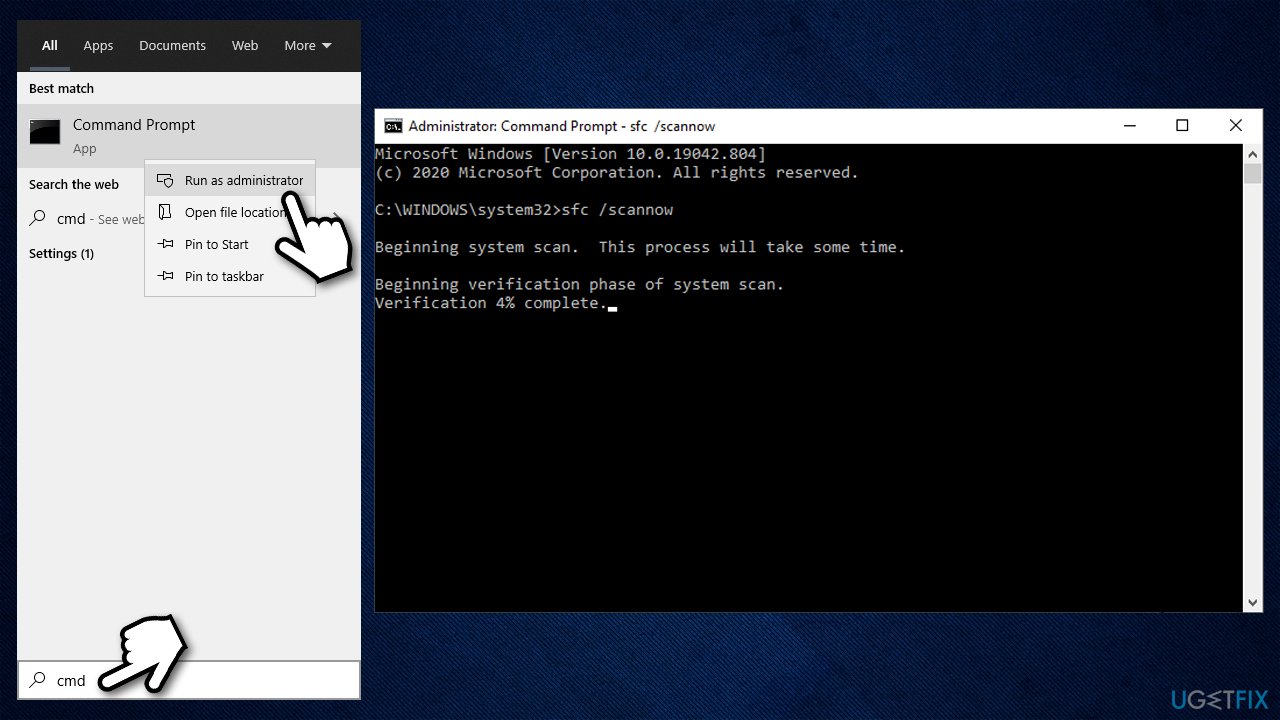
How to fix slow microsoft edge run sfc scan - Wait till the scan finishes - Windows should report if it found system file integrity violations and whether or not they were repaired.
Solution 6. Reset the browser
If none of the solutions above helped, you should try resetting Microsoft Edge.
- Make sure that Microsoft Edge is closed (press Ctrl+Shift+Esc and terminate all the related processes)
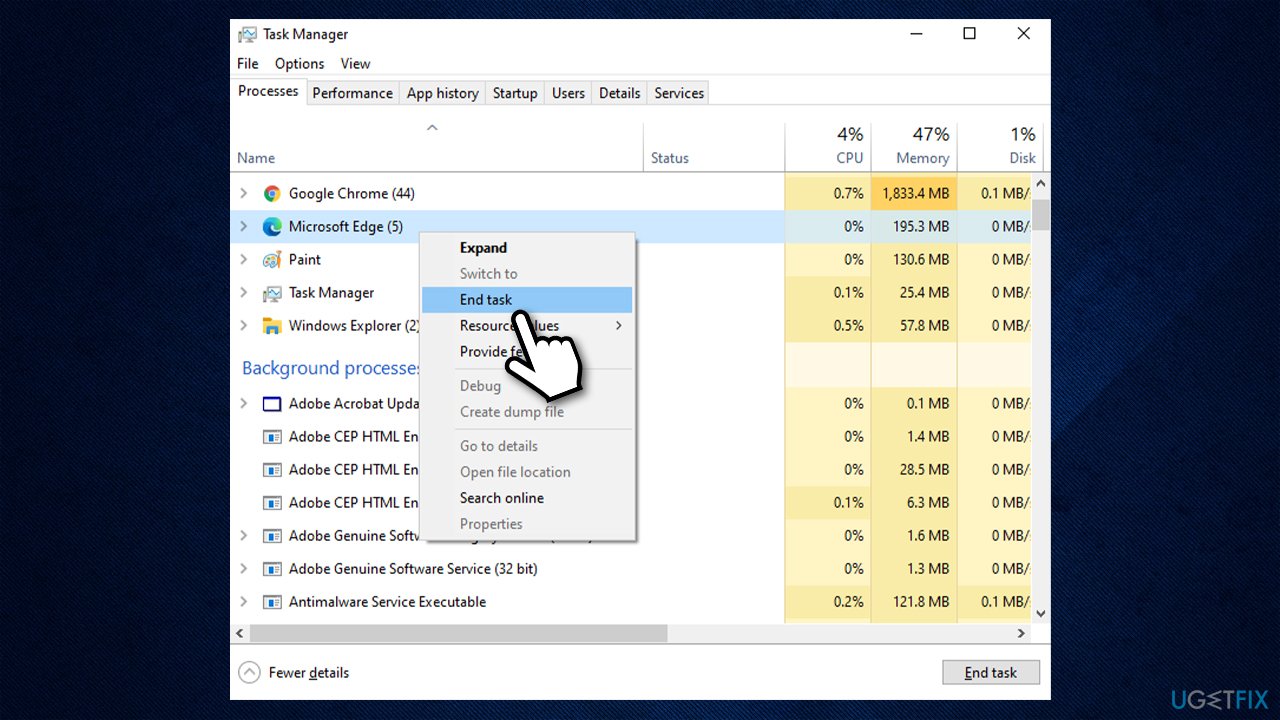
How to fix slow microsoft edge end all edge tasks - Type in %LocalAppData%\\Microsoft in Windows search and press Enter (a full path is C:\\Users\\[username]\\AppData\\Local\\Microsoft):
Note: if you can't see this folder, go to the View tab of Windows Explorer and tick the Hidden items box
- Delete Edge, Edge Beta, Edge Dev, Edge SXS, and EdgeBho folders.
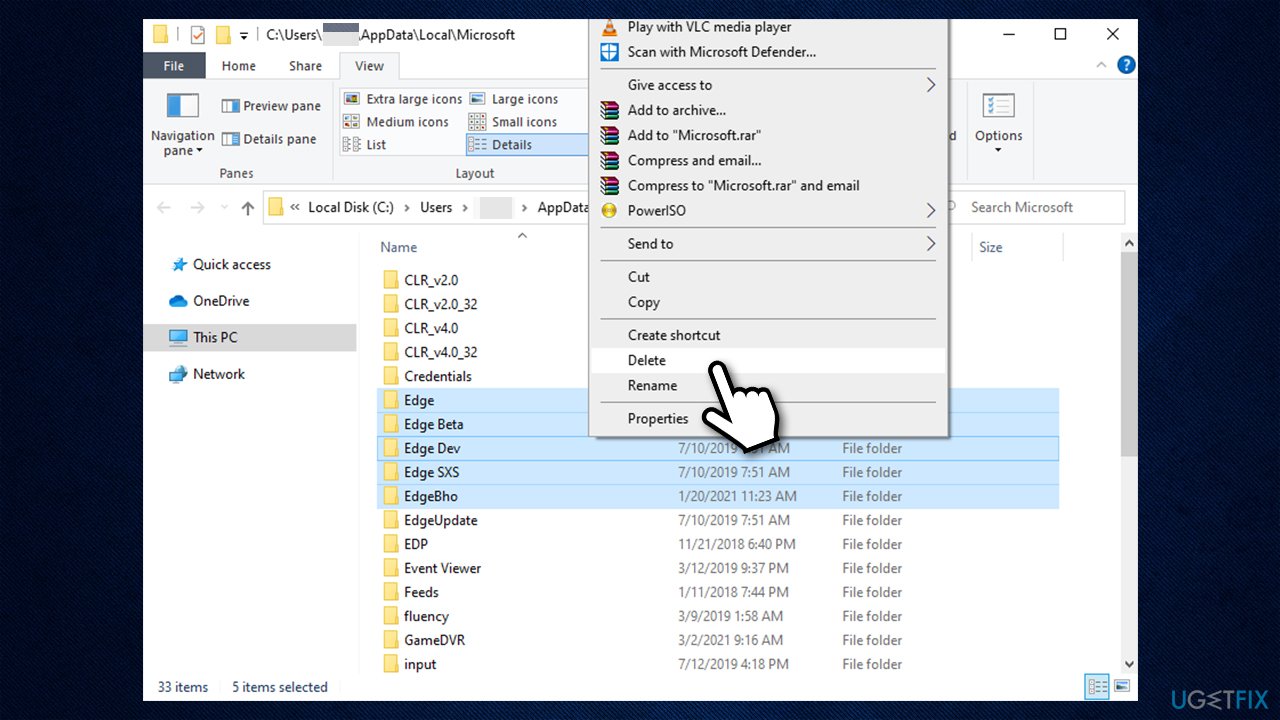
How to fix slow microsoft edge reset browser
Warning: Deleting these folders will fully reset Microsoft Edge, deleting all extensions, profiles, favorites, etc.
Bottom line
To potentially fix the slow performance of Microsoft Edge, you can turn off automatic proxy server detection and check for corrupted system files or incorrect settings. If these solutions do not resolve the issue, consider exploring additional fixes or troubleshooting methods.
Frequently asked questions
Microsoft Edge may run slow due to accumulated cache, extensions, or outdated browser settings. Regularly clearing the cache and disabling unnecessary extensions can improve performance.
You can reset Microsoft Edge by navigating to Settings > Reset settings and selecting 'Restore settings to their default values.' This action can help resolve any configuration issues affecting browser speed.
Yes, ensure that hardware acceleration is enabled in Edge settings, and consider adjusting privacy settings to limit tracking, which can enhance browsing speed.




Report an issue
What's wrong with this guide? We review every report and update or remove content.
Report received — thank you. We'll review and fix it.
You need a free account to submit a report.
Be the first to comment