How to fix
High CPU usage by Antimalware Service Executable (MsMpEng.exe)
on Windows
Resolve high CPU usage by Antimalware Service Executable on Windows 10/11 easily. Get expert-tested solutions to optimize performance and improve effici…


What causes How to fix high CPU usage by Antimalware Service Executable (MsMpEng.exe)?
- High CPU usage during scan process
- Random spikes in service activity
- High memory usage
- High bandwidth usage
- Issues introduced by the 2018 Creators update
Repairs Windows system files, removes malware, and restores a clean OS state — without reinstalling.
I'm not sure what the issue is, but I know it's a problem when my computer starts running at an extremely slow pace. One day after noticing this happening again and checking task manager - Antimalware Service Executable was taking up almost 100% of my CPU. This lasts for about 15-20 minutes and is extremely frustrating. When I checked the Task Manager, I noticed that "Antimalware Service Executable" hogs up to 80%-90% of CPU during these times. I don't think this is normal. Is there any way to fix Antimalware Service Executable high CPU usage on Windows 10?
Antimalware Service Executable is a component that belongs to the Microsoft Defender anti-malware and is run by an executable MsMpEng.exe. It is located in C:\\ProgramData\\Microsoft\\Windows Defender\\Platform folder by default and should not be modified or moved by the PC user.
Windows Defender is a free anti-malware solution that has consistently ranked well with independent IT security organizations and companies. It is pre-installed on Windows computers, but can only be used if you have purchased genuine Microsoft software like Windows 10 or Office 365. Despite being free, however, it ranks relatively well when it comes to the program's protection, performance, and usability rates, as tested by an independent IT-Security body AVTest.[ref en-1]
Even though Windows Defender can serve as a great anti-malware solution for most home users without being intrusive, some users reported that they experienced high CPU usage by Antimalware Service Executable. While this activity is relatively normal during the scan process of Microsoft Defender, others claimed that the service spikes at random times and is quite persistent. Others claimed that the Antimalware Service Executable resulted in high memory[ref en-2] and bandwidth usage as well.
Due to Antimalware Service Executable high CPU usage, most will experience system lag, video/gaming stuttering, system hang, and many other unwanted side effects. Consequently, users might lose some of their work done due to crashes of applications like MS Word or Photoshop.
Based on users' reports on Microsoft forums[ref en-6], the Antimalware Service Executable High Disk, memory, and CPU usage problem began in 2018 Creators update for Windows 10. Since OS updates frequently contain bugs, Windows Defender's high CPU consumption may be a result of incompatibilities between update components.
Fortunately, there are several ways you can fix Antimalware Service Executable High CPU usage relatively easily. Nevertheless, you can also opt for automatic Antimalware Service Executable High CPU fix by running a full system scan with PC repair software [d1] - it can fix various Windows problems and also detect and remove malware damage, resulting in a fully working and problem-free operating system.

Antimalware Service Executable is one of the main Windows Defender processes, which is also known as MsMpEng.exe. This file is responsible for Real-Time Protection service, meaning that it’s task is to scan downloaded files for spyware/worms/virus/malware,[ref en-3] quarantine them, and eventually remove.
Usually, the MsMpEng.exe or Antimalware Service Executable CPU usage gets high when the device owner uses Bluetooth,[ref en-4] connects the HDD, or downloads some data. According to Windows certified technicians, the reasons for MsMpEng.exe high CPU usage may be the following:
- low hardware resources;
- outdated Windows Defender definitions;
- outdated Windows Defender registry files;
- virus infection;
- Windows Defender directory self-scanning function;
- startup items.
If you choose so, you can uninstall Windows Defender, and that would work as Antimalware Service Executable High CPU usage fix perfectly. However, Microsoft Defender is a powerful antivirus, which is perfectly compatible with Windows 10 OS, so before switching to a third-party utility, try the fixes below.
This video contains information about eliminating this issue:
[youtube VhSUdwxuyBA]
Solution 1. Change Windows Defender’s Schedule
Windows Defender using a lot of CPU power during a full system scan is normal. All users have to do is just wait until the scan is complete (for their own computer safety). A full scan is needed, and users should run it from time to time. However, some machines are incorrectly set to run it daily, increasing the CPU usage of the process. As a result, users have the impression that Windows Defender is using way too much CPU power in general. Thus, you should make sure that scans are scheduled correctly:
- Press Windows key + R, type taskschd.msc, and press OK.
- Navigate to the Task Scheduler Library > Microsoft > Windows > Windows Defender directory.
- Locate the Windows Defender Scheduled Scan, right-click on it, and select Properties
- Select Properties and open Conditions tab.
- Uncheck all given conditions and click OK to approve the changes.
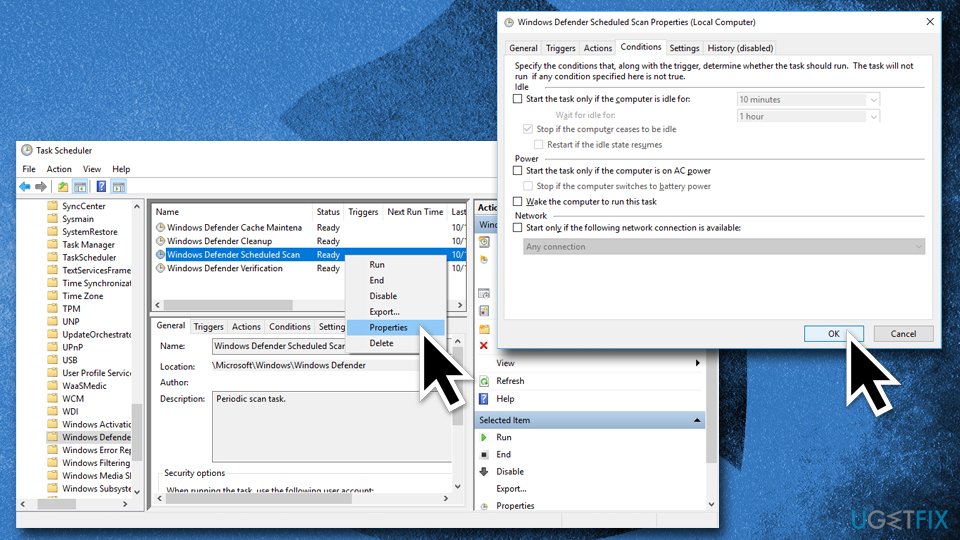
High cpu usage msmpeng exe open task scheduler - Now reschedule Windows Defender. Go to Properties, and pick Triggers tab
- Click on New
- Select the Monthly option or Weekly.
- Now select the preferred Day and enable it.
- Click OK and close all windows.
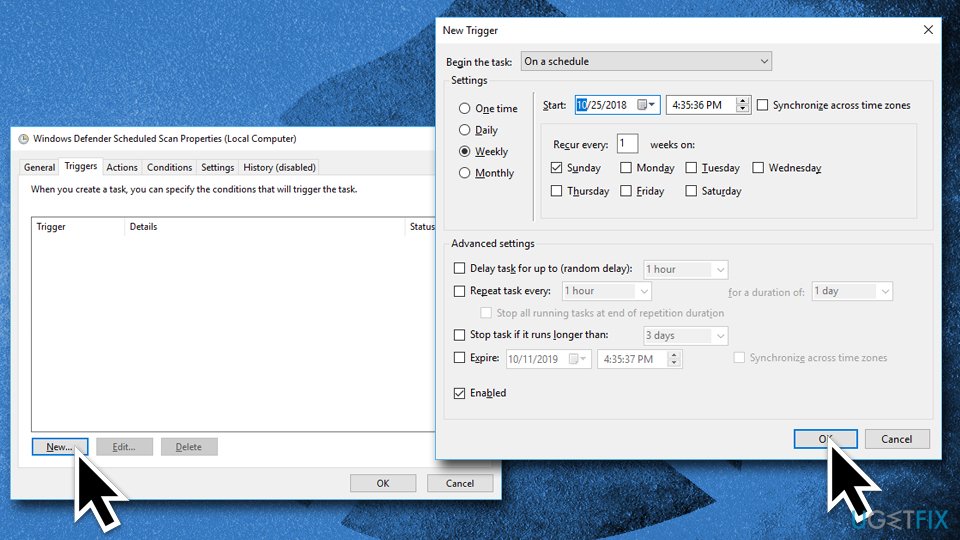
High cpu usage msmpeng exe new trigger
Solution 2. Scan your computer for viruses in Safe Mode
Beware that every executable or a process running in the Task Manager can be malicious. Hackers can name the malicious file; however, they want to reduce the chance of detection. Thus, if the Antimalware Service Executable process indicates high CPU usage, it is wise to first consider virus infection, as such threats like crypto-mining malware[ref en-5] abuse systems resources to mine digital currency.
First of all, run a full system scan with Windows Defender or another security application. Note that some viruses might disable windows Defender, or certain exceptions automatically added, which would consequently allow malware to operate even with Defender being active. Therefore, we advise you to access Safe Mode and scan your machine with third-party anti-virus software, or perform a repeated scan with Microsoft Defender. Reach Safe Mode as follows:
- Right-click on the Start button and then pick Settings
- Go to Update & Security and click Recovery
- Under Advanced startup, section click Restart now (this will immediately restart your PC)
- After a restart, Choose an option will show up on your screen
- Go to Troubleshoot > Advanced options > Startup Settings and click Restart
- Press F5 or 5 to enter Safe Mode with Networking
- Run a full system scan with anti-malware software of your choice
Solution 3. Prevent Windows Defender from scanning its directory
- Press Windows key and type Windows Defender settings.
- Double click the option to open its Settings.
- Pick Open Windows Defender Security Center
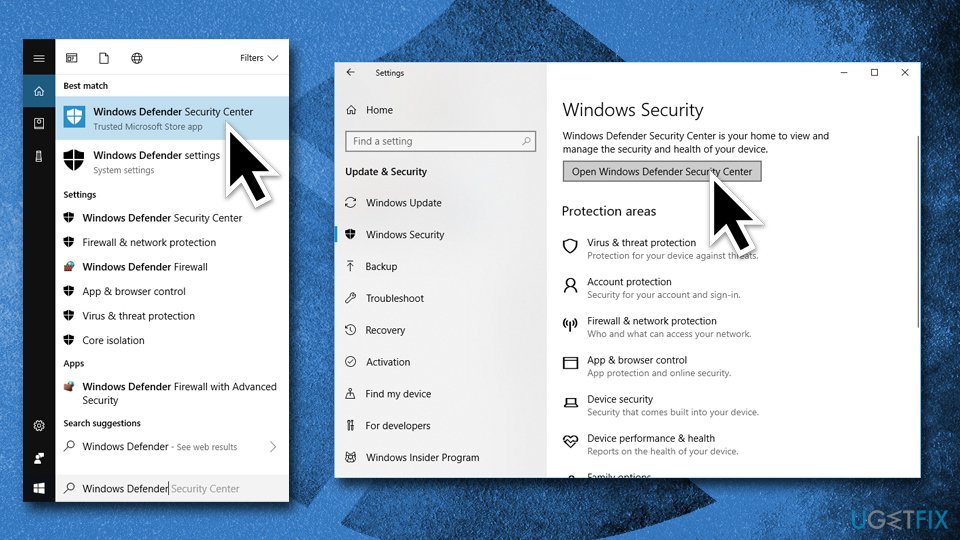
High cpu usage msmpeng exe open windows security center - Go to Virus & Threat protection > Virus & Threat protection settings
- Scroll down to find Exclusions and click on Add or remove exclusions
- Select Add an exclusion and click Exclude a folder
- Copy and paste the c:\\program files\\windows defender path
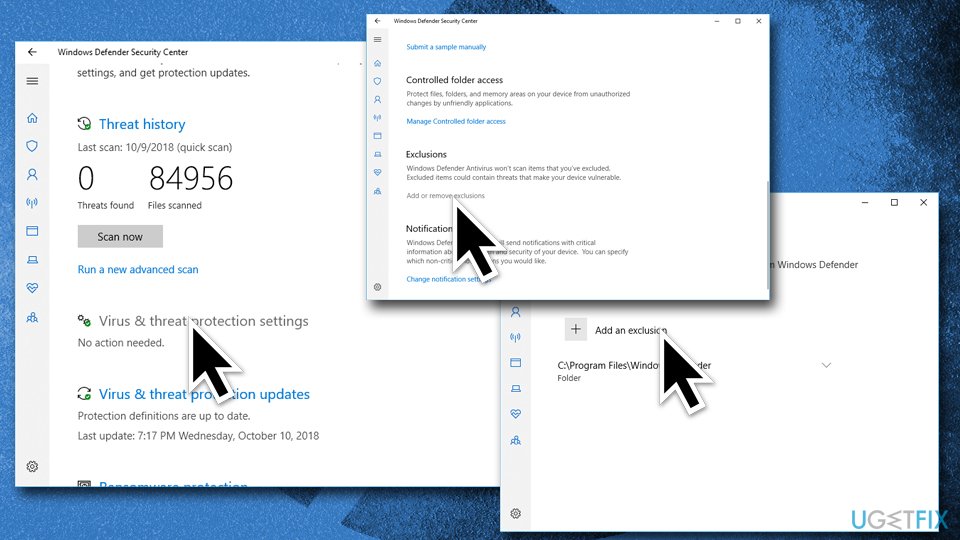
High cpu usage msmpeng exe add an exclusion
Solution 4. Manually limit the MsMpEng.exe CPU usage
It is possible to manually limit the CPU usage that is taken by MsMpEng.exe, but it is not recommended if the process is legitimate, as it can limit the capabilities of the program.
- Press Ctrl + Shift + ESC to open Task Manager.
- Click More details and open Details tab.
- Find and right-click the msmpeng.exe file and select Set affinity.
- Select the CPU limit threshold and close Task Manager.
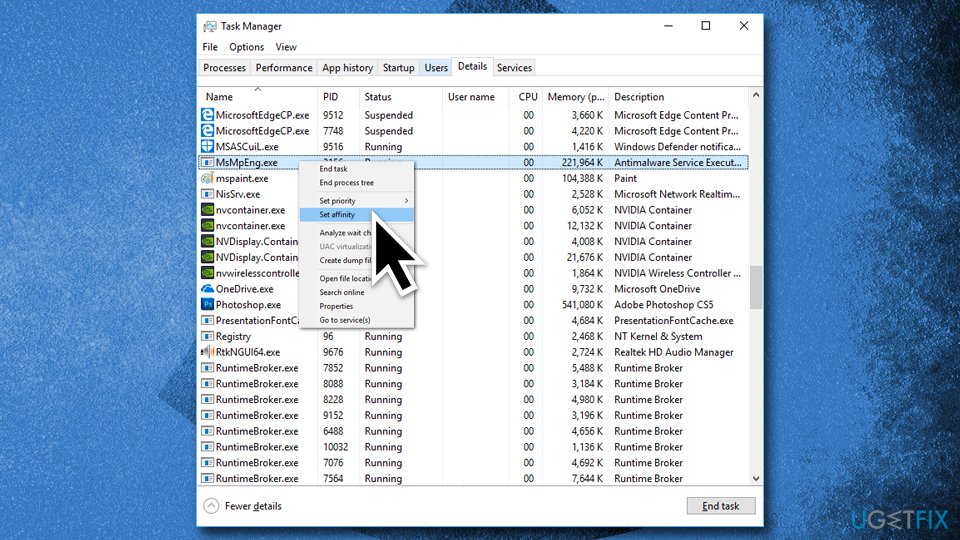
High cpu usage msmpeng exe set affinity
Solution 5. Disable all startup items
In some cases, startup items can cause various inconsistencies on Windows machines, including high CPU usage of Antimalware Service Executable. Try to disable all of them and then see if the problem persists. If you no longer experiencing the issue, you should enable each of the items individually and see which one is causing high CPU usage. Here's how:
- Type in msconfig or System Configuration into the search box and hit Enter
- Select Startup tab
- Click Open Task Manager
- Click on each of the programs and the click Disable
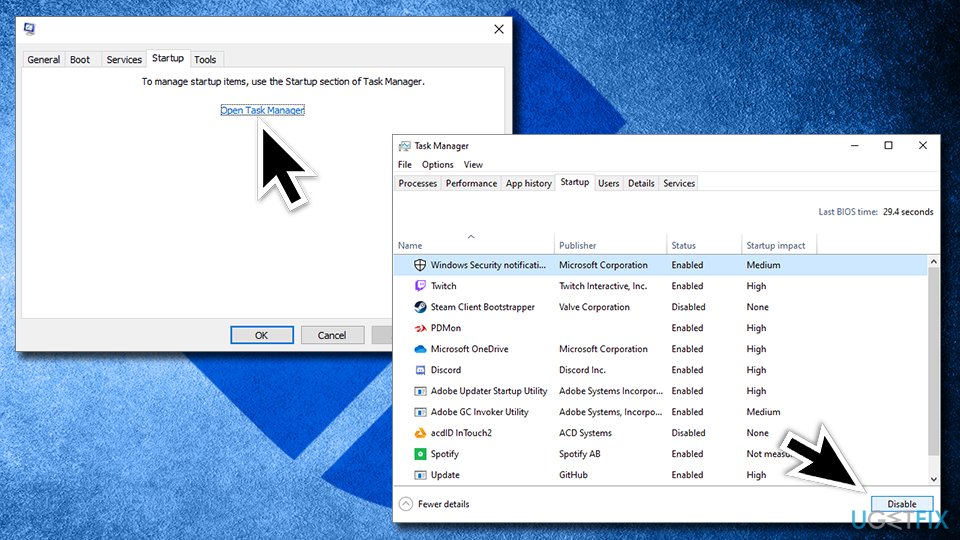
How to fix high cpu antimalware service executable msmpeng exe startup programs - Restart
Solution 6. Uninstall the most recent Windows updates
In some cases, Windows updates might not install correctly and creak certain system functions, including Antimalware Service Executable, in some cases. Uninstall the most recent Windows updates and then update the system once more:
- Right-click on Start and press Settings
- Go to Updates and Security and click View update history (right menu)
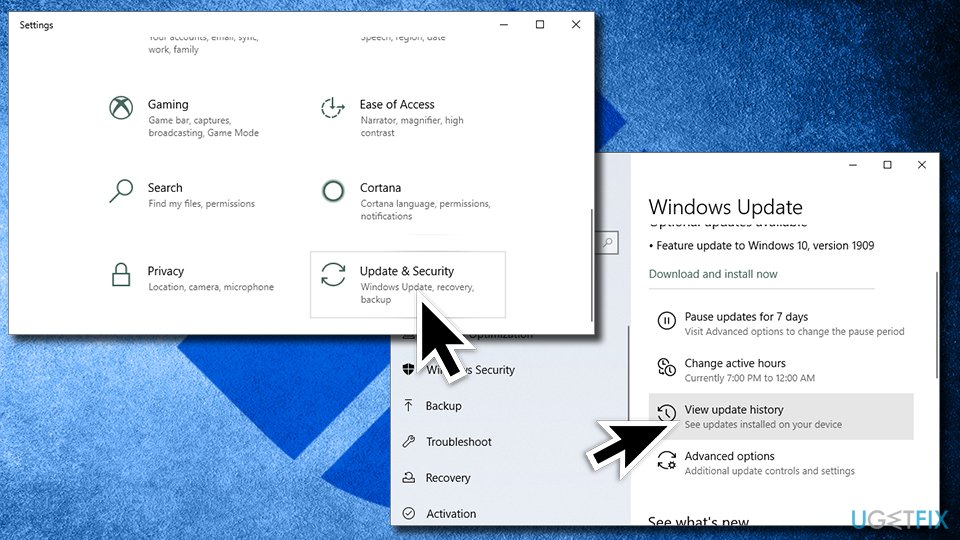
How to fix high cpu antimalware service executable view update history - Select Uninstall updates
- Make sure updates are sorted by the installation date
- Right-click on the most recent Windows updates and select Uninstall
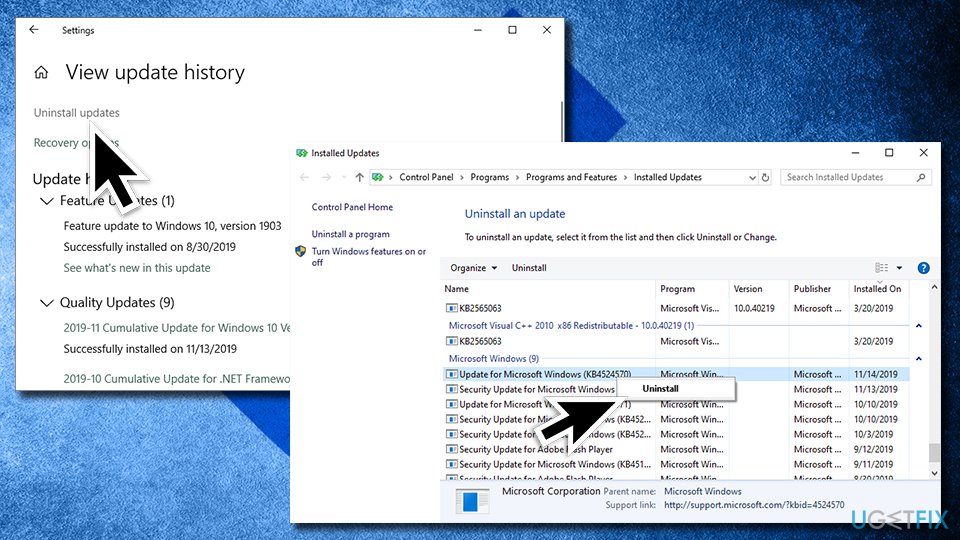
How to fix high cpu antimalware service executable uninstall windows updates - Reboot your computer and initiate Windows updates via Settings
Solution 7. Include Antimalware Service Executable to Windows Defender exclusion list
- Press Windows key + I simultaneously to open Settings
- Open Update & Security section
- Click on the Windows Defender option and select Add and exclusion in Exclusions
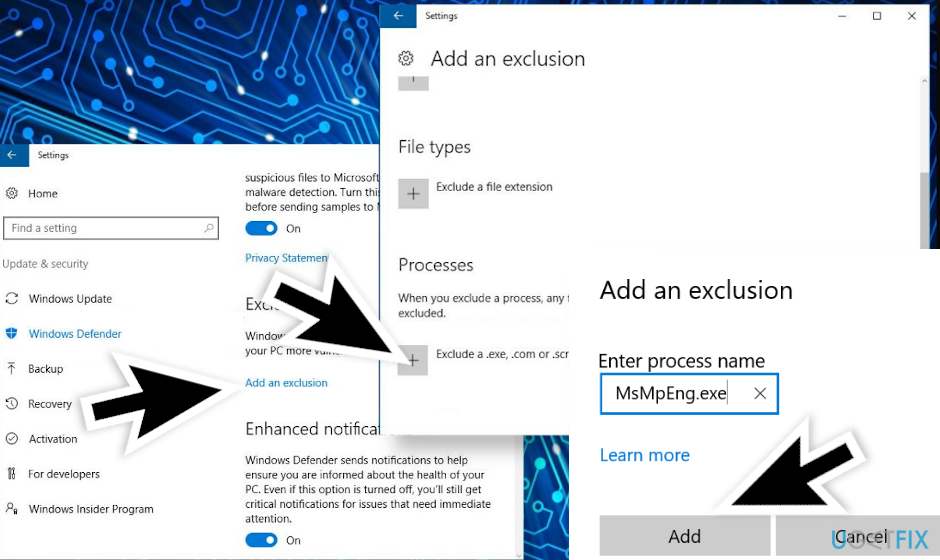
Fix high cpu usage - Click on the Exclude a .exe, .com or .scr process option
- Type the MsMpEng.exe and click OK to save the changes
If none of the methods above helped to fix high CPU usage by Antimalware Service Executable (MsMpEng.exe), please contact us, and we’ll try to help you individually. If, however, you prefer using another antivirus tool, you should simply download it from the official website. Windows Defender will then be automatically disabled.
Bottom line
To fix high CPU usage by Antimalware Service Executable, users can adjust the scheduled scan settings, exclude certain files or folders from scanning, or update Windows Defender. If these solutions do not resolve the issue, consider seeking further assistance on Microsoft forums or exploring alternative anti-malware solutions.
Frequently asked questions
High CPU usage by Antimalware Service Executable can be caused by Windows Defender performing a full system scan or conflicts with other security software. This often leads to increased resource consumption on Windows 10.
To reduce CPU usage of MsMpEng.exe on Windows 11, you can schedule scans for off-peak hours and exclude certain files or folders from being scanned. Adjusting these settings in Windows Security can help minimize the impact on system performance.
Disabling Antimalware Service Executable is not recommended as it compromises your system's security on Windows 10 and Windows 11. Instead, it's better to optimize its settings or consider alternative antivirus solutions.




Report an issue
What's wrong with this guide? We review every report and update or remove content.
Report received — thank you. We'll review and fix it.
You need a free account to submit a report.
Be the first to comment