How to fix
KB5021233 causes 0xc000021 BSOD
on Windows
Resolve the 0xc000021 BSOD error caused by KB5021233 in Windows 10 and 11 quickly with expert-tested solutions and clear visuals. Fixed in minutes!

What causes How to fix KB5021233 causes 0xc000021 BSOD in Windows?
- Installation of KB5021233
- Boot loop due to 0xc000021 BSOD
- Inability to access the device
- Issues with features like mouse cursor and audio
- System performance degradation
Repairs Windows system files, removes malware, and restores a clean OS state — without reinstalling.
Upon trying to update to the latest version of Windows KB5021233, I received 0xc000021 BSOD. Now I can't boot into Windows, and my PC keeps restarting. I am kind of stuck here and would appreciate some assistance with this matter.
KB5021233 was released by Microsoft on December 13 for versions 21H1, 21H2, and 22H2 of Windows 10. This is a routine monthly update that comes on the second or sometimes third Tuesday of every month, known as the Patch Tuesday. The update included some changes to Windows features (such as the removal of Cortana from the taskbar), bug fixes related to the camera app, and, most importantly, patches to security vulnerabilities.
While Windows updates are critical for any operating system, not everything always goes smoothly for users when it comes to their implementation. Besides failing to install for some people, the update seems to be causing 0xc000021 Blue Screen of Death crash upon installation.
There are numerous complaints from users that updates managed to break some features, such as the mouse cursor always showing busy, audio crackling, slow system operation, and more. While these issues usually go away after some troubleshooting, the repeated BSODs that users seem to get are a much more serious matter.
Users reported that they were unable to access their devices at all after installing KB5021233, as they were stuck in a boot loop due to the 0xc000021 Blue Screen. This can be a real problem since users can't find a way to access their machines to resolve the issue. Luckily, there is a go-around in these situations.
If you have installed KB5021233 and it is now causing your system to crash with 0xc000021 BSOD loop, you can try accessing Safe Mode and removing the update from the system. Alternatively (especially if you can't enter Safe Mode), you could undertake other troubleshooting measures to resolve the issue, all of which we discuss below.
Note: once you manage to access your desktop, we recommend running [d1] to ensure that the BSOD is not caused by any other underlying issues that might be difficult to detect and correct manually.
1. Access Safe Mode and remove the update
Your best bet to stop the reboot loop is by trying to access Safe Mode and then removing the faulty update. Follow these steps:
- Restart your computer
- Once Windows starts booting, press the Power button, interrupting the loading process - do this two more times
- After that, Windows will automatically enter Advanced Startup mode
- Select Troubleshoot > Advanced options > Startup Settings and Restart
- After a reboot, pick either 4/F4 for Safe Mode or 5/F5 for Safe Mode with Networking.
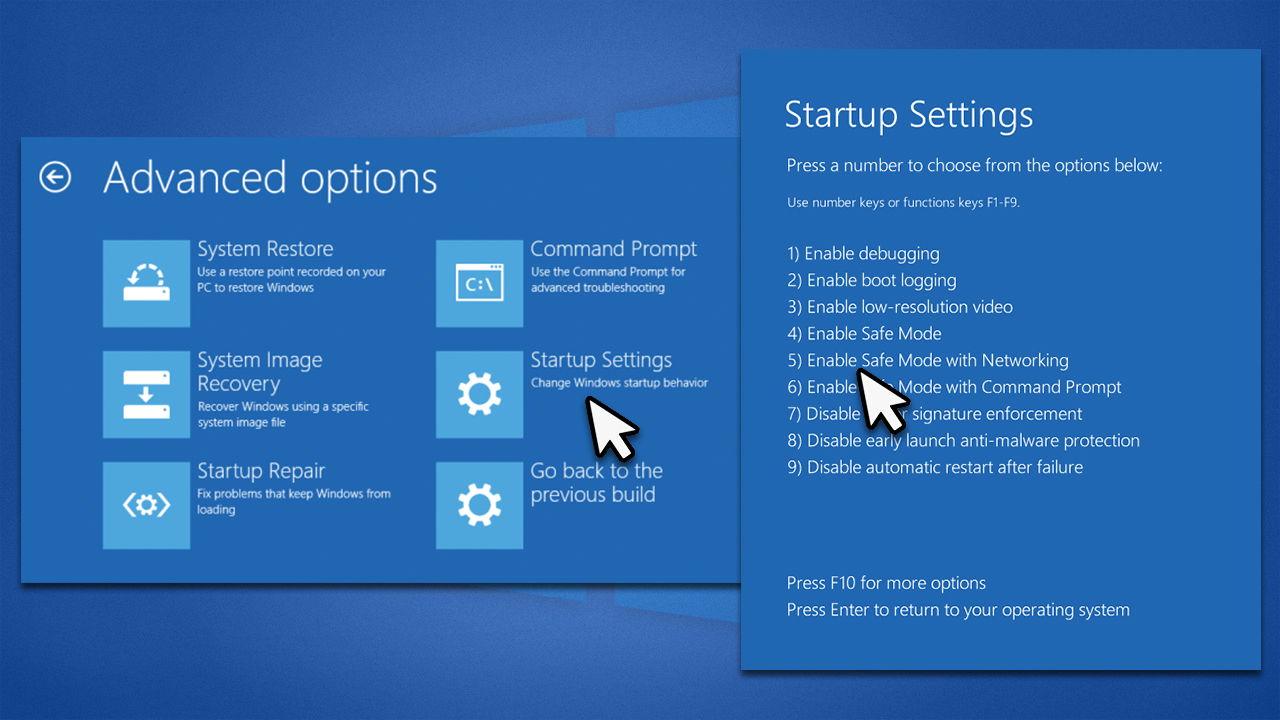
Once in Safe Mode, proceed with the following steps to uninstall the update:
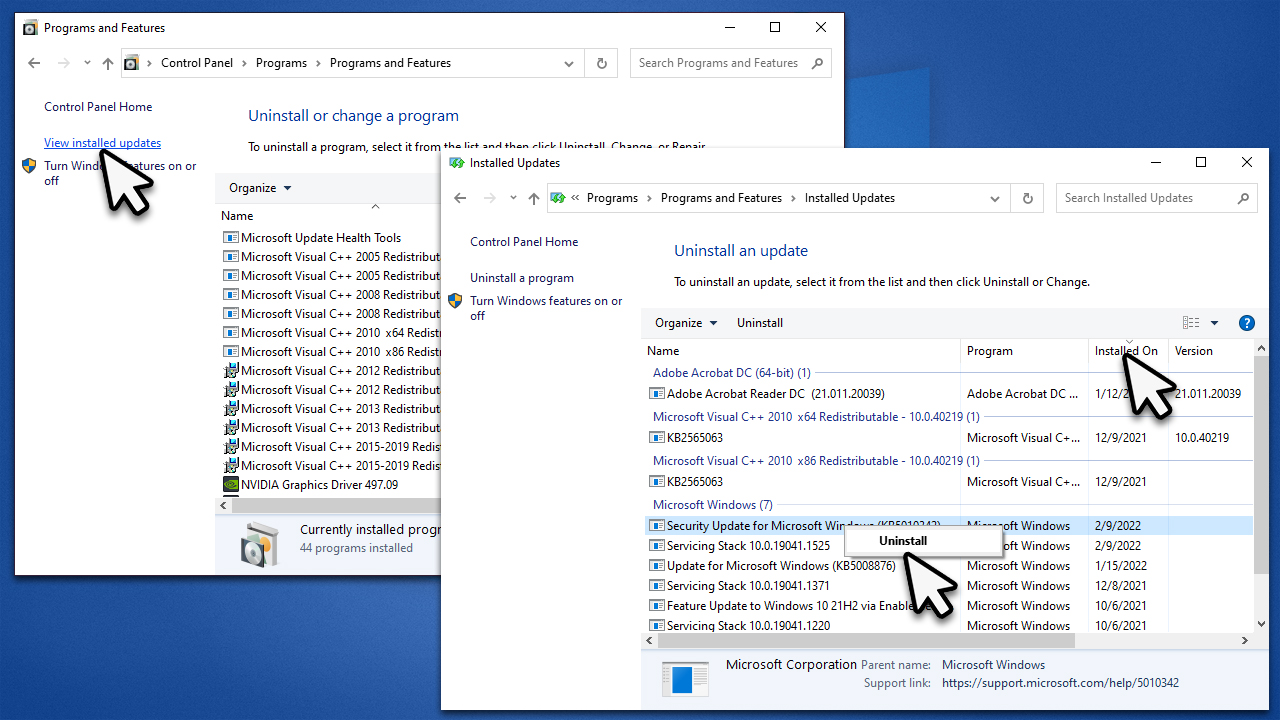
- Type Control Panel in Windows search and press Enter
- Select Programs > Uninstall a program
- Click on View installed updates on the left side of the window
- Sort all the updates by date
- Right-click on the most recent update and select Uninstall
- Proceed with on-screen instructions and restart your computer.
2. Try System Restore
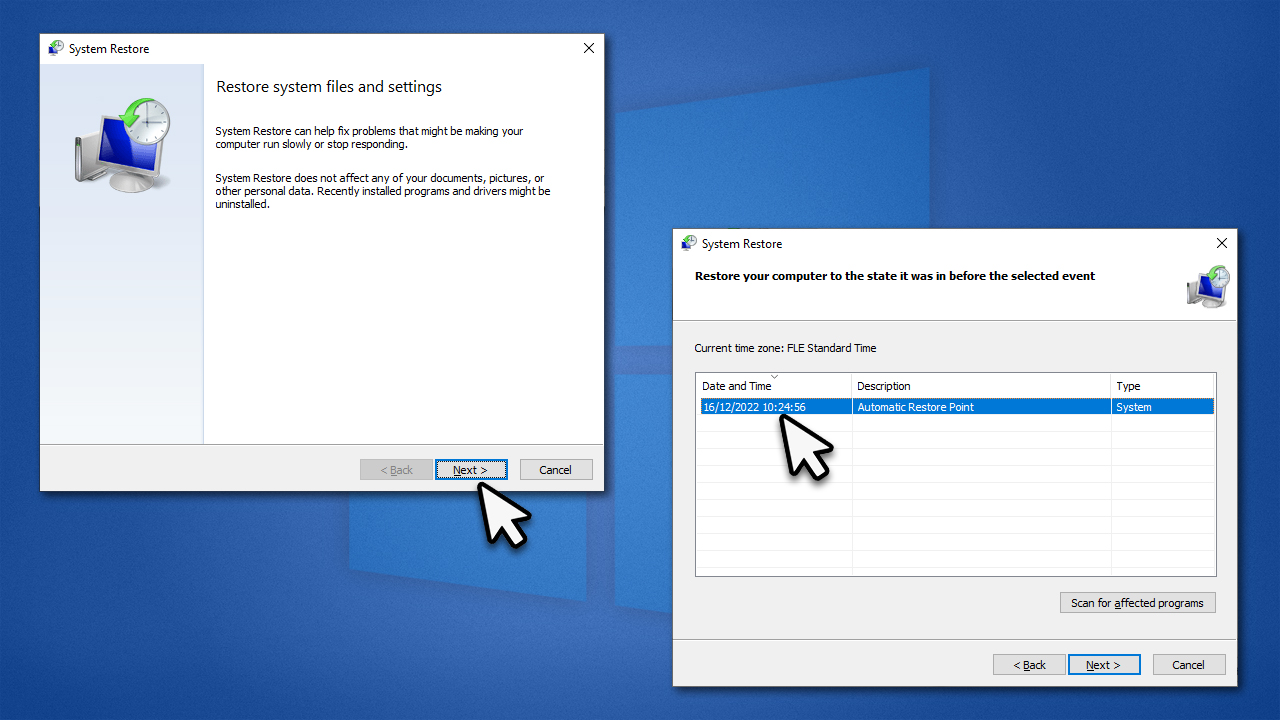
If accessing Safe Mode wasn't successful, you have a few alternative options. Let's start with System Restore:
- Access the recovery environment as explained in the previous solution
- Go to Troubleshoot when prompted and go to Advanced options
- Here, select System Restore
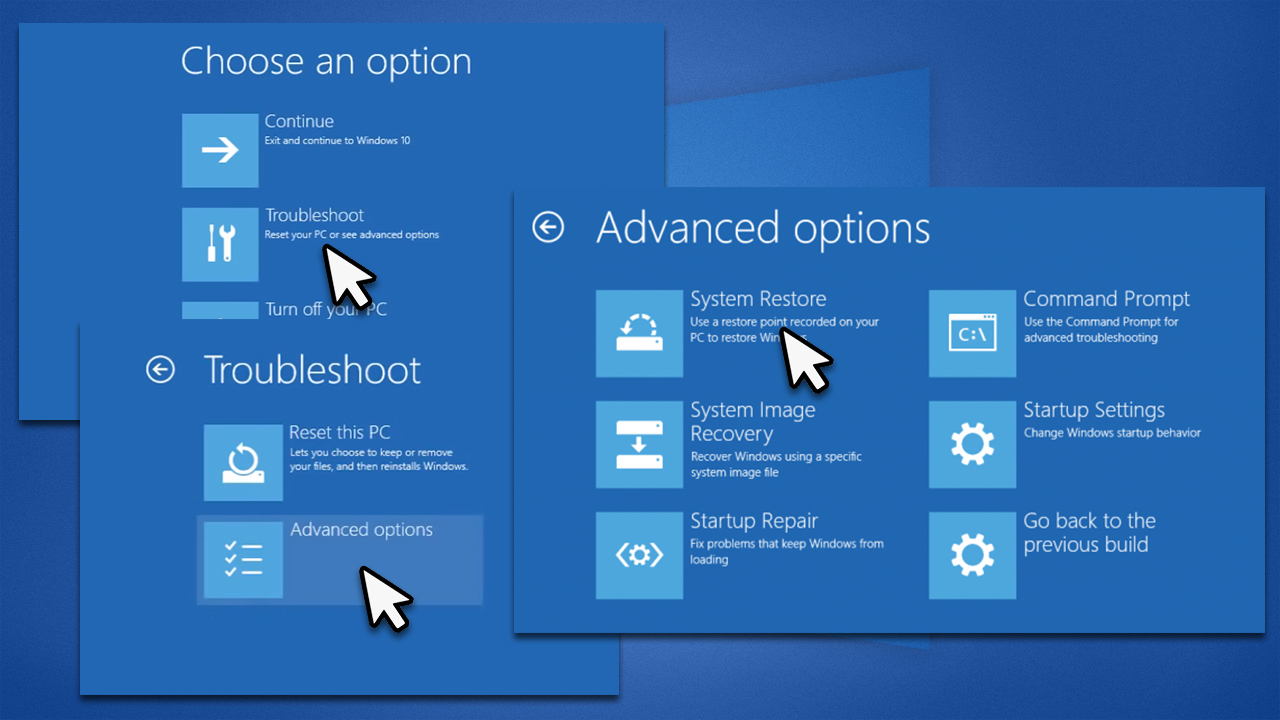
- Select the date before the update was installed
- Proceed with on-screen instructions to finalize the process and restart your system.
3. Repair damaged system files
Another option is to use Command Prompt to fix issues.
- In the Advanced Startup mode, pick Troubleshoot
- Go to Advanced options
- Pick Command Prompt
- Now type the following commands, pressing Enter after each:
sfc /scannow
dism /online /cleanup-image /restorehealth
bootrec.exe /rebuildbcd
bootrec.exe /fixmbr
bootrec.exe /fixboot - Reboot your device.
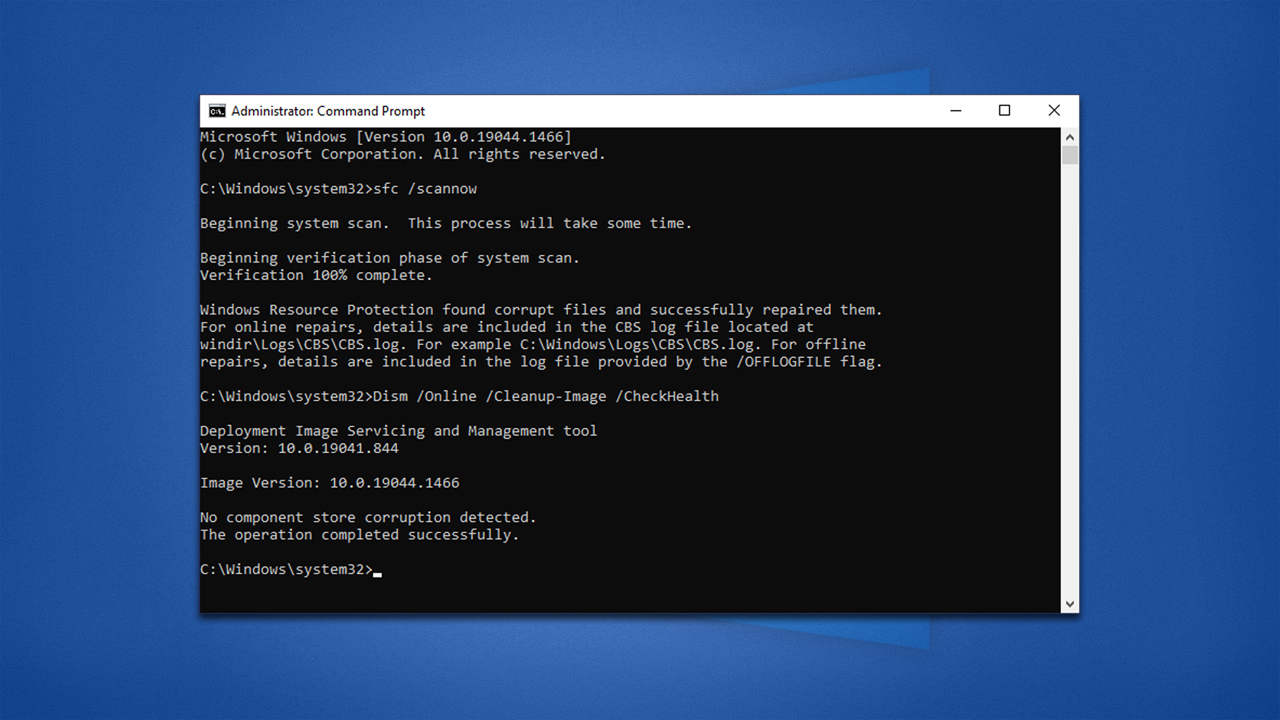
Note: if you need admin permission, type in net user administrator /active:yes command in Command Prompt and press Enter.
4. Disable driver signature enforcement
If accessing Safe Mode or using System Restore does not work, you can disable driver signature enforcement.
- In the Advanced Startup mode, go to Troubleshoot
- Select Advanced options and pick Startup settings
- From here, press 7 on your keyboard or pick Disable driver signature enforcement option
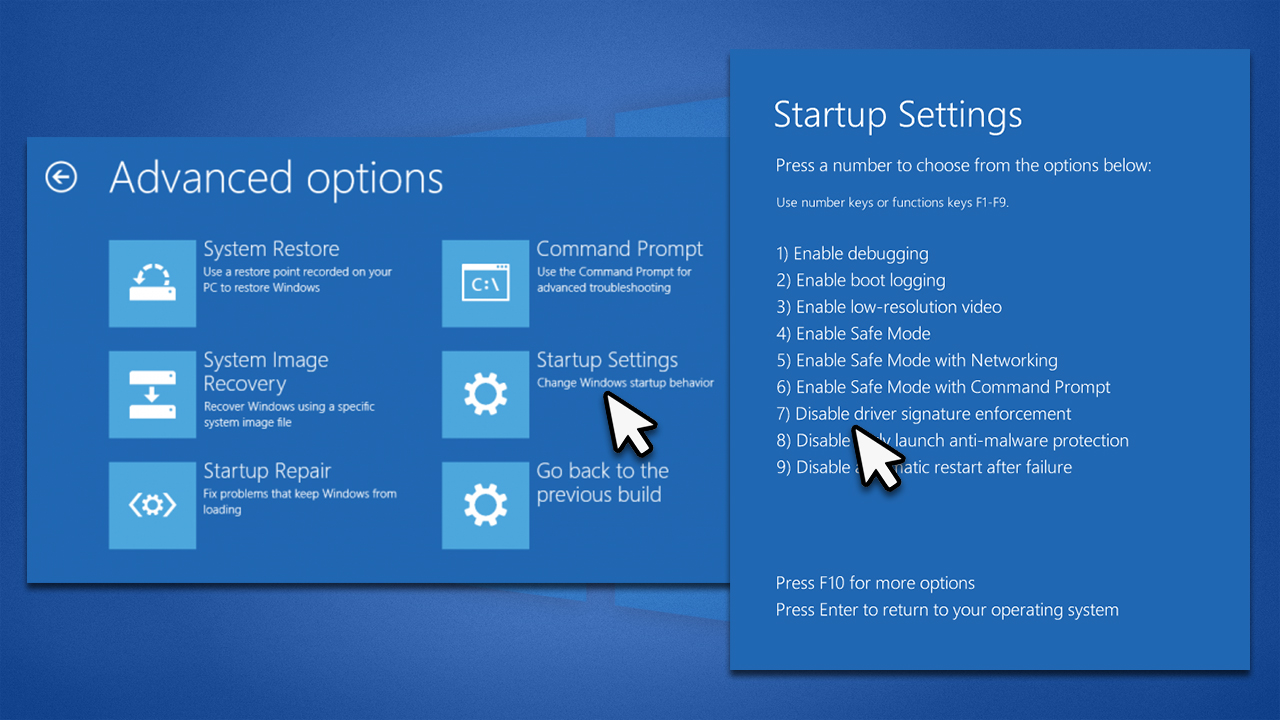
- Restart your PC and uninstall the faulty update.
5. Reinstall Windows
You can reinstall Windows without losing your files. For this, you will need a USB drive and a working computer to download Windows Installation Media.
- Visit the official Microsoft website and download Windows 10 installation media (Windows 11 version)
- Double-click the installer and select Yes when UAC shows up
- Agree to terms
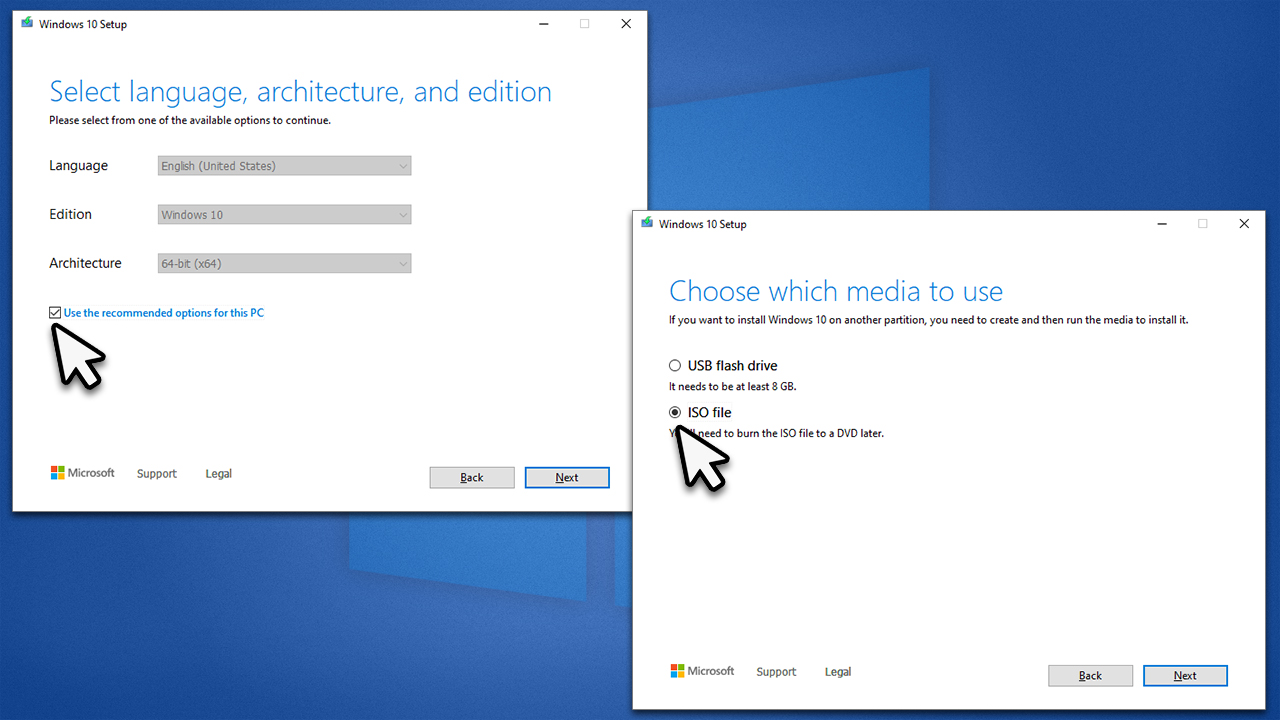
- Pick Create installation media (USB flash drive, DVD or ISO file) for another PC option and click Next
- Select the Use Recommended options for this PC checkbox and click Next
- Choose the ISO file and click Next
- Once you have prepared the ISO, put it into the malfunctioning PC
- Restart your machine and rapidly press F8, F10, F12, Del, or another button that would let you load into BIOS
- Here, go to the Boot section and set the boot priority to Flash drive
- Restart your system, and then proceed with on-screen instructions to reinstall Windows.
Bottom line
To fix the 0xc000021 BSOD caused by KB5021233, you can try accessing Safe Mode to remove the update. If Safe Mode is inaccessible, consider undertaking other troubleshooting measures. If none of these solutions work, further assistance may be required.
Frequently asked questions
KB5021233 is a cumulative update for Windows that, in some cases, can trigger a Blue Screen of Death (BSOD) with the error code 0xc000021. This issue typically arises due to compatibility problems or corrupted files introduced by the update.
To uninstall KB5021233, boot your PC in Safe Mode, go to Settings > Update & Security > Windows Update > View update history > Uninstall updates, and select the problematic update to remove it.
Yes, you can try running the System File Checker (SFC) and DISM tools to repair corrupted system files, or perform a system restore to revert your PC to a state before the update.




Report an issue
What's wrong with this guide? We review every report and update or remove content.
Report received — thank you. We'll review and fix it.
You need a free account to submit a report.
Be the first to comment