How to fix
Upgrade your graphics card
on Windows
Upgrade your graphics card for optimal Windows 10 or Windows 11 performance. Boost gaming and productivity with our expert-tested tips and tricks!

Why does How to upgrade your graphics card occur?
- Graphics card broke
- No integrated graphics present
- Graphics-intensive tasks require a functioning GPU
- Incorrect GPU specifications or size
- Incompatibility with motherboard
Repairs Windows system files, removes malware, and restores a clean OS state — without reinstalling.
Hello, my graphics card recently broke, so I was wondering how to handle this situation. Of course, I know I need to buy a new one, although I am not sure how to change graphics card correctly (I bought my PC pre-assembled). I want to be able to play the upcoming videos games that I am excited about. Any advice on this?
Graphics cards are exceptionally important when it comes to graphics-intensive tasks, such as gaming, HD video rendering, or 3D drawings creation. Thus, if this component breaks, all of these operations might not be continued as usual - PC might also fail to start if no integrated graphics are present. Hence, there is a huge need to upgrade a graphics card, otherwise known as a GPU, as soon as possible.
However, changing the GPU might not be as easy as it might seem initially. There are hundreds of graphics cards to choose from. Each of them has different specifications, sizes, feature support, cost, and purpose. While it might be difficult to choose from, it is equally as important to pick a card that would be supported by your motherboard, would be the correct size, and would serve the purpose it is was intended for.
As evident, low-end GPU should suffice for people who do not perform tasks such as gaming or video rendering. On the other hand, high-end graphics cards are a must for those who are willing to squeeze out the best performance for the 4K or 8K gaming. Therefore, the first step when making a GPU purchase, you need to establish how much you are willing to spend on it, and what precisely are you going to do with a graphics card.
If you are interested in comparing GPU benchmarks, there are plenty of websites that do regular testing and rate each of the cards based on their performance. You can also find out which GPU is the best choice when it comes to value for money. One such site is PassMark - you can find a lot of details about your current card and weigh the cons and pros of every single GPU available on the market.
Benchmarks, however, will not teach you to replace and upgrade to a new graphics card. You need to do the procedure correctly, as you can encounter various difficulties, some of which may result in the inability to launch your Windows PC at all - and nobody likes dealing with that. On the other hand, if you are experiencing errors, crashes, or other disturbances, you should employ a PC repair tool [d1], which could diagnose the problem and tell you precisely what is wrong. And now, let's dig into the topic and find out how to upgrade your graphics card correctly.
On the side note, if you are much into gaming and require more detailed advice for the matter, we recommend checking our "How to optimize my gaming PC" article.
Step 1. Buy a correct size GPU
Pretty much every graphics card is using PCI Express, otherwise known as PCI-E connection[ref en-2] slot standard that has been first introduced almost 20 years ago. The architecture is used by low-end and high-end GPUs nowadays, so you should not worry about the connection itself too much.
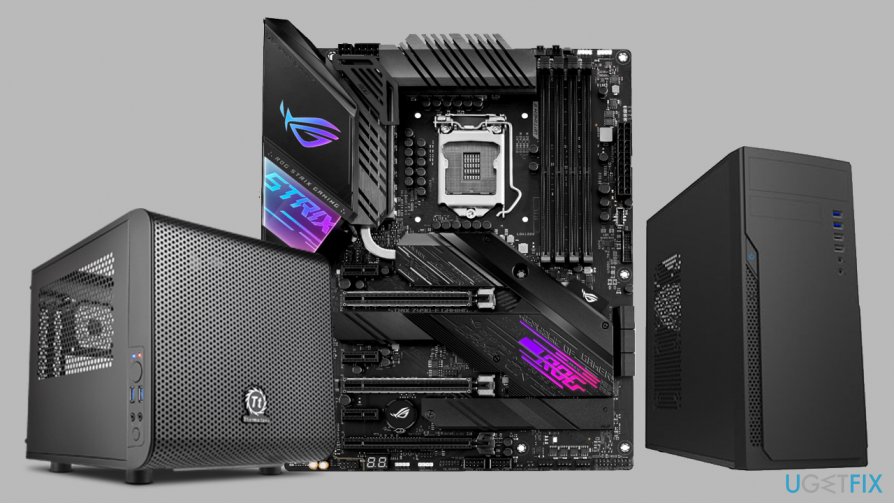
However, what is really important is the size of your PC case, motherboard, and the graphics card itself. There is no surprise there that high-end GPUs, such as Nvidia RTX 2080 Ti or RTX 3090, are monstrous size in comparison to mini-boards. Thus, if you are using a full ATX motherboard, you should not worry about GPU's size, although you should check the metrics if you are using the Micro or Mini ATX motherboard types.[ref en-1]
Step 2. Uninstall old video drivers from your PC
Once you are sure that your video card fits on your motherboard correctly, you should not simply rip out your old GPU and replace it with a new one. Instead, you should first uninstall the current video card drivers to upgrade the graphics card without major difficulties. Here's how to do it:
- Right-click on Start button and select Device Manager
- In Device Manager, expand the Display adapters section
- Right-click on the current graphics card, and select Uninstall device
- Select Delete the driver software from this device
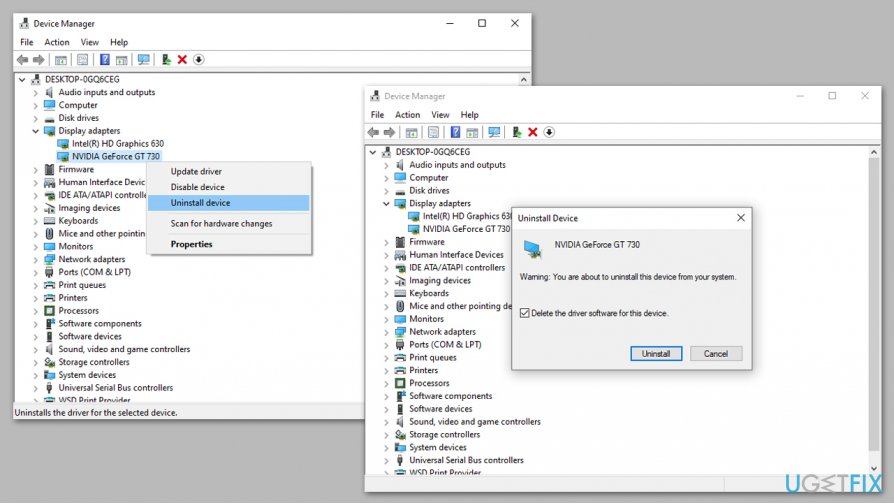
How to upgrade your graphics card uninstall old gpu drivers - Proceed with on-screen instructions
After the process is complete, shut down your computer and proceed with the next step.
Step 3. Insert your new GPU
As a safety measure, you should always disconnect your PC from any electricity sockets before opening the case - or you can disconnect the PSU cable from the back of the case. Once that is done, you should open the case - this process differs based on the manufacturer, so you can check the manual if you are in doubt. Nonetheless, most cases can be opened by removing the side panel. Then proceed with the following:
- Place the box on the side so that the motherboard would face you
- Disconnect the cable that powers your old GPU (another PCI-E connection which looks like a six-slot box, although this might not be present, as it depends on your graphics card type)
- If your old GPU is screwed to the PCB or the case with set on bolts - unscrew them
- Move the plastic tab next to the PCI-E slot outwards from the GPU
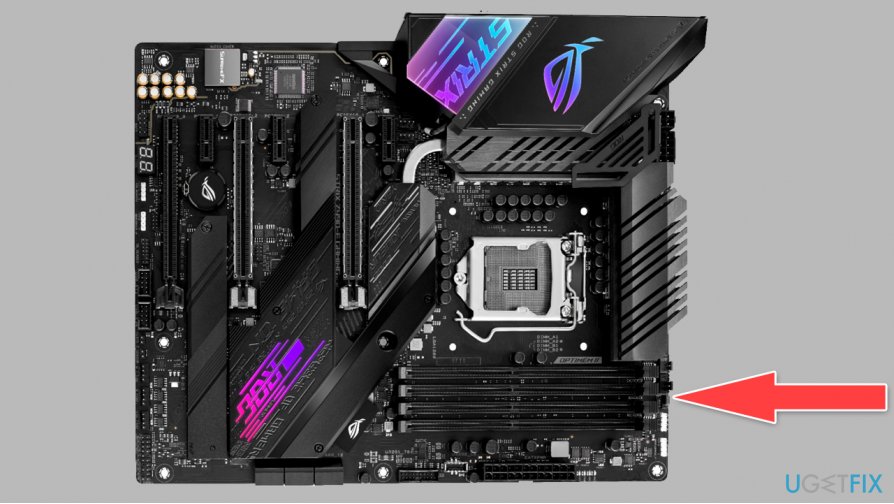
How to upgrade your graphics card insert new gpu into pcie slot - Remove your old card by pulling it slowly
Now, you should take the new GPU and perform all the steps mentioned above in an opposite order to replace graphics card.
Step 4. Install the most recent video drivers for your new graphics card
While you can install usable video drivers via Windows' Device Manager, it is not recommended. The best way to do that is by visiting the manufacturer's website and downloading the most recent drivers for your GPU model.
Here are the links to the most popular GPU manufacturer sites:
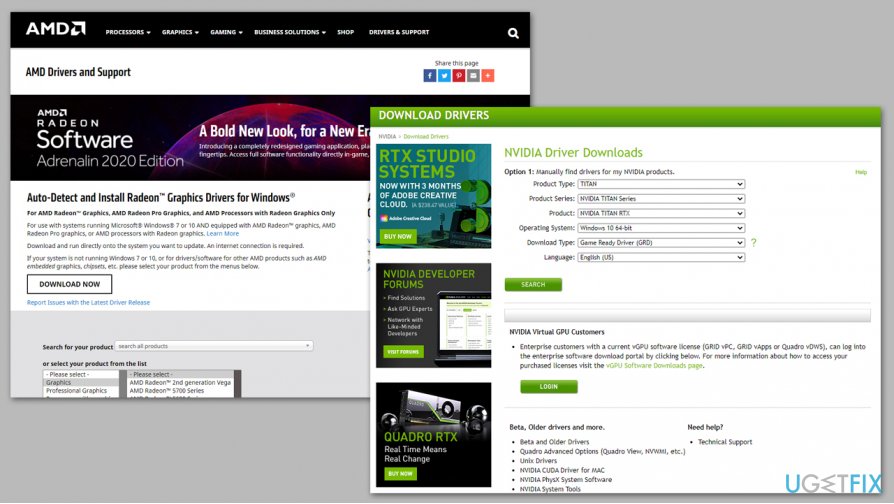
You can also use official software such as GeForce Experience or AMD's Adrenalin to keep your video card drivers up to date. Note that "driver updaters" are not recommended, as there are plenty of potentially unwanted programs that can mess up the normal operation of your GPU and even PC.[ref en-3]
Bottom line
To upgrade your graphics card, first establish your budget and intended use, then choose a compatible GPU based on performance benchmarks. If you encounter issues, consult websites like PassMark for comparisons. If none of the solutions work, consider seeking professional assistance.
Frequently asked questions
Before upgrading, ensure your power supply can handle the new graphics card and check for physical space in your case. Additionally, verify compatibility with your motherboard and ensure you have the latest drivers for optimal performance.
To install a new graphics card, power off your PC, remove the old card, and insert the new one into the PCIe slot. Once installed, boot up your system and install the latest drivers from the manufacturer's website.
Yes, upgrading your graphics card can significantly enhance gaming performance by allowing for higher resolutions and better frame rates. Ensure your system meets the recommended specifications for the games you want to play.



Report an issue
What's wrong with this guide? We review every report and update or remove content.
Report received — thank you. We'll review and fix it.
You need a free account to submit a report.
Be the first to comment